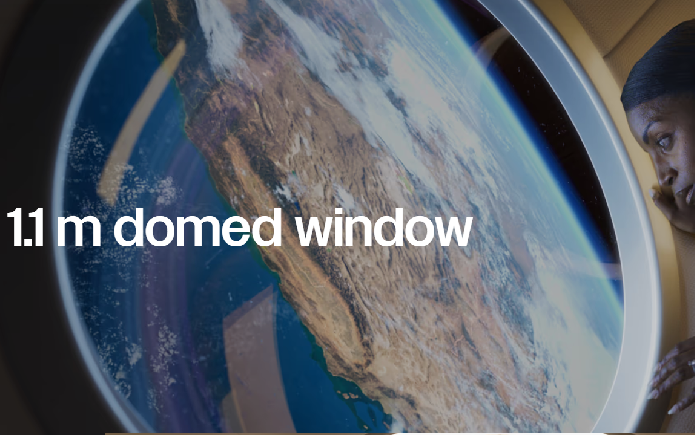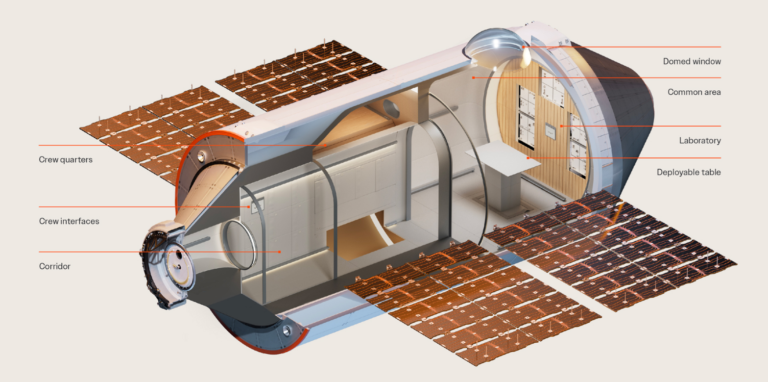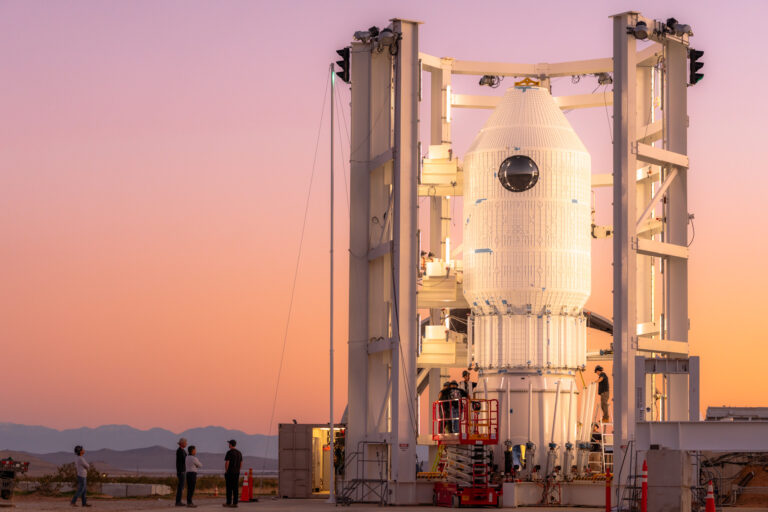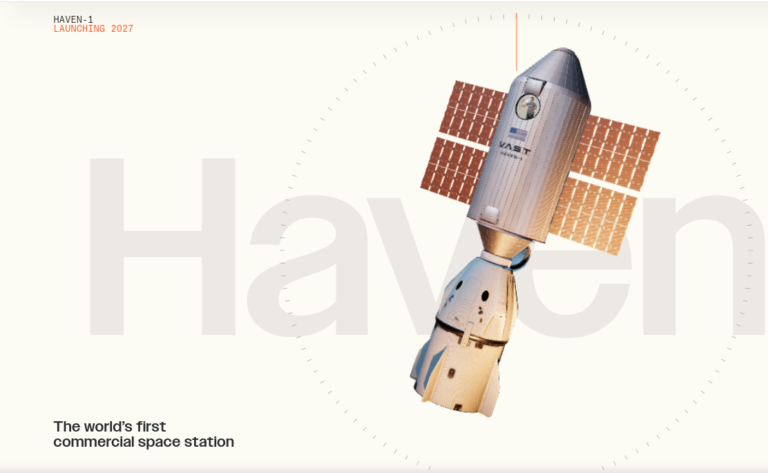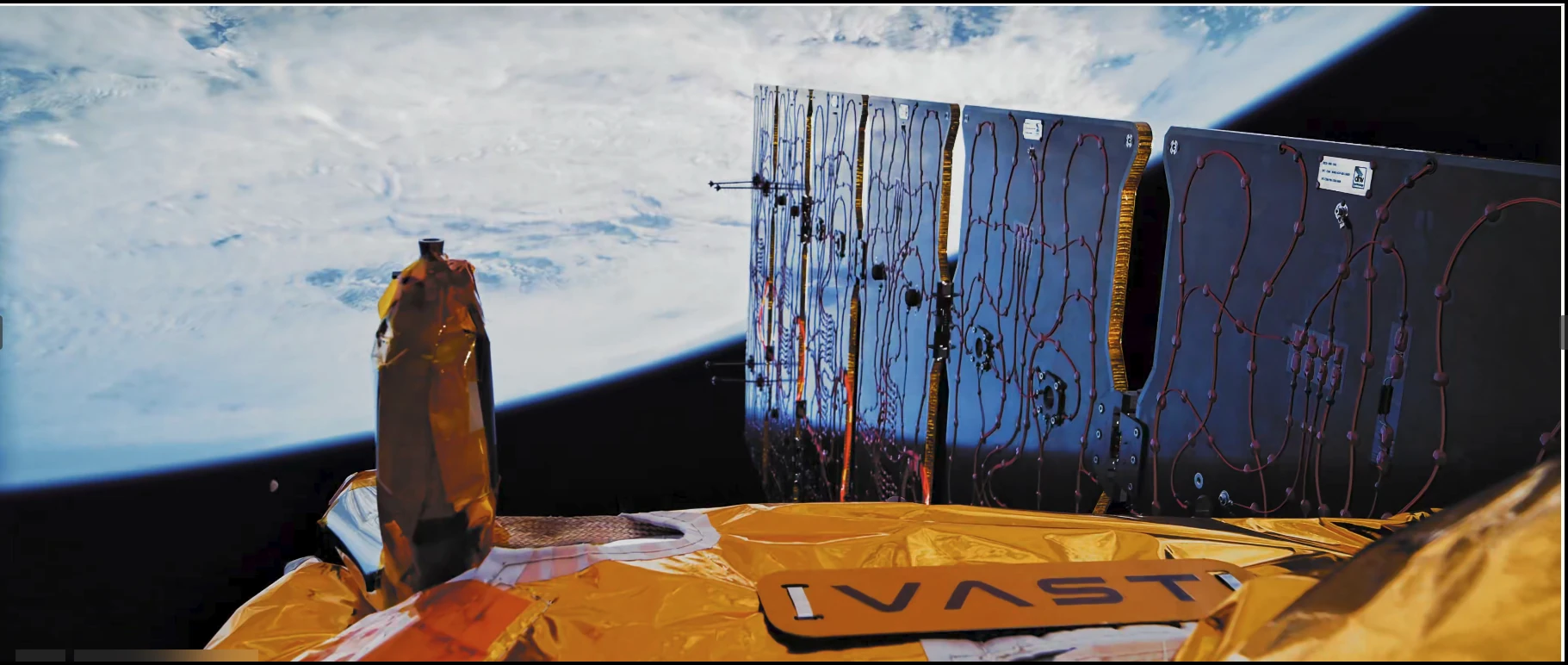
Haven-1, Scheduled to be the World’s First Commercial Space Station. Source: https://www.vastspace.com/updates/france-vast-two-mission-agreement-iss-haven-1
Grok response:
Haven-1 (Vast Space) is the closest to a potential early crewed visit among the projects mentioned, but its timeline has slipped and crewed operations remain uncertain before late 2027.[1][2]
Starlab (Voyager Space/Airbus et al.) targets a 2029 launch on Starship, placing any crewed visits after 2027.[3][4]
Orbital Reef (Blue Origin/Sierra Space) has older 2027 operational targets that appear stalled or behind schedule relative to competitors, with limited recent progress updates toward crewed flight.[5][6]
NASA’s consideration of a Starship-derived space station remains conceptual with no firm near-term crewed habitat plans before 2028.[7]
Here is a list of 10 key recent or relevant citations:
- Vast Delays Haven-1 Launch to 2027 (Payload Space, Jan 20, 2026) — Details the slip of Haven-1 from a mid-2026 target to no earlier than Q1 2027 due to assembly and testing timelines; notes crewed missions using SpaceX Dragon would follow launch after safety validation and could occur anywhere from weeks to years later within the station’s three-year life. Summarizes CEO comments on prioritizing uncrewed launch first.[1]
- The first commercial space station, Haven-1, is now undergoing assembly for launch (Ars Technica, Jan 20, 2026) — Reports Haven-1 assembly start and launch delay to Q1 2027; emphasizes it will launch uncrewed, with first crewed Dragon mission possible shortly after but dependent on confidence in station systems. Includes details on four planned 2-week crewed missions over three years.[2]
- Haven-1 (Vast Space official site, last updated/crawled ~Aug 2026) — States Haven-1 targeted for 2027 launch as a single-module station for private astronauts and government missions; references prior May 2026 hardware progress videos but aligns with delayed Q1 2027 target in other reporting. Describes short-duration crewed visits (up to four missions of ~14 days each).[8]
- Haven-1 (Wikipedia, last updated/crawled ~Aug 2026) — Notes launch NET Q1 2027 on Falcon 9 after January 2026 delay from late 2026; confirms assembly began January 20, 2026, and highlights its status as the first privately funded commercial station.[9]
- France Signs Historic Two-Mission Agreement with Vast (Business Wire/Morningstar, Jun 1, 2026) — Announces French agreement for missions including the first crewed flight to Haven-1, described as scheduled to launch in 2027. Provides context on international interest in the station.[10]
- Starlab (space station) (Wikipedia, last updated/crawled Aug 12, 2026) — Lists planned launch no earlier than 2029 on Starship (single flight, fully outfitted); notes design stage progress with earlier 2028 estimates shifting later. Emphasizes continuous crew capacity of four astronauts.[3]
- Starlab | Next generation space station (Airbus, crawled ~Aug 2026) — Confirms Starlab scheduled for 2029 Starship launch, operational within weeks of reaching orbit with no on-orbit assembly required; highlights NASA Space Act Agreement funding and focus on continuous human presence post-ISS.[4]
- Orbital Reef Space Station Advances to Design Phase (Blue Origin, Aug 22, 2022, with later references) — Older milestone on System Definition Review; notes historical 2027 operational target that has not been updated in recent company materials. Current Blue Origin LEO Destinations page focuses on ongoing CLD Phase 1 work without new crewed timelines.[5]
- Inside Orbital Reef (Ex Terra Media, Jan 26, 2026) — Discusses Orbital Reef’s 2027 target amid market uncertainty; notes competitors (including Axiom and Vast) advancing hardware faster, with Orbital Reef’s fate hinging on 2026–mid-2027 developments.[6]
- NASA eyeing SpaceX’s Starship as possible space station (Space.com, Jul 27, 2023) — Covers 2023 NASA Space Act Agreements exploring Starship as an orbital destination option; notes conceptual uses but no firm timelines for crewed habitat operations, especially relative to 2027.[7]
As of August 2026, no new space habitat (excluding ISS or Tiangong) has hosted human visitors, and the most advanced candidate—Haven-1—faces a launch no earlier than early 2027 with crewed visits dependent on post-launch verification. Starlab and other concepts remain years further out. Expert commentary in sources like Ars Technica and industry analyses highlights persistent delays common in commercial space infrastructure development.
Extracted resolution criteria links:
[‘https://voyagertechnologies.com/starlab/,’, ‘https://www.blueorigin.com/destinations,’, ‘https://www.space.com/nasa-considering-spacex-starship-space-station‘]Probability: 33%
=== Forecast Result ===
Reasoning and Analysis
Current State of Affairs (as of Aug 12, 2026)
Haven-1 (Vast Space) is the primary candidate:
- As of January 2026, Haven-1 began assembly with a launch target of NET Q1 2027 on Falcon 9 (already slipped from original NET Aug 2025 target)
- It will launch uncrewed first, with crewed Dragon missions following after safety validation
- France signed a two-mission agreement with Vast in June 2026 confirming ongoing momentum
- Four crewed missions of ~14 days each are planned over 3 years
- Wikipedia as of ~Aug 2026 confirms Q1 2027 NET launch date
Other candidates: Starlab targets 2029; Orbital Reef is behind schedule with no firm pre-2027 crewed dates; Starship-as-station is conceptual only.
Critical Assumptions and Failure Analysis
Assumption 1: Haven-1 launches by mid-to-late 2027
- The schedule has already slipped twice (2025→2026→Q1 2027)
- Space projects routinely slip further
- P(this assumption holds) ≈ 60% for any 2027 launch
Assumption 2: Crewed visit occurs within ~6-9 months of launch
- Even with timely launch, safety verification is required first
- Dragon missions are mature technology, reducing risk
- P(crew visits within months of 2027 launch | launch happens in 2027) ≈ 55-65%
Assumption 3: No other habitat accelerates unexpectedly
Assumption 4: Probabilistic Summary
- Orbital Reef, Starlab, and Starship-habitat face longer timelines
- Combined contribution: ~3-5%
Total from Haven-1: ~31-32%
Adding other options: ~34-35%
Calibration Adjustments
- Historical base rate of positive resolution: ~35%
- Consistent overconfidence tendency: adjust downward slightly
- However, this question has specific, plausible hardware in late-stage assembly with signed international agreements
- The technology pathway is mature (Falcon 9 + Dragon)
The main risks are (1) further schedule slippage of Haven-1 launch beyond 2027 and (2) even with timely launch, the gap between uncrewed launch and first crewed visit extending past year-end 2027.
Probability: 33%
About The Author