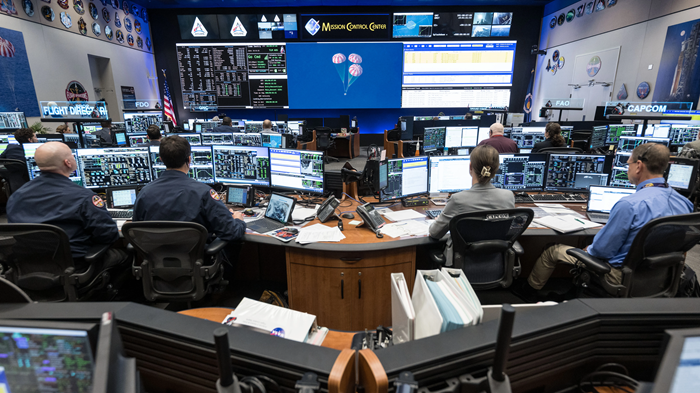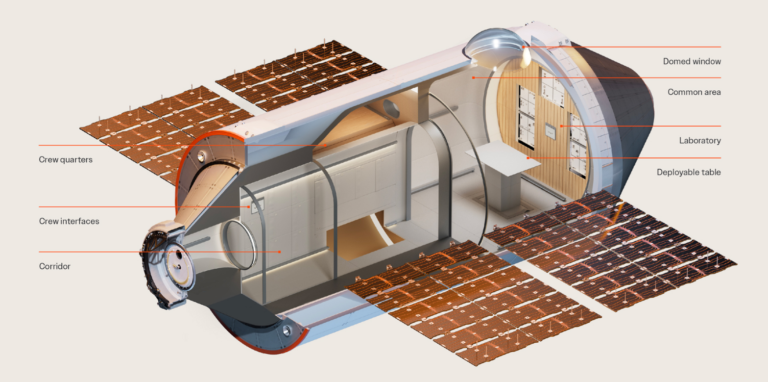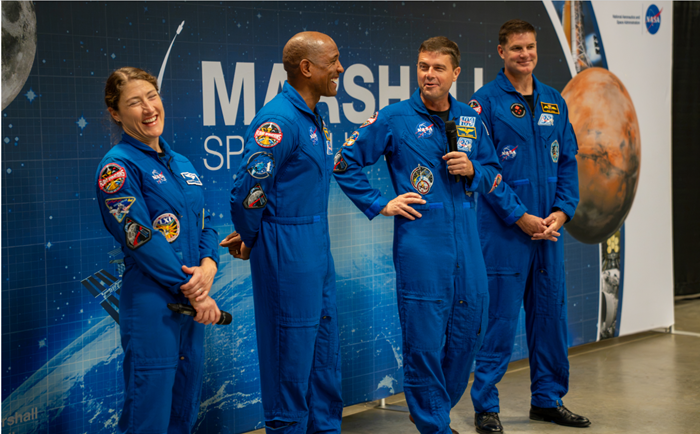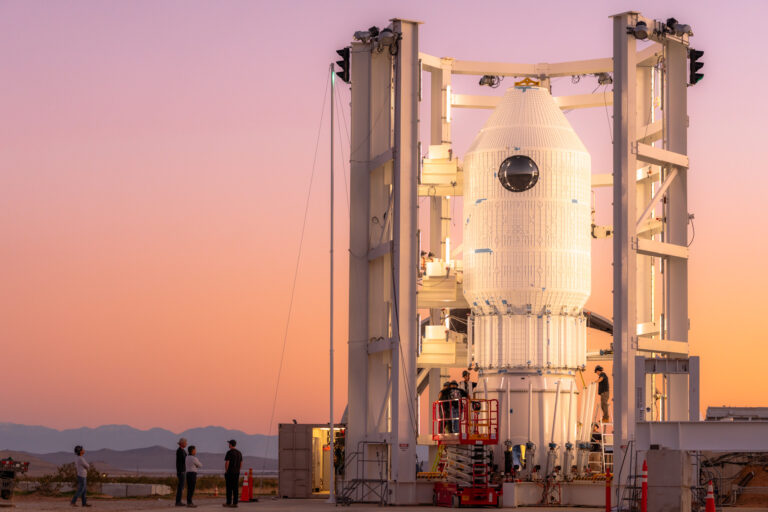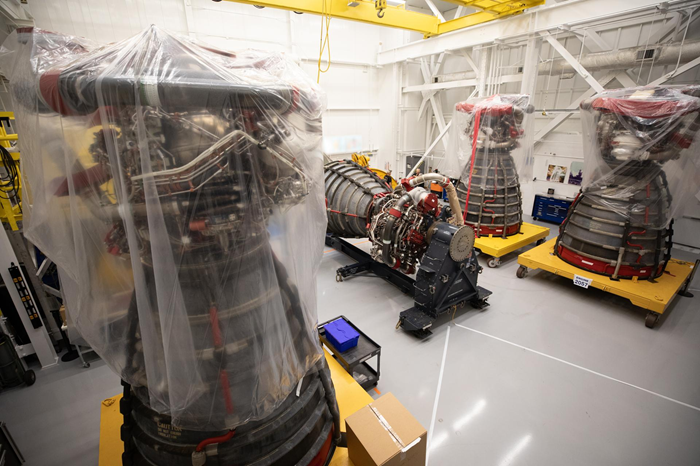
All four RS-25 SLS (Space Launch System) rocket engines, built by L3 Harris Technologies, were delivered to NASA’s Vehicle Assembly Building at Kennedy Space Center in Florida for the Artemis III mission on Tuesday, July 21, 2026. NASA/Ben Smegelsky. Source: https://www.nasa.gov/blogs/missions/2026/08/05/nasa-joins-artemis-iii-orion-modules-rocket-hardware-update/
Obtaining outside data.
Checking internet sources, using keywords: Artemis III orbital demonstration 2027
News from various sources:
NASA’s Artemis III mission in 2027 is designed as a major rehearsal for future crewed lunar landings. Before astronauts land on the Moon’s surface in 2028, Artemis III will test key orbital operations using Orion, SpaceX’s Starship, and Blue Origin’s Blue Moon landers. The mission involves two separate docking procedures with these landers in low Earth orbit, aiming to practice and perfect the docking, rendezvous, and systems integration necessary for future Moon missions.
Key Points:
Mission Objectives:
- Serve as a practice run before the first crewed landing on the Moon under Artemis IV.
- Test docking and integration between Orion and the two commercial landers (SpaceX’s Starship and Blue Origin’s Blue Moon) in a controlled Earth orbit.
- Conduct these maneuvers to gather crucial data and experience needed for safe and successful crewed landings on the Moon.
Launch Details:
- Artemis III will require three powerful rockets launching in succession: NASA’s SLS carrying Orion, Blue Origin’s New Glenn carrying the Blue Moon test lander, and SpaceX’s Starship.
- The sequence begins with Blue Origin’s launch to verify its systems in low Earth orbit, followed by SLS launching the crew in Orion, and finally, SpaceX’s Starship.
Testing Commercial Landers:
- SpaceX will test its Version 3 Starship configuration, focusing on docking procedures and vehicle integration with Orion.
- Blue Origin’s Blue Moon will also undergo tests involving its major subsystems and the potential presence of crew inside for testing purposes, though only in Earth orbit for this mission.
Software and Control System Testing:
- Unique to Artemis III, the mission will involve complex software handovers: different control authorities will switch between Orion and the landers’ control systems.
- This will provide essential insights into how these spacecraft function together before attempting a lunar landing.
Contingency Planning:
- Due to technical challenges and past schedule delays, Blue Origin is working on repairing its launchpad following a previous test failure.
- SpaceX’s readiness continues to be evaluated through ongoing test flights, crucial for ensuring the Starship’s suitability for the mission.
Strategic Impact:
- Success in Artemis III will validate NASA’s dual launch model, helping orchestrate separate logistics for lunar landers and crew delivery systems.
- Demonstrates NASA’s collaborative efforts with private companies to utilize commercial innovations in human space exploration.
Artemis III’s outcomes will influence not only the timelines but also the operational maturity required for subsequent Artemis missions and NASA’s broader vision for sustainable human presence on the Moon and beyond. Please note that some details such as certain roles of Blue Moon and New Glenn in Artemis III are not officially confirmed based on the latest available public information, and the specific planning details could evolve over time.
Fact-checked summary:
Artemis III, planned for 2027, is an essential mission designed as a major rehearsal for future crewed lunar landings, making its success critical for NASA’s goals. It serves as a practice run before Artemis IV’s crewed lunar landing and is intended to test systems and procedures essential for these future missions. The mission will use the Orion spacecraft and SpaceX’s actively developing Starship, allowing key operations to be tested in space. SpaceX’s readiness is being assessed through ongoing test flights, highlighting the importance of their success on the feasibility of Artemis III. Additionally, the mission aims to validate NASA’s dual launch model, a strategic objective that will significantly impact future mission planning. Overall, the Artemis III mission’s outcome is crucial in paving the way for NASA’s lunar exploration ambitions.
OpenAI gives a base rate of 0.7 (70%)
The question difficulty is rated 7 (0 to 10)
A Bayesian calculation could be performed as follows:
Using historical success rates of NASA and SpaceX and factoring in the potential for delays, a Bayesian update would start with a prior of 0.70 (base success for similar missions). NASA’s higher likelihood of success enhances confidence, adjusted by SpaceX’s moderate success and potential delay factors, suggesting a posterior probability of 0.72.
Bayesian base rate: 0.72 (72%)
Sufficient news to provide a good forecast? 1 (0 or 1)
News is relevant, topical and unbiased? 1 (0 or 1)
Question classification: scenario_based_forecast
Expected time (days) until question close: 456
The following were considered in order to produce this base rate:
The base rate was determined by evaluating the historical success of NASA and SpaceX missions, the complexity of upcoming technical challenges, and the significance of Artemis III in NASA’s broader mission timeline.
Ideally, the news feed would contain the following sorts of information for a better forecast:
Further updates on SpaceX’s test flight outcomes, detailed progress reports on the Orion spacecraft, and financial or political support for NASA’s goals would improve forecast accuracy.
Some potential divergent considerations that might affect the base rate:
Unexpected technical failures during upcoming SpaceX test flights or an increase in funding limitations could substantially delay the mission. Additionally, international geopolitical factors or policy changes in NASA’s priorities could affect timelines.
The following chain of events are necessary for the question to resolve positively:
- NASA successfully completes the development and testing of the Orion spacecraft systems specific to Artemis III. (High likelihood)
- SpaceX successfully completes test flights of the Starship and demonstrates its readiness for Artemis III payload and crew responsibilities. (Moderate likelihood)
- NASA and SpaceX successfully coordinate the dual launch model for Artemis III, overcoming any potential logistical hurdles. (Moderate likelihood)
- No significant unforeseen technical or funding issues delay the mission beyond 2027. (Moderate likelihood)
Querying Claude (AI predicts: 0.08 – confidence: 4)
Querying OpenAI (AI predicts: 0.65 – confidence: 6)
Guide to Jeremy Lichtman’s Multi-AI Oracle Reports
Question Type: Binary
Median from LLMs: 0.37
Base rate: 0.7 (from OpenAI)
SD: 0.29
MAPD: 0
Confidence: 5
Conf Mode: Low
Mellers: 0.31
Reverse Mellers: 0.41
Theory of Mind: 0.09 (What did the LLMs think other LLMs predicted?)
Beta Distribution: 0.96
Close Type: B (B = cautious # closer to 50%; A/C = closer to extremes)
LLM responses: 2
Model value: 0.37 (37%)
(Carolyn‘s note: Why might the Multi-AI Oracle have concluded today that the probability is only 37%, while its component of OpenAI insists on 70% for its base rate and 72% for its Bayesian calculation. My guess is that the other componednt AI — Claude — overruled OpenAI. Also, Philip Godzin’s pgodzinai also forecasted 37% today.)
The likelihood of the Artemis III ‘orbital demonstration mission’ succeeding by the end of 2027 is low due to several factors, including the program’s history of delays and significant technical challenges. The readiness of NASA’s Orion spacecraft appears to be progressing well, but critical dependencies like the SpaceX Starship Human Landing System, particularly its requirement for orbital refueling capabilities, remain unproven as of late 2026. Historical patterns of delay in NASA-led missions, compounded by the logistical complexity of coordinating multiple Starship tanker flights, suggest that the target timeline is ambitious. Political and budgetary uncertainties further complicate the program’s trajectory, although there is some possibility that faster-than-expected technological advancements by SpaceX or policy shifts could improve the outlook. If the mission is reinterpreted as a precursor orbital demonstration rather than the full crewed lunar landing, the probability of success by 2027 might be higher. However, all these elements combined make a successful Artemis III mission by the target date highly unlikely without substantial progress and additional support.
Runtime: 131 seconds.
About The Author