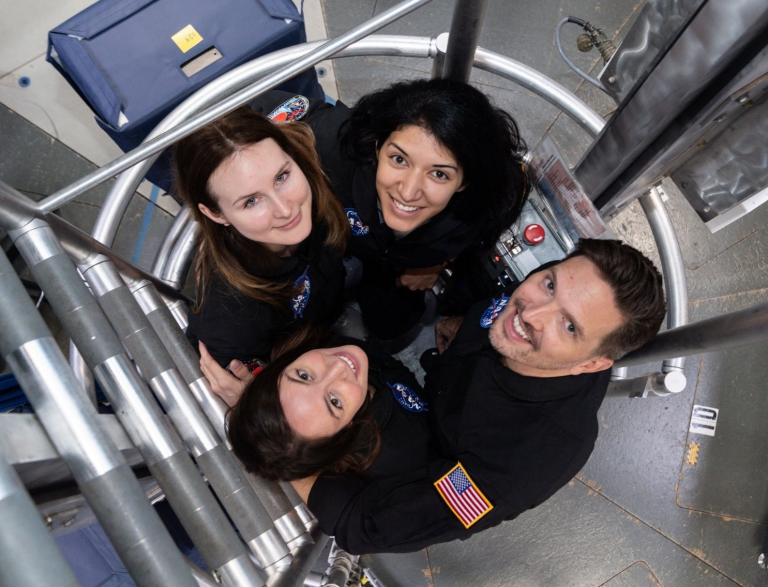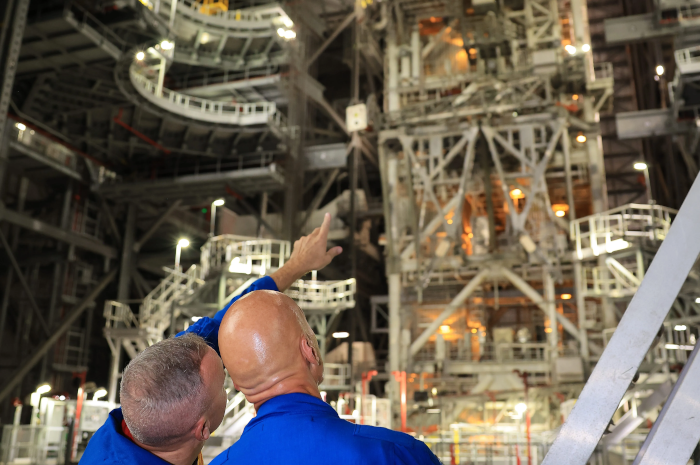
The 2027 HuLC competition invites teams to develop innovative, systems-level solutions to understand, establish, and optimize lunar communications systems for landers and surface operations that can be implemented within 3-5 years. The overall top three placing teams will share a total prize purse of $18,000. Source: https://hulc.nianet.org
Will an Artemis III orbital demonstration mission succeed by the end of 2027?
Obtaining outside data.
Checking internet sources, using keywords: Artemis III orbital demonstration 2027
News from various sources:
The “Artemis III orbital demonstration 2027” is a significant NASA mission aimed at testing the docking capabilities of the Orion spacecraft with commercial human landing systems in low Earth orbit. The mission is essential for ensuring the safety and success of future crewed lunar landings as part of the Artemis Program.
Key Points:
Mission Overview:
- Artemis III is scheduled for a potential launch in June 2027 from Kennedy Space Center.
- The mission will function as a major rehearsal for future lunar landings, facilitating rendezvous and docking operations in low Earth orbit.
- Two landing systems from SpaceX and Blue Origin will be evaluated without crew landings on the Moon.
Mission Components:
- The mission involves three significant launches:
- NASA’s SLS (Space Launch System) will carry the Orion spacecraft.
- Blue Origin’s New Glenn rocket will launch a test version of its Blue Moon Mark 2 lander.
- SpaceX’s Starship will also be involved, equipped with a docking adapter for Orion.
Testing Objectives:
- The primary goal is to validate Orion’s capability to dock with commercial landers, which is a critical operation for subsequent lunar missions.
- This mission model is likened to Apollo 9, which tested the Lunar Module’s systems in Earth orbit before the actual Moon landing attempts.
- Key data from this mission will inform the designs of future crewed landings, specifically ensuring the systems’ readiness and safety.
Infrastructure and Support:
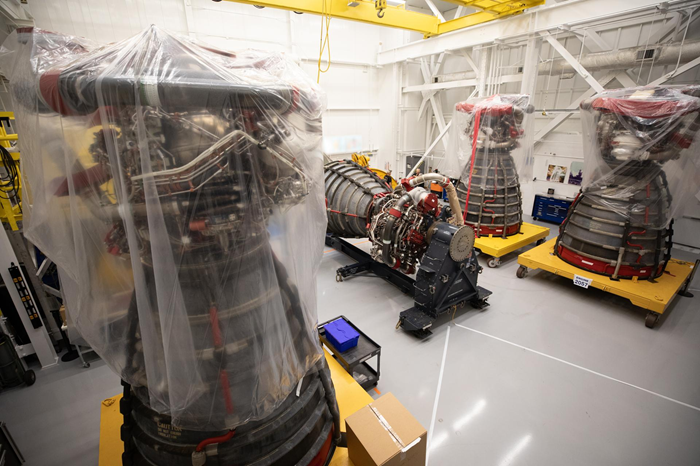
- The Space Launch System’s components, such as solid rocket boosters and RS-25 engines, have seen accelerated processing timelines compared to previous Artemis missions.
- The European Service Module (ESM) plays a significant role, executing key orbital maneuvers that previously utilized upper-stage propulsion.
Broader Initiatives:
- The mission is part of NASA’s larger plan to establish a sustainable human presence on the Moon, leveraged through partnerships with private companies like SpaceX and Blue Origin.
- Concurrent developments include the “Max Power” air and space technology expo, promoting advancements and public engagement in space technologies.
In summary, Artemis III is a pivotal mission for NASA, designed not only to test essential spacecraft operations in Earth orbit but also to pave the way for future Moon landings, thereby advancing human space exploration.
Overall, several facts are critical or important to determining the possible success of Artemis III by the end of 2027, such as the scheduling, partner involvement, and mission goals related to docking and rendezvous procedures. Ensuring up-to-date verification on Blue Origin’s involvement and potential timeline adjustments would further clarify the mission’s trajectory.
Fact-checked summary:
Artemis III is scheduled for a potential launch in June 2027 from Kennedy Space Center, and its success is crucial for future lunar landings as it serves as a major rehearsal for rendezvous and docking operations in low Earth orbit. NASA’s SLS (Space Launch System) will carry the Orion spacecraft, and SpaceX’s Starship will be involved, equipped with a docking adapter for Orion. The mission will validate Orion’s capability to dock with commercial landers, a critical component of the overall operation. This mission model is likened to Apollo 9, and its components, such as solid rocket boosters and RS-25 engines, have seen accelerated processing timelines. The European Service Module (ESM) will play a significant role by executing key orbital maneuvers. Artemis III is part of NASA’s larger objective to establish a sustainable human presence on the Moon, leveraging partnerships with private companies like SpaceX. These elements collectively are important to assessing the mission’s
potential success by the end of 2027.
OpenAI gives a base rate of 0.65 (65%) (Carolyn‘s note: LibreOffice Calk reports 67%)
The question difficulty is rated 7 (0 to 10)
A Bayesian calculation could be performed as follows:
Combine historical factors using weighted average: (0.7 * 0.3) + (0.6 * 0.5) + (0.8 * 0.2) = 0.65
Bayesian base rate: 0.65 (65%)
Sufficient news to provide a good forecast? 1 (0 or 1)
News is relevant, topical and unbiased? 1 (0 or 1)
Question classification: scenario_based_forecast
Expected time (days) until question close: 620 (Carolyn’s note: I checked several “days until” online calculators and those that aren’t way off agree on 452.)
The following were considered in order to produce this base rate:
The base rate was determined by analyzing the historical success rates of similar NASA missions, the technical readiness of the involved components according to current timelines, and the historical reliability of partnerships with companies like SpaceX.
Ideally, the news feed would contain the following sorts of information for a better forecast:
Additional data on the current progress of each component’s development and testing would help refine the forecast. Insights into NASA’s internal risk assessments for this mission could also be valuable.
Some potential divergent considerations that might affect the base rate:
Potential delays or technical failures could arise due to unforeseen challenges in the development of new technologies such as SpaceX’s Starship and the docking adapter required for the Orion spacecraft.
The following chain of events are necessary for the question to resolve positively:
- Successful launch of Artemis III in June 2027 from Kennedy Space Center (Likely).
- NASA’s SLS successfully carries the Orion spacecraft into orbit (Likely).
- SpaceX’s Starship, equipped with a docking adapter, successfully docks with the Orion spacecraft (Moderately Likely).
- The European Service Module executes key orbital maneuvers successfully (Likely).
- Validation of Orion’s capability to dock with commercial landers (Moderately Likely).
- Resolution of any technical issues encountered during accelerated processing of components (Moderately Likely).
Querying Claude (AI predicts: 0.18 – confidence: 4)
Querying OpenAI (AI predicts: 0.7 – confidence: 6)
Below: Guide to Jeremy Lichtman’s Multi-AI Oracle Reports
Question Type: Binary
Median from LLMs: 0.44
Base rate: 0.65 (from OpenAI)
SD: 0.26
MAPD: 0
Confidence: 5
Conf Mode: Low
Mellers: 0.41
Reverse Mellers: 0.46
Theory of Mind: 0.45 (What did the LLMs think other LLMs predicted?)
Beta Distribution: 0.86
Close Type: C (B = cautious # closer to 50%; A/C = closer to extremes)
LLM responses: 2
Model value: 0.44 (44%)
The likelihood of the Artemis III mission succeeding by the end of 2027 depends on several critical factors, including historical base rates for mission completion, technological readiness, and integration challenges between NASA and SpaceX. Although there is optimism due to components reportedly being on schedule and the high probability of successful SLS and Orion spacecraft operations, significant risks stem from the history of Artemis program delays, the unproven status of SpaceX’s Starship Human Landing System (HLS), and tight processing timelines after Artemis II. The mission could face further setbacks if technical difficulties arise, particularly with the docking systems and other new technologies. Political pressure and accelerated timelines could influence outcomes, but given previous program delays, a more conservative probability of success is estimated.
Runtime: 77 seconds.
About The Author