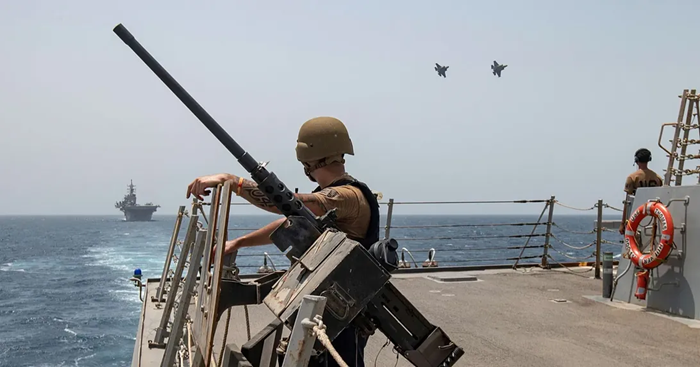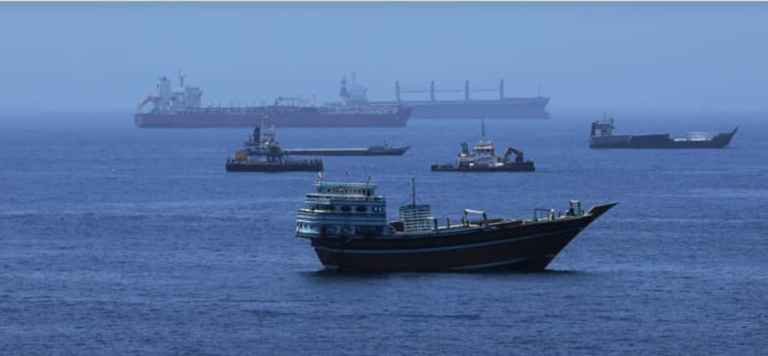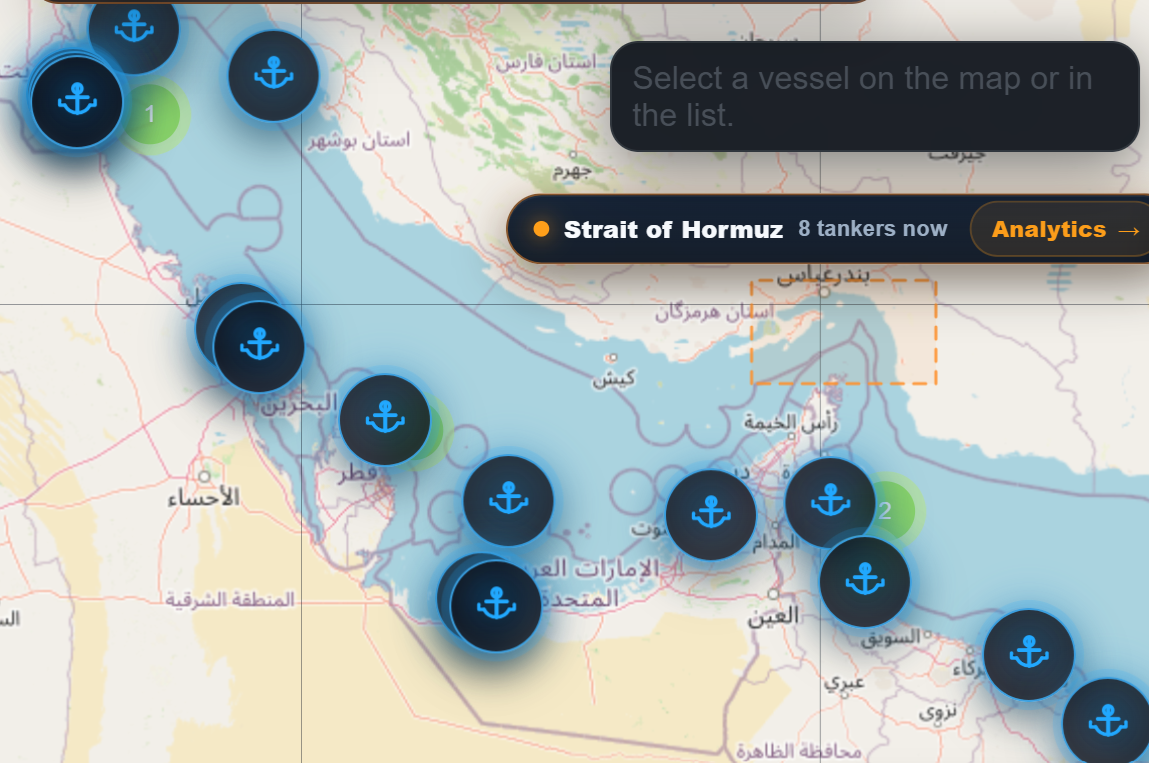
Screen shot of Oct. 1, 2025 of LNG tankers in the region of the Strait of Hormuz. Source: the Live map at https://tankermap.com/
Obtaining outside data.
Checking internet sources, using keywords: Strait of Hormuz LNG 2026
News from various sources:
Here’s a summary of the relevant information from the web content regarding the ‘Strait of Hormuz LNG 2026’:
Strait of Hormuz Overview:
- The Strait of Hormuz is a key maritime passage for global energy shipments, including crude oil and liquefied natural gas (LNG).
- Recent conflicts have disrupted shipping through the strait, leading to significant geopolitical tensions and impacting global energy markets.
Oil Transit and Issues:
- Crude oil shipments are showing signs of recovery with volumes nearing pre-conflict levels. Estimates suggest about 17.5 million barrels per day are transiting the strait, although attacks on vessels continue to pose a threat.
- Saudi Arabia has managed to maintain oil exports by maximizing use of the traditional route through the Gulf and engaging in ship-to-ship transfers.
LNG Traffic:
- There has been an increase in Qatar-linked LNG shipments through the Strait of Hormuz post-August 2026 disruptions. Tankers are taking alternative routes to avoid potential Iranian threats.
- Despite initial declines, LNG traffic is being partially restored, although only at about 20% of pre-war levels.
- The shortfall is being supplemented by production increases in Canada, the United States, and Malaysia.
Economic Implications:
- While crude oil flow through the strait is increasing, the global market continues to adapt with prices stabilizing, aided by agile maritime adjustments.
- LNG prices have decreased from previous highs, benefitting from increased production elsewhere and strategic navigation to avoid conflict zones.
Security Concerns:
- The strait remains a highly volatile region with ongoing risks of military escalation. Recent reports indicate several attacks on oil tankers by unknown projectiles.
Geopolitical Developments:
- Countries like Pakistan are negotiating safe passage for LNG shipments to ensure stable energy supplies amid ongoing disruptions and elevated global prices.
- The geopolitical situation remains tense, with potential for incidents that could further escalate tensions in the region.
Overall, while there is some recovery and adaptation in energy flows through the Strait of Hormuz, the area remains fraught with considerable security risks and geopolitical challenges impacting global energy markets.
Fact-checked summary:
The Strait of Hormuz is a critical maritime passage for global energy shipments, including crude oil and liquefied natural gas (LNG), making it highly relevant to the status of LNG traffic by the end of 2026. Recent conflicts have disrupted shipping routes through the strait, creating geopolitical tensions that directly affect energy markets. The area remains volatile, with ongoing risks and attacks on oil tankers reported, which suggests challenges in maintaining unimpeded traffic. Although crude oil flow through the strait is increasing, and the global market is stabilizing with agile maritime adaptations, the LNG traffic has yet to achieve full restoration to pre-disruption levels. The geopolitical situation continues to be tense, posing ongoing threats to the security and stability of shipments through the strait. These factors are critical in evaluating the prospect of the Strait of Hormuz becoming de facto unimpeded for LNG traffic by the end of 2026.
OpenAI gives a base rate of 0.4 (40%)
The question difficulty is rated 7 (0 to 10)
A Bayesian calculation could be performed as follows:
P(A|B) = [P(B|A) * P(A)] / [P(B|A) * P(A) + P(B|¬A) * P(¬A)]; where P(A) (initial likelihood of unimpeded passage by end of 2026) = 0.4, P(B|A) (likelihood of current conditions if unimpeded passage occurs) = 0.6, P(B|¬A) (likelihood of current conditions if unimpeded passage does not occur) = 0.5. P(A|B) = [0.6 * 0.4] / [0.6 * 0.4 + 0.5 * 0.6] = 0.48 (Carolyn’s note: LibreOffice Calc says this equals 44.444(ad infinitum)
Bayesian base rate: 0.48 (48%)
Sufficient news to provide a good forecast? 1 (0 or 1)
News is relevant, topical and unbiased? 1 (0 or 1)
Question classification: scenario_based_forecast
Expected time (days) until question close: 90
The following were considered in order to produce this base rate:
The base rate was established by reviewing historical occurrences of geopolitical tensions affecting the Strait of Hormuz. Often, the strait experiences disruptions, but these are usually region-specific and temporary, with eventual resolutions driven by economic necessity.
Ideally, the news feed would contain the following sorts of information for a better forecast:
Further data on diplomatic negotiations, potential security agreements, and regional alliances would be beneficial. Real-time updates on shipping incidents or resolutions would help refine the forecast.
Some potential divergent considerations that might affect the base rate:
Unexpected escalations in conflicts could lead to increased disruption. Alternatively, new diplomatic efforts or technological adaptations in shipping could mitigate the risk. These could significantly alter the strait’s usage and risk assessment.
The following chain of events are necessary for the question to resolve positively:
- Reduction or resolution of geopolitical tensions in the region (Likelihood: Unlikely)
- Securing safe passage agreements for LNG carriers (Likelihood: Possible)
- Increased naval or international security presence to deter threats (Likelihood: Likely)
- Continuous global demand for LNG prompting diplomatic resolutions (Likelihood: Possible)
- No significant escalations in regional conflicts (Likelihood: Unlikely)
Querying Claude (AI predicts: 0.32 – confidence: 4)
Querying OpenAI (AI predicts: 0.25 – confidence: 4)
Guide to Jeremy Lichtman’s Multi-AI Oracle Reports
Question Type: Binary
Median from LLMs: 0.29
Base rate: 0.4 (from OpenAI)
SD: 0.04
MAPD: 0
Confidence: 4
Conf Mode: Low
Mellers: 0.21
Reverse Mellers: 0.35
Theory of Mind: 0.19 (What did the LLMs think other LLMs predicted?)
Beta Distribution: 1
Close Type: A (B = cautious # closer to 50%; A/C = closer to extremes)
LLM responses: 2
Model value: 0.29 (29%)
The likelihood of LNG traffic through the Strait of Hormuz becoming unimpeded by the end of 2026 is currently assessed as low due to persistent geopolitical tensions and ongoing regional conflicts, particularly involving Iran and its influence over the strait. Historical patterns and recent news indicate that disruptions are common but tend to resolve slowly, often requiring significant diplomatic breakthroughs which are currently rated as unlikely. The assessment reflects a reduction in the initial base rate from 0.4 to approximately 0.32, signifying the challenges in achieving effective freedom of movement for LNG carriers without significant threats. However, potential game-changing scenarios such as a diplomatic breakthrough, resolution in Yemen, or enhanced naval security could alter this assessment, either by substantively reducing threats or by changing the criteria for what constitutes ‘unimpeded’ passage, thereby increasing the probability of achieving this status before the year’s end.
Runtime: 116 seconds
About The Author