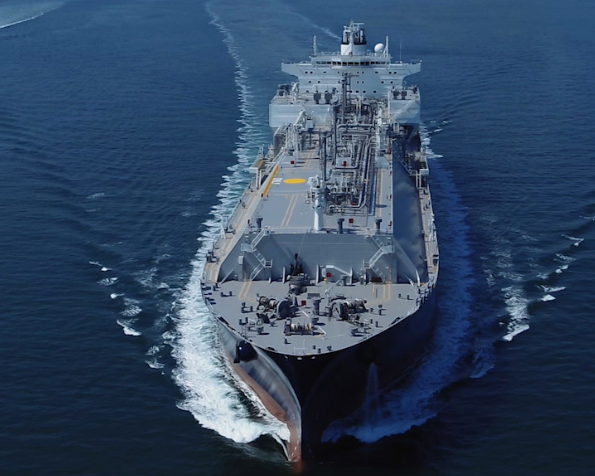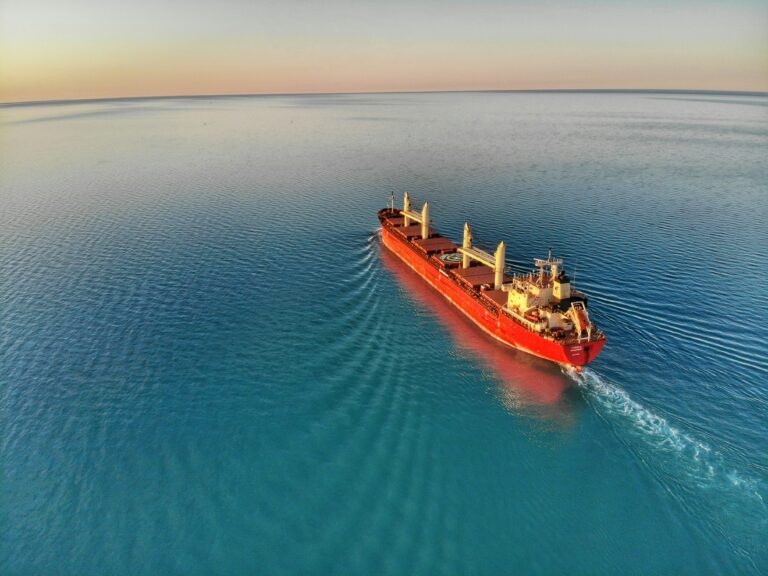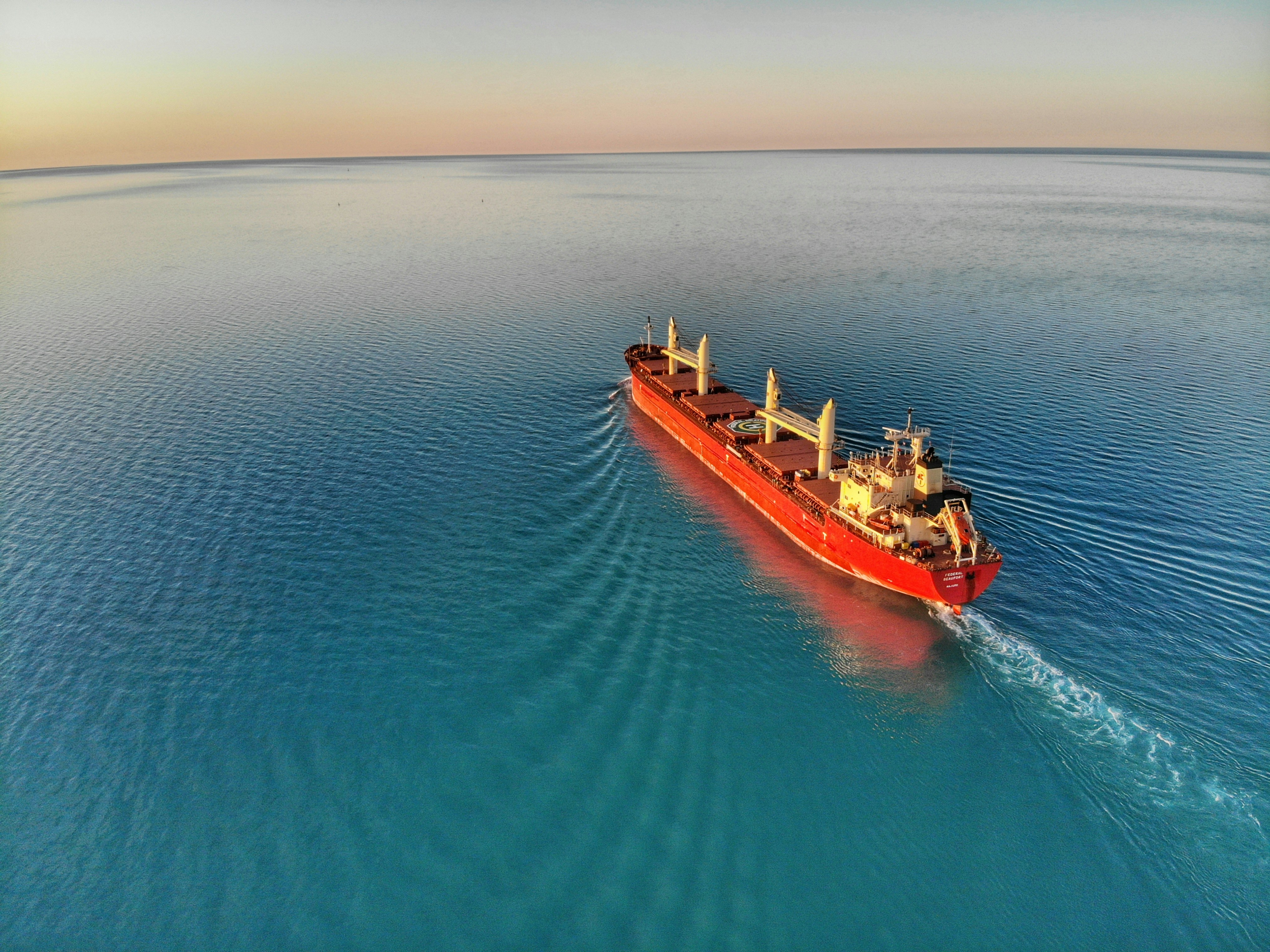
LNG tanker, courtesy Chris Pagan, a Michigan-based drone photographer. His free to download photo collection: https://unsplash.com/@chris_pagan
Anthropic Binary response:
Looking at this question, I need to assess the probability that Strait of Hormuz LNG traffic becomes “de facto unimpeded” by December 31, 2026 — just under 3 months from today’s date.
Current State Assessment (as of Oct 8, 2026):
- Active war between Iran, US, and Israel continues since late February 2026
- LNG traffic is 75-80% below pre-war levels despite a modest September rebound (17-21 cargoes vs. ~90/month pre-war baseline)
- Attack frequency is increasing, not decreasing — gCaptain reports “highest weekly total since the Iran war began” for tanker attacks in early October
- IRGC actively coercing vessels (ordering ships to turn back under threat), asserting de facto control
- War-risk insurance remains extremely elevated (reportedly ~30x normal)
- Daily transit counts just hit a 2+ month low (7-10 vessels vs. pre-war ~85/day)
- No evidence of imminent ceasefire or diplomatic breakthrough in the research
Key Assumptions That Could Change This Forecast:
- Assumption: War continues without resolution through year-end — If a ceasefire were achieved soon (say, within 4-6 weeks) AND held durably, shipping could begin normalizing. Probability this assumption fails (i.e., ceasefire achieved and holds): ~15-20%, given ongoing negotiations are mentioned but recent trend is escalation, not de-escalation.
- Assumption: Even post-ceasefire, confidence/insurance normalization takes months — Even if hostilities ended today, insurers, shipowners, and LNG producers would likely take weeks-to-months to restore “unimpeded” routine traffic given war-risk premiums and crew hesitancy. Probability this assumption fails (fast normalization): ~25-30% conditional on ceasefire.
- Assumption: gCaptain’s reporting threshold for “unimpeded” requires near-full normalization, not just improved volumes — gCaptain’s own framing consistently describes current conditions as “fragile rebound… despite risks,” suggesting a high bar for declaring “unimpeded.”
Compounding Probability:
- P(ceasefire/major de-escalation by ~Nov-Dec 2026): ~15-20%
- P(traffic normalizes to “unimpeded” within remaining window | ceasefire): ~30-35%
- Joint probability: ~5-7%
- Small additional allowance for unexpected rapid diplomatic resolution or Iran unilaterally de-escalating: +1-2%
Given the current trajectory shows escalating attacks rather than de-escalation, and only ~12 weeks remain until resolution, the base rate for such a dramatic reversal is low. This is a high bar requiring both military/political resolution AND market confidence restoration within a narrow window.
Data sufficiency: Sufficient
Probability: 5%
=== Forecast Result ===
Reasoning Rationale
1. Baseline and Current Operational Environment
As of October 8, 2026, the Strait of Hormuz remains in an active combat/interdiction state. The US-Israeli war with Iran (ongoing since late February 2026) has severely disrupted commercial shipping:
- Volume and throughput: September 2026 marked the highest monthly LNG transit since the conflict started (19–21 shipments), but traffic remains 75% to 80% below pre-war baselines (~90 cargoes per month) [3, 4, 5]. By any standard, this remains “severely restricted.”
- Hostile action and coercion: Incident frequency has recently intensified rather than abated. The first week of October 2026 saw the highest weekly tanker attacks since the war began, with at least six to seven commercial vessels struck in rapid succession and multiple UKMTO reports of the IRGC actively threatening vessels and ordering them to turn back [2, 7, 8, 9, 10, 12]. Overall commodity transits dropped to a two-month low of 7–10 vessels per day [2].
- Commercial barriers: War-risk insurance premiums remain extraordinarily high (~30x pre-war rates), many transits occur with AIS transponders deactivated (“dark”), and US naval convoys/escorts are still required [1].
2. Resolution Threshold and Source Analysis
The resolution criteria require that by December 31, 2026, gCaptain reports that Strait of Hormuz LNG traffic has become “de facto unimpeded” (defined as international maritime LNG traffic no longer being halted or severely restricted) [6].
- In its most recent coverage (October 5, 2026), gCaptain characterizes the LNG rebound as fragile, operating under severe risk, and well below normal levels [6].
- Maritime industry publications like gCaptain are notoriously cautious; they do not characterize shipping lanes as unimpeded while daily drone/missile threats, naval blockades, and 75%+ volume deficits persist [6, 7, 8].
3. Time Horizon and Required Sequence of Events
There are only ~84 days remaining until the resolution date (December 31, 2026). For the criteria to be met:
- Active hostilities in the Gulf and targeting of merchant shipping must effectively cease or an explicit, durable maritime truce must be concluded.
- Mine clearance, security reassessments, and insurance normalization must progress sufficiently for fleet operators (e.g., QatarEnergy, ADNOC, global charterers) to resume routine transits.
- Transit volumes must surge from ~20–25% back toward near-normal operational capacity.
- gCaptain must evaluate and report this transition before year-end.
Given that Hormuz transit control is Iran’s primary strategic counter-leverage against US blockades and strikes [1, 9, 10], a sudden decoupling of maritime transit from broader conflict dynamics is highly improbable. Even if a diplomatic breakthrough occurred by mid-to-late November, operational inertia and risk clearance would make a verified “de facto unimpeded” status before December 31 very difficult to achieve.
4. Timeframe Comparisons
- Within 1 month (by November 8, 2026): ~1% (conflict intensity is currently at peak weekly attack rates) [2, 12].
- By December 31, 2026 (~2.8 months): ~7%.
- Within 1 year (by October 2027): ~38% (sufficient time for war exhaustion, diplomatic accords, and operational recovery).
5. Key Assumptions and Sensitivity Analysis
- Assumption 1: Iran will not unilaterally open Hormuz to unimpeded commercial shipping without a broad cessation of hostilities and lifting of the US naval blockade [1, 10]. (Probability this assumption is wrong: ~12%).
- Assumption 2: A comprehensive diplomatic truce ending naval strikes will not take effect within the next 4–6 weeks. (Probability this assumption is wrong: ~15%).
- Assumption 3: Even if a truce is signed, operational lag and industry risk posture will delay gCaptain declaring the passage “de facto unimpeded” until 2027. (Probability this assumption is wrong: ~25%).
Synthesizing these probabilities yields an overall likelihood of resolution by end-2026 in the single digits.
Data sufficiency: Sufficient
Probability: 7%
End
About The Author