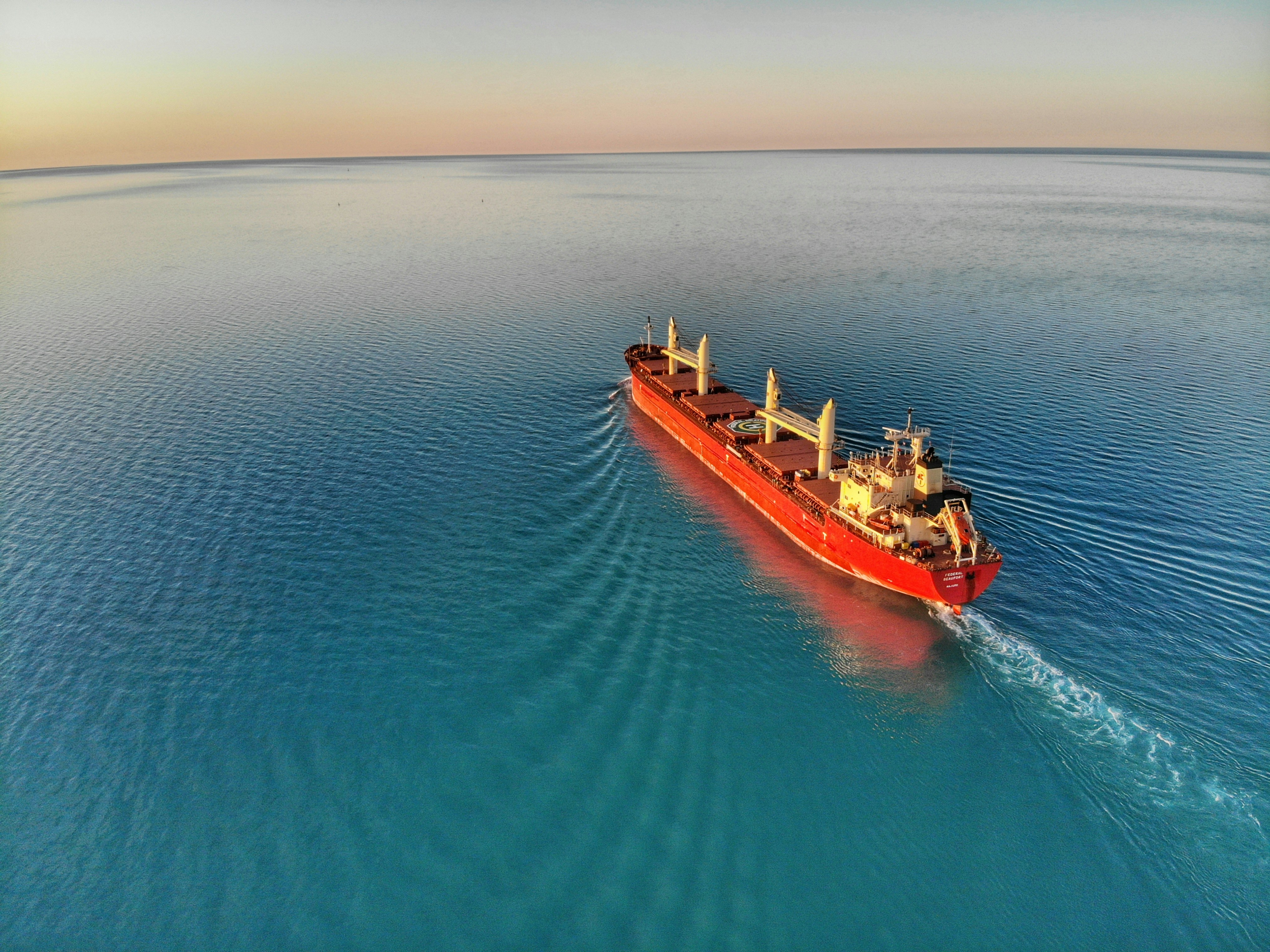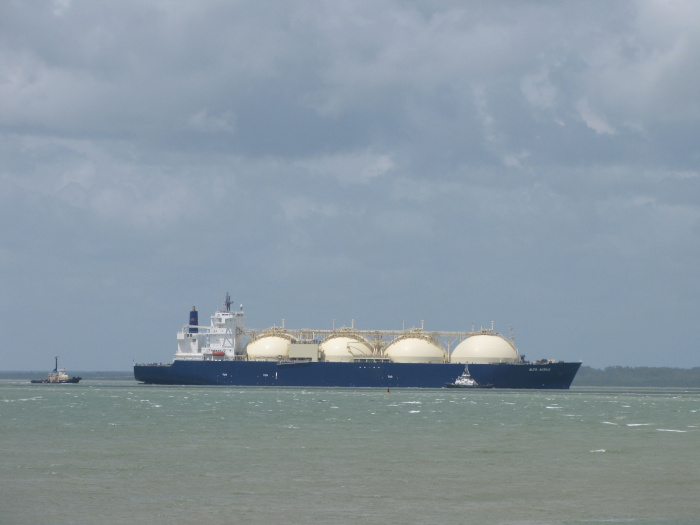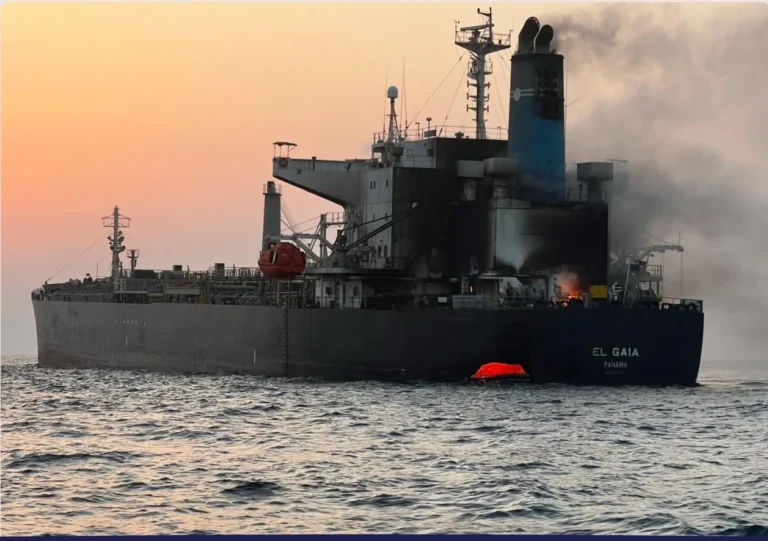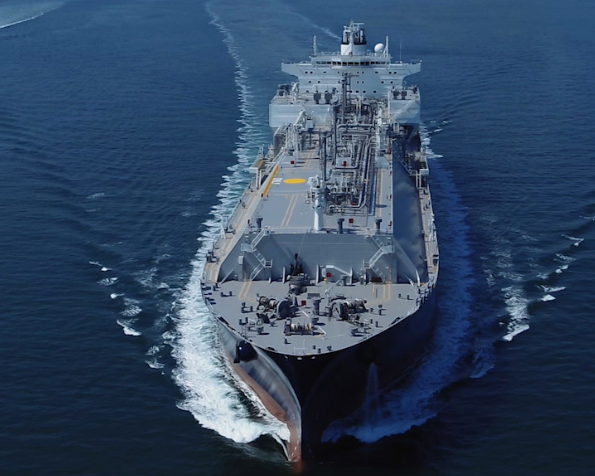
Gaslog Partners: A leading global provider of LNG shipping services. https://www.gaslogmlp.com/about-us/ Image Source: https://www.gaslogmlp.com/
Deepseek Binary response:
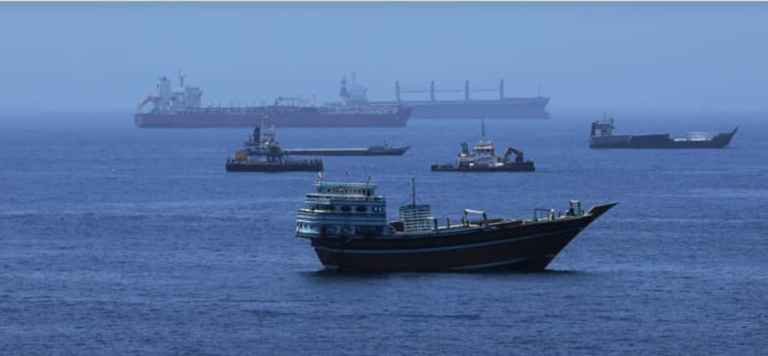
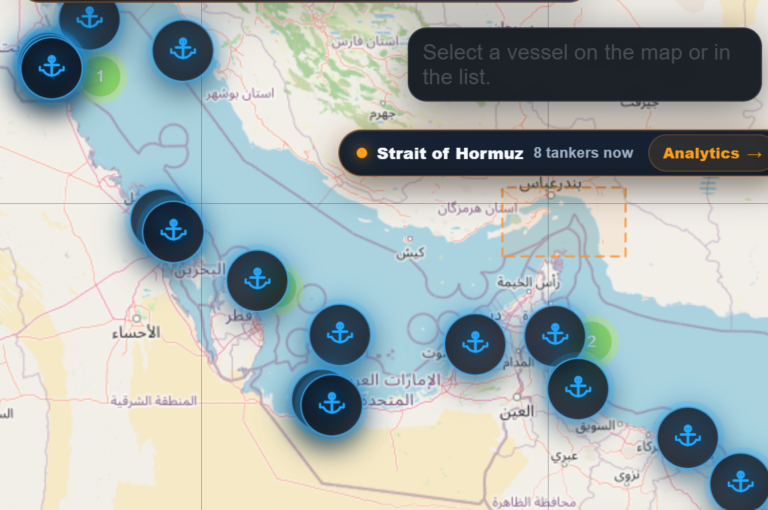
The current situation is still one of severe disruption. LNG traffic has resumed only in a trickle: roughly 2–4 LNG carriers per week versus a pre-war norm of about three LNG shipments per day. Overall Hormuz traffic remains far below pre-war levels, with UKMTO estimating it around 90% reduced and continued military constraints, blockade operations, and sporadic attacks. gCaptain’s latest relevant coverage describes “more LNG getting through,” not de facto unimpeded traffic.
For the question to resolve Yes, there would need to be a rapid shift within about three months: major de-escalation, lifting or easing of military restrictions, restored insurance and routing confidence, and then an explicit gCaptain report that LNG traffic is no longer halted or severely restricted. That is possible but unlikely on this timeline. Even if a ceasefire or diplomatic breakthrough occurred, mines, insurance caution, shipping schedules, and residual security risk would likely delay a true “unimpeded” characterization beyond end-2026.
I estimate roughly:
- 15–20% chance of major de-escalation/ceasefire by end-2026.
- Conditional on that, maybe 30–40% chance that LNG traffic becomes de facto unimpeded and gCaptain reports it in time.
- Small additional chance from gradual improvement without formal de-escalation.
That yields a low overall probability, but not negligible given the rapid diplomatic activity and strong commercial pressure to restore flows.
Data sufficiency: Sufficient
Probability: 10%
The extracted probability is: 10%
Gemini Binary response:
Rationale and Strategic Analysis
1. Baseline and Current Operational Environment
As of late September 2026, the Strait of Hormuz remains an active conflict zone under Operation Epic Fury, subject to both Iranian projectile/mine threats and an active U.S. naval blockade.
- Current Volume vs. Pre-War Baselines: Normal pre-war traffic was roughly 125 large commercial vessels per day, including approximately 3 LNG shipments daily (~21 per week). Current data indicates that commodity traffic is heavily depressed (moving average of ~15 vessels/day, UKMTO estimating overall traffic down ~90%), while LNG traffic is currently a trickle of roughly 2 to 4 vessel movements per week (~10–20% of pre-war volume).
- Security & Operational Constraints: The United States maintains ~20 naval vessels enforcing a blockade (redirecting over 100 commercial ships), and the southern corridor has recorded dozens of projectile strikes since July. Marine insurers, charterers, and shipowners continue to treat transits with extreme caution.
2. Resolution Threshold and Criteria
The question resolves Yes if, by December 31, 2026 (~98 days from today), gCaptain reports that Strait of Hormuz LNG traffic has become “de facto unimpeded” (defined as international maritime LNG traffic no longer halted or severely restricted).
- Recent gCaptain coverage (September 18, 2026) characterizes current transits as “more LNG getting through” against a backdrop of tight supply and severe disruption, rather than any normalization.
- For traffic to no longer be “severely restricted,” throughput would need to recover substantially (likely toward >70–80% of normal baseline), security risks (mines and projectile strikes) would need to drop precipitously, and traffic would have to move without reliance on ad-hoc or tightly rationed naval protection.
3. Key Scenarios to Resolution by End of 2026
Rapid De-escalation / Diplomatic Breakthrough (Probability: ~15%):
- High-level diplomacy at the UN or a ceasefire/safe-transit arrangement (similar to the Black Sea Grain Initiative) could open the corridor.
- Friction: Even if a political accord occurs in October or November, demining, insurance premium adjustments, and fleet repositioning take several weeks. If a deal is struck, there is roughly an even chance (~50%) that gCaptain reports LNG traffic as de facto unimpeded before December 31.
Escorted Corridor / De Facto Normalization Amid Hostilities (Probability: ~8%):
- U.S. naval demining and surveillance, combined with Qatari and international pressure ahead of the Northern Hemisphere winter, could establish a robust convoy corridor capable of handling 2+ LNG vessels per day.
- Friction: Maritime industry publications (including gCaptain) rarely describe military convoy operations through an active missile envelope as “de facto unimpeded.” Probability of gCaptain framing escorted traffic as unimpeded is modest (~30–35%).
Continued Conflict / Volatile Stagnation (Base Case: ~77%):
- Sporadic missile/drone attacks, naval standoff, and war risk insurance maintain severe restrictions on traffic through the remainder of the year.
Critical Assumptions and Failure Rates
- Assumption 1: Active hostilities or high-threat missile/mine risks will not fully terminate within the next 3 months.
Probability of failure (i.e., conflict unexpectedly halts rapidly): ~18%. - Assumption 2: Even if flows expand significantly, gCaptain will adhere to strict maritime definitions and not label convoyed or partial flows (~50% of normal) as “de facto unimpeded.”
Probability of failure (i.e., gCaptain prematurely reports traffic as unimpeded): ~15%. - Assumption 3: A single successful strike on a gas tanker would immediately freeze or set back LNG traffic for weeks.
Probability of failure (tankers transit despite casualties without disruption): ~10%.
5. Time-Horizon Calibration
- Likelihood by 1 month (October 24, 2026): ~3%
- Likelihood by 2 months (November 24, 2026): ~8%
- Likelihood by Resolution Date (December 31, 2026): ~14%
- Likelihood within 1 year (September 2027): ~45%
Factoring in the base rate penalty for low-probability rapid de-escalations during major maritime conflicts and accounting for the specific reporting requirement from gCaptain, the probability resolves around 14%.
Data sufficiency: Sufficient
Probability: 14%
=== Forecast Result ===
=== Reasoning ===
Looking at this forecast, I need to assess whether the Strait of Hormuz will transition from its current “severely restricted” state to “de facto unimpeded” LNG traffic within approximately 3 months (late Sept to Dec 31, 2026).
Key factors from current data:
- Active war context: The research indicates an ongoing US-Iran conflict (“Operation Epic Fury”) with active military operations, a US naval blockade (~20 vessels), and continued projectile strike incidents in the strait as recently as September 22, 2026.
- Severity of current restriction: Multiple authoritative sources (UKMTO, ISW, CRS) converge on traffic being 60-90% below pre-war levels:
- UKMTO: ~90% below pre-conflict levels
- ISW: transits at ~40% of pre-war levels on key routes
- Iran International: 17 vessels/weekend vs. ~125/day pre-war baseline
- LNG-specific metrics: Only 2-4 LNG carriers moving per week vs. pre-war rate of ~3/day — roughly 5-10% of normal LNG throughput, even at the “6-month high” cited by Moneycontrol.
- Trajectory: While there’s clear improvement from the war’s initial near-total halt, the trend is incremental (single-digit vessel counts, intermittent LNG tanker sightings) rather than approaching normalization.
- Analogous precedent: The Red Sea/Houthi shipping disruption (2023-present) shows that once security risk is introduced to a chokepoint, “severely restricted” status can persist for years, even without active daily combat — insurance, charterer risk-aversion, and naval enforcement create sticky disruption.
Critical assumptions and their failure risk:
- Assumption 1: War continues without near-term ceasefire (probability of rapid ceasefire in next 4-6 weeks: ~20%)
- Assumption 2: Even with ceasefire, shipping/insurance normalization takes months, not weeks (probability of rapid post-ceasefire normalization: ~30-35%)
- Assumption 3: gCaptain would need to explicitly characterize traffic as “unimpeded” — a high bar given current reporting language emphasizes “trickle,” “modest,” and comparisons to depressed baselines rather than pre-war norms.
Given the active war, ongoing enforcement/blockade posture, and the need for both military de-escalation AND commercial/insurance confidence rebuilding within just 3 months, full “de facto unimpeded” status by Dec 31, 2026 appears unlikely, though not negligible given diplomatic pressure and market incentives pushing toward normalization.
Data sufficiency: Sufficient
Probability: 10%
End
About The Author