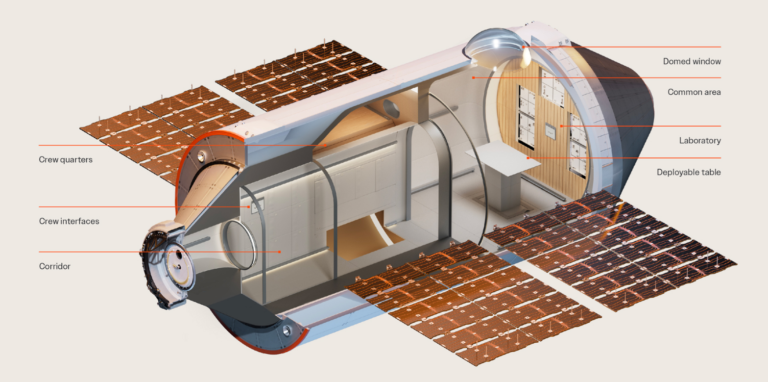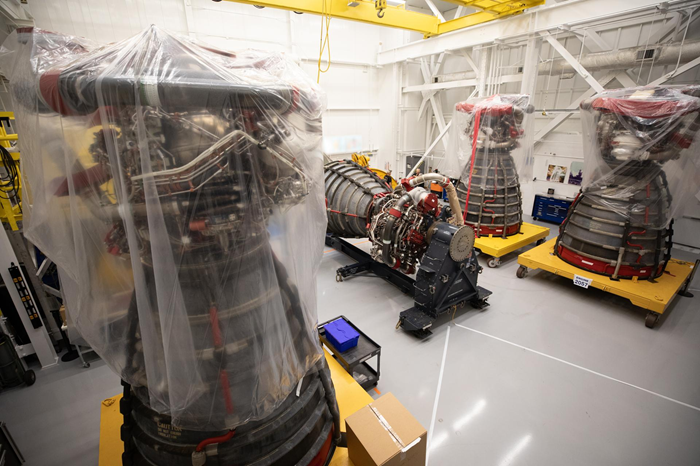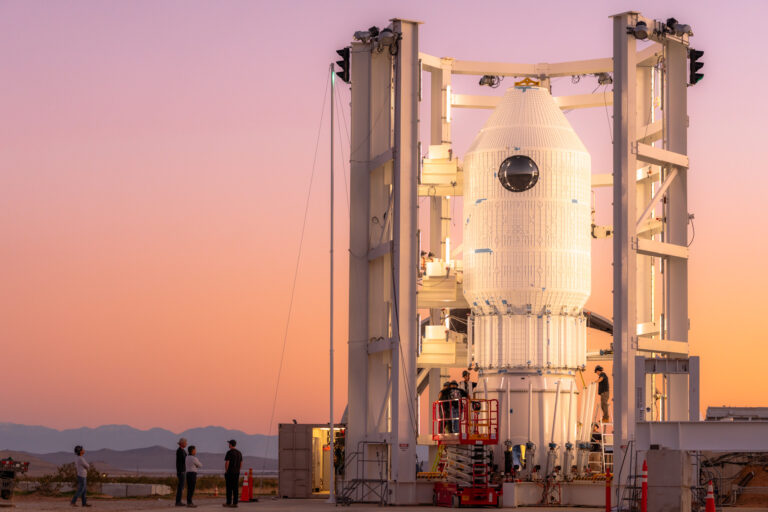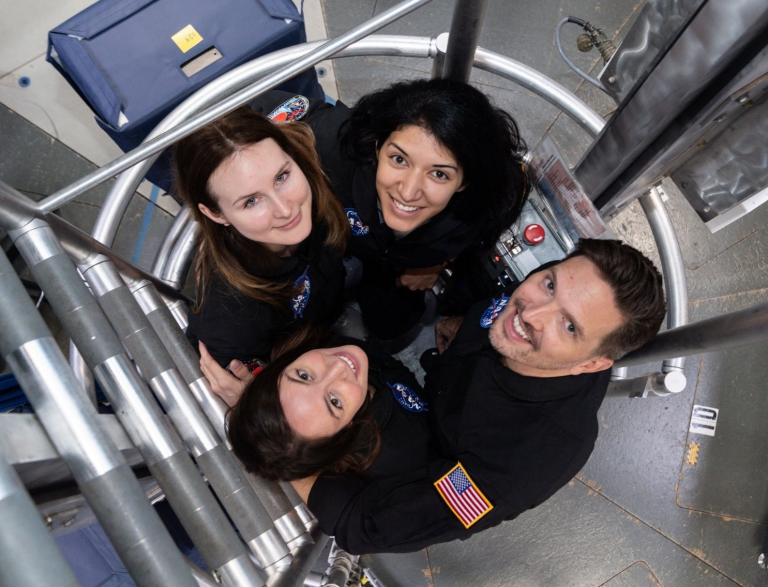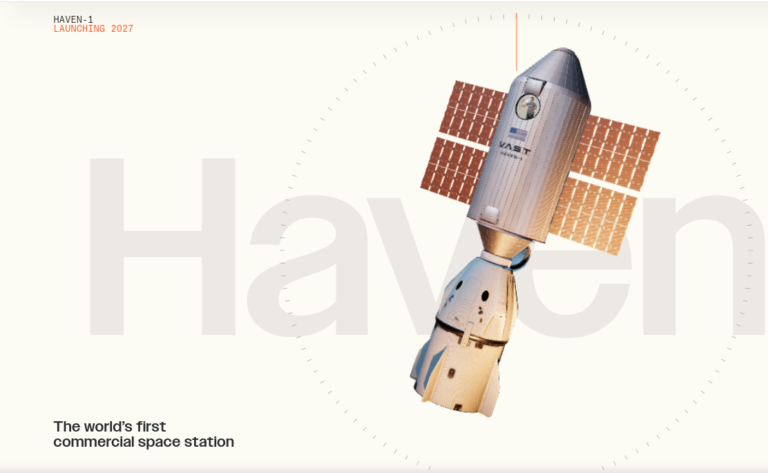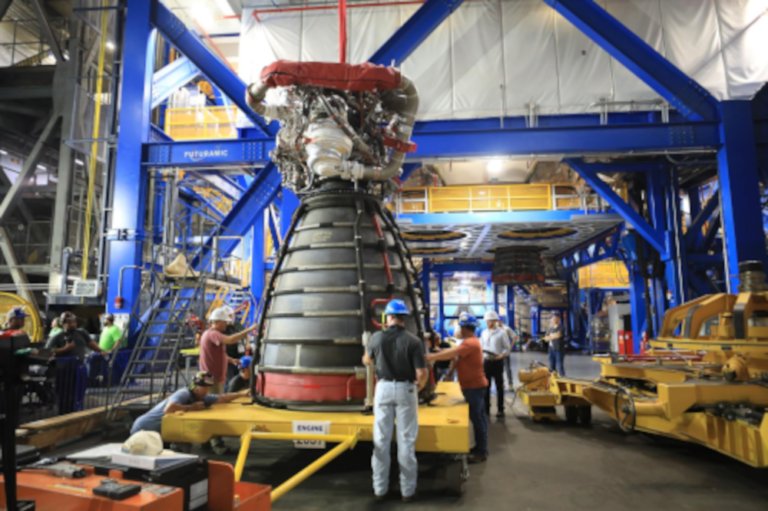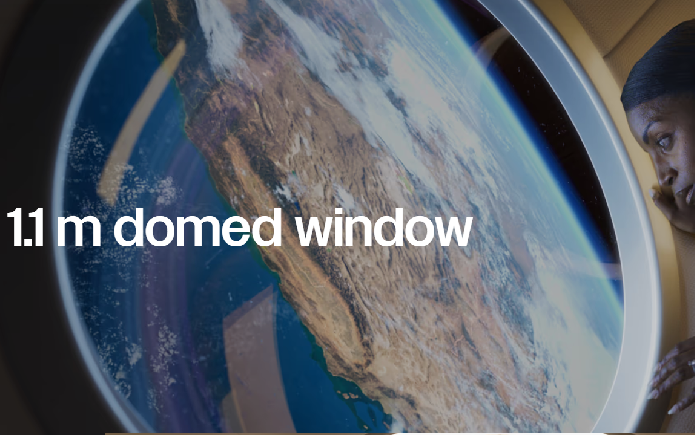
Haven-1, targeted to launch in 2027, is a state-of-the-art, human-centric space station, home to an innovation lab for both private astronauts and government missions. In one scene from Vast Space's website, a woman is looking out the large window of the Haven-1 space station, currently under construction. Source: https://www.vastspace.com/haven-1
Deepseek Binary response:
The resolution hinges on whether any new space habitat (excluding ISS and Tiangong) hosts a human visit by the end of 2027. The research sources from October 2026 emphasize that Starship is not close to human-rating for habitat use, and NASA-partnered commercial stations like Orbital Reef and Starlab are targeted closer to 2030–2031. The main near-term candidate is Vast’s Haven-1, a small private station planned to be visited by a Crew Dragon mission. However, as of late 2026, Haven-1 has not launched, and its original 2025 target has already slipped. The remaining window is roughly 15 months, and space hardware timelines are prone to further delays. Even if Haven-1 launches in 2027, the crewed visit could easily slip into 2028. Other candidates (Axiom, Starship-as-habitat, Orbital Reef, Starlab) are either excluded by the resolution criteria or highly unlikely within this timeframe. Base rates for first human visits to new stations are low, and the current schedule uncertainty points to a modest probability.
Data sufficiency: Sufficient
Probability: 25%
Anthropic Binary response:
Looking at this question, I need to assess the probability that any new space habitat (Haven-1, Orbital Reef, Starlab, or a Starship-based station) will have humans visit it before December 31, 2027.
Key considerations:
- Haven-1 (most likely candidate per background): Vast Space’s Haven-1 was originally targeted for a 2025-2026 launch with a crewed follow-up mission shortly after. However, the detailed research provided (which exhaustively covers NASA/SpaceX/Starliner issues) contains zero mentions of Haven-1 progress, launch dates, or crew mission updates as of October 2026. This absence is telling – if Haven-1 had launched or had firm near-term crewed mission dates, it would likely appear in space industry coverage. This suggests likely schedule slippage, consistent with the historical pattern of commercial space hardware delays.
- Orbital Reef and Starlab: Research explicitly ties these programs to the ISS retirement timeline (~2030-2031), as NASA’s commercial LEO destination strategy anticendedly targets that window for operational handoff, not 2027. These appear unlikely to have crewed visits before 2028.
- Starship as habitat: Despite reaching orbit for the first time (Sept 28, 2026), sources indicate NASA may require on the order of 100 successful flights before human-rating, and the near-term Artemis III LEO concept explicitly keeps crew inside Orion rather than entering Starship’s interior. This pathway looks very unlikely to resolve Yes by 2027.
- General base rate: Commercial space station/habitat projects have a strong historical pattern of significant schedule slips (Bigelow, Axiom free-flyer plans, etc.). With ~14 months remaining and no confirmed recent progress signals on the most promising candidate (Haven-1), the probability should be moderate-low rather than high.
Assumptions most likely to be wrong and impact the forecast:
- Assumption that Haven-1 has NOT already quietly progressed toward a near-term crewed launch (probability this is wrong: ~20%) — if wrong, probability should rise significantly.
- Assumption that no dark-horse candidate (e.g., a Chinese commercial module, or an unannounced Vast/Axiom acceleration) emerges (probability: ~10-15%).
- Assumption that funding/technical setbacks continue as the default trajectory for Haven-1 (if this assumption fails and Vast executes quickly, could resolve Yes).
Weighing these together, I estimate a moderate-low probability, acknowledging real uncertainty and the 14-month window providing some buffer, but tempered by the clear absence of corroborating recent progress signals and historical slip patterns in this industry.
Data sufficiency: Sufficient
Probability: 27%
=== Forecast Result ===
=== Reasoning ===
Looking at this question, I need to assess the probability that humans will visit any new space habitat (excluding ISS/Tiangong) before end of 2027.
Key candidates analysis:
- Haven-1 (Vast Space) – Flagged in the background as “most likely to be first.” Originally targeted for launch around 2025-2026, with crewed visits (Vast-1 mission) to follow using proven Dragon/Falcon 9 hardware (lower technical risk than novel vehicle certification). Notably, the extensive research provided contains NO specific updates on Haven-1’s progress, despite covering the space sector extensively as of October 2026. This absence is a meaningful negative signal—if major milestones (uncrewed launch, crewed docking) had occurred, I’d expect coverage. This suggests likely delays from original timeline.
- Orbital Reef / Starlab – Research clearly indicates these commercial stations are being paced to NASA’s ISS retirement timeline (~2030-2031), not an accelerated 2027 target. Low probability of crewed visits by 2027.
- Starship as habitat – Research is quite explicit that this is NOT a near-term path: first orbital flight only achieved Sept 2026, with NASA indicating ~100 successful flights may be needed for human-rating. Even the Artemis III concept keeps astronauts in Orion without entering Starship. This essentially rules out Starship-habitat visits by 2027.
Synthesis:
- Haven-1 has the most plausible path (existing launch vehicles, no new certification burden, strong funding), but lack of confirming progress reports by Oct 2026 suggests schedule slippage from original 2025/2026 targets. Still, 14+ months of runway remain before the Dec 2027 deadline.
- Other pathways (Orbital Reef, Starlab, Starship) appear explicitly structured around 2030+ timelines per research.
- Space hardware projects historically slip significantly; “first-to-fly” commercial stations have a mixed track record of hitting announced dates.
- Historical base rates for this forecasting context suggest calibrating toward lower-than-intuitive probabilities for the “ambitious schedule met” cases.
Key uncertain assumptions:
- Assumption: Haven-1 is the dominant path to “Yes” (if wrong, and another project surges, resolution could still occur, but this seems unlikely per research)
- Assumption: Haven-1’s silence in research indicates delay, not just lack of coverage (could be ~20% wrong—Vast Space could be quietly on track)
- Assumption: No other unexpected commercial/private habitat project emerges unexpectedly (low probability given 14-month window)
Weighing Haven-1’s moderate probability (~30-35%) as primary path, with small additive probability from other paths (~5-8% combined), while discounting for general overconfidence and historical slip patterns in this sector:
Data sufficiency: Sufficient
Probability: 30%
End
About The Author