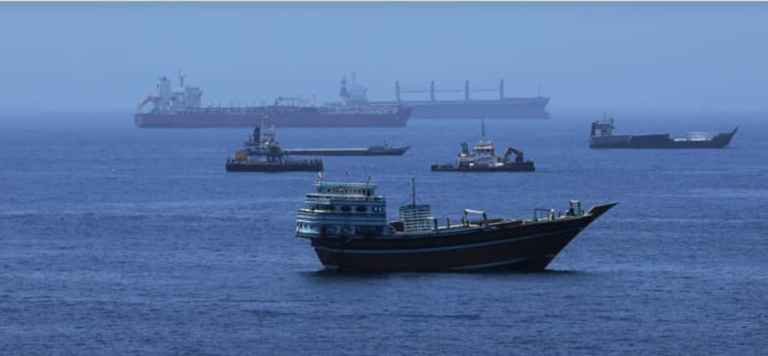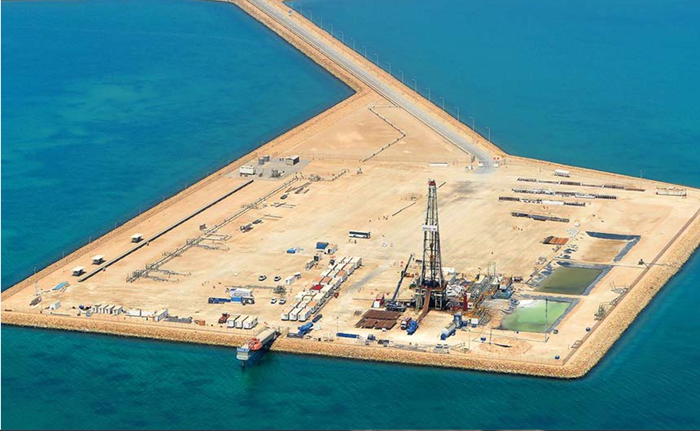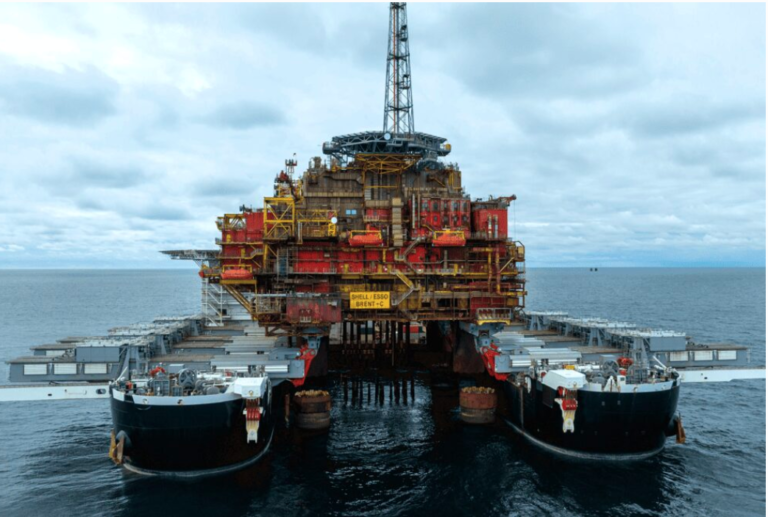
Photo: With a global footprint in more than 100 countries and employees representing almost twice as many nationalities, we work each day on decarbonizing industry, innovating in oil and gas, delivering digital at scale, and developing and scaling new energy systems that accelerate the energy transition. Source: https://www.slb.com/about/who-we-are
Deepseek Binary response:
Current Brent is around 97.75 USD/barrel. For the question to resolve Yes, Brent would need to trade below 50 USD/barrel at some point between now and 2026-12-31 — a roughly 49% decline in under three months. The 2026 low so far has been in the high-50s/low-60s, and all recent authoritative forecasts cluster well above 50 for the balance of 2026: EIA around 90, Reuters poll around 89, BMI around 93, and Trading Economics’ own Q4 forecast near 107.
Even bearish scenarios generally point to 60–80, not below 50. Given high volatility, a zero-drift statistical model implies a low single-digit percent chance of touching 50, but current fundamentals (supply disruptions, inventory draws, OPEC+ restraint) and positive expected drift reduce that further.
Historical base rates of Brent falling from above 90 to below 50 within one quarter are on the order of 1%. The main upside risks to this probability would be a sudden global demand collapse or a rapid full Middle East de-escalation combined with an OPEC+ supply flood, but even those would likely need additional shocks to push Brent under 50 before year-end.
Data sufficiency: Sufficient
Probability: 2%
Grok response:
Brent crude has not traded below $50 at any point in 2026 so far (lowest prints were in the high $50s to low $60s in early January). Current prices near $98 and consensus forecasts for the rest of the year remain far above that threshold amid ongoing Middle East supply constraints and drawn inventories.
Citations
Brent crude oil price information and 52-week range (Financial Times markets). Data as of October 6, 2026.
Front-month or benchmark Brent was quoted near $97.6, down about 2.7% on the day, with a 52-week range of roughly $58.72 (December 16, 2025) to $126.41 (April 30, 2026). Year-to-date performance was strongly positive (on the order of +45–50% versus a year earlier). Recent daily ranges have stayed in the mid-$90s to low $100s.
Brent oil – Price – Chart – Historical Data – News (Trading Economics). Published/updated October 6, 2026. Resolution source page.
Brent was quoted near $98 per barrel on October 6, 2026, down roughly 2% on the day, after recent sessions near or above $100. The page notes the all-time high of $147.50 (July 2008) and a long-term low of $2.23, with the displayed recent range well above $90. Trading Economics’ model projects about $106.60 by the end of Q4 2026 and $121 in 12 months.
Short-Term Energy Outlook (U.S. Energy Information Administration). Released September 9, 2026 (forecast completed September 3; next release October 6).
EIA forecasts Brent to average about $91 per barrel for full-year 2026 and around $90 in the second half, after averaging $91 in August. Global inventories are estimated down roughly 400 million barrels year-to-date, with further draws expected through year-end due to persistent Middle East export constraints. Prices are projected to ease only gradually to a $74 average in 2027 as production recovers.
Analysts raise 2026 oil forecasts on prolonged Gulf disruption: Reuters poll (Reuters). Published September 30, 2026.
A survey of 30 economists and analysts raised the 2026 Brent average forecast to $89.05 per barrel (from $85.08 the prior month), with individual forecasts ranging from $77.27 to $97.60. The upward revision reflects conviction that full restoration of Strait of Hormuz flows is unlikely in the near term and that inventories will absorb much of the shortfall. HSBC and others described Hormuz as structurally impaired with only gradual recovery.
BMI Raises Brent Crude Forecast To US$93 For 2026 And US$81 For 2027 (Business Today / BMI). Published October 5, 2026.
BMI lifted its 2026 average Brent forecast to $93 (from $83) and sees $107 in Q4 2026 and $112 in Q1 2027. The revision assumes a preliminary agreement reopening the Strait of Hormuz only in Q1 2027 rather than earlier. After that, BMI expects a sharp decline toward the $60s–$70s later in 2027 as Gulf output recovers and supply growth outpaces demand.
OPEC+ agrees to keep November oil output targets steady (Reuters). Published October 4, 2026.
Seven core OPEC+ members (Saudi Arabia, Russia, Iraq, Kuwait, Algeria, Kazakhstan, Oman) agreed on October 4 to hold November production targets unchanged. Actual output remains well below pre-conflict levels because of Middle East disruptions; the group still has roughly 2 million b/d of cuts in place. The next meeting is scheduled for November 1.
Oil holds decline on signs of increased Middle East shipments (Bloomberg via The Edge / Moneyweb and related reports). Published October 6, 2026.
Brent traded near $100 after losing about 2% the prior session as Persian Gulf crude exports rose and Saudi Aramco cut official selling prices for Asian buyers. Kuwait output was reported around 75% of pre-war levels and some shipping data showed crude flows through Hormuz approaching pre-war volumes on certain days, though refined-product flows remain constrained. Escalating Yemen-related risks limited the downside.
Energy markets under chokepoint stress: The 2026 Hormuz shock (CEPR / VoxEU). Published October 6, 2026.
The Strait of Hormuz normally carries roughly one-quarter of global seaborne oil trade. The 2026 disruption created a large net shortfall even after offsets from inventories, demand destruction, alternative routes, and emergency stock releases. Prompt prices and product crack spreads rose sharply; partial recovery in flows has not fully restored pre-conflict availability.
Oil Market Report highlights and related IEA commentary (International Energy Agency, June and August 2026 reports referenced in secondary coverage). Dates June–August 2026, with updates into September.
IEA forecasts global oil demand to decline by roughly 1.1–1.6 million b/d in 2026 because of elevated prices and supply-chain disruptions, before rebounding in 2027. Supply is also projected lower in 2026 (on the order of 4 mb/d) before a large rebound in 2027. Dated Brent fell sharply in May–June from April peaks above $120 toward the low $80s as flows partially recovered, then firmed again.
Historical Brent futures data (early 2026 lows) (LiveCharts / ICE-linked daily series and corroborating spot references). Data through early 2026, accessed October 2026.
ICE Brent futures lows in early January 2026 were around $59.75–$60 (for example, a January 5 low near $59.75 and settlements near $60–$62). Monthly averages started the year in the mid-$60s before the late-February conflict drove prices sharply higher. The prior 52-week low near $58.72 occurred on December 16, 2025, outside the 2026 window.
=== Forecast Result ===
=== Reasoning ===
Looking at this question, I need to assess the probability that Brent Crude will trade below $50/barrel at any point between now (Oct 6, 2026) and Dec 31, 2026 — a window of less than 3 months.
Current state of the market:
- Brent is currently trading at approximately $97.75-$98 per barrel (per Trading Economics, the resolution source)
- This represents a ~2.5% daily decline amid recovering Middle East supply flows, but prices remain firmly in high-$90s to low-$100s range
- The 2026 YTD low was approximately $59-60 (early January, pre-Hormuz crisis), and the 12-month low was $58.72 (Dec 2025)
- No point in 2026 has come remotely close to $50
Forward-looking context:
- Multiple independent forecasts converge well above $50 for the remainder of 2026: EIA ($90 full-year avg, ~$90 for 2H26), Reuters analyst poll ($89 avg, range $77-$98), BMI ($93 avg, Q4 $107), Trading Economics model (Q4 forecast $106.60)
- The dominant market driver is the Strait of Hormuz disruption (since Feb 2026), which has kept a structural floor under prices even as exports partially recover toward pre-war levels
- OPEC+ just held production cuts steady for November, maintaining supply discipline
- Even optimistic “recovery” scenarios discussed by analysts point to $60-80 range later in 2026/2027, not sub-$50
Magnitude of move required:
For Brent to fall below $50, it would need to decline roughly 49% from current levels within less than 3 months. Historical precedent shows such rapid, large drawdowns are rare and typically require extraordinary catalysts (e.g., 2020 COVID demand collapse, 2014-2016 supply glut unwound over many months). Given current supply constraints are easing gradually rather than collapsing, and demand shows no signs of a sudden collapse, this magnitude of move in the remaining timeframe is a significant tail event.
Key assumptions that could fail:
- Sudden full Hormuz resolution + simultaneous demand shock (recession) — low probability (~3-5%) in 3 months
- OPEC+ abruptly abandoning cuts and flooding market — inconsistent with Nov decision already made
- Analyst/EIA consensus being systematically wrong by 50%+ — historically rare over such short horizons
Given the convergence of forecasts, current price level, limited time remaining, and the structural supply tightness still present (despite recent easing), a sub-$50 print by year-end is highly unlikely but not impossible given oil’s historical volatility potential.
Data sufficiency: Sufficient
Probability: 3%
End
About The Author