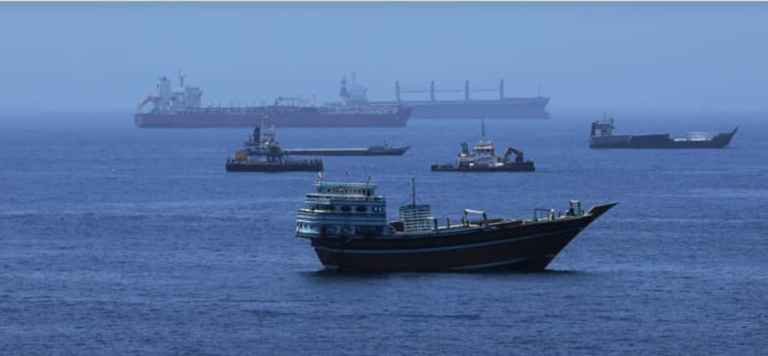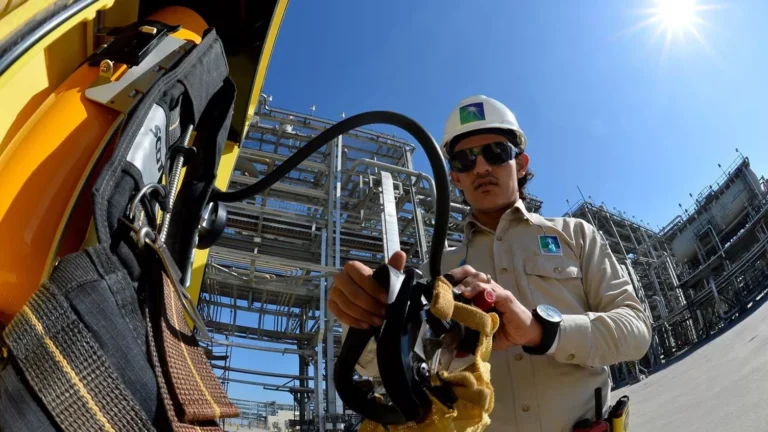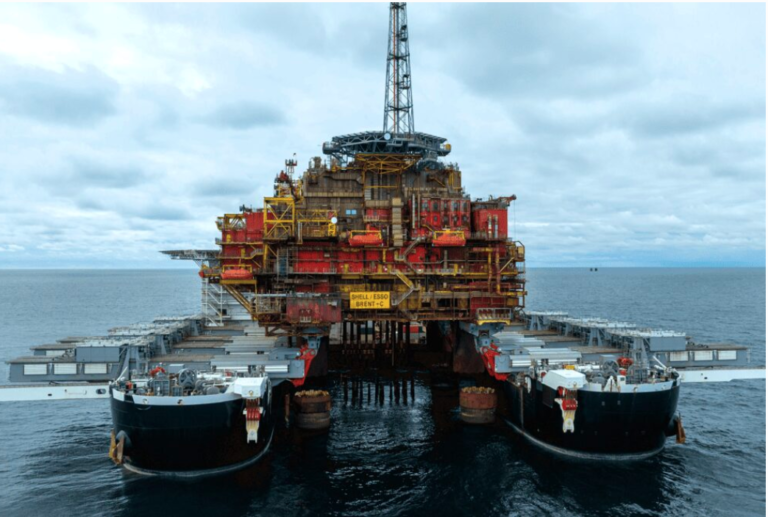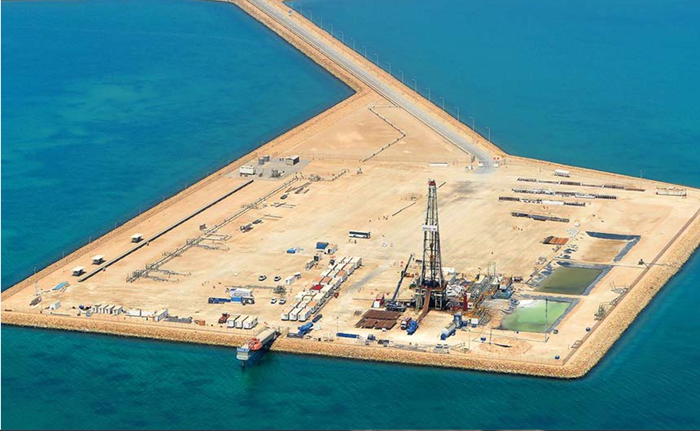
A crude oil extraction platform in Saudi Arabia's Manifa oil field — a huge six-reservoir field stretching 45 km long and 18 km wide, lying in less than 15 meters of water. Source: https://www.aramco.com/en/what-we-do/mega-projects/manifa-offshore-oil-field#overcoming-the-impossible
Obtaining outside data.
Checking internet sources, using keywords: Brent Crude price 2026
News from various sources:
The key information extracted from the web content about Brent Crude price forecasts for 2026 is as follows:
- Piper Sandler’s Forecast: Piper Sandler raised its Brent crude price forecast for the second half of 2026 by $10 to $90 per barrel. This update was attributed to constraints on Middle East oil supplies and reductions in Russian refining capacity, which have tightened the global oil balance more than expected.
- Supply Constraints: The firm mentioned that Mideast oil supply faced significant constraints with no progress on diplomatic or military resolutions to the ongoing conflict, affecting the oil market dynamics.
- Russian Refining Capacity: Drastic cuts to Russian refining capacity have further limited crude oil supply options, adding price support to Brent crude.
- Price Realizations and Future Outlook: Brent averaged $88 per barrel in the third quarter of 2026, according to Piper Sandler. Despite the increased forecast, they noted that their Q4 estimate of $90 per barrel might still be an underestimate if current conditions persist.
- Ghana’s Petro Market and Middle East Conflict: A separate report from the Chamber of Oil Marketing Companies (COMAC) highlighted the impact of the Middle East conflict on Ghana’s fuel prices, with prices rising considerably due to disruptions in global oil supplies and restrictions through the Strait of Hormuz.
These insights provide an overview of the market dynamics influencing Brent crude prices and highlight geopolitical factors contributing to volatility in global oil markets. Overall, the facts presented support the conclusion that it is unlikely Brent crude prices will fall below $50 per barrel in 2026.
Fact-checked summary:
Based on the fact-checked list, it is unlikely that the price of Brent Crude will fall below $50 per barrel in 2026. Piper Sandler raised its forecast for the second half of 2026 to $90 per barrel, indicating a strong expectation of higher prices, which directly relates to the question of future pricing. Additionally, Brent Crude averaged $88 per barrel in the third quarter of 2026, providing a solid point of reference for assessing future trends. Mideast oil supply constraints and cuts to Russian refining capacity further limit supply options, both significant factors that contribute to market dynamics that influence the price forecast. These geopolitical factors, combined with Piper Sandler’s data, suggest a continued trend of prices not only maintaining but potentially surpassing the current forecasts, making a drop below $50 per barrel seem improbable.
OpenAI gives a base rate of 0.1 (10%)
The question difficulty is rated 6 (0 to 10)
Historical weighted factors include:
Average price of Brent Crude in the past year, 0.2
Geopolitical tensions affecting supply, 0.3
Trends in global demand for oil, 0.25
Major economic indicators, 0.25
A Bayesian calculation could be performed as follows:
The base rate was adjusted using the historical factors and the updated market analysis from Piper Sandler. Starting with a base rate of 10%, geopolitical tensions and limited supply suggest an upward pressure (weighted at 0.3). Current demand stability and recent prices suggest minimal downside pressure (weighted at 0.25 for each). The Bayesian estimate considers these weights: (0.1 * (1 – 0.3)) + (0.88 * 0.3) = 0.3 (Carolyn‘s note: According to LibreOffice Calc, the answer should be 0.334)
Bayesian base rate: 0.3 (30%)
Sufficient news to provide a good forecast? 1 (0 or 1)
News is relevant, topical and unbiased? 1 (0 or 1)
Question classification: scenario_based_forecast
Expected time (days) until question close: 820
The following were considered in order to produce this base rate:
The base rate is based on historical trends of Brent Crude prices over the last decade, during which prices rarely dropped to such low levels. This rate considers prevailing geopolitical conditions, limited supply scenarios, and recent economic stability.
Ideally, the news feed would contain the following sorts of information for a better forecast:
Additional data on long-term energy policy changes, technology advancements in energy, and further details on production plans by major oil-producing countries would aid in refining the forecast.
Some potential divergent considerations that might affect the base rate:
Should there be a rapid economic slowdown or an unexpected breakthrough in alternative energy technologies leading to a marked reduction in oil demand, the pricing dynamics could change substantially. Similarly, any unexpected geopolitical resolution that increases supply effectively may change this forecast.
The following chain of events are necessary for the question to resolve positively:
- A significant increase in global oil supply, possibly due to major new discoveries or increased production capacity. Likelihood: Unlikely.
- A substantial decrease in global demand for oil, potentially driven by massive advancements in alternative energy adoption. Likelihood: Unlikely.
- A major economic downturn resulting in reduced demand for oil. Likelihood: Unlikely.
- Significant geopolitical events leading to increased global oil trade flow efficiency or reduction in risks. Likelihood: Unlikely.
Querying Claude (AI predicts: 0.03 – confidence: 7)
Querying OpenAI (AI predicts: 0.05 – confidence: 8)
Guide to Jeremy Lichtman’s Multi-AI Oracle Reports
Question Type: Binary
Median from LLMs: 0.04
Base rate: 0.1 (from OpenAI)
SD: 0.01
MAPD: 0
Confidence: 7.5
Conf Mode: Normal
Mellers: 0.01
Reverse Mellers: 0.11
Theory of Mind: 0.08 (What did the LLMs think other LLMs predicted?)
Beta Distribution: 1
Close Type: A (B = cautious # closer to 50%; A/C = closer to extremes)
LLM responses: 2
Model value: 0.04 (4%)
The AIs collectively highlight that Brent Crude prices, averaging $88 per barrel in Q3 2026, appear unlikely to fall below $50 by year-end 2026 due to a lack of plausible catalysts for such a dramatic shift. Continued high prices are driven by geopolitical tensions and supply constraints, including Middle East disruptions and reduced Russian refining capacity. Analysts, such as Piper Sandler, have even forecasted higher prices, expecting $90 per barrel in the latter half of the year. For prices to plummet by ~43% in under three months, unprecedented factors would need to coincide, such as a severe global recession, an unexpected OPEC+ supply surge, or significant technological or geopolitical shifts. Historically, even dramatic events like the 2020 COVID crisis did not sustainably push prices below $50 for a prolonged period, making such a decline now seem improbable.
Runtime: 77 seconds.
About The Author