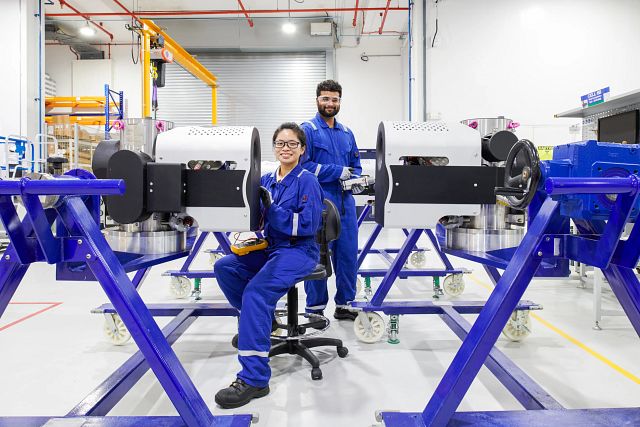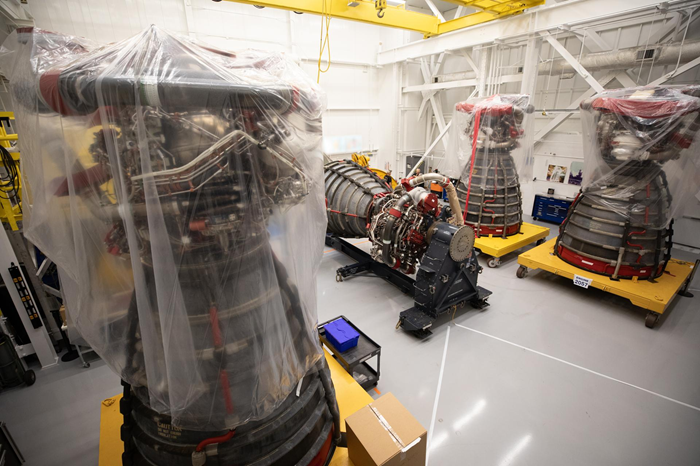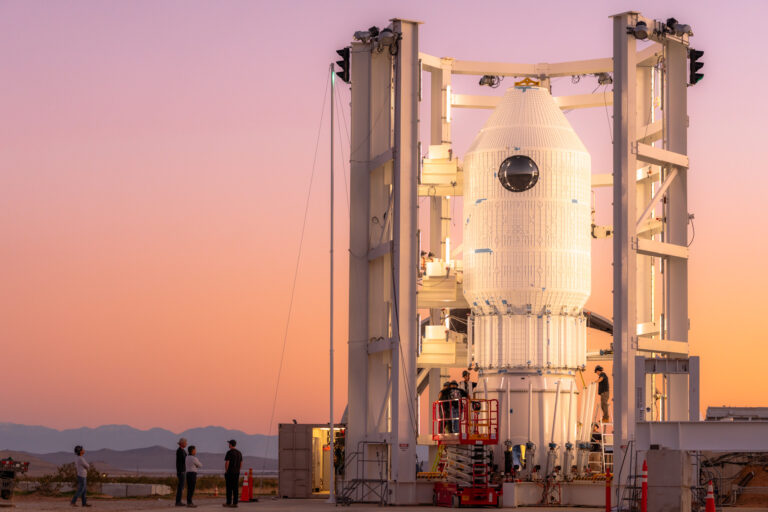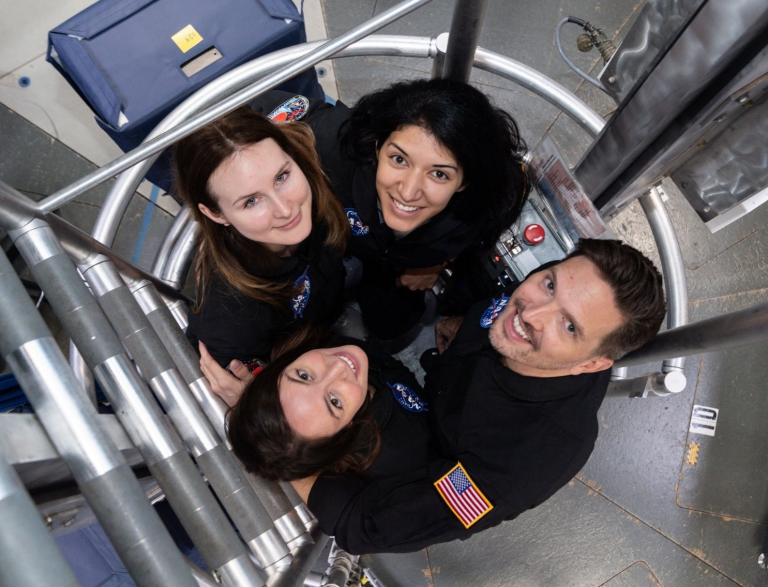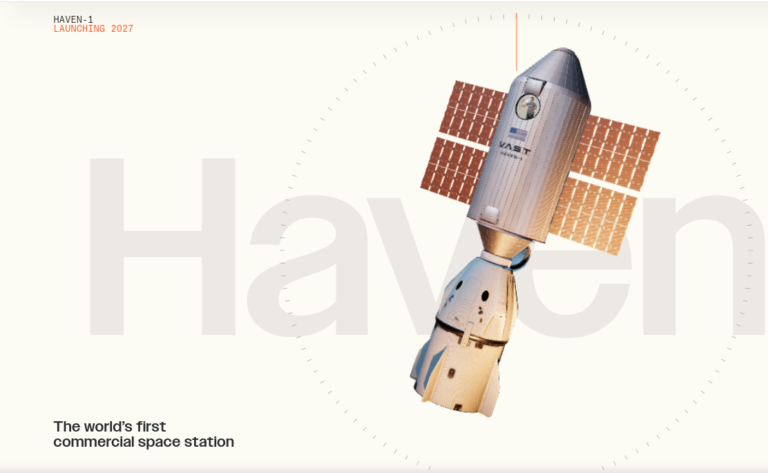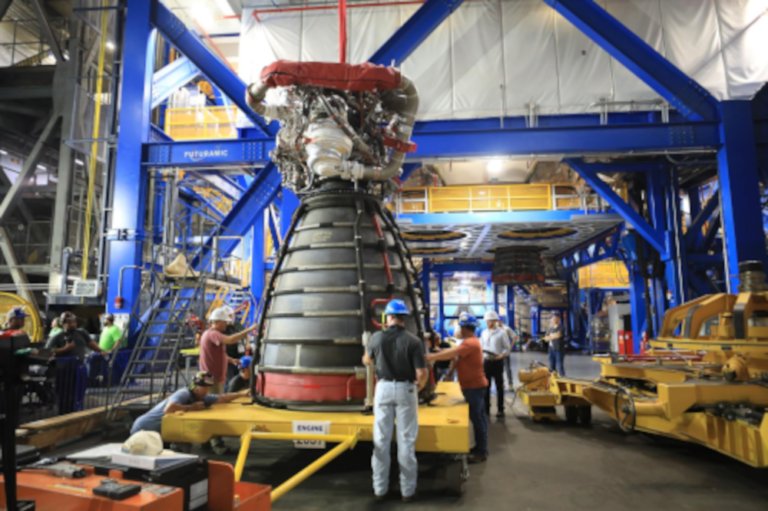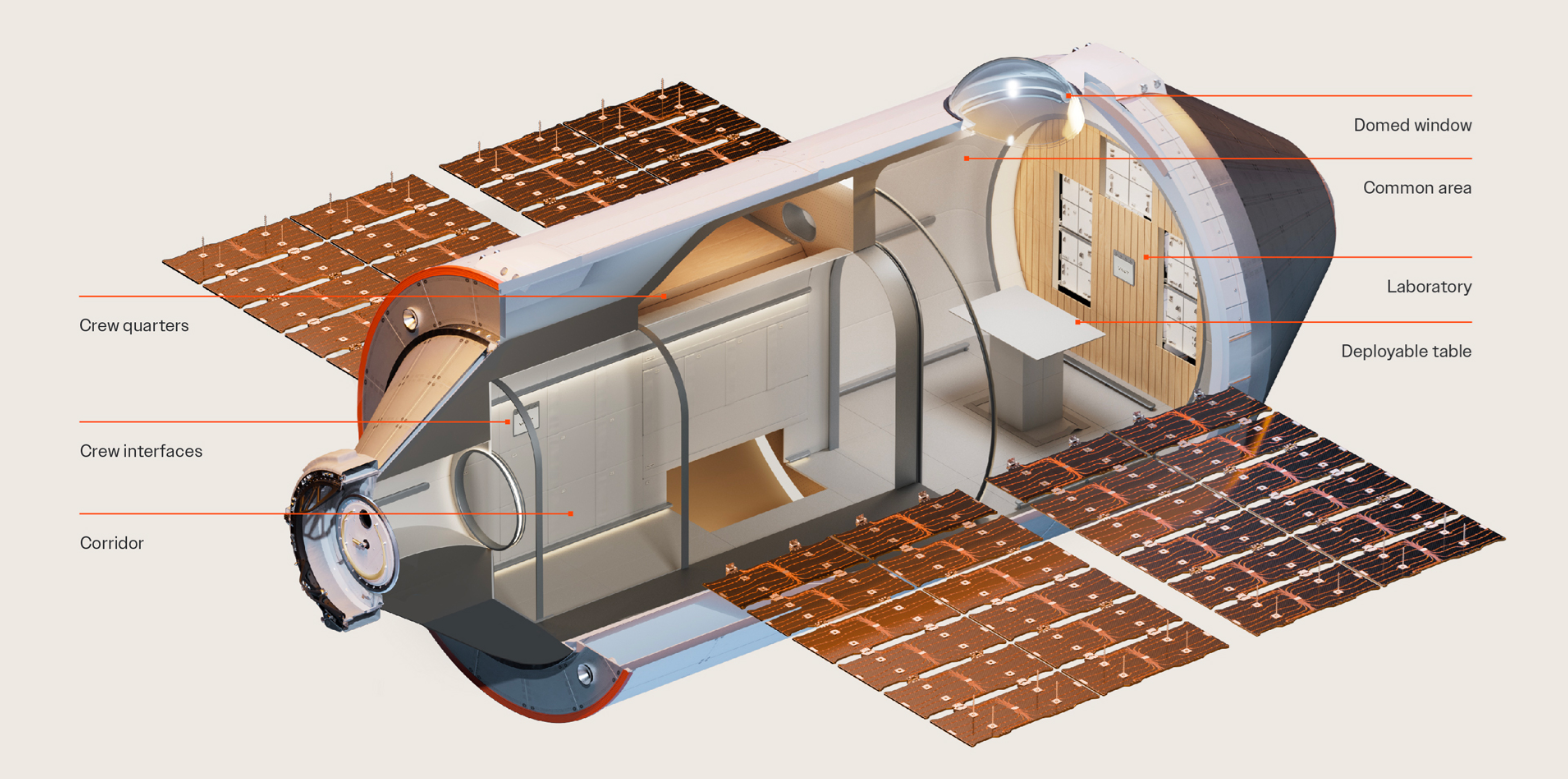
Vast, the US-based space habitation technology company, reveals here the interior design features of Haven-1, likely to become the world’s first commercial space station. Source: https://www.vastspace.com/updates/vast-unveils-its-final-haven-1-space-station-design
Deepseek Binary response:
The only plausible candidate for a human visit to a new space habitat before the end of 2027 is Vast’s Haven‑1. Orbital Reef, Starlab, Axiom’s free-flying station, and NASA’s Starship-as-station concept are all on timelines that do not credibly support crewed visits by then.
Haven‑1 is currently targeting a Falcon 9 launch in Q1 2027, with hardware in final integration. The first crewed mission, Vast‑1, is listed for roughly mid‑2027 on Crew Dragon. If the station launches as planned, there is a strong chance crew will visit before the end of 2027, though the required uncrewed Dragon docking verification and SpaceX safety approval introduce non-trivial delays.
Key risks:
- The launch has already slipped multiple times (from 2025 to 2026 to Q1 2027).
- Environmental testing at NASA’s Armstrong facility was still pending as of late September 2026.
- Post-launch verification could take anywhere from weeks to much longer, potentially pushing crew arrival into 2028.
- Any major technical issue or launch failure would eliminate the possibility.
Probabilistic assessment:
- Launch by end Q1 2027: ~25%
- Launch in Q2 2027: ~30%
- Launch in Q3 2027: ~20%
- Launch in Q4 2027 or later: ~25%
- Conditional probability of a crewed visit by end 2027 given launch quarter: Q1 ~85%, Q2 ~65%, Q3 ~30%, Q4 ~5%.
Weighted sum: (0.25 × 0.85) + (0.30 × 0.65) + (0.20 × 0.30) + (0.15 × 0.05) ≈ 47.5%. Adjusting slightly downward for general schedule risk and overconfidence gives roughly 45%.
Data sufficiency: Sufficient
Probability: 45%
Grok response:
1. Vast Maintains Early 2027 Haven-1 Launch | Aviation Week
Published: September 18, 2026
Vast CEO Max Haot reaffirmed that Haven-1 remains on pace for a first-quarter 2027 launch after the earlier schedule reset. The demonstration station is still targeted for early the following year. The comments came on the sidelines of a major space industry event while hardware integration continued.
2. Vast Establishes Lunar Programs Division, Applying Haven Flight Heritage… (Vast press release)
Published: September 23, 2026
Haven-1 is described as targeted to be the world’s first commercial space station, with launch anticipated in 2027. The flight structure is in final integration in the clean room at Vast’s Long Beach headquarters. The company is leveraging Haven-1 systems and experience for proposed lunar infrastructure.
3. Haven-1 – Wikipedia
Updated: September 29, 2026
Haven-1 is listed as NET Q1 2027 on a Falcon 9, with the first crewed mission (Vast-1) planned to send four astronauts on Crew Dragon for roughly 10–30 days. CEO Max Haot has stated that verification events, including an uncrewed Dragon docking, must precede the crewed flight and could take anywhere from two weeks to three years. The station has a planned ~3-year orbital life supporting a limited number of short crew visits and relies in part on the docked Dragon for life support.
4. The first commercial space station, Haven-1, is now undergoing assembly for launch – Ars Technica
Published: January 20, 2026
Vast slipped the public target from mid-2026 to Q1 2027 as clean-room integration began. Haot said on-orbit checkouts could be completed in as little as two weeks, after which SpaceX must agree the station is safe for Dragon docking before a crew is launched; crew arrival could follow as early as two weeks after that approval. He emphasized a strong incentive to send crew as soon as it can be done safely within the station’s three-year life, and noted training timelines could potentially be compressed.
5. Vast’s Haven-1 continues to advance through milestones ahead of planned 2027 launch – NASASpaceFlight.com
Published: July 4, 2026
The station was reported on track for a Q1 2027 Falcon 9 launch after thermal-control integration, thruster vacuum testing, and other hardware milestones. The inaugural four-person crew is expected to arrive on the Vast-1 Crew Dragon mission. ESA reserve astronaut Arnaud Prost had already been named as a flight engineer for that mission, with additional crew discussions underway.
6. Starlab (space station) – Wikipedia
Updated: September 29, 2026
Starlab is planned for launch no earlier than 2029 as a single integrated station on SpaceX Starship. It completed its NASA Commercial Critical Design Review in February 2026 and is intended to provide continuous crew capability before ISS retirement around 2030. Pressurized volume is substantially larger than Haven-1, but the schedule does not support operations in 2027.
7. Starlab Completes NASA Commercial Critical Design Review | Voyager Technologies
Published: February 23, 2026
Completion of the CCDR confirmed technical maturity of the architecture, safety approach, and performance requirements and cleared the program to move fully into fabrication, testing, and assembly. Leadership stated the timeline aligns with ISS transition needs. The joint venture (Voyager-led with Airbus, Mitsubishi, MDA Space, and others) continues under a NASA Space Act Agreement.
8. NASA eyeing SpaceX’s Starship as possible space station – Space.com
Published: July 27, 2023
NASA and SpaceX signed an unfunded Space Act Agreement under the Collaborations for Commercial Space Capabilities-2 initiative to study an integrated LEO architecture that includes Starship as a potential transportation and in-space destination element. The agreement provided technical consultation rather than funded development or a commitment to operate a station. It was one of several company selections at the time.
9. NASA has a Dragon dilemma, and there appear to be no good answers – Ars Technica
Published: September 29, 2026
SpaceX has told NASA and commercial-station developers that it intends to sunset Crew Dragon and Falcon around or before 2030 and is not interested in developing Starship for human launches into Earth orbit at this time. Agency and industry attention on Starship human-rating is prioritized toward the lunar Human Landing System rather than LEO habitation. This constrains near-term crew-transport options for any future stations.
10. Blue Origin continues rebuilding LC-36… (Orbital Reef status note) – NASASpaceFlight.com
Published: July 31, 2026
Orbital Reef (Blue Origin with Sierra Space) has carried a 2027 launch target, but that date depends on funding and milestones still ahead. Progress has been quieter relative to other Blue Origin priorities (New Glenn recovery after a pad incident and Blue Moon landers). The station is designed eventually to support ten or more crew; an ESA memorandum of understanding exists for potential collaboration.
Extracted resolution criteria links:
[‘https://www.space.com/nasa-considering-spacex-starship-space-station‘, ‘https://www.blueorigin.com/destinations,’, ‘https://voyagertechnologies.com/starlab/,’]
=== Forecast Result ===
=== Reasoning ===
The only plausible candidate for a human visit to a new space habitat before the end of 2027 is Vast’s Haven‑1. Orbital Reef, Starlab, Axiom’s free-flying station, and NASA’s Starship-as-station concept are all on timelines that do not credibly support crewed visits by then.
Haven‑1 is currently targeting a Falcon 9 launch in Q1 2027, with hardware in final integration. The first crewed mission, Vast‑1, is listed for roughly mid‑2027 on Crew Dragon. If the station launches as planned, there is a strong chance crew will visit before the end of 2027, though the required uncrewed Dragon docking verification and SpaceX safety approval introduce non-trivial delays.
Key risks:
- The launch has already slipped multiple times (from 2025 to 2026 to Q1 2027).
- Environmental testing at NASA’s Armstrong facility was still pending as of late September 2026.
- Post-launch verification could take anywhere from weeks to much longer, potentially pushing crew arrival into 2028.
- Any major technical issue or launch failure would eliminate the possibility.
Probabilistic assessment:
- Launch by end Q1 2027: ~25%
- Launch in Q2 2027: ~30%
- Launch in Q3 2027: ~20%
- Launch in Q4 2027 or later: ~25%
- Conditional probability of a crewed visit by end 2027 given launch quarter: Q1 ~85%, Q2 ~65%, Q3 ~30%, Q4 ~5%.
Weighted sum: (0.25 × 0.85) + (0.30 × 0.65) + (0.20 × 0.30) + (0.15 × 0.05) ≈ 47.5%. Adjusting slightly downward for general schedule risk and overconfidence gives roughly 45%.
Data sufficiency: Sufficient
Probability: 45%
End
About The Author