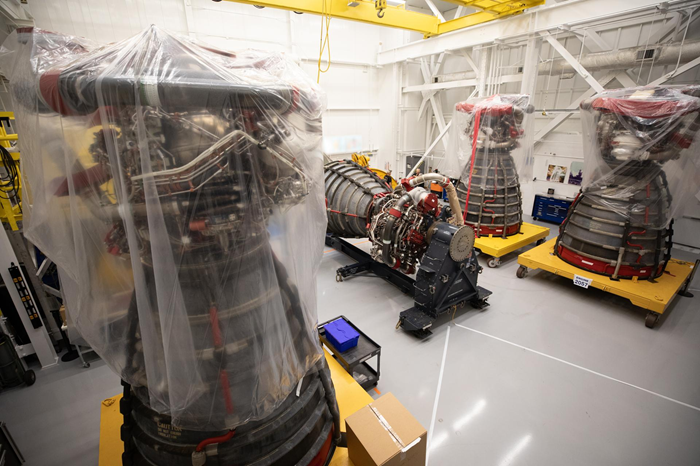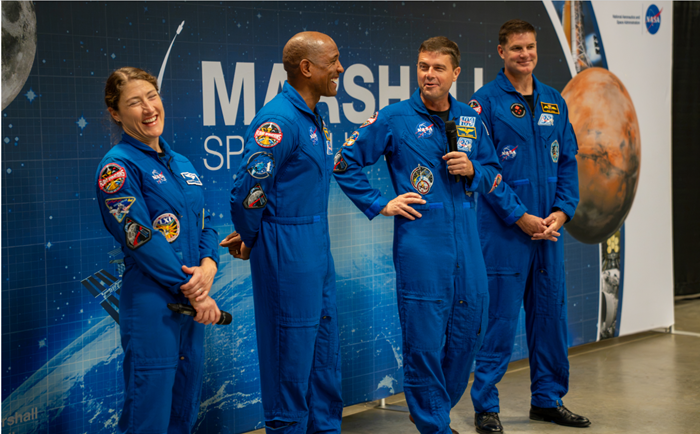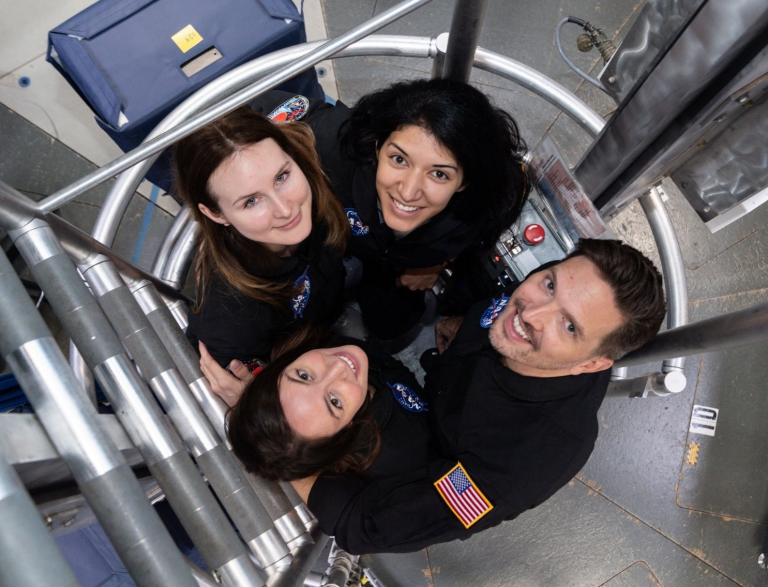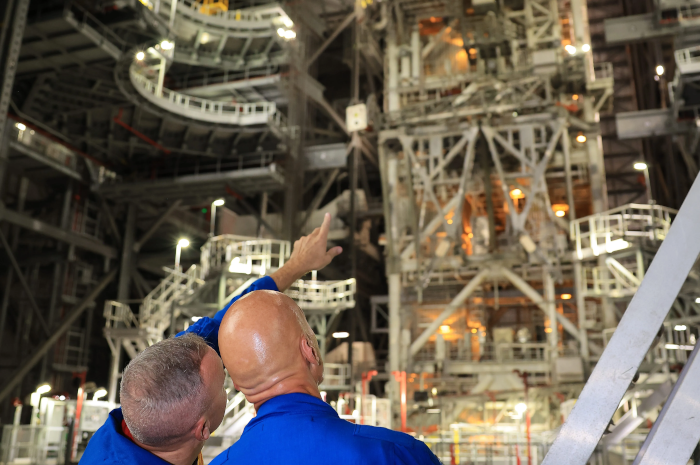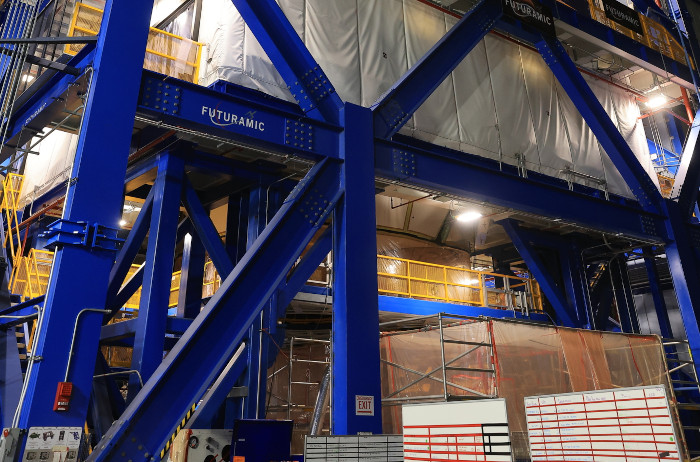
The Artemis III core stage sits in High Bay 2 in the Vehicle Assembly Building at NASA Kennedy with the core stage tank attached to its engine section on May 12, 2026. Credit: NASA/Kim Shiflett. Source: https://www.nasa.gov/missions/artemis/artemis-3/nasa-outlines-preliminary-artemis-iii-mission-plans/
Obtaining outside data.
Checking internet sources, using keywords: Artemis III orbital demonstration 2027
News from various sources:
The content from the web has provided detailed information on the upcoming Artemis III mission, planned by NASA for 2027. Key points from the content include:
- Mission Overview: Artemis III is designed as a significant rehearsal for future crewed lunar missions and is slated as an orbital demonstration rather than a lunar landing. This mission will test the rendezvous and docking capabilities between NASA’s Orion spacecraft and the commercial human landing systems being developed by SpaceX and Blue Origin.
- Mission Objectives: The primary goal is to practice the integration of systems and vehicles from multiple commercial partners in low Earth orbit. The mission will involve docking sequences with both Blue Origin’s Blue Moon lander and SpaceX’s Starship.
- Testing and Development: Blue Origin’s test lander, which does not include the BE-7 engine but has life support and habitation capabilities, will be launched on the New Glenn rocket. SpaceX will follow with a Starship Version 3 test that does not include a crew-accessible cabin. Information from these tests will contribute to the development of landers for future crewed lunar landings.
- Launch Details: The mission will consist of three separate launches from different sites in Florida. Blue Origin will launch first, followed by NASA’s Space Launch System (SLS) carrying Orion, and then SpaceX’s Starship. The mission is planned to commence in June 2027.
- Significance of Artemis III: This mission is seen as a preparatory step for the anticipated Artemis IV, which aims for a crewed lunar landing by 2028. By practicing complex dockings and testing vehicle interoperability in LEO, NASA seeks to reduce risks associated with crewed missions to the Moon.
- Challenges and Schedules: Despite being on track for a 2027 launch, Artemis III faces challenges, including the readiness of commercial landers and the infrastructure needed for launch. SpaceX’s Starship readiness, specifically its in-orbit refueling capacity, remains critical. Similarly, Blue Origin faces infrastructural delays following an explosion at its launch site.
In summary, the Artemis III mission involves testing vital technologies and procedures in low Earth orbit as a precursor to crewed lunar landings projected for Artemis IV. Despite challenges, NASA remains optimistic about meeting the 2027 timeline and establishing a reliable procedural framework for future lunar missions. Most facts from this summary are relevant and important in assessing the projected success of the Artemis III mission by the end of 2027. Some require more external validation for full accuracy, particularly regarding technical partnerships and test specifics.
Fact-checked:
To determine whether the Artemis III orbital demonstration mission will succeed by the end of 2027, several key facts are both true and relevant. Artemis III is a planned orbital demonstration mission, which is important as it outlines the mission’s objectives and scope. The mission will test essential rendezvous and docking capabilities between NASA’s Orion spacecraft and commercial human landing systems developed by companies such as SpaceX. This is critical, as it is necessary for meeting the mission goals. Artemis III involves three separate launches from different sites in Florida: starting with Blue Origin, followed by NASA’s Space Launch System (SLS) with Orion, and then SpaceX’s Starship, beginning in June 2027. This sequence is important as it affects the mission’s timeline and overall execution. The mission also serves as a preparatory step for Artemis IV, aiming for a crewed lunar landing by 2028, situating Artemis III within the broader context of NASA’s lunar exploration program. Additionally, challenges such as the readiness of commercial landers, SpaceX’s in-orbit refueling for Starship, and infrastructural delays at Blue Origin due to a site explosion are critical to address, as they directly impact mission feasibility.
OpenAI gives a base rate of 0.6 (60%)
The question difficulty is rated 7 (0 to 10)
Historical weighted factors include:
Success rate of NASA’s orbital missions in past decade, 0.3
Commercial spaceflight demonstration success rate, 0.3
Infrastructure readiness for space missions, 0.2
Technical readiness and reliability of spacecraft technologies, 0.2
A Bayesian calculation could be performed as follows:
Using the historical factors, we calculate a weighted success rate: (0.3 * 0.8 for NASA) + (0.3 * 0.5 for commercial success) + (0.2 * 0.6 for infrastructure) + (0.2 * 0.7 for technical readiness) = 0.24 + 0.15 + 0.12 + 0.14 = 0.65. (Carolyn‘s note: Correct!)
Bayesian base rate: 0.65 (65%)
Sufficient news to provide a good forecast? 1 (0 or 1)
News is relevant, topical and unbiased? 1 (0 or 1)
Question classification: scenario_based_forecast
Expected time (days) until question close: 462 (Carolyn’s note: Error! According to the date calculator at https://www.calculator.net/date-calculator.html, and excluding today, the answer is 466 days.)
The following were considered in order to produce this base rate:
The base rate was established by examining the historical success rates of NASA’s missions, commercial space endeavors, and current technological readiness. Given the planned sequence of events and potential obstacles, the base rate reflects a moderate likelihood of success.
Ideally, the news feed would contain the following sorts of information for a better forecast:
To improve the forecast, additional information about the current status of each player’s readiness (NASA, SpaceX, Blue Origin) and updates on any resolved or ongoing issues with infrastructure or technology would be helpful.
Some potential divergent considerations that might affect the base rate:
Factors that could lead to a different outcome include potential delays in commercial HLS development, risks related to in-orbit refueling by SpaceX, or unforeseen infrastructural issues at launch sites like those experienced by Blue Origin.
The following chain of events are necessary for the question to resolve positively:
- Successful development of NASA’s Orion spacecraft. Very likely
- Successful development and readiness of commercial human landing systems (HLS) by companies such as SpaceX. Likely
- Successful sequence of three separate launches from different sites in Florida, starting in June 2027. Somewhat likely
- SpaceX completes successful in-orbit refueling for Starship. Somewhat likely – Blue Origin resolves infrastructural delays due to site explosion. Somewhat likely
Querying Claude (AI predicts: 0.12 – confidence: 4)
Querying OpenAI (AI predicts: 0.65 – confidence: 6)
Guide to Jeremy Lichtman’s Multi-AI Oracle Reports
Question Type: Binary
Median from LLMs: 0.39
Base rate: 0.6 (from OpenAI)
SD: 0.27
MAPD: 0
Confidence: 5
Conf Mode: Low
Mellers: 0.34
Reverse Mellers: 0.42
Theory of Mind: 0.385 (What did the LLMs think other LLMs predicted?)
Beta Distribution: 0.86
Close Type: C (B = cautious # closer to 50%; A/C = closer to extremes)
LLM responses: 2
Model value: 0.39 (39%)
The reasoning across the AI summaries highlights a cautious optimism for the success of the Artemis III orbital demonstration by the end of 2027. Key elements include the readiness of NASA’s Orion spacecraft and the development of SpaceX’s Starship human landing system. However, significant challenges persist, notably the demonstration of in-orbit refueling by SpaceX and the recovery of Blue Origin’s launch infrastructure after a site explosion. The complexity of coordinating multiple launches and the potential for technical and logistical delays are emphasized as major risks. Historical precedence of delays in NASA programs, alongside positive factors such as the possibility of rapid technological progress or political impetus, particularly under the Trump administration, lead to a mixed probability of success estimates. Despite potential setbacks, there is recognition of progress in some areas, relying on commercial innovation and governmental support to overcome traditional hurdles.
Runtime: 81 seconds.
About The Author