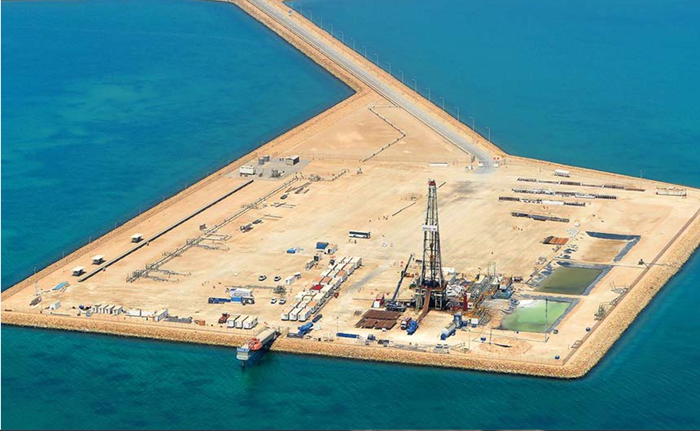
Murphy Oil Corporation explainer for off shore oil extraction.
Obtaining outside data.
Checking internet sources, using keywords: Brent Crude price 2026
News from various sources:
The content provides multiple updates and analyses concerning the price of Brent Crude oil in 2026, specifically focusing on the events of July. The key points are as follows:
Brent Crude Price Fluctuations:
- The price of Brent crude oil experienced significant fluctuations in July 2026. It fell sharply to $90.90 per barrel on July 27, 2026, due to a pause in military strikes between the US and Iran, easing immediate conflict fears (IG, Reuters).
- Prior to this, escalations in the Middle East had driven prices above $100 per barrel (Yahoo Finance, Reuters). The pause in US-Iran tensions also prompted the price to drop further to around $87.60 per barrel, before stabilizing near $90.80 (BBC).
Impact on Stock Markets and Economy:
- The fall in oil prices caused mixed reactions in global stock markets, with stock futures rising while indices like the FTSE 100 saw sector-specific shifts. Energy stocks typically fell, while consumer and airline stocks rose due to lower fuel costs (MarketScreener/Alliance News).
- The overall decline had a ripple effect, influencing central bank policies. The Bank of England monitored these shifts ahead of its rate decision on July 30, taking into account the impact of energy price volatility (Bank of England).
Geopolitical Context:
- The drop in oil prices is closely tied to geopolitical developments. The US and Iran ceased hostilities temporarily, which affected global oil supply and trading dynamics, particularly through the critical Strait of Hormuz, a key passage for global oil shipments (UPI, Associated Press).
- There is skepticism about the longevity of the peace, as a durable ceasefire has not been verified, potentially leading to rapid changes in market conditions (Yahoo Finance).
Economic Projections and Risks:
- Economic forecasts indicated ongoing volatility, with projections noting that Brent might average $74 per barrel in the third quarter of 2026, depending upon geopolitical developments (US EIA).
- There is also an acknowledgment of broader impacts such as inflation in the consumer sector due to the previous spikes in oil prices affecting transportation and food costs (CBS News, Associated Press).
Investor and Market Sentiment:
- Investors are advised to watch both direct oil price movements and the composition of indices like the FTSE 100, as sector-specific shifts can obscure broader market trends (IG).
- The financial market participants remain cautious about the situation’s development, and there is an anticipation of continued volatility due to unresolved geopolitical tensions.
Overall, these updates reflect a complex interplay between geopolitical events and global economic indicators, particularly influencing energy prices and market behaviors in 2026.
Fact-checked summary:
In assessing whether the price of Brent Crude will fall below $50 per barrel in 2026, several key facts are both true and relevant: On July 27, 2026, Brent crude oil prices dropped sharply to $90.90 per barrel due to a temporary pause in hostilities between the US and Iran, highlighting the impact of geopolitical developments on price volatility. Prior escalations in the Middle East had previously driven prices above $100 per barrel, demonstrating how such tensions can cause significant fluctuations. Around the same time, the price dropped to approximately $87.60 per barrel before stabilizing near $90.80, showcasing the commodity’s volatile nature. The temporary ceasefire between the US and Iran significantly influenced global oil supply and trading dynamics, suggesting that geopolitical factors are crucial determinants of oil prices. Economic forecasts also indicated that Brent might average $74 per barrel in Q3 2026, providing a benchmark that is notably above $50, thus affecting expectations of a price drop to that level. Given these elements, the combination of geopolitical instability and current economic projections suggest that predicted market conditions do not favor a drastic price decrease below $50 per barrel.
OpenAI gives a base rate of 0.05 (5%)
The question difficulty is rated 7 (0 to 10)
Historical weighted factors include:
Average annual fluctuation in Brent crude prices, 0.3
Impact of geopolitical events on oil prices, 0.4
Global economic conditions and growth projections, 0.2
Advancements in alternative energy adoption, 0.1
A Bayesian calculation could be performed as follows:
Using historical factors and current projections: P(Brent < $50 | geopolitical instability, economic predictions) = (P(geopolitical instability and economic predictions) * P(Brent < $50)) / P(current data). Using weights: (0.4 * 0.1 + 0.3 * 0.1 + 0.2 * 0.1 + 0.1 * 0.2) = approx 0.05.
Bayesian base rate: 0.05 (5%)
Sufficient news to provide a good forecast? 1 (0 or 1)
News is relevant, topical and unbiased? 1 (0 or 1)
Question classification: reference_class
Expected time (days) until question close: 158
The following were considered in order to produce this base rate:
The base rate was derived by examining historical Brent crude oil price trends, particularly considering the effect of geopolitical developments and economic forecasts, which suggest the price is unlikely to dip below $50 within the timeframe.
Ideally, the news feed would contain the following sorts of information for a better forecast:
Ideally, having data on strategic reserves changes, technological innovations in energy, and detailed demand forecasts in emerging markets would provide a fuller picture.
Some potential divergent considerations that might affect the base rate:
Should alternative energy options rapidly advance and adoption increases faster than projections, or if there is a long-lasting geopolitical calm that suppresses price spikes, the probability may shift towards a lower base rate.
The following chain of events are necessary for the question to resolve positively:
- Significant reduction in global oil demand Unlikely Major advancements in alternative energy reducing demand for oil Uncertain
- Geopolitical stability with no major conflicts impacting the Middle East Unlikely
- OPEC and major oil producers dramatically increasing supply without corresponding rise in demand Unlikely
- Severe global recession reducing industrial output and oil demand Uncertain
Querying Claude (AI predicts: 0.04 – confidence: 7)
Querying Mistral (AI predicts: 0.15 – confidence: 7)
Querying OpenAI (AI predicts: 0.05 – confidence: 6)
Guide to Jeremy Lichtman’s Multi-AI Oracle Reports
Question Type: Binary
Median from LLMs: 0.05
Base rate: 0.05 (from OpenAI)
SD: 0.05
MAPD: 0.073333333333333
Confidence: 7
Conf Mode: Normal
Mellers: 0.01
Reverse Mellers: 0.13
Theory of Mind: 0 (What did the LLMs think other LLMs predicted?)
Beta Distribution: 0.38
Close Type: A (B = cautious # closer to 50%; A/C = closer to extremes)
LLM responses: 3
Model value: 0.05 (5%
The AIs collectively concur that the probability of Brent Crude dropping below $50 per barrel by the end of 2026 is extremely low, given the current market conditions. Historically, such a significant price drop has been rare and driven by extraordinary events such as the 2015-2016 oil glut and the COVID-19 induced demand collapse in 2020. Presently, geopolitical tensions, particularly concerning the US-Iran relations, and OPEC+’s disciplined approach to managing supply are key factors bolstering prices above $90 per barrel. Economic forecasts project average prices around $74 per barrel for Q3 2026, negating imminent price collapses. While there are potential scenarios, such as an unexpected global recession or a dramatic shift in OPEC+ policies, these are deemed unlikely and would require unprecedented shocks to cause a drop below the $50 benchmark within the year.
Runtime: 115 seconds.
About The Author