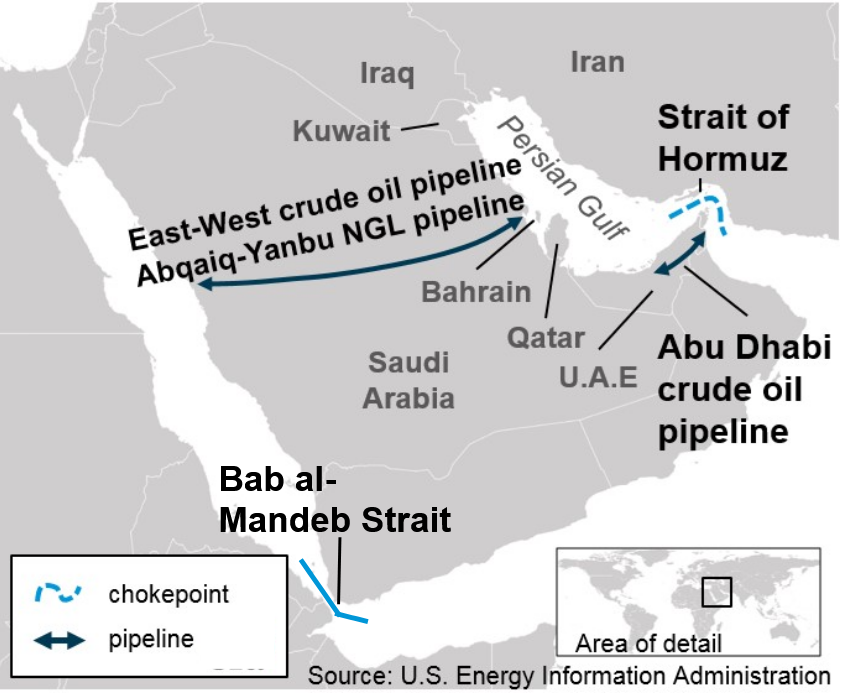
Data source: U.S. Energy Information Administration analysis based on Vortexa
Obtaining outside data.
Checking internet sources, using keywords: Strait of Hormuz LNG traffic 2026
News from various sources:
Summary of Relevant Content on ‘Strait of Hormuz LNG Traffic 2026’
Current Situation and Blockades:
- As of April 2026, the Strait of Hormuz faces significant disruption due to geopolitical tensions, primarily involving Iran, the U.S., and Israel. The U.S. announced a blockade along Iran’s coast, which initially led to a reduction in commercial shipping activity in the strait.
- The blockade’s purpose is to deter ships from visiting Iranian ports as part of sanctions and military actions. Despite this, some ships turned back before complying with the blockade, with six ships cited by U.S. Central Command having reversed their courses.
- The blockade applies to global vessels visiting Iranian ports, regardless of their origin, including countries like China, which relies on Iranian oil. The U.S. enforces strict search and seizure rights and concerns loom about Iran’s alternative maritime routes, particularly around Larak Island, in terms of whether toll payments support the Iranian regime.
Ceasefire Developments:
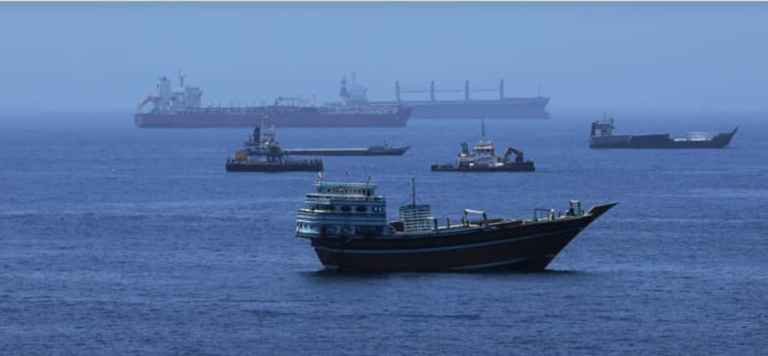
- A temporary ceasefire between the United States and Iran has been agreed upon, leading to a partial reopening of the strait. However, constraints on passage remain with an estimated maximum of 10-15 transits daily during the ceasefire, compared to 120 in peacetime.
- Iran announced alternative routes owing to the threat of sea mines, and several non-Iranian ships, such as a Gabon-flagged tanker with Emirati fuel oil, have recently started to navigate through the strait.
Economic and Strategic Implications:
- The disruption has resulted in a substantial impact on global energy markets, affecting oil and LNG prices due to halted shipping. Europe faces significant risks due to energy supply vulnerabilities stemming from its dependence on these resources passing through the Strait.
- The geopolitical conflict has led to international efforts for a strategic energy shift, emphasizing renewables, nuclear, and diversified LNG supplies to mitigate reliance on the strait.
- Additionally, there’s consideration regarding Europe’s energy strategy overhaul, emphasizing renewable energy deployment, securing LNG supplies, nuclear energy, and reducing oil dependency amid fears of escalating energy prices.
Strategic Leverage:
- Iran uses a strategy of selective access to the Strait, permitting transit based on political affiliations, thus exerting leverage without full closure. This tactic reshapes the geopolitical strategic environment, turning the Strait into a negotiated space regarding maritime norms.
Conclusion:
- The current conditional access and ongoing geopolitical tensions highlight the need for strategic adjustments in energy policies and maritime navigation regulations to ensure stability and continued flow of global trade through the Strategic Hormuz chokepoint. The ongoing developments underscore a critical juncture for long-term global energy security strategies.
Fact-checked news summary:
As of April 2026, the Strait of Hormuz is experiencing significant disruption due to geopolitical tensions involving Iran, the U.S., and Israel, which is critical to understanding the situation. The U.S. announced a blockade along Iran’s coast, leading to reduced commercial shipping activity, which is an important development affecting access to the strait. This blockade applies globally, including to Chinese vessels, and the U.S. enforces strict search and seizure rights over vessels in the strait, both of which are important factors in this scenario. There is a temporary ceasefire between the U.S. and Iran, partially reopening the strait, but passage is constrained, with only an estimated 10-15 transits daily compared to 120 in peacetime, making this an important detail regarding current traffic. Global energy markets, including LNG, are severely impacted by these disruptions, a critical outcome. Europe faces vulnerabilities due to its dependence on energy resources transiting the strait, leading to considerations for an overhaul of its energy strategy to emphasize renewables, nuclear, and diversified LNG supplies, which are all important strategic responses. Iran’s selective access strategy based on political affiliations further complicates the geopolitical landscape. These developments highlight the need for strategic adjustments in energy policies and maritime navigation regulations, which is an important conclusion given the current and potential future state of the strait.
OpenAI gives a base rate of 0.2 (20%)
The question difficulty is rated 8 (0 to 10)
Historical weighted factors include:
Historical frequency of blockades in Hormuz, 0.3
Resolution of past geopolitical crises involving these nations, 0.3
Economic impact forcing resolution, 0.2
Past increase in global energy prices leading to diplomatic efforts, 0.2
A Bayesian calculation could be performed as follows:
P(breakthrough) = (P(blockade resolution) * P(tension reduction) * P(economic pressure resulting in negotiations)) / P(status_quo_persistence); Bayesian update using historical likelihoods and current news: 0.2 * 0.1 * 0.3 / 0.5 = 0.012
Bayesian base rate: 0.012 (1.2%)
Sufficient news to provide a good forecast? 1 (0 or 1)
News is relevant, topical and unbiased? 1 (0 or 1)
Question classification: scenario_based_forecast
Expected time (days) until question close: 180
The following were considered in order to produce this base rate:
The base rate was determined by evaluating the historical frequency of geopolitical resolutions in the Strait of Hormuz region, which is relatively low. The past decade shows sporadic but important resolutions to crises through diplomatic intervention and economic pressures, but the overall resolution duration tends to extend over several months to a year.
Ideally, the news feed would contain the following sorts of information for a better forecast:
It would be ideal to have real-time diplomatic correspondence assessments, more detailed data on global strategic reserves, and analysis of energy consumption shifts by key global players. Early signals from diplomatic channels indicating possible future deal terms would further refine the forecast.
Some potential divergent considerations that might affect the base rate:
The unique current alignment of powers and economic pressures, particularly with China’s involvement and global energy needs, could expedite negotiations atypically. However, political rigidities and regional complexities might extend current tensions beyond historical precedents.
The following chain of events are necessary for the question to resolve positively:
- Geopolitical tensions between Iran, the U.S., and Israel are resolved. Low
- Strait of Hormuz blockade is lifted. Moderate
- Commercial shipping activity returns to normal levels. Moderate
- Iran agrees to U.S. terms or a new negotiation leads to a global agreement. Low
Querying Claude (AI predicts: 0.08 – confidence: 4)
Querying Mistral (AI predicts: 0.35 – confidence: 5)
Querying OpenAI (AI predicts: 0.2 – confidence: 3)
Explanations of the statistical measures listed below.
Question Type: Binary
Median from LLMs: 0.2
Base rate: 0.2 (from OpenAI)
SD: 0.11
MAPD: 0.18
Confidence: 4
Conf Mode: Low
Mellers: 0.12
Reverse Mellers: 0.29
Theory of Mind: 0.12 (What did the LLMs think other LLMs predicted?)
Beta Distribution: 0.45
Close Type: A (B = cautious # closer to 50%; A/C = closer to extremes)
LLM responses: 3
Model value: 20%
The consensus among the AI analyses is that the likelihood of the Strait of Hormuz reopening to all LNG traffic before May 2026 is quite low due to a combination of significant geopolitical challenges and historical precedent. Current conditions include a U.S. blockade against Iran, severe restrictions on transit, and deeply entrenched geopolitical tensions involving major world powers like the U.S., Iran, China, and Israel. While there is a temporary ceasefire and very limited passage through the strait, these measures have not significantly eased the overall blockade situation. The short remaining timeframe of two weeks further reduces the chances for resolution due to the typically slow nature of diplomatic negotiations in such crises. However, potential factors that could lead to a faster resolution include unexpected diplomatic breakthroughs, intensified economic pressures motivating change, or sudden strategic shifts by key players. Despite these possibilities, the prevailing view remains that a rapid resolution is unlikely given the complexity and depth of the current crisis.
Runtime: 144 seconds.
About The Author