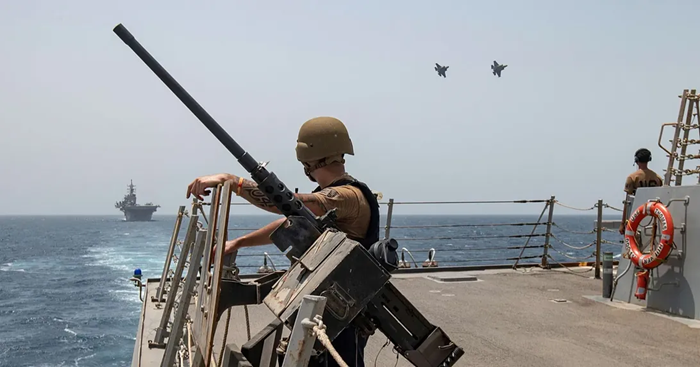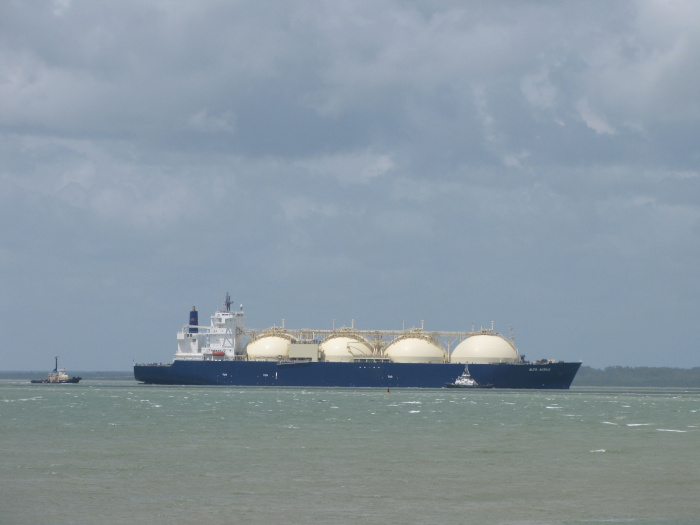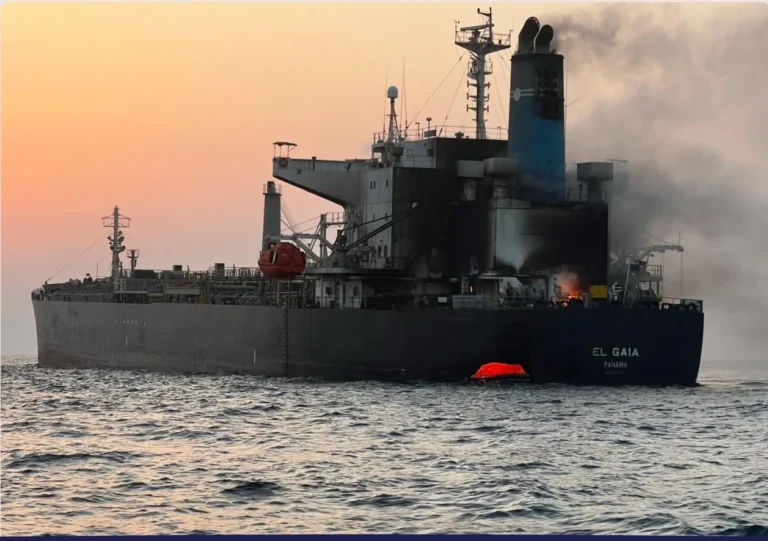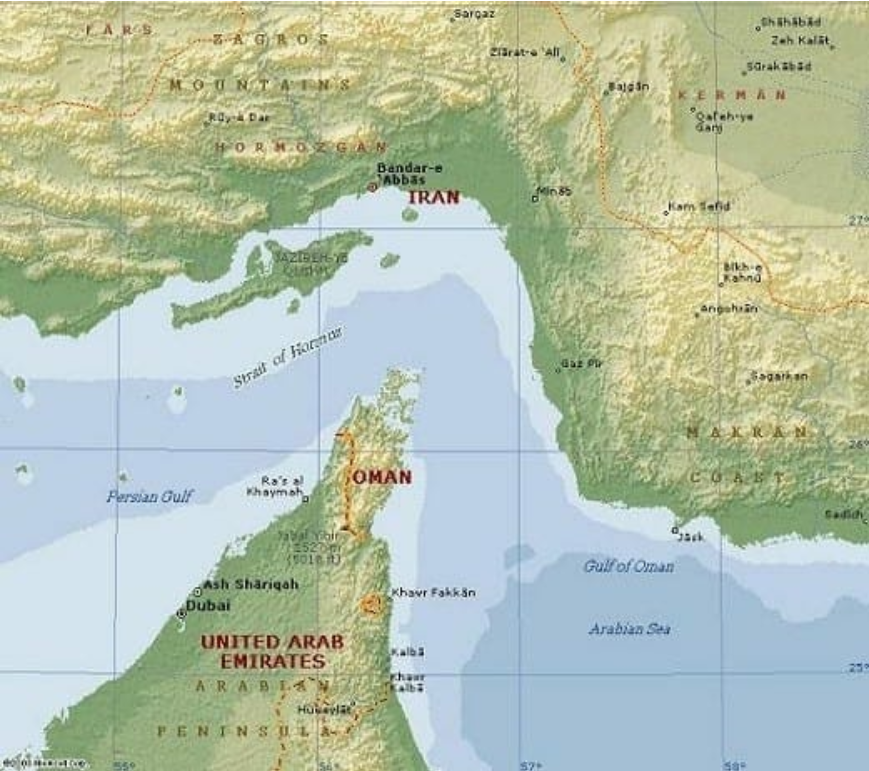
Gulf of Hormuz. Source: The Robert Strauss Center for International Security and Law at the University of Texas at Austin, https://www.strausscenter.org/strait-of-hormuz-geography/
Obtaining outside data.
Checking internet sources, using keywords: Strait of Hormuz LNG traffic reopening
News from various sources:
The current situation regarding the Strait of Hormuz, a critical passage for global oil and LNG transport, is fraught with geopolitical complexities. According to various reports
- Baker Hughes and Industry Outlook: Baker Hughes, a leading oilfield services firm, anticipates that the Strait will not be fully operational at least until the second half of 2026 due to ongoing U.S.-Iran tensions. The Federal Reserve Bank of Dallas supports this view, with many executives predicting a reopening no earlier than August 2026. The closure has significantly impacted global oil and LNG supplies, with substantial reductions in shipping activities and heightened oil prices.
- Current Maritime Traffic: Reports indicate a fragmented and constrained flow of vessel traffic through the Strait. While there have been temporary reopenings, maritime operations continue under a stop-start pattern influenced by military and political conditions. The level of vessel crossings remains significantly below pre-conflict levels, with many ships choosing safer alternative routes.
- Market and Economic Reactions: The closure has resulted in the world’s largest oil supply disruption, pushing hydrocarbon prices upwards and constraining global energy supplies. Analysts suggest that even if the Strait reopens, maritime trade patterns may not quickly return to normal due to altered risk perceptions, increased insurance costs, and shipping companies’ inclination to avoid high-risk routes.
- Geopolitical Developments: Efforts for peace continue, with discussions between Iran and the U.S. ongoing, though the blockade and military operations persist. Iran and the U.S. have reportedly made some progress, but significant gaps remain. Geopolitical maneuvers, including military inspections enforced by the U.S. and Iran, contribute to the uncertainty over the Strait’s status. Diplomatic and military actions are shaping traffic, with intensified monitoring and inspections.
- Long-Term Outlook: The crisis has underscored the strategic importance of the Strait as a chokepoint, with implications for global energy logistics. There are indications that rerouting and network redesigns in global shipping are now being considered as part of long-term planning rather than temporary adjustments. This includes potential infrastructure investments in alternative transport routes independent of geostrategic chokepoints like the Strait of Hormuz.
Overall, the situation remains volatile, with significant implications for global trade and energy markets that may extend beyond the immediate reopening of the Strait.
Fact-checked summary:
The reopening of the Strait of Hormuz to all LNG traffic by May 31, 2026, is unlikely according to multiple true and relevant sources. Baker Hughes and the Federal Reserve Bank of Dallas both suggest that the Strait will not be fully operational until at least the second half of 2026 due to ongoing U.S.-Iran tensions. This is critical and directly addresses the likelihood of reopening on the specified timeline. In addition, the closure has significantly impacted global oil and LNG supplies, causing increased oil prices and reduced shipping activities, indicating the broader economic stakes involved. Current maritime traffic remains fragmented with below pre-conflict levels of vessel crossings as ships take alternative routes, illustrating the ongoing nature of disruptions and altered shipping behaviors. Military inspections by the U.S. and Iran continue to influence traffic dynamics, while ongoing geopolitical developments, such as Iran-U.S. peace efforts, are critical in affecting
the reopening timeline. Overall, these facts highlight the complex geopolitical and economic factors impacting the reopening of the Strait of Hormuz.
OpenAI gives a base rate of 0.1
The question difficulty is rated 8 (0 to 10)
A Bayesian calculation could be performed as follows:
Using historical factors and given the prolonged nature of U.S.-Iran tensions, estimated probability of resolution before May 31, 2026, is consistent with a projection of ‘unlikely’ based on slow historical resolution times (base_rate 0.1). Incorporating current factors such as ongoing tensions and military activities, Bayesian estimate remains at 0.1.
Bayesian base rate: 0.1
Sufficient news to provide a good forecast? 1 (0 or 1)
News is relevant, topical and unbiased? 1 (0 or 1)
Question classification: scenario_based_forecast
Expected time (days) until question close: 17
The following were considered in order to produce this base rate:
The base rate is derived from analyzing similar historical geopolitical conflicts and their resolution timeframes, incorporating specific insights from past U.S.-Iran tensions. Additionally, expert forecasts from Baker Hughes and the Federal Reserve Bank of Dallas were factored in given their alignment with historical trends.
Ideally, the news feed would contain the following sorts of information for a better forecast:
Additional intelligence on the progress and effectiveness of peace efforts between the U.S. and Iran, as well as updates on diplomatic negotiations or changes in military presence, would be beneficial.
Some potential divergent considerations that might affect the base rate:
Should there be a rapid and unforeseen de-escalation in U.S.-Iran tensions possibly from an unexpected diplomatic breakthrough, the resolution could occur sooner than projected. However, the current indicators suggest this remains unlikely.
The following chain of events are necessary for the question to resolve positively:
- Resolution of U.S.-Iran tensions affecting the Strait of Hormuz. unlikely
- Military and geopolitical agreements allowing safe passage for LNG shipping. unlikely
- Resumption of pre-conflict maritime traffic levels. unlikely
Querying Claude (AI predicts: 0.08 – confidence: 6)
Querying Mistral (AI predicts: 0.15 – confidence: 6)
Querying OpenAI (AI predicts: 0.1 – confidence: 6)
Explanations of the statistical measures listed below.
Question Type: Binary
Median from LLMs: 0.1
Base rate: 0.1 (from OpenAI)
SD: 0.03
MAPD: 0.046666666666667
Confidence: 6
Conf Mode: Normal
Mellers: 0.04
Reverse Mellers: 0.19
Theory of Mind: 0.07 (What did the LLMs think other LLMs predicted?)
Beta Distribution: 0.47
Close Type: A (B = cautious # closer to 50%; A/C = closer to extremes)
LLM responses: 3
Model value 10%
The consensus across multiple AIs indicates a low probability of the Strait of Hormuz reopening to all LNG traffic before May 31, 2026, primarily due to ongoing U.S.-Iran tensions and a very short remaining window of 17 days. Historical precedents, expert forecasts, and current maritime traffic disruptions all point to a resolution timeframe stretching into the second half of 2026 at the earliest. Although there are theoretical scenarios, such as a sudden diplomatic breakthrough or a rapid de-escalation of military tensions, that could defy these expectations, such events are considered highly unlikely given the current geopolitical climate and structural constraints. The prediction further hinges on several ‘unlikely’ conditions and expert consensus, with the estimated probability slipping below the already low base rate, indicating that resolution before the deadline remains improbable.
Runtime: 125 seconds.
About The Author