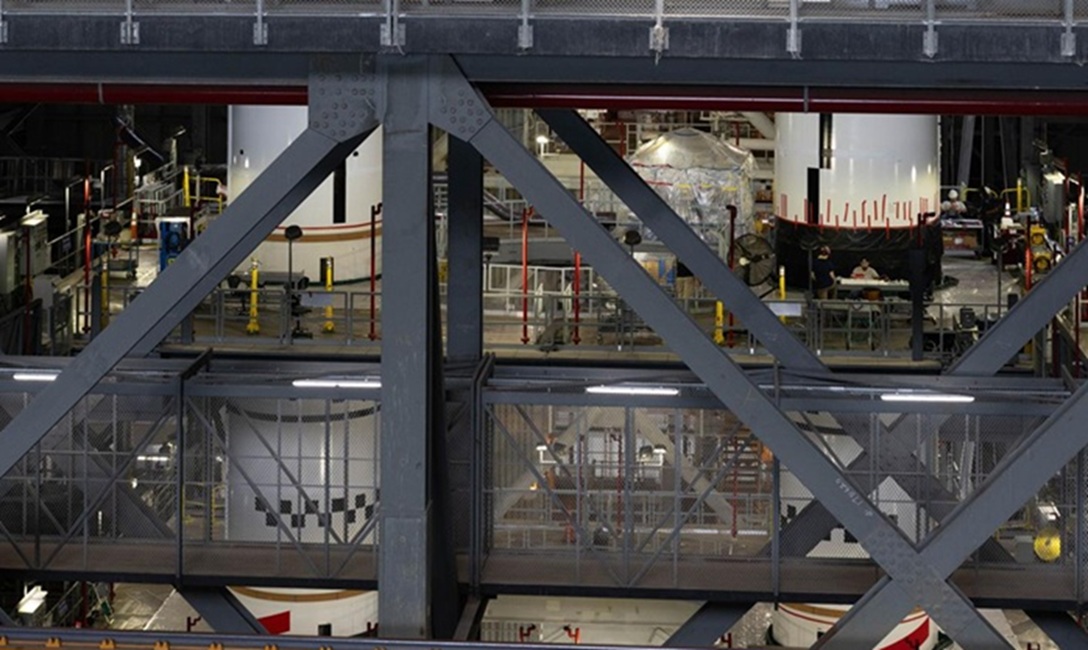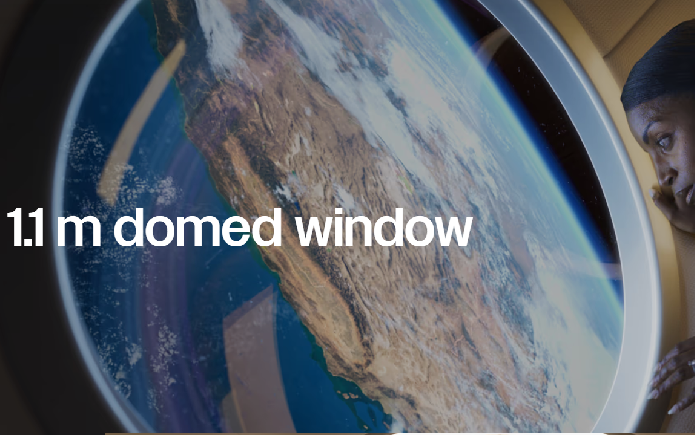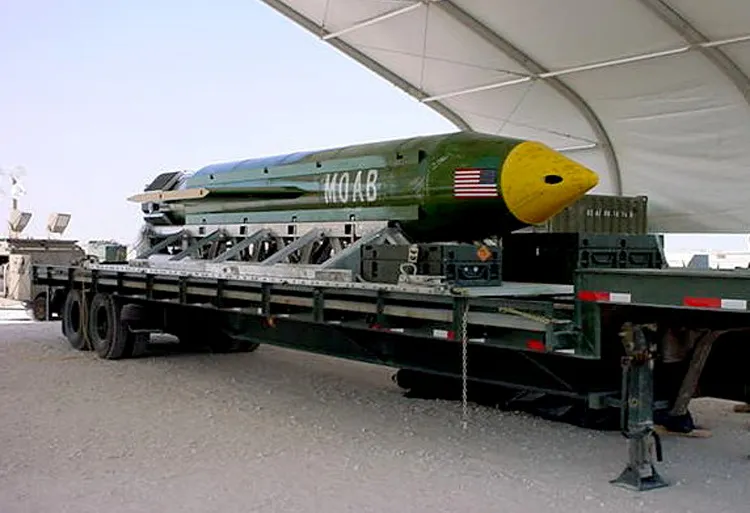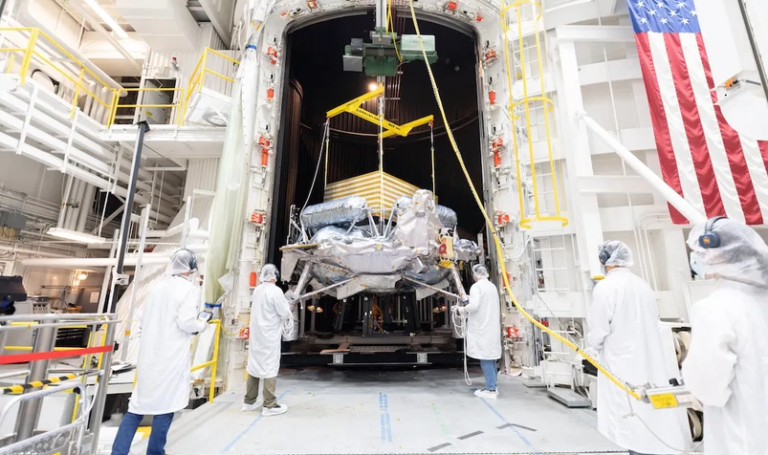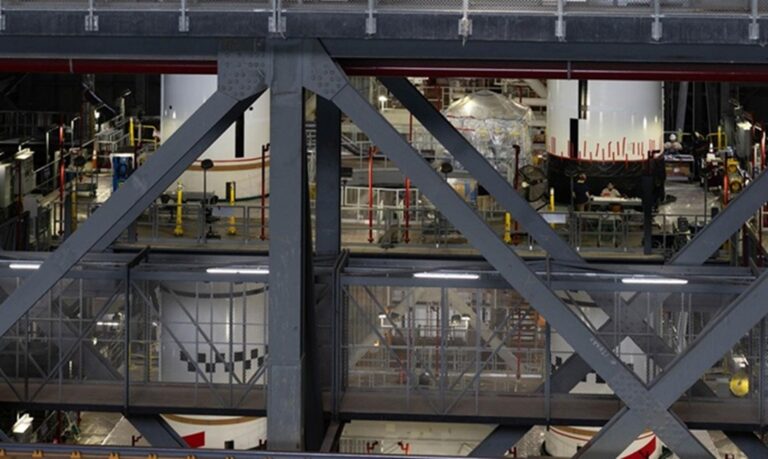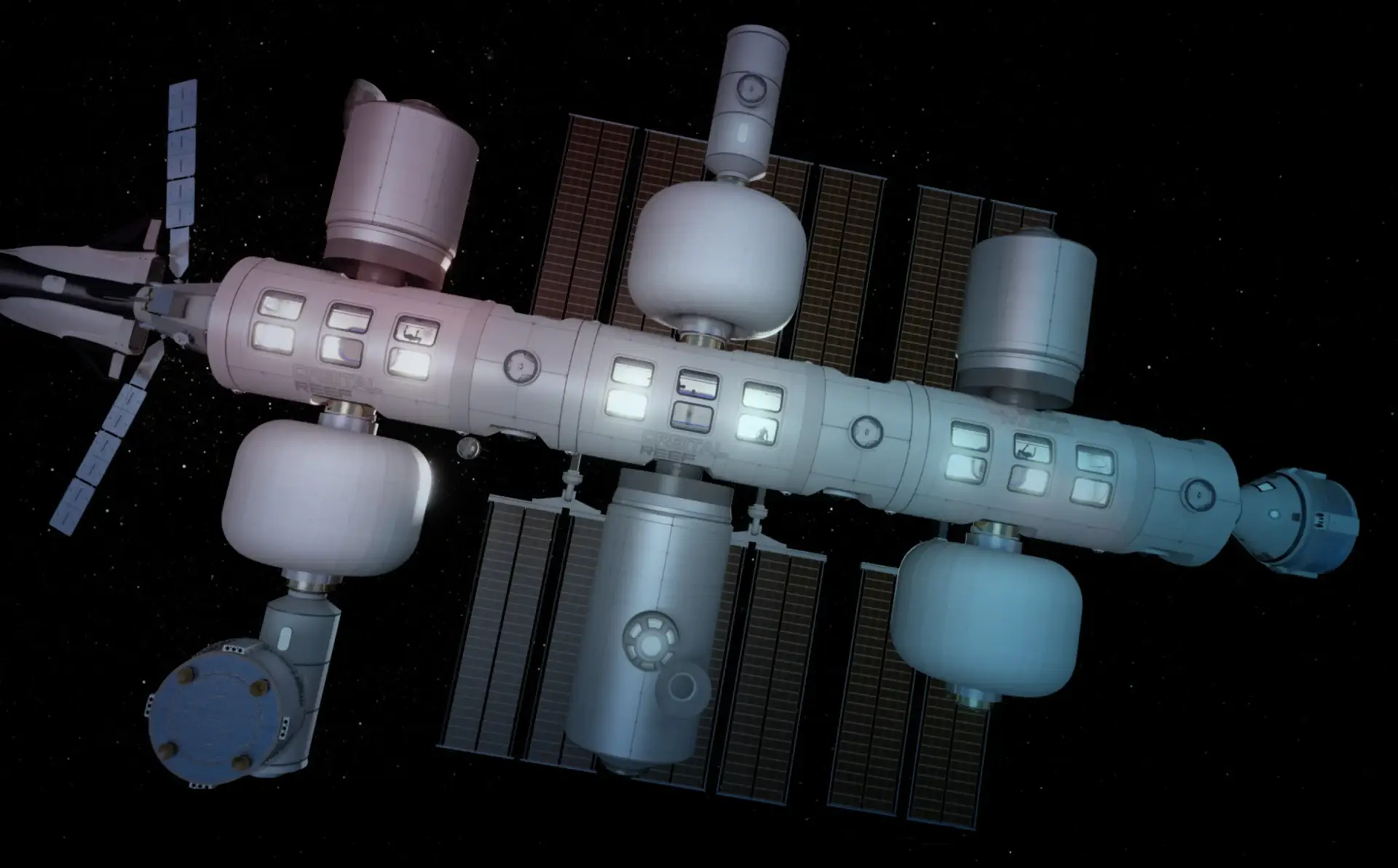
Orbital Reef. Source: Blue Origen Space station concept. https://www.blueorigin.com/destinations
Grok response:
- Vast Advances Haven-1 Into Integration Phase (https://www.vastspace.com/updates/vast-advances-haven-1-into-integration-phase), Published: Jan 20, 2026. Vast has begun cleanroom integration of Haven-1 after completing primary structure, updating the launch schedule to Q1 2027 based on current timeline. The station is contracted for launch on SpaceX Falcon 9. This positions Haven-1 as the leading candidate for the first commercial space station.
- Vast Delays Haven-1 Launch to 2027 (https://payloadspace.com/vast-delays-haven-1-launch-to-2027), Published: Jan 20, 2026. Haven-1, previously slated for 2026, is now no earlier than Q1 2027 launch, with potential further delays before full operations. The delay stems from integration progress. Crewed missions would follow uncrewed commissioning.
- The first commercial space station, Haven-1, is now undergoing assembly for launch (https://arstechnica.com/space/2026/01/the-first-commercial-space-station-haven-1-is-now-undergoing-assembly-for-launch), Published: Jan 20, 2026. Haven-1’s mid-2026 launch target is no longer feasible due to assembly pace. CEO Haot confirmed the shift in an interview. The single-module station aims to demonstrate commercial LEO capabilities.
- Inside Orbital Reef (https://www.exterrajsc.com/p/inside-orbital-reef), Published: Jan 26, 2026. Orbital Reef’s Preliminary Design Review, due in 2023, remains open as of early 2026. Development is progressing slowly under NASA CLD funding. No firm launch or crewed visit dates before 2028.
- Orbital Reef: Inside the “Business Park in Space” That May Replace the ISS (https://orbitaltoday.com/2026/03/24/orbital-reef-inside-the-business-park-in-space-that-may-replace-the-iss), Published: Mar 24, 2026. Led by Blue Origin and Sierra Space, Orbital Reef targets ~400 km orbit with first modules eyed for 2027, though timelines are optimistic. Still in design phase per recent NASA reviews. Partnerships include Boeing and Redwire for commercialization.
- Commercial space stations: 10 Breakthrough Technologies 2026 (https://www.technologyreview.com/2026/01/12/1130030/commercial-space-stations-2026-breakthrough-technology), Published: Jan 12, 2026 (updated for Vast timeline). Lists commercial stations as 2026 breakthrough; Vast Haven-1 shifted to early 2027. Others like Starlab and Orbital Reef target 2028+. Notes NASA’s funding challenges post-ISS.
- Private Starlab space station moves into full-scale development ahead of 2028 launch (https://www.space.com/space-exploration/human-spaceflight/private-starlab-space-station-moves-into-full-scale-development-ahead-of-2028-launch), Published: Mar 18, 2025. Starlab completed PDR, advancing to full development for 2028 SpaceX Starship launch. NASA awarded $217M via CLD. First crewed operations planned for 2029.
- NASA’s Grim Outlook for New Space Stations (https://www.bloomberg.com/news/newsletters/2026-03-25/commercial-space-stations-get-a-grim-outlook-from-nasa), Published: Mar 25, 2026. NASA lacks funding to robustly support commercial LEO stations post-ISS deorbit in 2030. Questions viability of Phase 2 awards in early 2026. Impacts timelines for Orbital Reef, Starlab, etc.
- NASA eyeing SpaceX’s Starship as possible space station (https://www.space.com/nasa-considering-spacex-starship-space-station), Published: July 27, 2023. NASA via CCSC-2 considers Starship conversion to LEO habitat for research/commerce. No timelines; conceptual stage leveraging Starship’s size/cargo capacity. SpaceX has one stacked flight as of 2023; no 2026 updates.
- Vast opens Houston office (@vast X post), Timestamp: Apr 3, 2026. Vast hosted NASA leaders to tour full-scale Haven-1 model at new Houston office near JSC. Emphasizes Haven-1 as next step for US LEO presence. Recent activity signals ongoing progress toward 2027 launch.[1][2]
Haven-1 by Vast remains the frontrunner for the first new space habitat, with primary structure completed in early 2025 and integration advancing as of January 2026, but the company officially updated its launch to no earlier than Q1 2027 on SpaceX Falcon 9.[3][4] This slip from the prior May 2026 target reflects realistic pacing for cleanroom assembly and testing, with uncrewed commissioning to follow launch and the first crewed Vast-1 mission (four astronauts) expected later in 2027.[5] As of April 2026, Vast continues public demos like the Houston Haven-1 model tour with NASA, but no announcements indicate acceleration back to 2026 or confirm crewed visits before year-end 2027.[1]
Orbital Reef, developed by Blue Origin and Sierra Space under NASA’s Commercial LEO Destinations (CLD) program ($172M Phase 1 funding), lags in milestones; its Preliminary Design Review—originally due 2023—remains incomplete into early 2026, with first modules optimistically targeted for 2027 but widely viewed as aspirational given design-phase status.[6][7] Blue Origin’s destinations page describes it as a 2021-concept mixed-use park at 250 miles altitude, but lacks updated operational dates or crewed plans before 2028; NASA noted design progress in April 2025, yet recent outlooks highlight funding constraints.[8][9]
Starlab (Voyager Space, Airbus, partners) advanced to full-scale development after PDR in March 2025, with manufacturing contracts awarded September 2025 and a baseline 2028 launch on SpaceX Starship ($217M NASA CLD funding); operations and crewed hosting are slated for 2029 as a continuously crewed platform.[10][11] The Voyager site emphasizes single-launch no-assembly design but provides no granular 2026-2027 progress or human visit timelines.[12]
NASA’s consideration of SpaceX Starship as a space station—via 2023 CCSC-2 unfunded agreement—remains conceptual, with no dedicated timelines, funding, or development updates through 2026; Starship focuses on Artemis/ propellant transfer demos, not habitat conversion for human visits by 2027.[13]
Broader context: No commercial stations have launched as of April 15, 2026; MIT Technology Review (Jan 2026) highlights the field as a breakthrough but notes Haven-1’s delay amid NASA budget grimness for ISS successors (deorbit ~2030).[14] Axiom Station begins ISS-attached modules in 2026 but free-flying later; no other habitats show human visits feasible before end-2027. Recent X activity (April 2026) shows enthusiasm for Haven-1 at events like Space Symposium, but aligns with official Q1 2027 outlook.[15]
Extracted resolution criteria links:
[‘https://www.blueorigin.com/destinations,’, ‘https://www.space.com/nasa-considering-spacex-starship-space-station‘, ‘https://voyagertechnologies.com/starlab/,’]
== Forecast Result ===
Identifying the Key Candidate
The only realistic candidate for a human-visited new space habitat before end-2027 is Haven-1 by Vast. All others are too far behind:
- Orbital Reef: PDR still incomplete as of early 2026; first modules aspirational for 2027, crewed visits 2028+ at earliest
- Starlab: 2028 launch baseline, crewed operations 2029
- SpaceX Starship station: Purely conceptual, no timelines or funding
- Axiom modules: Attached to ISS (would count as visiting ISS, excluded by resolution)
Haven-1 Timeline Chain
For resolution YES, all three must succeed before Dec 31, 2027:
- Haven-1 launches (currently NET Q1 2027, stated Jan 2026)
- Uncrewed commissioning succeeds (likely 3-6 months minimum)
- Vast-1 crewed mission launches and docks
Probability Estimates
Launch timing (given already slipped once, integration started Jan 2026):
| Window | P(launch) |
|---|---|
| Q1 2027 | ~15% |
| Q2 2027 | ~20% |
| Q3 2027 | ~20% |
| Q4 2027 | ~15% |
| 2028+ | ~30% |
Conditional P(crewed visit by end 2027 | launch window):
- Q1 launch: ~60% (9 months — comfortable if commissioning goes well)
- Q2 launch: ~40% (6 months — tight but feasible)
- Q3 launch: ~15% (very tight, compressed commissioning needed)
- Q4 launch: ~3% (virtually impossible)
Combined: 0.15×0.60 + 0.20×0.40 + 0.20×0.15 + 0.15×0.03 ≈ 20%
Key Assumption Risks
- Haven-1 launches by mid-2027 (~55% chance of failure) — space hardware integration routinely exceeds timelines; Vast has already slipped once
- Commissioning takes ≤6 months (~25% failure risk) — first-of-kind station by a startup, anomalies could extend this
- No showstopper technical/funding issues (~15% failure risk) — startup risk, though Vast is well-funded
Discounting for overall program risk (~15%): 0.20 × 0.85 ≈ 17%
Adding ~1% for wildcard scenarios (other habitats).
Calibration Adjustment
Accounting for historical overconfidence and the fact that only ~35% of forecasting questions resolve positively, I adjust downward slightly from ~18% to ~13%.
The research explicitly notes: “no announcements indicate acceleration or confirm crewed visits before year-end 2027,” and even Vast’s own messaging is careful to say “later in 2027” without firm commitment.
Probability: 13%
End
About The Author