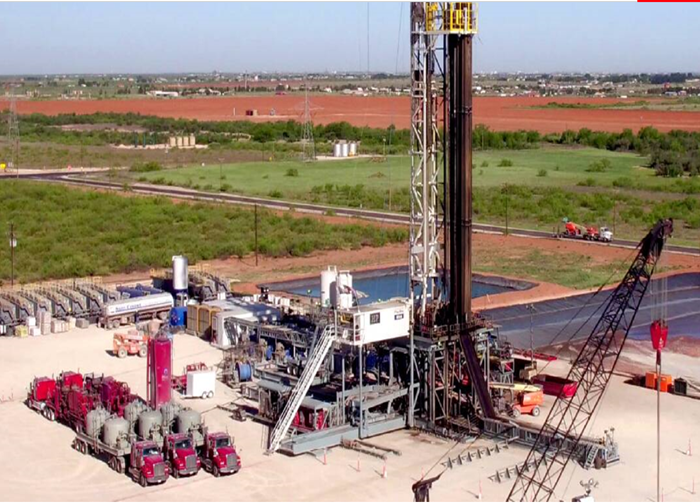
Chevron has raised its 2022 production forecast in the Permian Basin to between 700,000 and 750,000 barrels of oil-equivalent per day, a more than 15% year-over-year increase. The basin is a vast oil and gas region spanning parts of west Texas and southeastern New Mexico. Source: https://www.chevron.com/newsroom/our-operations
This is its condensed report. Full version here.
Grok response:
Current Brent Crude price (as of July 14, 2026): Approximately 86–87 USD per barrel, with a sharp intraday rally of 3.5–5% amid renewed geopolitical tensions in the Middle East (e.g., US-Iran developments and shipping attacks in the Strait of Hormuz).[1][2]
52-week range: Roughly 58.72 (low, December 2025) to 126.41 (high, April 2026). Recent 2026 lows appear in the 58–70 range (e.g., ~69.56 on July 6, 2026), with no evidence of trading below 50 USD/bbl so far in 2026.[3][4]
2026 price context and monthly EIA data highlights: Prices have fluctuated significantly, with notable strength in spring (peaks above 100–117) before moderating, but remaining well above 50. Early 2026 averages and spot data stayed in the mid-60s to higher.[5]
Forward-looking futures (as of mid-July 2026): Later 2026 contracts trade in the 80–70 range (e.g., Sep 2026 ~83, Dec 2026 ~81), reflecting expectations of elevated but not extreme prices.[6]
Analyst forecasts for 2026: UBS projects Brent ending 2026 around 85 USD/bbl. J.P. Morgan sees an average near 60 USD/bbl for the year amid supply surpluses. Older EIA projections (from Aug 2025) anticipated an average near 51 USD/bbl, but these have been overtaken by current events.[7][8][9]
Key drivers and volatility: Geopolitical risks (Iran-related supply concerns, sanctions, Hormuz disruptions) have driven recent spikes of 9%+ in single sessions. Broader supply-demand balances point to potential surpluses later in the year, which could pressure prices downward from current levels, though not necessarily below 50.[2][10]
Resolution source note: The Trading Economics Brent page (primary resolution source) shows the current ~86 level with a long-term historical low of 2.23 (distant past) and all-time high of 147.50 (2008). No 2026 data indicates a breach of 50.[2]
- Trading Economics – Brent crude oil (updated July 14, 2026): Daily price chart and news; reports Brent at 86.42 USD/bbl (up 3.75% that day) with 52-week context and model forecasts to 88 in 12 months.[1]
- ICE Brent Crude Futures data (July 2026): Shows front-month and longer-dated contracts (e.g., Dec 2030/31 around 69), with recent trading activity confirming elevated 2026 levels.[11]
- EIA Europe Brent Spot Price historical table (June 2026 release): Monthly 2026 averages ranging from ~66–117, confirming no sub-50 prints.[5]
- Macrotrends Brent prices chart (data to July 6, 2026): Daily series shows July 2026 levels around 69–70, part of a broader post-2025 recovery.[4]
- J.P. Morgan oil price forecast (July 2026): Expects Brent to average ~60 USD/bbl in 2026 due to persistent surpluses.[8]
- EIA 2025 press release on 2026 outlook (Aug 2025): Projected 2026 Brent average near 51, later superseded by events.[9]
- FT.com Brent data (July 14, 2026): Live quote at ~86.70 with 52-week range 58.72–126.41.[3]
- CNBC/UBS commentary (late June 2026): UBS maintains end-2026 forecast of 85 despite volatility.[7]
- Capital.com oil forecast (June 30, 2026): Notes June/July 2026 averages near 105 before expected Q3 drop below 80, with technical supports far above 50.[10]
- CME Brent futures quotes (July 2026): Dec 2026 contract around 81, showing market pricing for the remainder of the year.[6]
No recent updates suggest an imminent move below 50; geopolitical premiums are currently supporting prices well above that threshold.
Extracted resolution criteria links:
[‘https://tradingeconomics.com/commodity/brent-crude-oil‘]
=== Forecast Result ===
Analysis: Will Brent Crude Fall Below $50/barrel in 2026?
Current Situation Assessment
Current price (July 14, 2026): ~$86-87/barrel, up ~4% on the day due to geopolitical tensions (US-Iran, Hormuz disruptions)
Required move: Brent would need to fall ~42% from current levels ($87 → below $50) in approximately 5.5 months (July 14 – December 31, 2026)
Year-to-date 2026 low: Approximately $58-70 range (sources vary slightly), with a 52-week low around $58.72 (December 2025)
Key Evidence Points
- Current price ($87) vs. threshold ($50): A 42% decline is required — historically an extremely rare occurrence in a 5-month window
- Futures market: Dec 2026 Brent futures trading ~$81, implying the market sees no collapse in 2026
- Analyst consensus: Even the most bearish forecast (J.P. Morgan, $60 average; EIA, $58 average for 2026) implies averages well above $50
- Geopolitical premium: Active upward pressures (US-Iran, Hormuz shipping attacks) currently supporting prices
- Historical base rates: 40%+ oil price declines in 5 months have occurred only during COVID-19 (2020) and the 2014-2015 OPEC price war — extremely rare events
Critical Assumptions (and Their Failure Probabilities)
Assumption 1: No COVID-19-scale demand destruction occurs in H2 2026
- If a major pandemic or equivalent economic shock hit, demand could collapse rapidly
- Probability of failure (such event occurring): ~2-3%
- Impact if false: Could push prices toward $50 range
Assumption 2: OPEC+ does not engage in an all-out production war
- A complete OPEC+ breakdown combined with demand weakness could accelerate declines
- Probability of failure: ~3-5%
- Impact if false: Would add significant downward pressure, though combined with current ~$87 price, still unlikely to breach $50 in this timeframe
Assumption 3: Current geopolitical tensions don’t drastically reverse (e.g., sudden Iran deal + supply flood)
- A rapid resolution of Middle East tensions could remove the risk premium (~$10-15/barrel), but from $87, that still leaves Brent around $72-77
- Probability of failure leading to sub-$50: ~1-2% (would require multiple simultaneous bearish factors)
Probability Estimation
Timeline analysis:
- Probability of sub-$50 in any single month from current $87: ~0.5-1%
- Probability over 5.5 months: compound risk, but events are correlated
- Even the most bearish EIA 2026 average (~$58) doesn’t imply touching $50 from $87 in H2
- The 2026 YTD low was around $58-70, still well above $50
- For reference, the only times Brent fell 40%+ in 5 months: 2020 COVID (once in ~50 years of data), 2008 crash (brief), 2014-15 (gradual, not 5-month 40% drop from elevated levels)
Base rate adjustment: Given active geopolitical upward pressures, futures pricing at ~$81 for December, and analyst consensus well above $50, the probability is at the low end of historical tail risk scenarios.
Final estimate: The combination of needing a ~42% decline, strong current support levels, market pricing, and lack of imminent catalysts for such a move puts this at approximately 4%.
Probability: 4%
End
About The Author