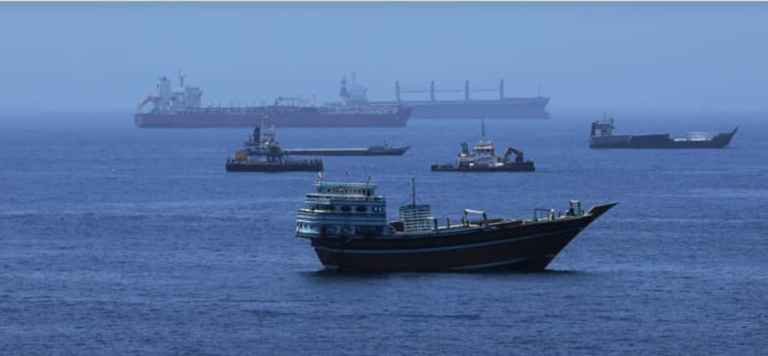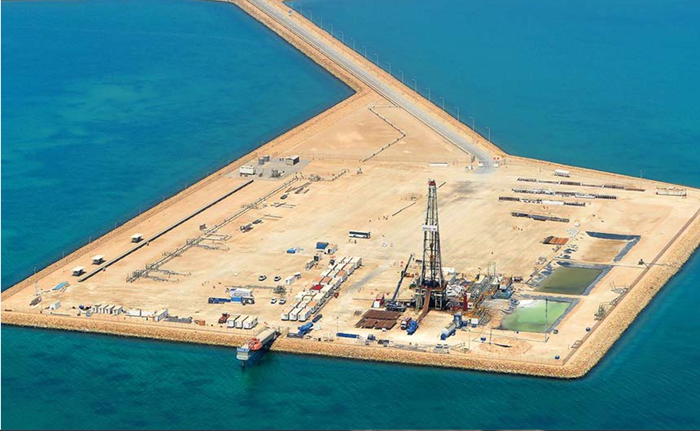
View of a supply vessel at the Brent Delt platform.
Obtaining outside data.
Checking internet sources, using keywords: Brent Crude price 2026
News from various sources:
The provided web content discusses forecasts and developments regarding Brent crude oil prices for the year 2026, amidst geopolitical tensions and diplomatic negotiations.
- Goldman Sachs Forecast: Goldman Sachs revised its Brent crude forecast for the fourth quarter of 2026 to $80 per barrel from $90. The revision comes after an interim agreement was announced to lift the US blockade and reopen the Strait of Hormuz, a crucial oil chokepoint. However, the bank warns of potential spikes above $130 if geopolitical tensions resurface.
- Market Reactions: Oil prices have been volatile due to ongoing conflicts and negotiations between the US and Iran. Brent crude prices experienced significant fluctuations, driven by hopes of a ceasefire and reopening of the Strait of Hormuz. Prices dropped by around 20% from 2026 highs as optimism grew over a US-Iran ceasefire deal.
- Impact on Oil Supply: The reopening of the Strait of Hormuz is expected to alleviate some supply concerns, with Persian Gulf oil exports projected to return to pre-conflict levels earlier than expected. Fears of continued disruptions, however, keep prices from stabilizing fully.
- Future Projections: Despite predictions of a global oil surplus in 2027, strategic stockpiling and geopolitical risk premiums may keep prices supported. Analysts at various institutions suggest Brent crude could stabilize in the range of $90 to $100 per barrel short-term but indicate potential for further reductions in 2027 to levels around $70 to $85, contingent on demand dynamics and continued peace.
- Brokerage Insights: Emkay Global raised concerns about potential imbalances in physical markets that could cause short-term price surges. They predict eventual price moderation beyond the first half of fiscal year 2027.
- Recent Price Movements: As of mid-2026, Brent crude prices trended near $80-$90 per barrel, influenced by a combination of diplomatic negotiations, potential peace deals, and evolving market conditions. The fluctuation in prices underscores the market’s sensitivity to geopolitical events impacting key shipping routes like the Strait of Hormuz.
In summary, while easing tensions and potential deals offer hope for more stable oil markets, continued caution is advised due to ongoing geopolitical risks and supply chain recovery challenges.
Overall, while forecasts suggest a potential decrease, factors like geopolitical risks and supply disruptions make a drop below $50 unlikely without significant negative demand shifts or geopolitical stabilization.
Fact-checked summary:
Goldman Sachs revised its Brent crude forecast to $80 per barrel for Q4 2026, which is an important indicator as it directly addresses the question about future prices. This forecast is relevant, giving a specific expected price level, suggesting it is unlikely that prices will fall below $50 per barrel by that time. Geopolitical factors, such as US-Iran conflicts, significantly influence oil prices, making this context critical for understanding price trends. The reopening of the Strait of Hormuz and its expected alleviation of supply concerns also play an important role in stabilizing prices. Additionally, while predictions of a global oil surplus in 2027 may still support higher prices through stockpiling and risk premiums, speculative forecasts suggest a stabilization of Brent crude around $70-$85 in 2027, important for understanding potential future price ranges but still placing them above $50 per barrel. These facts collectively indicate that a drop below $50 is improbable
without major demand shifts or geopolitical stabilization.
OpenAI gives a base rate of 0.05 (5%)
The question difficulty is rated 7 (0 to 10)
Historical weighted factors include:
Global economic growth, 0.3
Geopolitical tensions, 0.25
OPEC production rates, 0.2
Technological advancements in energy, 0.15
Stockpiling and reserves, 0.1
A Bayesian calculation could be performed as follows:
Using weighted historical factors: (0.3 * global_economic_growth_impact + 0.25 * geopolitical_tensions_impact + 0.2 * opec_production_impact + 0.15 * tech_advancement_impact + 0.1 * stockpiling_impact), considering the positive Brent crude forecast for Q4 2026 and speculative forecasts for 2027 remaining above $50, the Bayesian estimate adjusts the base rate by adding cautious optimism to account for stable to high prices.
Bayesian base rate: 0.07 (7%)
Sufficient news to provide a good forecast? 1 (0 or 1)
News is relevant, topical and unbiased? 1 (0 or 1)
Question classification: scenario_based_forecast
Expected time (days) until question close: 920
The following were considered in order to produce this base rate:
The base rate is derived from historical oil price trends, where significant drops to below $50 per barrel are rare and often linked with major global economic downturns. Given GDP growth projections and current geopolitical tensions, the likelihood of such a drop remains low.
Ideally, the news feed would contain the following sorts of information for a better forecast:
Additional information such as precise global economic growth predictions, updates on alternative energy technology adoption rates, and more detailed geopolitical forecasts would help refine the forecast.
Some potential divergent considerations that might affect the base rate:
Potential downturns in the global economy beyond current forecasts, unexpected major technological disruptions in energy consumption, or unprecedented geopolitical resolutions could cause significant changes to the base rate.
The following chain of events are necessary for the question to resolve positively:
- A significant global decrease in oil demand causing oversupply (unlikely)
- Major technological advancements reducing oil dependency (very unlikely)
- A severe global recession reducing economic activity and thus oil demand (unlikely)
- Dramatic geopolitical stability reducing risk premiums on oil (unlikely)
Querying Claude (AI predicts: 0.07 – confidence: 5)
Querying Mistral (AI predicts: 0.15 – confidence: 7)
Querying OpenAI (AI predicts: 0.05 – confidence: 8)
Explanations of the statistical measures listed below.
Question Type: Binary
Median from LLMs: 0.07
Base rate: 0.05 (from OpenAI)
SD: 0.04
MAPD: 0.066666666666667
Confidence: 7
Conf Mode: Normal
Mellers: 0.02
Reverse Mellers: 0.16
Theory of Mind: 0 (What did the LLMs think other LLMs predicted?)
Beta Distribution: 0.25
Close Type: A (B = cautious # closer to 50%; A/C = closer to extremes)
LLM responses: 3
Model value: 7
The consensus among the various AI analyses is that the likelihood of Brent crude oil prices falling below $50 per barrel by the end of 2026 is low. Historical precedents indicate that prices only dip below this threshold during exceptional global events like severe economic recessions or supply gluts, such as those seen during the COVID-19 pandemic. Current forecasts, like those from Goldman Sachs predicting $80 per barrel for Q4 2026, alongside factors like OPEC+ production discipline and Middle East geopolitical tensions, suggest stability in prices. However, potential risks that could disrupt this prediction include an unforeseen global recession, geopolitical resolutions reducing risk premiums, or rapid technological advancements in energy reducing oil demand faster than expected. Despite these risks, the combined weight of historical trends, current market conditions, and expert forecasts support a stable price trajectory above $50.
Runtime: 140 seconds.
About The Author