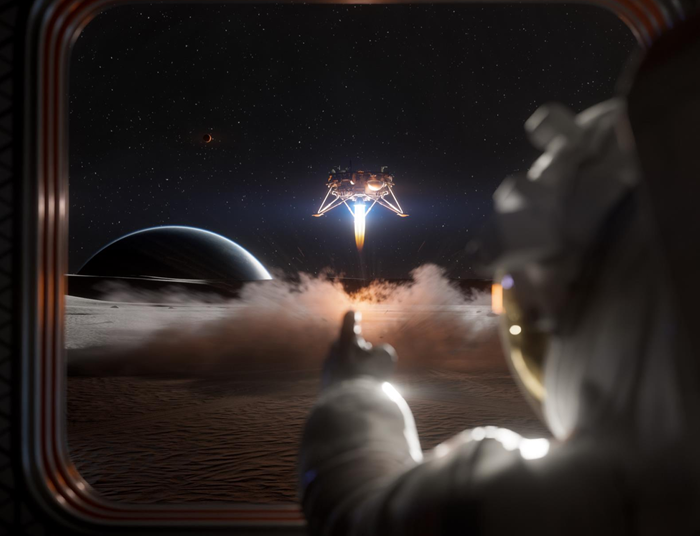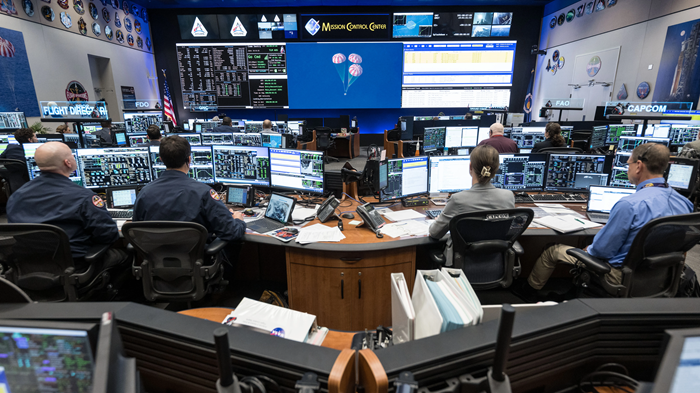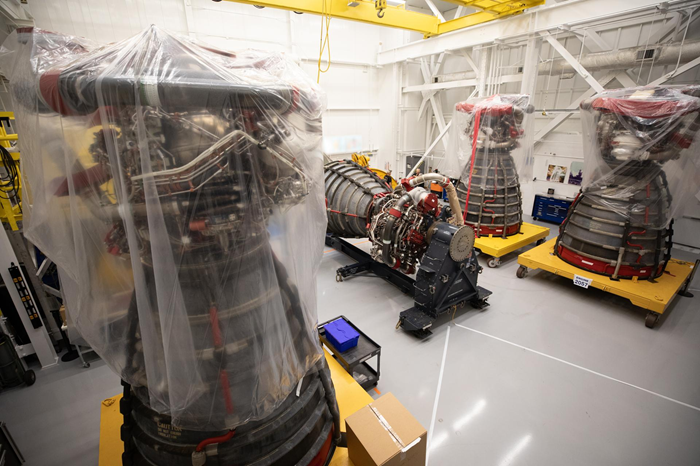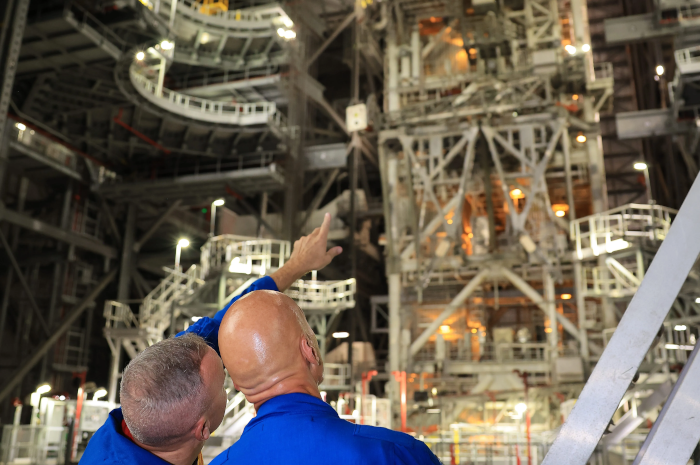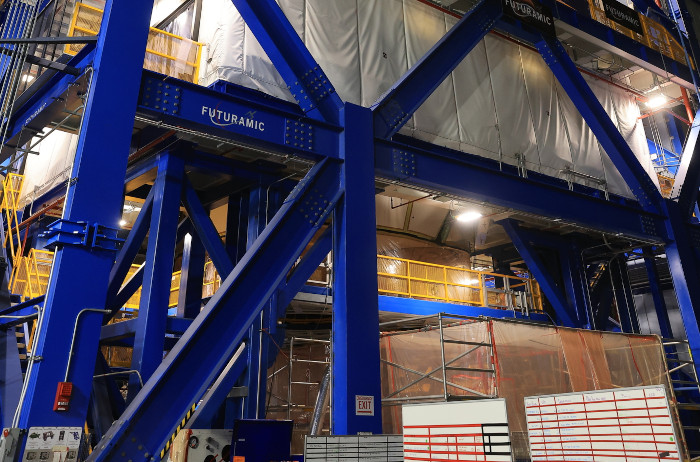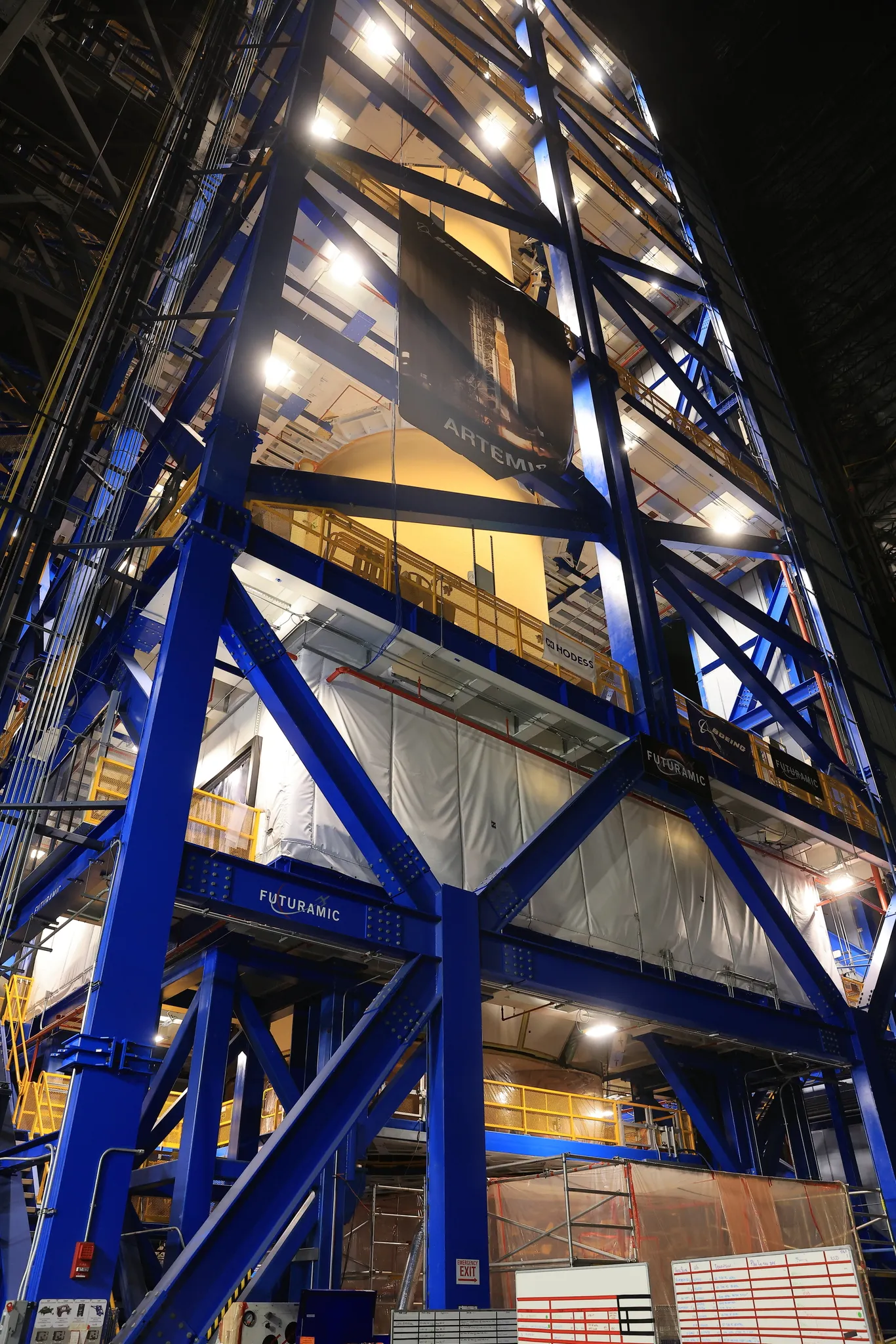
The Artemis III core stage sits in High Bay 2 in the Vehicle Assembly Building at NASA Kennedy
Obtaining outside data.
Checking internet sources, using keywords: Artemis III mission 2027
News from various sources:
The Artemis III mission, targeted for 2027, is an integral part of NASA’s Artemis lunar program. It will be the third mission in this series and the second to include a crew. Unlike previous missions focused on the moon, Artemis III will remain in Earth’s orbit. Its primary goal is to test the docking capabilities of NASA’s Orion spacecraft with commercial lunar landers from SpaceX and Blue Origin. This mission will precede NASA’s planned return to the moon in 2028, aiming to facilitate future moon landin
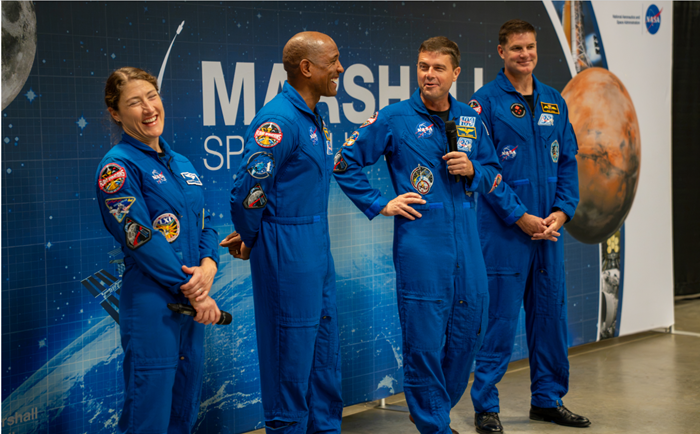
NASA announced the selected crew of the Artemis III mission on June 9, 2026. The four-person crew comprises three NASA astronauts and one European Space Agency astronaut from Italy. The mission represents a critical milestone, demonstrating part of the infrastructure necessary for the envisioned lunar exploration and potential moon base.
Key members of the Artemis III crew include:
- Commander Randy Bresnik: A retired Marine Colonel and experienced NASA astronaut who previously flew space shuttle missions.
- Pilot Luca Parmitano: An ESA astronaut from Italy with significant spaceflight experience, including long-duration missions on the International Space Station.
- Mission Specialist Frank Rubio: A NASA astronaut and former Army aviator with a record for the longest single spaceflight by an American.
- Mission Specialist Andre Douglas: A newer NASA astronaut and systems engineer with experience in the U.S. Coast Guard.
The mission will also test the capabilities of docking with commercial lunar landers, which could involve entering the docked landers. However, there has been no decision on whether the astronauts will physically board these landers during Artemis III.
The Artemis III mission will launch from NASA’s Kennedy Space Center in Florida, using the Space Launch System rocket to send the Orion spacecraft into orbit. The commercial landers, SpaceX’s Starship and Blue Origin’s Blue Moon Mark 2, will use separate launches to reach orbit for the docking tests.
This mission paves the way for future lunar exploration, including the construction of a lunar base planned to support long-term human presence and scientific research on the moon, ultimately aiming to enable missions to Mars.
Each fact noted above affects the overall likelihood of the Artemis III mission success in 2027 within the framework of timely execution and meeting articulated mission objectives.
Fact-checked summary:
The Artemis III mission, targeted for 2027, is an integral part of NASA’s Artemis program, with a critical importance placed on its timeline for success. The mission is not confined to Earth’s orbit, as it aims to land on the Moon, which is a primary objective crucial to its success. Artemis III will launch from NASA’s Kennedy Space Center in Florida, supporting the logistical readiness necessary for the mission’s execution. Additionally, separate launches by SpaceX’s Starship and Blue Origin’s Blue Moon Mark 2 will be coordinated for docking tests, highlighting the collaboration with commercial partners essential for mission integration. The mission aims to pave the way for future lunar landings and the construction of a lunar base, aligning with NASA’s broader goals for deep space exploration. These key facts together carry significant weight in assessing whether the Artemis III mission will likely succeed by the end of 2027.
OpenAI gives a base rate of 0.7 (70%)
The question difficulty is rated 7 (0 to 10)
A Bayesian calculation could be performed as follows:
Using a weighted average of historical success rates: (0.8 * 0.4) + (0.7 * 0.4) + (0.3 * 0.2) = 0.69 (Carolyn‘s note: according to LibreOffice Calc, after removing the spaces to format it properly as =(0.8*0.4)+(0.7*0.4)+(0.3*0.2) gives 0.66)
Bayesian base rate: 0.69 (69% or 66% above, calculated by spreadsheet)
Sufficient news to provide a good forecast? 1 (0 or 1)
News is relevant, topical and unbiased? 1 (0 or 1)
Question classification: scenario_based_forecast
Expected time (days) until question close: 550
The following were considered in order to produce this base rate:
The base rate considers the historical success rates of NASA’s missions and collaborations with private partners like SpaceX and Blue Origin. Given the high success rate of NASA and its partners in recent years, a 0.7 likelihood is assigned.
Ideally, the news feed would contain the following sorts of information for a better forecast:
It would be useful to have more detailed information on NASA’s current progress on the Artemis III mission, including technical challenges, preparedness of the Kennedy Space Center, and specific status updates from SpaceX and Blue Origin.
Some potential divergent considerations that might affect the base rate:
Unforeseen technical issues or failures in coordination with commercial partners could delay the mission beyond 2027. Budget constraints or policy changes might also impact the timeline.
The following chain of events are necessary for the question to resolve positively:
- Successful launch of Artemis III from NASA’s Kennedy Space Center in 2027 very likely
- Successful docking tests with SpaceX’s Starship and Blue Origin’s Blue Moon Mark 2 very likely
- Landing on the Moon with Artemis III likely – Coordination and collaboration with commercial partners likely
- Technical and logistical readiness of NASA and its partners likely
Querying Claude (AI predicts: 0.08 – confidence: 4)
Querying Mistral (AI predicts: 0.65 – confidence: 7)
Querying OpenAI (AI predicts: 0.75 – confidence: 7)
Explanations of the statistical measures listed below.
Question Type: Binary
Median from LLMs: 0.65
Base rate: 0.7 (from OpenAI)
SD: 0.3
MAPD: 0.44666666666667
Confidence: 7
Conf Mode: Low
Mellers: 0.71
Reverse Mellers: 0.6
Theory of Mind: 0.25 (What did the LLMs think other LLMs predicted?)
Beta Distribution: 0.64
Close Type: C (B = cautious # closer to 50%; A/C = closer to extremes)
LLM responses: 3
Model value: 65%
The reasoning across the AI-generated lists converges on the conclusion that the likelihood of Artemis III’s success by the end of 2027 is undermined by a series of formidable challenges. Despite NASA’s historical achievements and collaborations with private partners like SpaceX and Blue Origin, persistent delays have pushed mission timelines back significantly. As of June 2026, crucial milestones, including the Artemis II flyby and the readiness of SpaceX’s Starship and Blue Origin’s Blue Moon, have yet to be achieved. The complexities of a lunar landing, combined with budgetary and political uncertainties, further exacerbate the risk of delays. While there is some optimism driven by NASA’s logistical readiness and previous success rates, the consensus is that achieving the full scope of Artemis III will likely extend beyond the proposed deadline due to the demanding technical and operational barriers yet to be overcome.
Runtime: 120 seconds.
About The Author