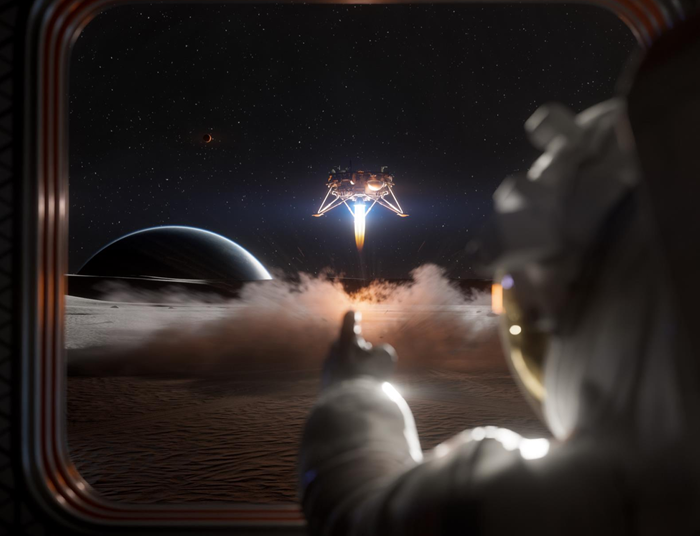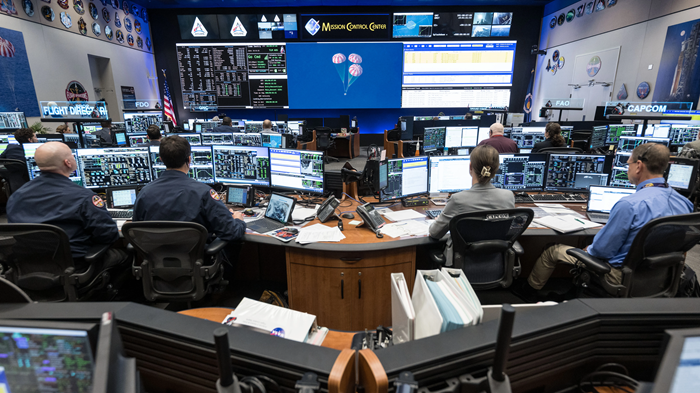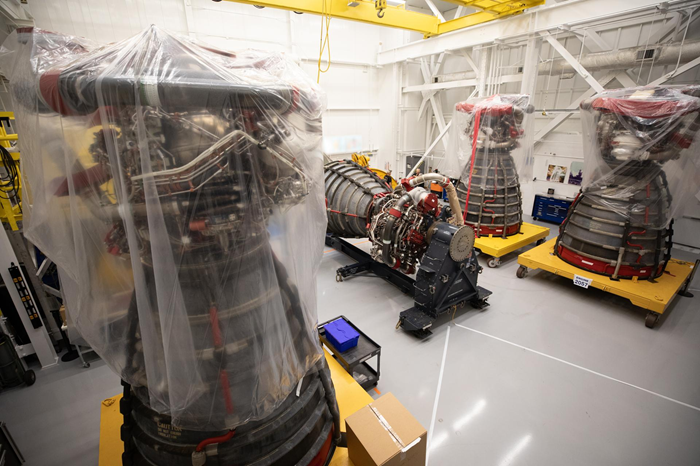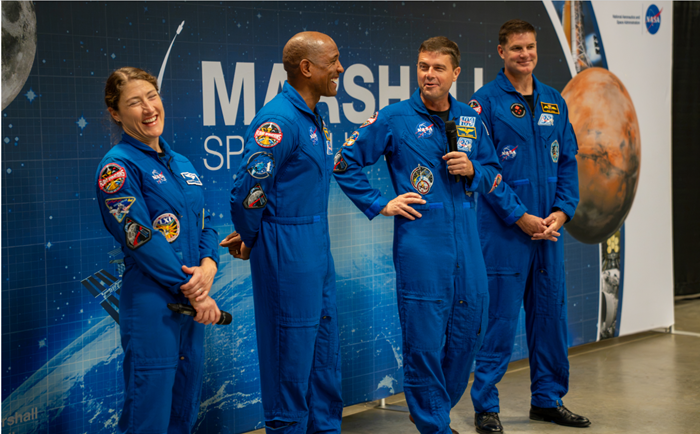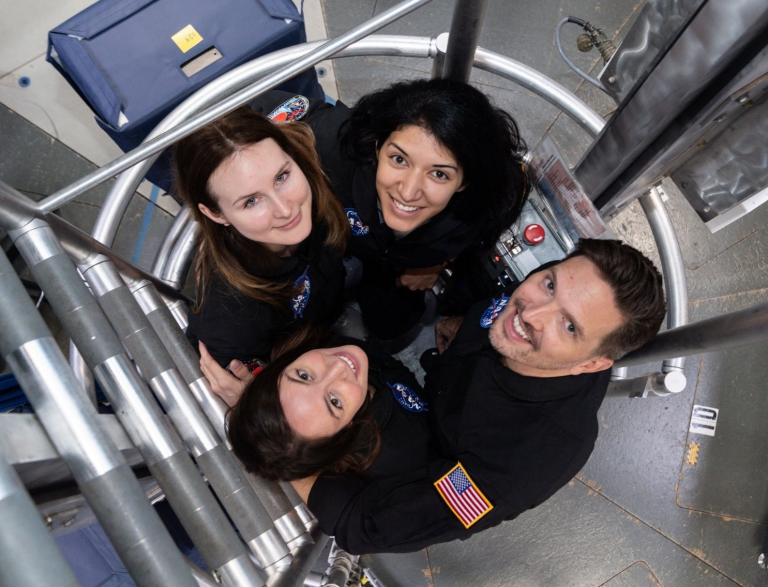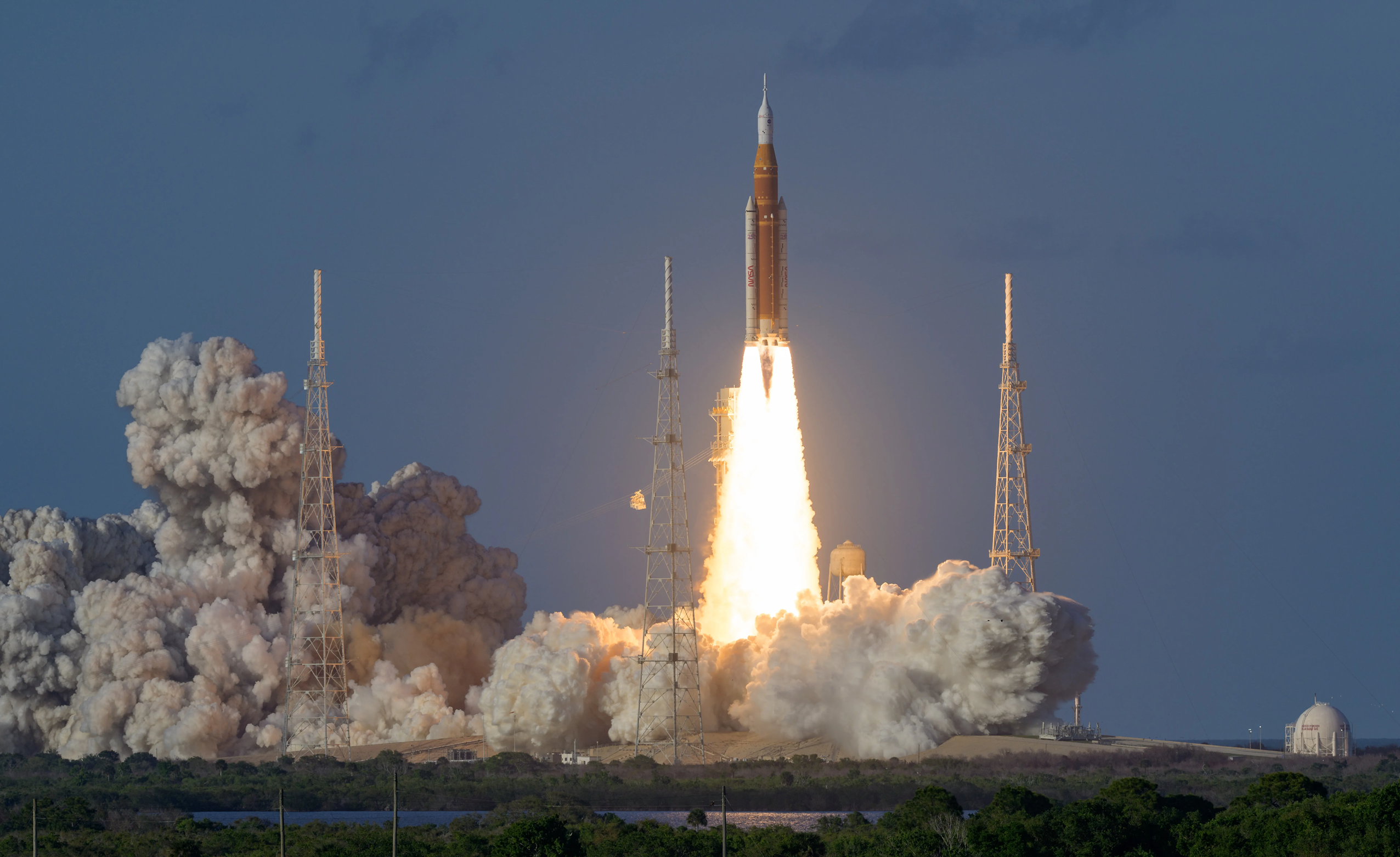
NASA’s Space Launch System rocket launches carrying the Orion spacecraft with NASA astronauts Reid Wiseman, commander; Victor Glover, pilot; Christina Koch, mission specialist; and CSA (Canadian Space Agency) astronaut Jeremy Hansen, mission specialist.
Obtaining outside data.
Checking internet sources, using keywords: Artemis III orbital mission 2027
News from various sources:
The Artemis III mission, scheduled for 2027, represents a significant step in NASA’s Artemis lunar program. Initially meant to be a crewed lunar landing mission, Artemis III has been restructured into an orbital mission focused on testing essential systems required for future lunar exploration. The mission will involve multiple complex tests of docking procedures and systems integration in low Earth orbit, preparing for a crewed lunar landing with Artemis IV in 2028
Mission Specifics:
- Artemis III will launch from Kennedy Space Center, Florida, on the Space Launch System (SLS) rocket, carrying the Orion spacecraft and its four-person crew.
- The crew will conduct rendezvous and docking operations with commercial Human Landing Systems (HLS) being developed by SpaceX and Blue Origin.
- Planned tests will involve the Orion spacecraft docking with a Blue Origin pathfinder lander and later a SpaceX Starship pathfinder for systems validations in orbit.
- The mission aims to assess new spacesuit designs and life support systems and will conduct a spacewalk to evaluate their functionality in preparation for future lunar missions.
Crew:
- Commander: Randy Bresnik, a decorated former Marine Corps colonel and experienced astronaut with extensive space mission and test piloting experience.
- Pilot: Luca Parmitano, an ESA (European Space Agency) astronaut and Italian Air Force colonel.
- Mission Specialists: NASA astronauts Andre Douglas, an engineer with comprehensive space systems expertise, and Frank Rubio, a physician and Army aviator noted for his record-breaking spaceflight.
- Backup: Bob Hines, a veteran Air Force pilot with significant experience from the NASA SpaceX Crew-4 mission.
Mission Goals:
- Pave the way for Artemis IV’s crewed lunar landing at the Moon’s South Pole in 2028.
- Develop and refine systems and procedures needed for sustained lunar exploration and the future construction of a lunar base.
- Collect vital operational data to inform and optimize subsequent missions in the Artemis program, including those targeting Mars and other deep-space endeavors.
The mission is seen as a major technological and international collaboration milestone, marked by high-stakes testing of varying international and commercial spaceflight systems that form part of a broader strategy for long-term human presence beyond Earth.
Overall, these facts outline the goals, structure, and key aspects of the Artemis III mission. While specific crew members are mentioned, their identification is less crucial to the mission’s predicted technical outcomes.
Fact-checked summary:
Artemis III, scheduled for 2027, has been restructured from a crewed lunar landing mission into an orbital demonstration mission, a critical update that defines its revised objectives. It is important to note that this mission will test essential systems required for future lunar exploration, utilizing the Space Launch System (SLS) rocket to launch from Kennedy Space Center, Florida, and carrying the Orion spacecraft with a crew of four. The mission involves docking operations with commercial Human Landing Systems (HLS) from SpaceX and Blue Origin, testing new spacesuit designs and life support systems through a spacewalk, as well as conducting high-stakes testing of international and commercial spaceflight systems. These elements are significant to the resolution of whether Artemis III will succeed by the end of 2027, given they pertain directly to the updated mission structure and goals.
OpenAI gives a base rate of 0.7 (70%)
The question difficulty is rated 6 (0 to 10)
Historical weighted factors include:
Historical success rate of NASA crewed missions, 0.3
Success rate of recent Artemis program missions, 0.5
Track record of SpaceX and Blue Origin in docking missions, 0.2
A Bayesian calculation could be performed as follows:
Combining historical success rates: 0.3 * 0.9 (NASA crewed missions) + 0.5 * 0.8 (Artemis program) + 0.2 * 0.85 (SpaceX and Blue Origin) gives a weighted sum = 0.87 (87%) (Carolyn’s note: close, but not accurate. Showing my work, it should be (0.3*0.9)+(0.5*0.8)+0.2*0.85 = 0.84 (84%))
Bayesian base rate: 0.87 (87%)
Sufficient news to provide a good forecast? 1 (0 or 1)
News is relevant, topical and unbiased? 1 (0 or 1)
Question classification: scenario_based_forecast
Expected time (days) until question close: 559
The following were considered in order to produce this base rate:
The base rate is based on NASA’s strong track record with SLS and Orion missions, including current capabilities and planned developments. The restructuring into an orbital demo mission increases feasibility within the timeframe.
Ideally, the news feed would contain the following sorts of information for a better forecast:
More information on the progress of commercial HLS systems and spacesuit testing would increase accuracy. Updates on specific technical readiness levels for integrated systems would be helpful.
Some potential divergent considerations that might affect the base rate:
Potential setbacks might occur in testing or integration of commercial systems, or in spacewalk safety. Delays in system readiness from the commercial partners could affect the timeline.
The following chain of events are necessary for the question to resolve positively:
- Successful launch of the Space Launch System (SLS) rocket from Kennedy Space Center, Florida, by 2027. (Likely)
- Successful deployment and operation of the Orion spacecraft with a crew of four. (Likely)
- Successful docking operations with commercial Human Landing Systems (HLS) from SpaceX and Blue Origin. (Moderately likely)
- Successful testing of new spacesuit designs and life support systems during a spacewalk. (Moderately likely)
- Effective testing of international and commercial spaceflight systems during the mission’s demonstrations. (Likely)
Querying Claude (AI predicts: 0.18 – confidence: 4)
Querying Mistral (AI predicts: 0.65 – confidence: 7)
Querying OpenAI (AI predicts: 0.75 – confidence: 7)
Explanations of the statistical measures listed below.
Question Type: Binary
Median from LLMs: 0.65
Base rate: 0.7 (from OpenAI)
SD: 0.25
MAPD: 0.38
Confidence: 7
Conf Mode: Low
Mellers: 0.71
Reverse Mellers: 0.6
Theory of Mind: 0 (What did the LLMs think other LLMs predicted?)
Beta Distribution: 0.65
Close Type: C (B = cautious # closer to 50%; A/C = closer to extremes)
LLM responses: 3
Model value: 65%
The restructuring of Artemis III from a crewed lunar landing to an orbital demonstration mission increases its feasibility by reducing complexity, but several critical challenges remain. Successful achievement of the mission by the end of 2027 is contingent on overcoming historical delays, such as those experienced with Artemis I and II, and requires the alignment of multiple concurrent developments: the SLS launch readiness, Orion spacecraft operations, and integration of commercial Human Landing Systems from SpaceX and Blue Origin. Despite progress and NASA’s track record, integration of new technologies, such as spacesuits and life support systems, introduces substantial risk due to their unproven deployment in real mission conditions. Concerns regarding compressed timelines, potential budgetary or political influences, and the readiness of commercial partners remain significant factors contributing to varied likelihood predictions for mission success, which estimates range from 18% to 65% based on these variables.
Runtime: 149 seconds.
About The Author