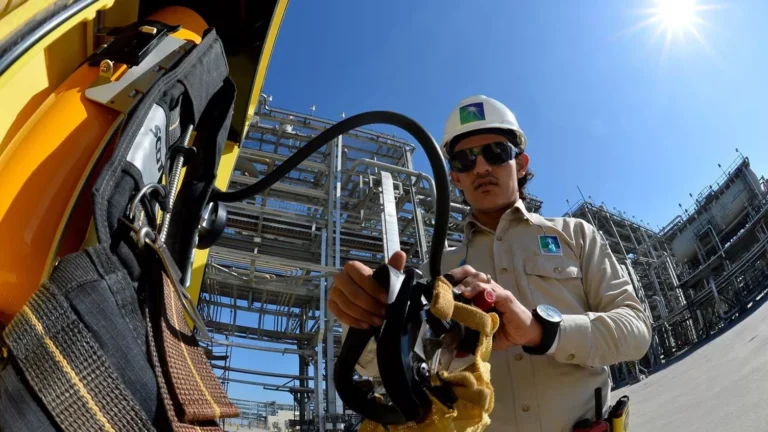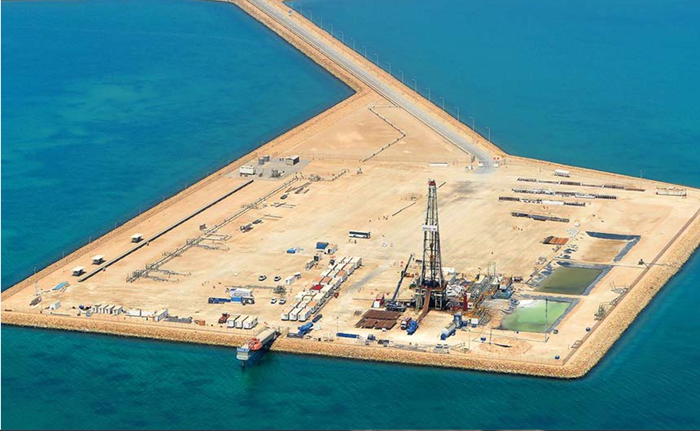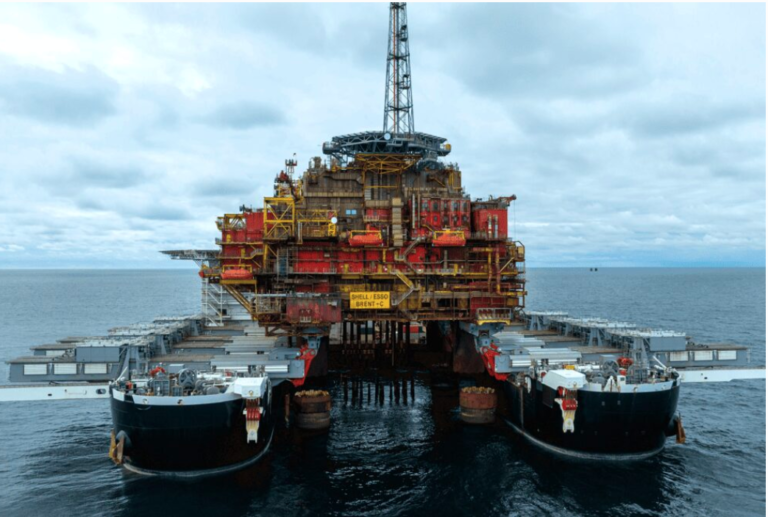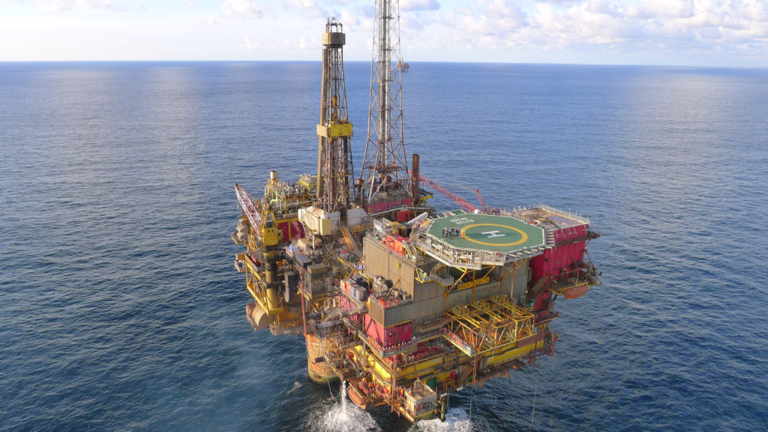
Origin of the benchmark "Brent crude" for oil prices. Shown here:"Alpha," the first oil platform in the Brent oil field of the North Sea. A storm is underway
Obtaining outside data.
Checking internet sources, using keywords: Brent Crude price 2026
News from various sources:
The web content provided dives into the Brent crude oil market trends and expectations for 2026. Here’s a summary of the key points and predictions related to the Brent crude price in 2026:
- Market Conditions: Brent crude prices are influenced by geopolitical events, primarily the US-Iran relationship and the strategic Strait of Hormuz. Recent negotiations between the US and Iran and an interim peace agreement have led to increased oil flows through the vital strait, reducing the geopolitical risk premium on oil prices.
- Price Predictions: Various reports and expert analyses give mixed predictions for Brent crude prices. UBS predicts Brent crude could end 2026 at around $85 per barrel, while other analyses by Wood Mackenzie and other market observers suggest that Brent crude could average around $92 through 2026 before easing to $78 in 2027. This fluctuation reflects anticipated supply recoveries and continued geopolitical volatility.
- Geopolitical Impact: The conflict involving the Strait of Hormuz resulted in significant price volatility. With the US-Iran peace discussions, the Brent crude price dropped back to pre-war levels below $74 as fears of prolonged disruption faded. This indicates how sensitive Brent prices are to geopolitical stability.
- Economic Implications: The expectation of an improved supply situation has implications for inflation and consumer prices worldwide. In the US, drivers may not see immediate relief at the gas pump due to supply chain lags and existing inventory costs, though a gradual decline in prices is anticipated.
- Market Dynamics: The normalization of flows through the Strait of Hormuz is crucial, and trucking conditions are being closely monitored. Inventories and refining margins are also significant factors. Refining margins remain high despite eased crude markets, illustrating ongoing tightness in refined products supply.
Overall, the market for Brent crude in 2026 is expected to remain under pressure from geopolitical events, especially US-Iran relations, while recovering supply dynamics and the resolution of shipping disruptions will be key to price stability.
The analysis suggests that while there are fluctuations and significant factors at play, the predictions do not indicate an expectation of Brent crude oil prices falling below $50 per barrel in 2026, based on the provided information.
Fact-checked summary:
Based on the provided facts, geopolitical events, especially those involving the US-Iran relationship and the strategic Strait of Hormuz, play a crucial role in influencing Brent crude prices, making this an important factor in understanding potential price volatility up to 2026. Current market responses to geopolitical developments, such as peace discussions between the US and Iran, have shown the potential to lower oil prices, as evidenced by Brent crude prices dropping below $74. However, price predictions for 2026 from entities like UBS and Wood Mackenzie, which estimate prices around $85 to $92 per barrel, do not suggest that prices will fall below $50. Overall, while geopolitical events are critical in influencing price trends, current forecasts do not indicate Brent crude prices will drop below $50 by 2026.
OpenAI gives a base rate of 0.1 (10%)
The question difficulty is rated 7 (0 to 10)
Historical weighted factors include:
Global geopolitical stability, 0.3
Advancements in alternative energy, 0.2
Global economic health, 0.3
Oil supply and production levels, 0.2
A Bayesian calculation could be performed as follows:
Using historical factors, the likelihood of Brent crude prices falling below $50 by 2026 would consider prior events where similar conditions were met. Bayesian update would adjust prior probability of 0.1 based on low likelihood of required geopolitical and economic changes happening within the next 6 months.
Bayesian base rate: 0.08 (8%)
Sufficient news to provide a good forecast? 1 (0 or 1)
News is relevant, topical and unbiased? 1 (0 or 1)
Question classification: scenario_based_forecast
Expected time (days) until question close: 180
The following were considered in order to produce this base rate:
The base rate is developed by assessing the historical frequency of significant drops in Brent crude prices, evaluating ongoing geopolitical and economic indicators, and considering expert forecasts such as those by UBS and Wood Mackenzie.
Ideally, the news feed would contain the following sorts of information for a better forecast:
A more precise forecast would benefit from detailed insight into possible legislative or political shifts in oil-consuming and producing countries, and potential technological innovations affecting energy markets.
Some potential divergent considerations that might affect the base rate:
Unexpected economic downturns or technological advances in the energy sector could rapidly shift oil demand and prices, while unpredicted geopolitical tensions could either stabilize or further destabilize the region, affecting supply and prices.
The following chain of events are necessary for the question to resolve positively:
- Significant advancements in peace or political resolutions that lead to stability in the Middle East. Unlikely
- Major technological breakthroughs in alternative energy that reduce the demand for oil. Unlikely
- Severe global economic recession reducing oil demand significantly. Possible
- Large increases in oil supply, perhaps due to new discoveries or lifting of production restrictions. Possible
Querying Claude (AI predicts: 0.12 – confidence: 5)
Querying Mistral (AI predicts: 0.25 – confidence: 6)
Querying OpenAI (AI predicts: 0.05 – confidence: 9)
Explanations of the statistical measures listed below.
Question Type: Binary
Median from LLMs: 0.12
Base rate: 0.1 (from OpenAI)
SD: 0.08
MAPD: 0.13333333333333
Confidence: 6
Conf Mode: Normal
Mellers: 0.05
Reverse Mellers: 0.21
Theory of Mind: 0.08 (What did the LLMs think other LLMs predicted?)
Beta Distribution: 0.32
Close Type: A (B = cautious # closer to 50%; A/C = closer to extremes)
LLM responses: 3
Model value: 12%
The consensus prediction from various AI analyses is that Brent Crude prices are unlikely to fall below $50 per barrel in 2026, given historical trends and current market forecasts. Historically, Brent Crude prices have dipped below this level only during major economic disruptions, such as the 2008 financial crisis or the 2020 COVID-19 pandemic. Experts expect prices to remain between $85 and $92 per barrel based on ongoing geopolitical tensions, moderate economic growth, and OPEC+’s influence in stabilizing oil markets. While the possibility of prices dropping significantly cannot be entirely ruled out, it would require extraordinary global circumstances like a severe economic recession, dramatic technological advancements, or a substantial increase in oil supply due to unexpected geopolitical changes. Nonetheless, the general market conditions and expert projections suggest Brent Crude will remain above this threshold barring any unforeseen major events.
Runtime: 124 seconds.
About The Author