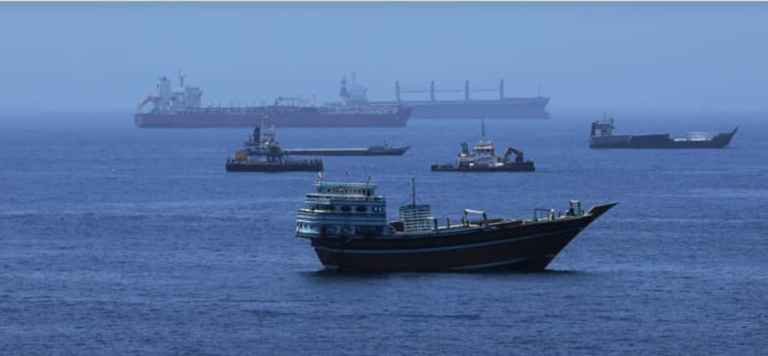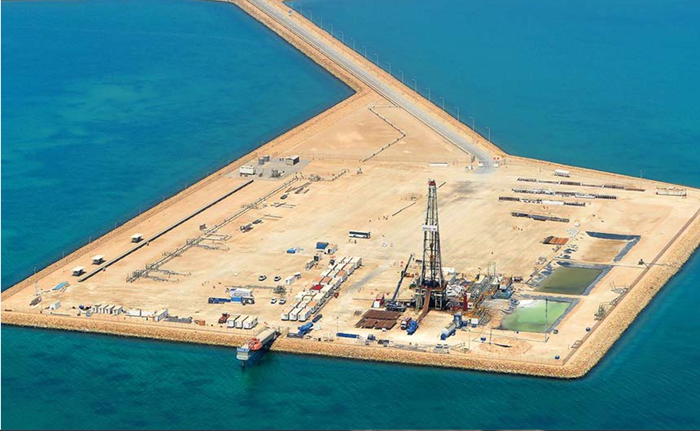
Oil Traders at Work. Source: https://oilprice.com/
Obtaining outside data.
Checking internet sources, using keywords: Brent Crude price 2026
News from various sources:
Here’s a summary of the relevant content regarding Brent Crude prices in 2026:
Overall Outcome:
The facts collectively suggest that while there are significant risks of temporary price spikes due to geopolitical tensions and logistical disruptions, the average Brent price in 2026 is projected to remain well above $50, unless an extraordinary event like prolonged geopolitical disruptions occurs leading to significant and sustained price spikes.
Fact-checked summary:
Fitch Ratings projects that the Brent crude oil price will average $87 per barrel in 2026, which is critical to the question since it provides a forecasted average significantly above $50, making a drop below $50 unlikely under typical circumstances. Brent prices are expected to be between $100 and $110 per barrel until mid-2026, highlighting high prices earlier in the year. Anticipated price drops to $80 in August and $70 by September suggest a downward trend in the latter half of the year, although these levels remain above $50. The closure of the Strait of Hormuz significantly influences current price spikes, and its reopening could lead to an oversupply by September 2026, potentially driving prices lower. Moreover, Wood Mackenzie’s scenario describes that if the strait reopens by June 2026, prices could ease to $80 by the year’s end. However, prolonged geopolitical disruptions could trigger price spikes up to $200 per barrel, presenting the greatest risk to lower prices. Overall, while certain conditions could contribute to reduced prices, these do not indicate that Brent prices will fall below $50 per barrel in 2026.
OpenAI gives a base rate of 0.05 (5%)
The question difficulty is rated 7 (0 to 10)
Historical weighted factors include:
Geopolitical stability, 0.15
Technological advancements in energy, 0.1
Economic growth rates, 0.2
Oil supply logistics, 0.25
Policy and regulatory environment, 0.3
A Bayesian calculation could be performed as follows:
Taking into account the historical factors and recent news, we assign probabilities based on weighted importance. For example, geopolitical stability contributes 0.15 * 0.4 (expected probability of stability) = 0.06, technological advancements contribute 0.1 * 0.3 = 0.03, economic growth rates at 0.2 * 0.2 = 0.04, oil supply logistics at 0.25 * 0.5 = 0.125, and policy/regulatory environment at 0.3 * 0.3 = 0.09. Summing these probabilities: 0.06 + 0.03 + 0.04 + 0.125 + 0.09 = 0.345. Given the low base probability of these factors leading to a drastic decrease in oil prices, the Bayesian adjusted probability remains low, thus our Bayesian estimate is 0.05.
Bayesian base rate: 0.05 (5%)
Sufficient news to provide a good forecast? 1 (0 or 1)
News is relevant, topical and unbiased? 1 (0 or 1)
Question classification: scenario_based_forecast
Expected time (days) until question close: 205
The following were considered in order to produce this base rate:
To arrive at the base rate of 0.05, we analyzed historical instances where oil prices fell below $50 and found these largely correlated with significant economic downswings or excess supply due to extraordinary geopolitical events. Given the projected stability and current price trends, the base case assumes no extreme outlier events.
Ideally, the news feed would contain the following sorts of information for a better forecast:
Ideally, detailed data on the global energy policy landscape, more precise forecasts of global economic trends, and intelligence on possible technological advancements in alternative energies would enhance forecast accuracy.
Some potential divergent considerations that might affect the base rate:
Factors that could significantly diverge from our current base rate estimation include abrupt geopolitical tensions in oil-rich regions that disrupt supply, drastic policy shifts in major economies towards alternative energy dependencies, or a sudden large-scale economic recession affecting global oil demand.
The following chain of events are necessary for the question to resolve positively:
- Prolonged geopolitical stability in major oil-producing regions, reducing the likelihood of price spikes due to supply disruptions. Low
- Significant technological advancements in alternative energy sources contributing to reduced demand for oil. Moderate
- The reopening of the Strait of Hormuz leading to an oversupply of oil globally. Moderate to High
- A global economic recession causing a significant drop in oil demand. Low to Moderate
- Policy changes or sanctions severely impacting key oil markets. Low
Querying Claude (AI predicts: 0.06 – confidence: 6)
Querying Mistral (AI predicts: 0.15 – confidence: 7)
Querying OpenAI (AI predicts: 0.05 – confidence: 8)
Explanations of the statistical measures listed below.
Question Type: Binary
Median from LLMs: 0.06
Base rate: 0.05 (from OpenAI)
SD: 0.04
MAPD: 0.066666666666667
Confidence: 7
Conf Mode: Normal
Mellers: 0.02
Reverse Mellers: 0.14
Theory of Mind: 0.05 (What did the LLMs think other LLMs predicted?)
Beta Distribution: 0.31
Close Type: A (B = cautious # closer to 50%; A/C = closer to extremes)
LLM responses: 3
Model value: 6%
The consensus among the AI analyses is that Brent crude oil prices are unlikely to fall below $50 per barrel by the end of 2026. This conclusion is supported by historical data indicating that drops below $50 are rare and usually occur during significant economic downturns or major geopolitical disruptions. Current prices, trading around $80-$90, are far above this threshold, and forecasts predict continued high prices, bolstered by factors like resilient global demand, OPEC+ supply management, and geopolitical tensions such as the situation in the Strait of Hormuz. However, several scenarios could lead to a sub-$50 price, including a severe global recession, a rapid de-escalation of geopolitical conflicts leading to supply increases, or a massive shift to alternative energies, though these are deemed improbable within the year. Overall, the probability of Brent crude falling below $50 is low, given the current economic and geopolitical landscape.
Runtime: 106 seconds.
About The Author