U.S. Army Soldiers Conduct Operations in the Middle East. U.S. Army paratroopers prepare an M119 howitzer for a fire mission during a field artillery live-fire exercise in the Middle East. The exercise validated capabilities, demonstrating the synchronized lethality required to systematically target and degrade adversaries in multi-domain combat operations. (U.S. Army photo) Source: https://www.centcom.mil/MEDIA/IMAGERY/
Grok response:
List of 10 Citations:
- 2026 Strait of Hormuz crisis (Wikipedia). Description: Detailed entry on the ongoing crisis triggered by the 2026 Iran war. Published/updated: ~August 2026 (crawled August 6, 2026). Summary: Shipping through the Strait has been largely blocked by Iran since February 28, 2026, following U.S./Israeli strikes; traffic dropped near zero with only limited or managed recovery by June; LNG and oil flows remain severely constrained amid continued attacks and declarations of closure.[1]
- Traffic slows through Strait of Hormuz as Iran tensions flare (Reuters). Description: Report on recent ship-tracking data amid renewed tensions. Published: July 10, 2026. Summary: LNG and oil tanker traffic dropped to its lowest daily level since late June, with only 10 ships transiting on one day versus a pre-war average of 125–140; some ballast LNG tankers entered but overall volumes far below normal despite occasional transits.[2]
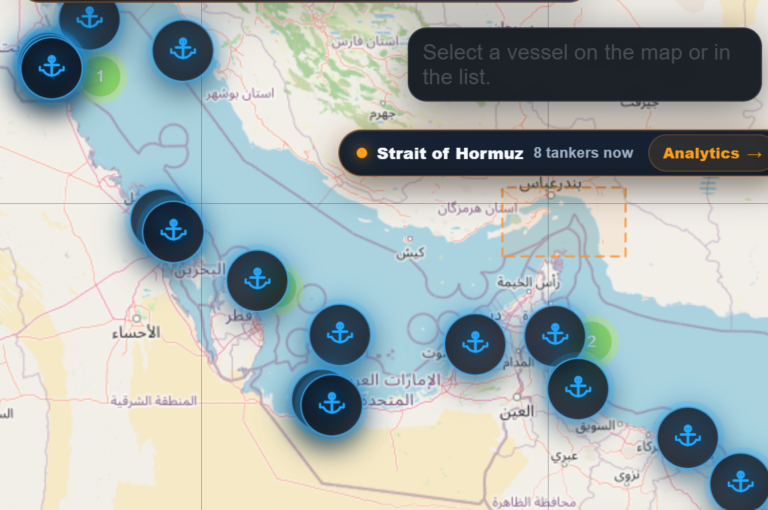
- Strait of Hormuz Live Traffic Tracker (hormuzstraitmonitor.com). Description: Real-time monitoring site with current status. Updated: August 4–6, 2026. Summary: Strait remains CLOSED since February 28, 2026 (159+ days); current daily throughput at ~3% of normal (2 ships, 315K DWT); 25% of global LNG normally transits but flows are minimal due to IRGC restrictions.[3]
- More LNG, Japan-Linked Vessels Transit Hormuz Despite Renewed Mideast Tensions (gCaptain/Reuters). Description: Article on resumed but limited LNG movements. Published: July 10, 2026. Summary: At least five ballast LNG tankers entered recently, including Qatar-linked vessels; daily traffic rose modestly but remained well below pre-conflict levels amid ongoing fighting; highlights risks even with partial resumption.[4]
- 2026 Iran war (Wikipedia). Description: Overview of the broader conflict affecting the Strait. Published/updated: August 5–6, 2026 (crawled same day). Summary: U.S./Israel operations against Iran ongoing since February 28, 2026, with Strait disruptions central; limited ceasefires and MoUs in spring/summer failed to fully restore flows; attacks on vessels, including LNG carriers, continued into July.[5]
- Qatari LNG Ship Struck in Strait of Hormuz, Testing US Talks (gCaptain/Bloomberg). Description: Report on attack on a Nakilat LNG carrier. Published: July 7, 2026. Summary: First Qatari LNG tanker hit by projectile while exiting the Strait, damaging efforts to revive exports; incident occurred near Omani coast and tested fragile agreements to halt attacks; underscores persistent security risks for LNG traffic.[6]
- Hormuz Disruption to Stall 2026 LNG Trade… (gCaptain/Reuters). Description: Analysis of global LNG impacts. Published: June 30, 2026. Summary: Disruptions have shut in ~20% of global monthly LNG supply since February; Shell noted potential flat 2026 trade if flows normalize soon, but warned of ongoing effects from the Iran war; no full recovery evident at time of reporting.[7]
- Strait of Hormuz disruptions: Implications for global trade… (UNCTAD). Description: Assessment of early conflict impacts. Published: March 10, 2026. Summary: Ship transits reacted quickly to escalation with near-halt in flows; prices rose sharply; 20–25% of oil/LNG trade normally passes through but was effectively blocked.[8]
- Iran Conflict and the Strait of Hormuz (Congressional Research Service). Description: U.S. policy analysis of maritime threats. Published: March 11, 2026 (updated references through mid-2026). Summary: Iran declared closure in early March with attacks on transiting ships; traffic essentially at standstill; U.S. explored options to reestablish free transit amid ongoing hostilities.[9]
- Hormuz ship traffic remains restricted… (Anadolu Agency). Description: Update on limited daily movements. Published: ~April 30, 2026. Summary: Only 11 vessels moved through in a 24-hour period amid restrictions; flows remain far below normal despite occasional passages; reflects persistent Iranian controls and security concerns.[10]
Rundown of Relevant News (as of August 6, 2026):
The 2026 Iran war, which began with U.S. and Israeli strikes on February 28, has led to Iran blocking or severely restricting traffic through the Strait of Hormuz, a key route for ~20% of global LNG (primarily from Qatar and the UAE). Live trackers and reports confirm the strait remains effectively CLOSED or heavily managed, with daily transits at 2–10% of pre-war averages (normal ~60–140 ships/day) and LNG flows near zero or limited to sporadic ballast/empty tankers.[3][2]
Recent months (June–July 2026) saw tentative increases in some oil/LNG movements and MoUs/ceasefire talks, but renewed attacks—including on Qatari LNG carriers in early July—halted progress and kept traffic constrained.[6][4] gCaptain has documented these incidents and partial resumptions but has not reported de facto unimpeded international LNG traffic. Broader war developments, including ongoing U.S. strikes and Iranian responses as recently as early August, continue to sustain the disruption.[5]
No authoritative gCaptain report indicates full unimpeded status; expert and data sources (Kpler, LSEG, AIS trackers) consistently show severe ongoing restrictions. Resolution by end-2026 would require a major de-escalation or agreement restoring normal flows, which current trends do not yet support.
=== Forecast Result ===
This forecast assesses the probability of international LNG traffic through the Strait of Hormuz becoming “de facto unimpeded” by December 31, 2026, as reported by gCaptain. The current date is August 6, 2026.
Reasoning Rationale
- Current Status is Severely Restricted: As of early August 2026, all available research confirms that LNG traffic through the Strait of Hormuz is far from unimpeded. Following the start of the Iran war in February, the strait has been described as “operational but highly constrained”, with traffic at a small fraction of pre-war levels. Recent LNG movements have been the first in weeks and are characterized as sporadic, single-vessel events requiring explicit Iranian permission, rather than a return to routine commerce. The waterway is effectively operating under a “permission-based” regime, with freedom of navigation suspended. This is the opposite of “unimpeded.”
- Interpreting “De Facto Unimpeded”: The resolution criteria require traffic to be “no longer halted or severely restricted.” As the arbiter, gCaptain, a specialized maritime publication, would likely interpret this based on commercial and operational reality. This would require a return to:
- Normal Traffic Volumes: A sustained flow of multiple LNG carriers daily, not just isolated events.
- Restoration of Free Passage: An end to the “permission-based” system where Iran acts as a gatekeeper.
- Commercial Normalcy: A reduction of war risk insurance premiums to reasonable levels and the lifting of force majeure declarations by major exporters like QatarEnergy.
- The High Bar for Resolution by Year-End: For the situation to resolve as “Yes” by December 31, a rapid and profound shift is needed within the next ~4.8 months. This would involve:
- A durable ceasefire or political settlement to the underlying US-Iran conflict.
- A reversal of Iran’s policy of controlling the strait, moving away from the planned “managed corridor” which would institutionalize its control.
- A full ramp-up of commercial operations, which itself requires a 6-8 week lead time for LNG export facilities alone, even after the strait is deemed safe.
- The Most Likely Scenario is Not “Unimpeded”: The most discussed potential development is an Iran-Oman deal to create new shipping corridors. However, analysis suggests this would formalize Iranian control within its territorial waters, creating a managed, and possibly tolled, regime. While this might increase traffic volumes from their current nadir, it would codify a system of control and restriction, making it the antithesis of “de facto unimpeded.” This scenario, a form of managed reopening, is the most probable outcome but would resolve the question as No.
- Probability Synthesis: The path to a “Yes” resolution requires a cascade of low-probability events. A durable peace treaty must be signed very soon (e.g., by October) to allow time for commercial confidence and operational capacity to be restored by year-end. Given the conflict has been active for six months, such a swift and complete resolution is highly unlikely. The inertia of the current “no war, no peace” standoff is strong. However, the immense economic pressure on all parties creates a non-zero chance of a diplomatic breakthrough. My forecast assigns a low probability to this optimistic scenario, acknowledging it is possible but improbable.
- Key Assumption 1: The Iran-Oman deal, if it happens, will formalize a restricted system, not an unimpeded one. (Probability of this being wrong: <10%)
- Key Assumption 2: gCaptain will interpret “unimpeded” as requiring a return to near-normal commercial conditions, not just a slight increase in traffic. (Probability of this being wrong: <15%)
- Key Assumption 3: A full political and military resolution to a six-month war will not be achieved and implemented within the next 4.8 months. (Probability of this being wrong: ~10-15%)
Considering these factors, the probability of LNG traffic becoming de facto unimpeded by the deadline is very low.
Probability: 8%
About The Author