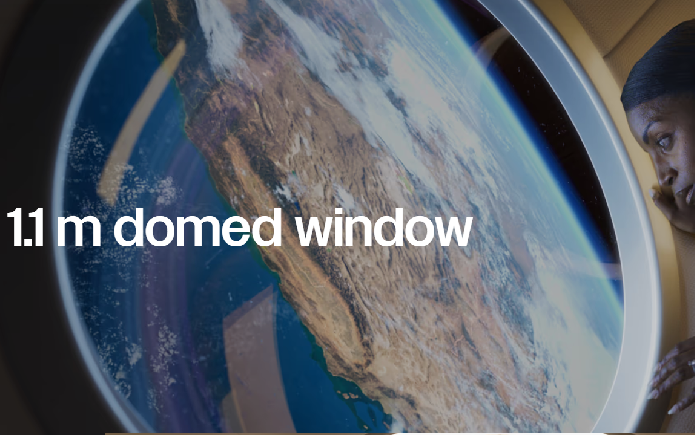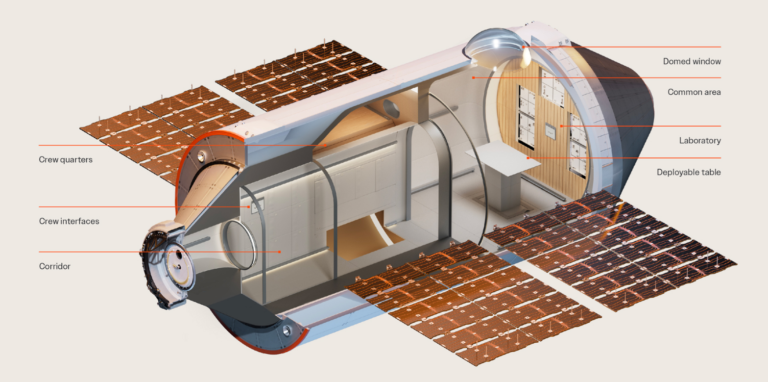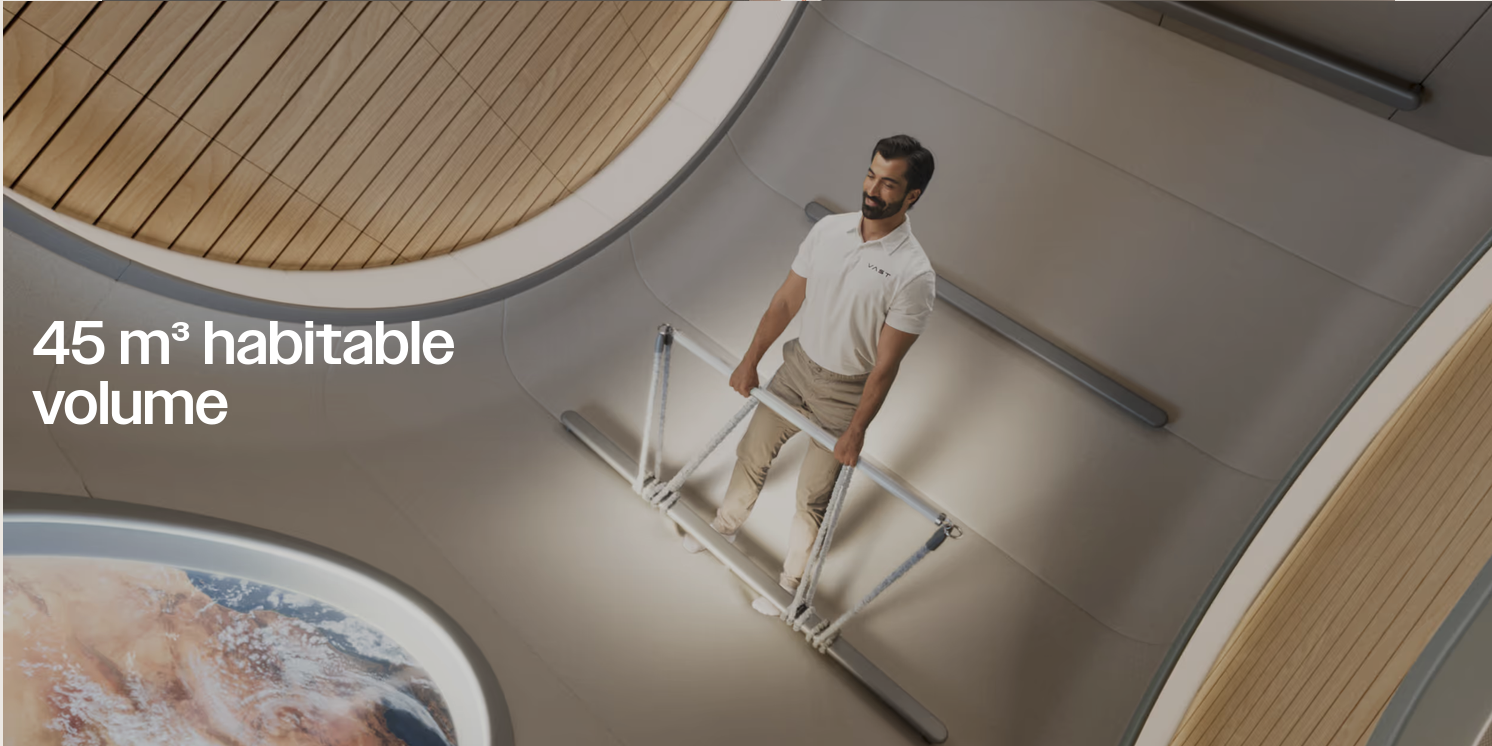
SpaceX Dragon spacecraft. The mission will include opportunities to conduct advanced science, research, development, and in-space manufacturing. Source: https://www.vastspace.com/haven-1
Grok response:
Here is a list of 10 key citations with publication dates and summaries relevant to potential new space habitats and timelines:
- “Vast Delays Haven-1 Launch to 2027” (Payload Space, Jan 20, 2026): Reports Vast’s announcement shifting Haven-1 (single-module commercial station for 4 crew, up to 30-day stays) from a 2026 target to no earlier than Q1 2027 on Falcon 9; notes first crewed mission could follow launch by as little as two weeks or much longer.[1]
- Private Space Stations article (NSS, undated but referencing early 2026 updates): Details Haven-1 timeline slip in early 2026 to Q1 2027 earliest; contrasts with Axiom plans and notes Haven-1 as potential first standalone commercial station if successful.[2]
- Starlab site (Airbus, crawled July 2026): States Starlab launch currently scheduled for 2029 on Starship, with operations starting weeks later to ensure continuity post-ISS; emphasizes single-launch, no-assembly design.[3]
- Starlab Wikipedia (updated ~Feb 2026 context): Confirms no earlier than 2029 launch after completing NASA Commercial Critical Design Review in Feb 2026; notes focus on research continuity before ISS end-of-decade retirement.[4]
- “Inside Orbital Reef” (Ex Terra Media, Jan 26, 2026): Notes Orbital Reef (Blue Origin/Sierra Space) completed System Definition Review with NASA in June 2025 but remains behind competitors like Axiom in hardware maturity; questions 2027 operational targets as overly optimistic.[5]
- Blue Origin LEO Destinations page (crawled July 2026): Describes ongoing CLD Phase 1 work on Orbital Reef concept but provides no updated launch or crewed timeline beyond 2021-era plans.[6]
- Axiom Space Wikipedia (updated ~Dec 2024–2026 context): Outlines revised plans with first module (PPTM) targeted for 2027 launch to attach to ISS, separation in 2028, and independent free-flying operations later; first independent habitat elements post-2027.[7]
- SpaceX Starship Wikipedia (crawled July 2026): Focuses Starship development on Artemis lunar landings (uncrewed ~2027, crewed ~2028) with no near-term plans for LEO habitat use or station conversion before 2028.[8]
- NASA commercial stations article (June 24, 2026): States NASA target for commercial station crewed on-orbit demonstrations (min. 4 crew, 30 days) is no later than 2030; notes multiple companies in development with phased funding.[9]
- Vast Haven-1 progress reports (various 2025–early 2026): Show pre-delay progress toward 2026 launch (primary structure, testing) but confirm the Q1 2027 slip announced January 2026, with Haven Demo testbed already flown.[1]
Key context as of July 29, 2026: Haven-1 remains the leading candidate for the first new habitat visit. Its launch is now targeted no earlier than Q1 2027, with potential crewed missions (via Crew Dragon) possible shortly thereafter—potentially enabling a human visit before end-2027 if integration and operations proceed smoothly. No other listed projects (Starlab, Orbital Reef) have credible timelines for launches or visits before 2028–2029. Axiom’s initial modules attach to the ISS and do not create an independent new habitat until 2028+. Starship concepts focus on lunar use, with no LEO habitat demonstrations imminent. No authoritative sources indicate accelerated timelines or new entrants that would enable a visit in the remaining 2026–2027 window.
Extracted resolution criteria links:
[‘https://www.space.com/nasa-considering-spacex-starship-space-station‘, ‘https://www.blueorigin.com/destinations,’, ‘https://voyagertechnologies.com/starlab/,’]
=== Forecast Result ===
Analysis Framework
Primary Candidate: Haven-1 (Vast Space)
Analysis Framework
Primary Candidate: Haven-1 (Vast Space)
This question essentially hinges on one project: Haven-1. All other candidates (Orbital Reef, Starlab, Starship-station concepts) are clearly not ready for crewed visits by end-2027.
Haven-1 Timeline Evidence:
- January 2026: Official announcement delaying from 2026 to “no earlier than Q1 2027” for launch
- Mid-2026: ~80% complete, with launch still described as “next year” from multiple sources
- After uncrewed launch: crewed mission “as little as 2 weeks or as long as much more” after launch
Critical Assumptions Analysis
Assumption 1: Haven-1 launches in 2027 (as planned)
- Risk of failure: Already slipped once (from 2026 to Q1 2027). Still ~20% incomplete as of mid-2026. New regulatory requirements for a non-ISS docking habitat are unproven. Launch manifest issues could delay Falcon 9 slot.
- Probability it launches in 2027: ~60-65%
- Probability it launches in Q1-Q2 2027 specifically: ~45%
Assumption 2: Crewed mission follows launch within 2027
- Risk of failure: Even if launched Q1 2027, crewed mission could slip if integration issues arise. However, Crew Dragon is well-proven, and there’s institutional pressure to demonstrate quickly.
- P(crewed in 2027 | Q1 2027 launch) ≈ 88%
- P(crewed in 2027 | Q2 2027 launch) ≈ 82%
- P(crewed in 2027 | Q3 2027 launch) ≈ 65%
- P(crewed in 2027 | Q4 2027 launch) ≈ 15%
Probabilistic Calculation
Launch timing distribution:
- Q1 2027 (30% probability): 88% crewed → 26.4%
- Q2 2027 (18%): 82% crewed → 14.8%
- Q3 2027 (10%): 65% crewed → 6.5%
- Q4 2027 (7%): 15% crewed → 1.1%
- No 2027 launch (35%): 0%
Haven-1 contribution: ~49%
Other candidates (Orbital Reef, Starlab, Starship) combined: ~2%
Key Calibration Factors
- Historical base rate for these questions: ~35% resolve positively; space program schedules frequently slip
- Prior slippage: Haven-1 already delayed once, suggesting ~35-40% chance of another significant delay
- Technical simplicity favoring success: Single module + proven Falcon 9 + proven Crew Dragon = lower technical risk than most commercial station projects
- No confirmed SpaceX manifest entry for Haven-1 crewed mission yet (as of available information)
Adjusting for overcaution on commercial space timelines and the demonstrated pattern of schedule slips, I reduce from the 50% raw estimate to account for base rates and slippage patterns.
Timeline comparison:
- By June 2027: ~25%
- By December 2027 (as asked): ~43%
- By December 2028: ~72%
The question resolution depends heavily on a single event chain with inherent schedule uncertainty, meaning I should not be overconfident despite promising indicators.
Probability: 43%. All other candidates (Orbital Reef, Starlab, Starship-station concepts) are clearly not ready for crewed visits by end-2027.
Haven-1 Timeline Evidence:
- January 2026: Official announcement delaying from 2026 to “no earlier than Q1 2027” for launch
- Mid-2026: ~80% complete, with launch still described as “next year” from multiple sources
- After uncrewed launch: crewed mission “as little as 2 weeks or as long as much more” after launch
Critical Assumptions Analysis
Assumption 1: Haven-1 launches in 2027 (as planned)
- Risk of failure: Already slipped once (from 2026 to Q1 2027). Still ~20% incomplete as of mid-2026. New regulatory requirements for a non-ISS docking habitat are unproven. Launch manifest issues could delay Falcon 9 slot.
- Probability it launches in 2027: ~60-65%
- Probability it launches in Q1-Q2 2027 specifically: ~45%
Assumption 2: Crewed mission follows launch within 2027
- Risk of failure: Even if launched Q1 2027, crewed mission could slip if integration issues arise. However, Crew Dragon is well-proven, and there’s institutional pressure to demonstrate quickly.
- P(crewed in 2027 | Q1 2027 launch) ≈ 88%
- P(crewed in 2027 | Q2 2027 launch) ≈ 82%
- P(crewed in 2027 | Q3 2027 launch) ≈ 65%
- P(crewed in 2027 | Q4 2027 launch) ≈ 15%
Probabilistic Calculation
Launch timing distribution:
- Q1 2027 (30% probability): 88% crewed → 26.4%
- Q2 2027 (18%): 82% crewed → 14.8%
- Q3 2027 (10%): 65% crewed → 6.5%
- Q4 2027 (7%): 15% crewed → 1.1%
- No 2027 launch (35%): 0%
Haven-1 contribution: ~49%
Other candidates (Orbital Reef, Starlab, Starship) combined: ~2%
Key Calibration Factors
- Historical base rate for these questions: ~35% resolve positively; space program schedules frequently slip
- Prior slippage: Haven-1 already delayed once, suggesting ~35-40% chance of another significant delay
- Technical simplicity favoring success: Single module + proven Falcon 9 + proven Crew Dragon = lower technical risk than most commercial station projects
- No confirmed SpaceX manifest entry for Haven-1 crewed mission yet (as of available information)
Adjusting for overcaution on commercial space timelines and the demonstrated pattern of schedule slips, I reduce from the 50% raw estimate to account for base rates and slippage patterns.
Timeline comparison:
- By June 2027: ~25%
- By December 2027 (as asked): ~43%
- By December 2028: ~72%
The question resolution depends heavily on a single event chain with inherent schedule uncertainty, meaning I should not be overconfident despite promising indicators.
Probability: 43%
End
About The Author