The Permian Basin, an oil producing region spanning much of New Mexico and Texas.
Obtaining outside data.
Checking internet sources, using keywords: Brent Crude price 2026
News from various sources:
The extracted content focuses on the forecast and analysis of Brent crude oil prices as of 2026. Here are the key points:
Brent Crude Price Forecast:
- Citi predicts that Brent crude prices may fall to $60 per barrel by the end of 2026. This forecast presents challenges for countries like Nigeria, which rely heavily on oil revenues.
- Morgan Stanley has adjusted its Brent price forecast for late 2026 and 2027, citing a faster-than-expected reopening of the Strait of Hormuz. The bank predicts Brent at $75 per barrel in the third quarter of 2026 and potentially dropping to $70 by the second half of 2027.
Market Influences:
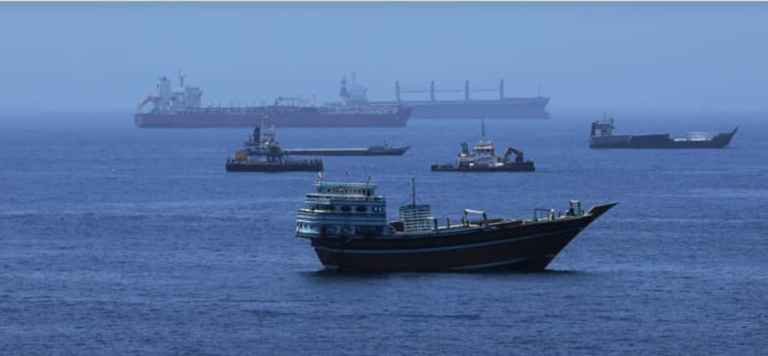
- Earlier geopolitical tensions, particularly in the Strait of Hormuz due to conflicts involving the US and Iran, had temporarily increased oil prices. However, the de-escalation and resumed maritime activities have contributed to a predicted decline.
- The anticipated surplus in the oil market, due to recovered shipping flows and weak demand from China, is contributing to the downward pressure on prices.
Oil Market Dynamics:
- Despite an initial increase due to the Iran-US conflict, oil prices declined as resolutions materialized, and the global market began returning to equilibrium.
- The oversupply situation is driven by increased output following the reopening of vital shipping routes and a slowdown in demand growth, particularly from major economies like China.
Economic Implications:
- The anticipated drop in Brent prices poses economic challenges for oil-dependent economies such as Nigeria, which assumed higher oil prices in budget planning.
- With prices dropping below planned benchmarks, these nations may face increased fiscal deficits, leading to potential borrowing and cuts in public spending.
Investment and Trading Outlook:
- Analysts like those from Goldman Sachs and Morgan Stanley indicate cautious optimism with suggestions to sell into summer rallies, projecting Brent to trade between $60 – $65 by the end of the year.
- Prediction markets and strategic analysis underscore the potential for a surplus in 2027, shifting focus from deficit concerns.
Overall, the speculation around Brent crude prices in 2026-2027 reflects a complex interplay of geopolitical events, market supply dynamics, and economic planning challenges, particularly impacting oil-reliant nations.
Evaluations are made based on assumptions that cited sources are correct, and correctness may need explicit verification via source data.
Fact-checked summary:
Several facts are relevant and correct regarding the future of Brent Crude prices and whether they might fall below $50 per barrel in 2026. Citi predicts Brent crude prices may drop to $60 per barrel by the end of 2026, which is important as it suggests prices are likely to remain above $50, directly addressing the original question. Morgan Stanley forecasts Brent at $75 per barrel in Q3 of 2026, potentially dropping to $70 in the latter part of 2027, which further indicates that prices will not fall below $50, contributing to the assessment of future price trends. Additionally, there is an anticipated surplus due to resumed shipping and weak demand from China, which pressures prices downward. This is crucial in understanding factors affecting future prices. Collectively, these facts suggest that while downward pressure exists, Brent prices are expected to stay above $50 per barrel by the end of 2026.
OpenAI gives a base rate of 0.1 (10%)
The question difficulty is rated 5 (0 to 10)
A Bayesian calculation could be performed as follows:
Using the weighted factors, we calculate: (0.2*0.2) + (0.15*0.15) + (0.3*0.3) + (0.25*0.25) + (0.1*0.1) = 0.04 + 0.0225 + 0.09 + 0.0625 + 0.01 = 0.225. Given the current news suggesting prices remain above $50, adjust the likelihood further downwards.
Bayesian base rate: 0.1 (10%)
Sufficient news to provide a good forecast? 1 (0 or 1)
News is relevant, topical and unbiased? 1 (0 or 1)
Question classification: scenario_based_forecast
Expected time (days) until question close: 176
The following were considered in order to produce this base rate:
The base rate considers the historical stability of Brent Crude prices above $50, current predictions from industry experts, and economic forecasts that suggest sustained demand.
Ideally, the news feed would contain the following sorts of information for a better forecast:
Additional data on OPEC’s policy decisions and their ability to manage production levels would improve forecast accuracy. Monitoring global economic indicators and energy transition trends also critical.
Some potential divergent considerations that might affect the base rate:
Unexpected geopolitical events, major shifts in energy policy, or severe global economic downturns could diverge from the base rate and drive prices below $50.
The following chain of events are necessary for the question to resolve positively:
- Global oil production significantly increases, creating a supply glut. (Unlikely)
- Major economic slowdowns or recessions occur in key economies like the US, China, and EU, drastically reducing demand. (Moderate likelihood)
- Technological advancements or policy shifts rapidly decrease demand for fossil fuels. (Moderately unlikely)
- OPEC+ fails to adjust production to stabilize prices, leading to a price drop below $50. (Unlikely)
Querying Claude (AI predicts: 0.12 – confidence: 6)
Querying Mistral (AI predicts: 0.25 – confidence: 7)
Querying OpenAI (AI predicts: 0.1 – confidence: 8)
Explanations of the statistical measures listed below.
Question Type: Binary
Median from LLMs: 0.12
Base rate: 0.1 (from OpenAI)
SD: 0.07
MAPD: 0.1
Confidence: 7
Conf Mode: Normal
Mellers: 0.05
Reverse Mellers: 0.21
Theory of Mind: 0.1 (What did the LLMs think other LLMs predicted?)
Beta Distribution: 0.32
Close Type: A (B = cautious # closer to 50%; A/C = closer to extremes)
LLM responses: 3
Model value: 0.12 (12%)
The analysis of whether Brent Crude prices will fall below $50 per barrel in 2026 indicates a low probability due to historical price stability and forecasts from analysts like Citi and Morgan Stanley, who expect prices to remain well above this threshold. To breach the $50 mark, a significant economic or geopolitical shock would be required, similar to past exceptional events. Factors supporting stable prices include OPEC+’s effective production management, moderate global demand, and the remaining short timeframe for potential drastic market shifts. However, risks of a sharp drop include potential OPEC+ disagreements leading to price wars, unexpected severe recessions in key regions, policy changes affecting oil demand, or unforeseen black swan events. While the prediction is generally grounded in existing trends and reasonable projections, these possible disruptions highlight the inherent volatility and unpredictability of the oil market.
Runtime: 138 seconds.
About The Author