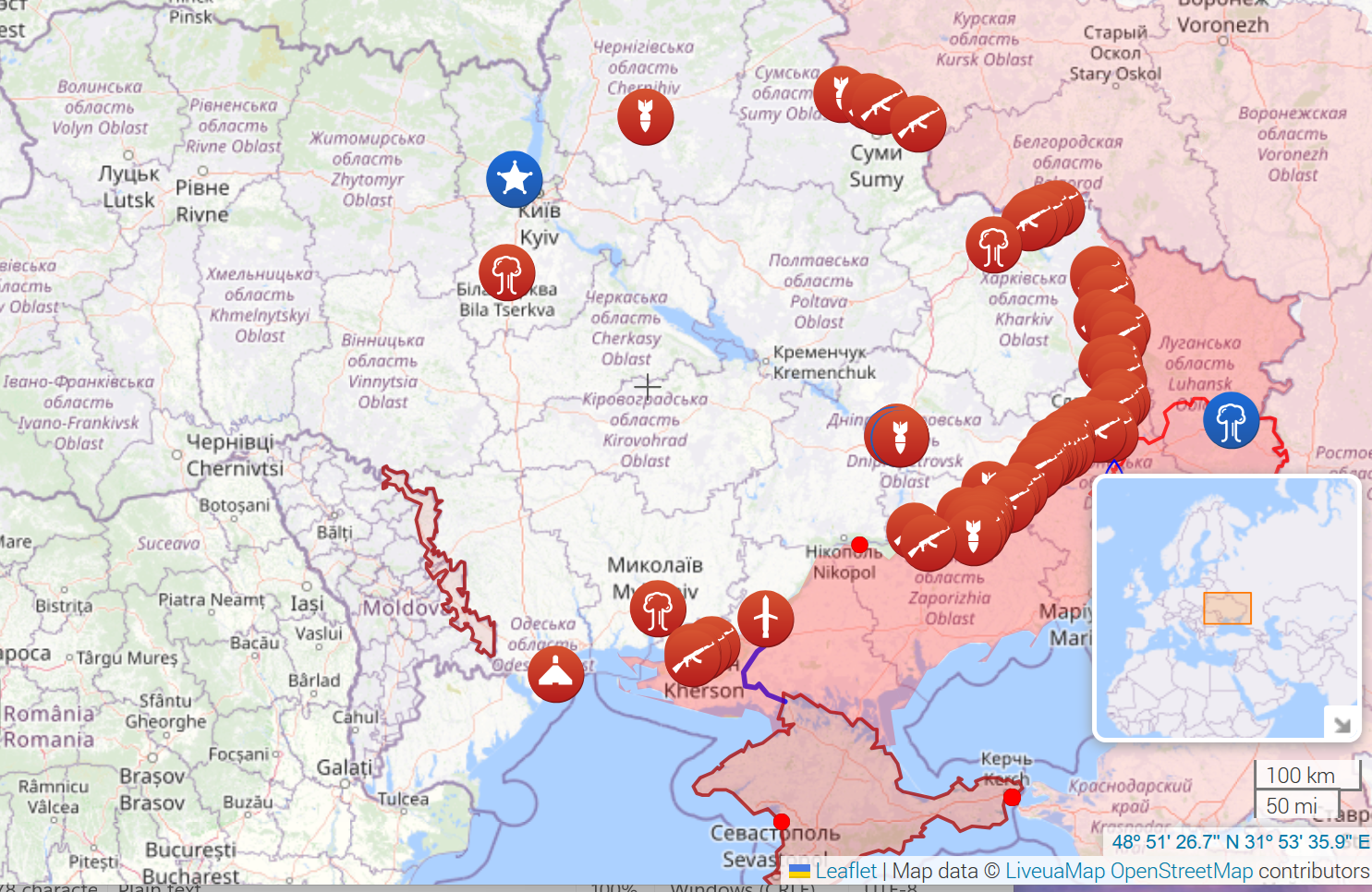
Source: https://liveuamap.com/about#world
Obtaining outside data.
Checking internet sources, using keywords: Ukraine ceasefire 2026
News from various sources:
The extracted content regarding the Ukraine ceasefire in 2026 contains several key pieces of information:
- Trump’s Announcement: U.S. President Donald Trump announced a three-day ceasefire between Ukraine and Russia starting May 9, 2026. The ceasefire includes a mutual exchange of 1,000 prisoners. Trump expressed hope that this could lead to a long-term peace agreement.
- Background of the Ceasefire: Russia had unilaterally declared a two-day ceasefire to coincide with its May 9 World War II Victory Day, a significant holiday for Russia. Ukraine had initially proposed a truce, which it claimed Moscow ignored before this announcement.
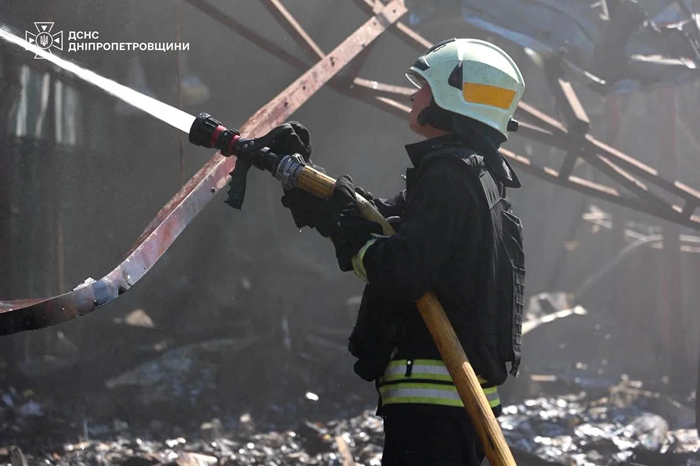
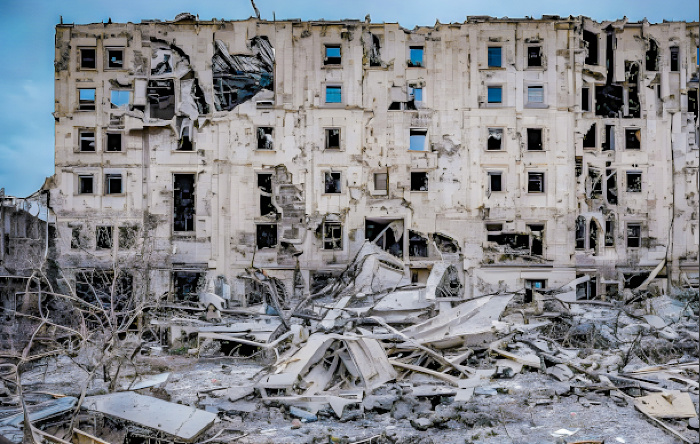
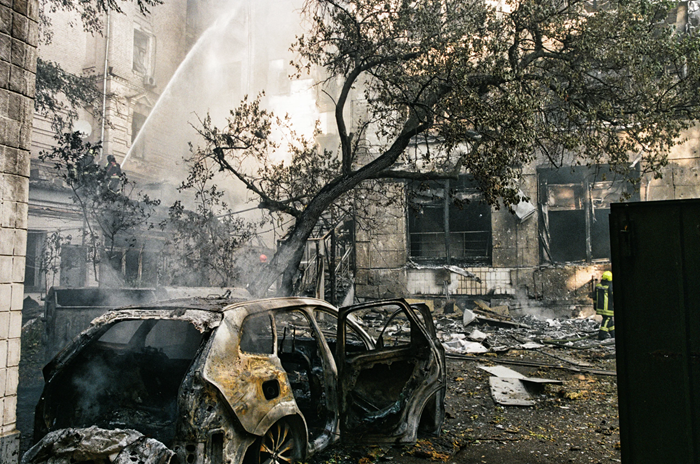
- Ceasefire Violations and Ongoing Fighting: Despite the ceasefire, conflicts continued, with both sides accusing each other of violations. Russia reported numerous violations by Ukraine, and both sides continued to launch drone and artillery strikes against each other.
- Political and Social Reactions: Ukrainian officials showed skepticism towards the Russian ceasefire offer, viewing it as a tactic to secure their Victory Day celebrations. Despite the declared truce, attacks persisted, and both the Ukrainian and Russian forces engaged in retaliatory assaults.
- International Response: UN Secretary-General António Guterres has called for a full and unconditional ceasefire, highlighting the dangers of the ongoing conflict and the need for de-escalation. The UN has reported rising civilian casualties, stressing compliance with international humanitarian laws.
- Potential for Negotiations: Although there are calls for negotiations and de-escalation, reports indicate strained relations and ongoing skepticism about the sincerity of both parties toward peace talks. Russian President Vladimir Putin expressed a willingness to discuss new security arrangements, although there is doubt regarding Russia’s commitment to peace.
- Context of War: The conflict has resulted in significant loss of life since Russia’s full-scale invasion of Ukraine began in February 2022. High civilian casualties and damage to civilian infrastructure have been reported. The conflict is underscored by historical narratives and significant national events, like Russia’s commemoration of WWII Victory Day.
Fact-checked summary:
Based on the fact-checked summary, several verified facts are relevant to the question of a ceasefire being declared in Ukraine in 2026. Russia had unilaterally declared a two-day ceasefire to coincide with its May 9 World War II Victory Day, though this followed an initially ignored truce proposal by Ukraine. This background is important as it outlines the dynamics leading to a ceasefire declaration. Despite the ceasefire, violations and ongoing fighting continued, with both sides accusing each other of attacks, which significantly affects the sustainability of the ceasefire. Ukrainian officials expressed skepticism towards the Russian ceasefire, perceiving it as a tactical move, which impacts the perceived legitimacy and implementation. UN Secretary-General António Guterres also called for a full and unconditional ceasefire, which, while underscoring international pressure for peace, holds lesser importance in directly influencing the ceasefire. Additionally, strained relations have continued, with Russian President Vladimir Putin’s expressed willingness to discuss security arrangements, though doubts about Russia’s commitment remain, underscoring the importance of negotiation potential for long-term peace. These factors offer insights into the complexity and challenges surrounding the ceasefire’s potential success and continuity in 2026.
OpenAI gives a base rate of 0.25 (25%)
The question difficulty is rated 7 (0 to 10)
Historical weighted factors include:
Past ceasefire attempts in Ukraine-Russia conflict, 0.4
International mediation interventions, 0.2
Duration and intensity of conflict, 0.3
Political stability and leadership changes, 0.1
Querying Claude (AI predicts: 0.22 – confidence: 3)
Querying Mistral (AI predicts: 0.3 – confidence: 5)
Querying OpenAI (AI predicts: 0.3 – confidence: 5)
Explanations of the statistical measures listed below.
Question Type: Binary
Median from LLMs: 0.3
Base rate: 0.25 (from OpenAI)
SD: 0.04
MAPD: 0.053333333333333
Confidence: 5
Conf Mode: Normal
Mellers: 0.23
Reverse Mellers: 0.37
Theory of Mind: 0 (What did the LLMs think other LLMs predicted?)
Beta Distribution: 0.09
Close Type: B (B = cautious # closer to 50%; A/C = closer to extremes)
LLM responses: 3
Model value: 30%
The predictions about the likelihood of a ceasefire or armistice in Ukraine by the end of 2026 weigh historical patterns of conflict resolution, recent temporary ceasefire attempts, and the current geopolitical landscape. Key points of consideration include a base rate of 0.25 for ceasefire occurrences in similar conflicts, slightly adjusted for the increased international pressure from entities such as the UN. Although a brief unilateral ceasefire by Russia in May 2026 demonstrated a willingness for short-term peace tactics, Ukraine perceives these actions with skepticism, leading to doubts over the establishment of a lasting agreement. Both sides continue to accuse one another of violations, and enduring military engagements further complicate diplomatic efforts. There is some possibility, driven by international mediation and unforeseen military or political developments, that more substantial negotiations could arise by the year’s end. However, the political climates in both Ukraine and Russia, alongside mutual distrust, suggest that only temporary and localized truces might be likely within the seven-month time frame remaining in 2026.
Runtime: 85 seconds.
About The Author