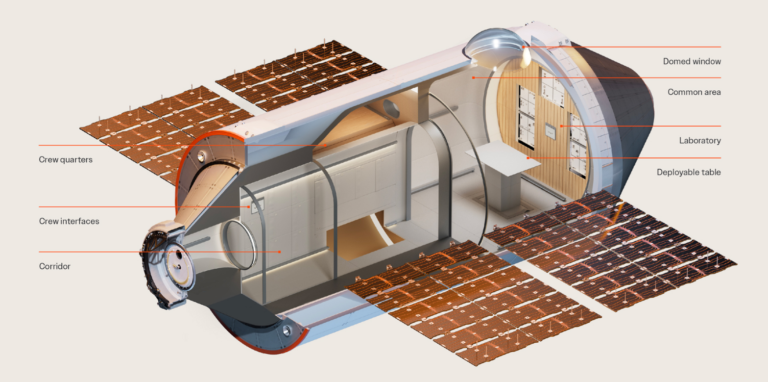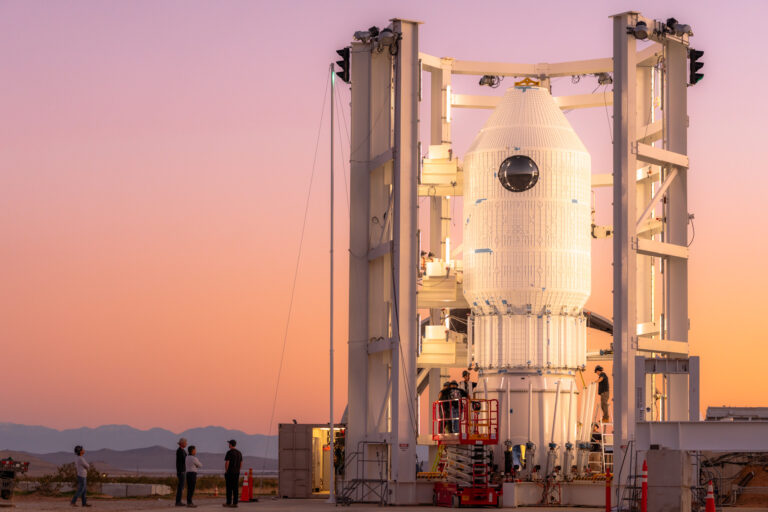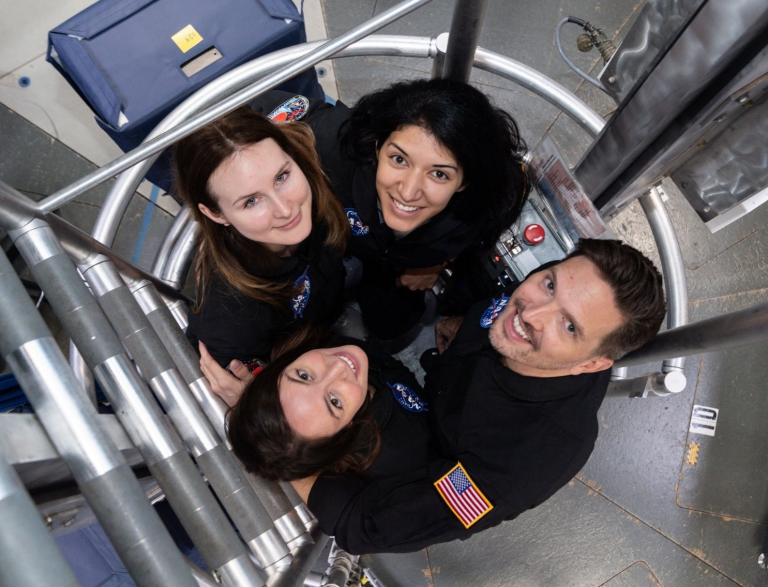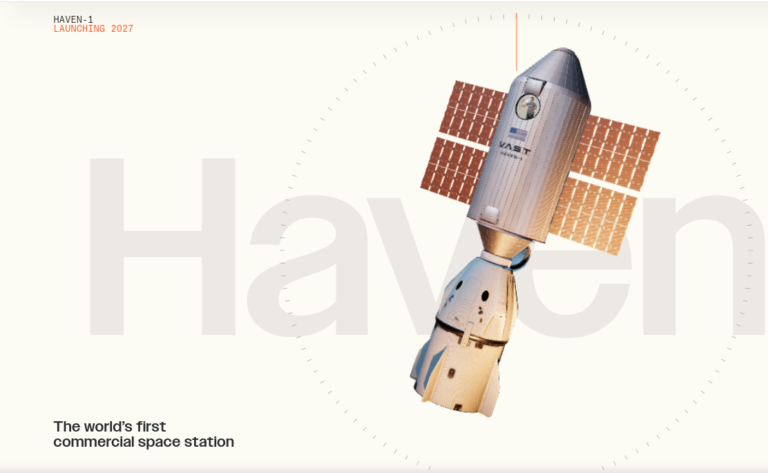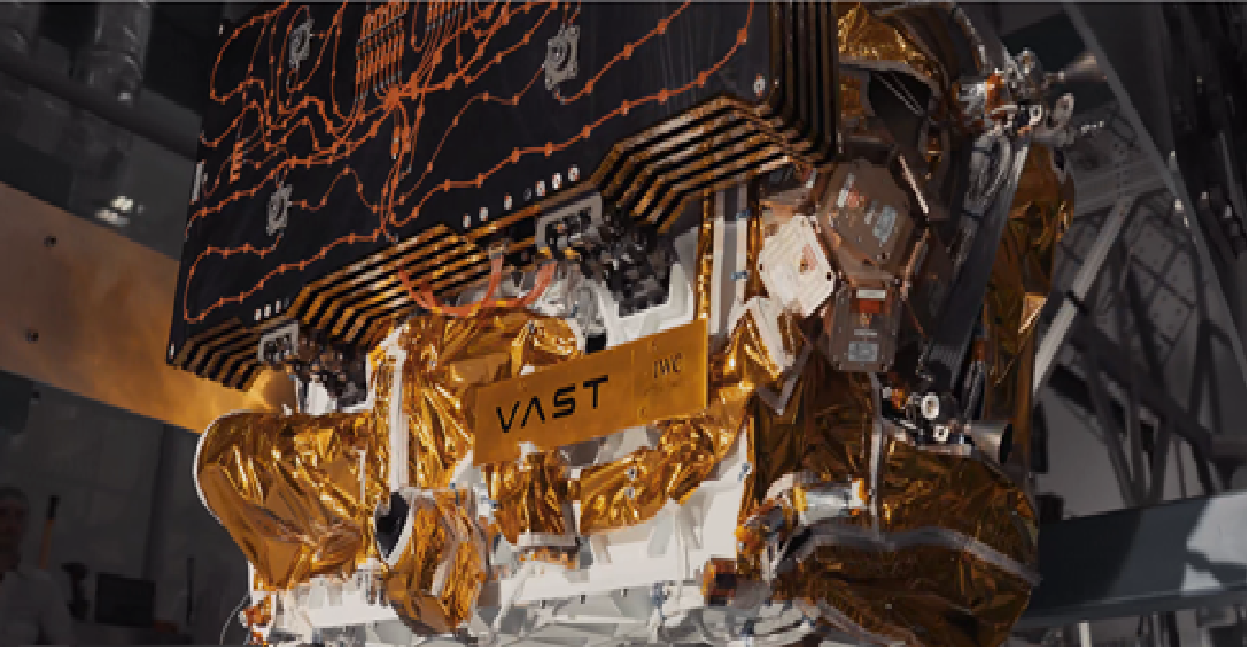
Vast recently signed a Memorandum of Understanding (MoU) with the UK government to help advance the UK’s space leadership by exploring joint opportunities in human spaceflight, STEM, the humanities, and local industry partnerships for missions on Haven-1, scheduled to be the world’s first commercial space station. Source: https://www.vastspace.com/
Grok response:
1. Vast Delays Haven-1 Launch to 2027
Payload Space news article covering Vast’s official announcement.
Published: January 20, 2026.
Vast delayed the Haven-1 launch from an expected 2026 date to no earlier than Q1 2027, with the first crew potentially arriving significantly later. The station will rely on SpaceX Dragon for crew transport, life support, and power. Vast CEO Max Haot emphasized that crewed flights will only begin once the company and SpaceX are fully confident in the station’s safety after uncrewed commissioning.[1]
2. The first commercial space station, Haven-1, is now undergoing assembly for launch
Ars Technica interview and report on Haven-1 hardware status and revised timeline.
Published: January 20, 2026.
The article details that Haven-1’s mid-2026 public launch target is no longer feasible, with integration, NASA testing at Plum Brook, and a Q1 2027 uncrewed Falcon 9 launch now planned. No crew will launch with the station itself. Crewed visits could theoretically start as early as two weeks after launch or as late as anytime during the station’s three-year lifetime.[2]
3. France Signs Historic Two-Mission Agreement with Vast to the International Space Station and Haven-1
Official Vast press release announcing a partnership with the French government.
Published: June 1, 2026.
France selected Vast for a private ISS mission (NET summer 2027) and the first crewed Haven-1 test flight, both planned as two-week missions in 2027 using SpaceX Dragon. Haven-1 is in integration at Vast’s Long Beach facility for a 2027 launch, with the first crew expected to arrive within a few weeks afterward. ESA astronauts Thomas Pesquet and Arnaud Prost are slated for the respective missions, pending approvals.[3]
4. Q&A: Axiom’s Peggy Whitson on space station assembly
Aerospace America interview with Axiom’s VP of human spaceflight.
Published: January 12, 2026.
Axiom’s initial two-module station (PPTM plus habitat) is slated for launch starting in early 2028, with crew welcome shortly thereafter. The first module is being prepared for Houston integration. This represents a shift from earlier plans to attach to the ISS in 2026–2027 before becoming free-flying.[4]
5. Voyager ‘very optimistic’ about Starlab amid potential NASA changes
SpaceNews report on Voyager Technologies’ earnings call comments.
Published: May 5, 2026.
Voyager CEO Dylan Taylor expressed strong optimism for Starlab regardless of NASA’s evolving Commercial LEO Destinations strategy. The joint venture (with Airbus and others) is prepared for either free-flyer or attached-module approaches. Starlab remains targeted for a single Starship launch well after 2027.[5]
6. NASA Changes Course on Commercial Space Stations
CSIS analysis of NASA’s March 2026 “Ignition” strategy announcement and subsequent reversal.
Published: May 27, 2026.
NASA briefly proposed a government-owned core module attached to the ISS with commercial add-ons due to doubts about the commercial business case, then reverted to supporting independent free-flyers after industry feedback. Phase 2 awards are expected in 2026, but this does not accelerate any station to operational status before the late 2020s.[6]
7. Commercial Space Stations 2026: Vast, Axiom, Starlab
Orbital Radar overview and comparison of leading commercial station projects.
Published: May 25, 2026.
Haven-1 is positioned as the first standalone commercial station with a Q1 2027 Falcon 9 launch and follow-on crewed mission. Axiom, Orbital Reef, and Starlab are all targeted for ~2028 or later. NASA’s CLD Phase 2 process is underway but does not change the near-term hardware timelines.[7]
8. Inside Orbital Reef
Ex Terra Media analysis of Blue Origin and Sierra Space progress.
Published: January 26, 2026.
Blue Origin still publicly cites a 2027 operational target for Orbital Reef, but industry analysts assessing the current design and testing state (including 2025 NASA milestones) project 2028–2030. The project has lagged competitors in hardware manufacturing and public updates.[8]
9. Starlab | Next generation space station
Airbus official page describing the Starlab joint venture.
Current as of latest crawl (mid-2026).
Starlab is designed for a single SpaceX Starship launch and will be operational within weeks of arrival, with no on-orbit assembly required. The current schedule is a 2029 launch to ensure continuity before ISS decommissioning around 2030. Partners include Voyager, Airbus, Mitsubishi, and MDA Space.[9]
10. NASA eyeing SpaceX’s Starship as possible space station
Space.com report on NASA’s Collaborations for Commercial Space Capabilities-2 agreements.
Published: July 27, 2023.
NASA entered an unfunded Space Act Agreement with SpaceX (among others) to explore converting a Starship into a low-Earth orbit destination. This remains a conceptual option alongside other CLD efforts; there have been no subsequent announcements of hardware development or crewed visits targeted before 2028.[10]
A June 2026 agreement with France explicitly schedules the first crewed Haven-1 flight (a test/acceptance mission) for 2027, with the crew arriving a few weeks after the station reaches orbit. A July 2026 update indicated the project remains on track for Q1 2027 launch. Vast has already flown a successful Haven Demo technology demonstrator. The station is designed as a standalone 45 m³ habitable volume module with a three-year lifetime supporting multiple short missions.[11]
All other named candidates are later. Orbital Reef (Blue Origin/Sierra Space) has completed some NASA design and human-in-the-loop milestones through 2025 but shows little recent public hardware progress; independent analyses from early 2026 place operations in 2028 or later despite older 2027 targets. Starlab (Voyager Technologies/Airbus joint venture) is proceeding through design reviews and has selected Starship for a single-launch, no-assembly approach, but official and Wikipedia timelines point to 2028–2029. Axiom Station’s first module (PPTM) may reach the ISS around 2027–2028 for attachment, but the free-flying commercial station itself is not expected until 2028, and visits to an ISS-attached module would not constitute a new independent habitat under the resolution criteria. NASA’s consideration of a Starship-derived station dates to a 2023 unfunded study with no follow-on hardware or 2027 timeline.[12]
NASA’s Commercial LEO Destinations program experienced significant policy flux in 2026 (a proposed shift to a government core module plus commercial attachments, then a reversal to the original free-flyer model after industry pushback). Phase 2 funded agreements are anticipated later in 2026, but this process will not produce operational new habitats in 2027. No other commercial or national projects (beyond incremental ISS or Tiangong activity) have credible 2027 crewed-visit timelines. Recent expert commentary from Vast leadership, Voyager, and independent analysts consistently identifies Haven-1 as the earliest possible new destination, with all others facing multi-year slips relative to original plans. There are no current human visits to any new habitat, as none have launched.
Extracted resolution criteria links:
[‘https://www.space.com/nasa-considering-spacex-starship-space-station‘, ‘https://voyagertechnologies.com/starlab/,’, ‘https://www.blueorigin.com/destinations,’]
=== Forecast Result ===
Analysis of “Will any new space habitat be visited by humans before end of 2027?”
Candidate Habitats Assessment
Haven-1 (Vast Space) – The primary candidate:
- January 2026: Officially delayed from 2026 to Q1 2027 (uncrewed launch)
- June 2026: France signed formal agreement for a crewed Haven-1 test flight in 2027 with named astronauts (Pesquet/Prost)
- July 2026: Reported still on track for Q1 2027 launch
- Hardware in active integration in Long Beach; primary structure, pressure testing, solar arrays, life support all cited as completed
- Crew planned to arrive “within weeks” after station reaches orbit
All other candidates substantially later:
- Orbital Reef: Analysts project 2028-2030 despite older 2027 targets
- Starlab: Explicitly “2029-ish”
- Axiom: Free-flying station 2028+
- NASA lunar base: 2030+
- Starship as station: Conceptual only (unfunded 2023 SAA)
Key Assumptions and Their Failure Probabilities
Assumption 1: Haven-1 doesn’t slip further (already slipped once from 2026 → Q1 2027)
- Space projects commonly slip again after first delay
- P(this assumption holds, i.e., launches by Q2 2027): ~55%
- P(slips to H2 2027): ~20%
- P(slips to 2028+): ~25%
Assumption 2: Crewed certification completes quickly enough after launch
- CEO explicitly said crew flies only when “fully confident”
- France deal adds institutional pressure to meet 2027 timeline
- Even with Q1 2027 launch, have ~9+ months for commissioning and crew flight
- P(crew certification fails within 2027 if launched Q1-Q2 2027): ~25-35%
Assumption 3: The France government agreement creates binding commitment
- Named astronauts, government-to-government deal
- However, NASA/government agreements don’t guarantee technical timelines
- P(deal maintains 2027 target): ~65%
Timeline Probability Breakdown
| Launch Quarter | P(Launch) | P(Crewed visit by year end) | Combined |
|---|---|---|---|
| Q1 2027 | 30% | 75% | 22.5% |
| Q2 2027 | 25% | 65% | 16.3% |
| Q3 2027 | 15% | 45% | 6.8% |
| Q4 2027 | 10% | 12% | 1.2% |
| 2028+ | 20% | 0% | 0% |
Haven-1 subtotal: ~47%
Other candidates combined: ~2-3% (extremely low probability given timelines)
Total: ~49%
Adjustments
- Overconfidence bias: Historical base rates from the instructions suggest ~35% of questions resolve positively; space programs have well-documented delay tendencies
- Positive signals: France deal (June 2026) is strongest positive signal – named astronauts, government commitment, explicitly 2027 target
- Negative signals: Haven-1 already slipped once; safety certification timeline uncertain; Vast is a new company without crewed flight heritage
- Base rate of first crewed visits to new stations: ISS, Tiangong both experienced significant delays vs. initial timelines
Netting these factors, I estimate a slight downward adjustment from ~49% to approximately 42%, accounting for the systematic optimism of space program announcements and Vast’s relative inexperience.
Probability: 42%
End
About The Author