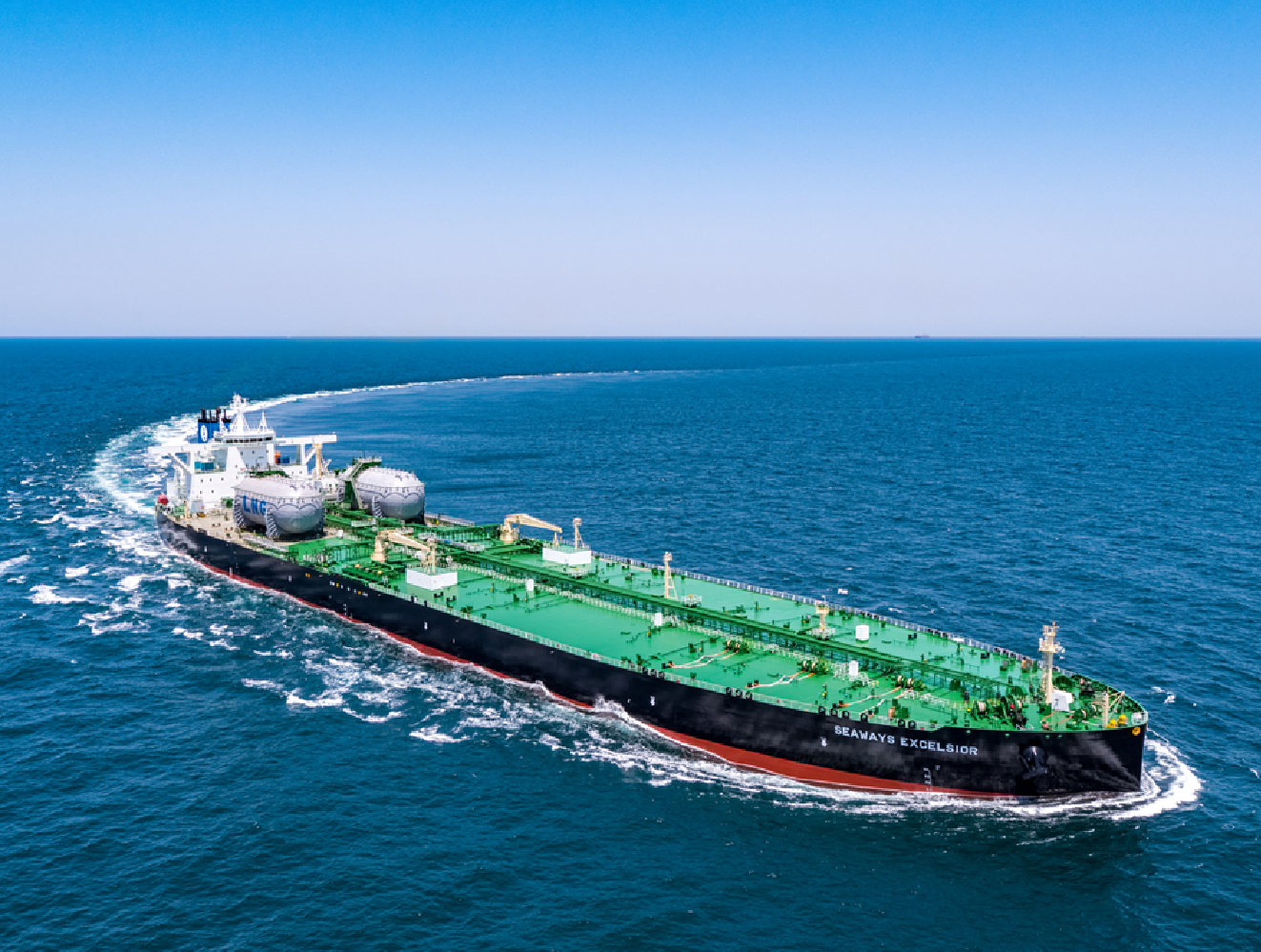
International Seaways owns and operates a fleet of 68 vessels, including 11 VLCCs, 13 Suezmaxes, five Aframaxes/LR2s, 11 LR1s (including four newbuildings), and 28 MR tankers. It is one of the largest global tanker companies focused on the seaborne transportation of crude oil and refined petroleum products. Source: https://intlseas.com/overview/default.aspx
Obtaining outside data.
Checking internet sources, using keywords: Brent Crude price 2026.
News from various sources:
Current Price Trends:
- Brent Crude prices have recently seen declines, dipping below $91, in line with the U.S. Energy Information Administration’s (EIA) forecast of $85 per barrel for Q3 2026.
- Despite recent dips, prices remain relatively high due to geopolitical tensions, particularly involving Iran and the Strait of Hormuz disruptions.
Geopolitical Influence:
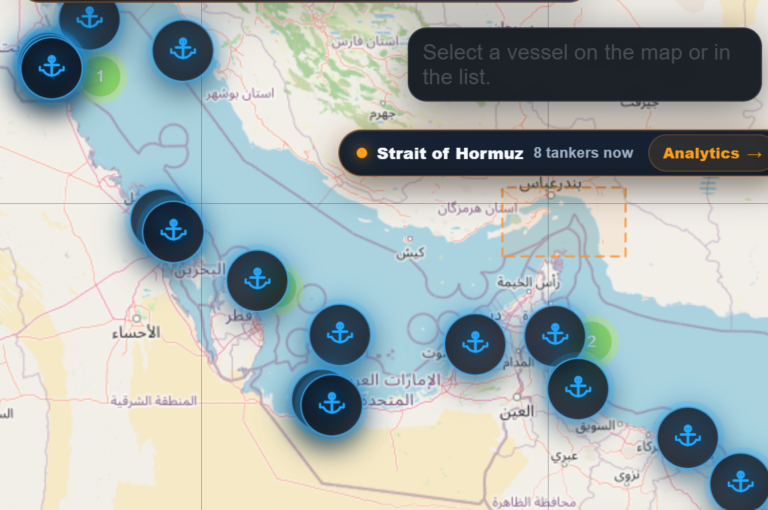
- The standoff between the U.S. and Iran, particularly concerning the Strait of Hormuz, has been a critical factor. This narrow maritime passage is crucial for global oil supply, handling a significant portion of the world’s oil flows.
- New U.S. sanctions against Iran and geopolitical tensions in the Middle East are expected to sustain a ‘risk premium’ in oil prices, keeping them elevated despite drops.
Market Forecasts and Analysis:
- Analysts and institutions like Citi and the EIA have varying forecasts, with some updates reflecting anticipated geopolitical resolutions:
- Citi raised its Q3 2026 Brent outlook to $80 per barrel, expecting eventual resolutions to U.S.-Iran negotiations.
- The EIA’s forecast aligns Brent around $85 but acknowledges current prices are higher.
- CIBC highlights the volatile nature of predictions, suggesting prices could fall to $70 with a resolution or approach triple digits if disruptions persist.
Demand and Supply Dynamics:
- Global oil demand is projected to decrease by 1.6 million barrels per day in 2026 due to high fuel prices and slowed economic activity.
- While demand outlooks are weak, supply disruptions, particularly in the Middle East, create a counterbalancing act influencing prices.
Strategic Trading:
- Traders use instruments like CFDs (Contracts for Difference) to hedge or capitalize on price movements due to geopolitical risks, with a focus on flexibility amidst price volatility.
Overall, Brent Crude prices in 2026 are caught between geopolitical uncertainties and fluctuating supply-demand dynamics. While forecasts suggest moderated prices, market sentiment remains highly sensitive to Middle Eastern geopolitical developments and potential strategic resolutions.
These facts collectively create a framework to analyze whether the price of Brent Crude might fall below $50 per barrel in 2026, understanding that the nature of forecasts and geopolitical contexts introduces uncertainty.
Fact-checked summary:
Geopolitical tensions, particularly involving Iran and the Strait of Hormuz, are currently keeping Brent crude oil prices relatively high, as this critical passage handles about 20% of the world’s traded oil and poses significant bottleneck risks. Additionally, new U.S. sanctions against Iran are expected to sustain a ‘risk premium’ in oil prices, influencing future price trends. Supply disruptions, particularly in the Middle East, also historically and currently affect Brent prices, highlighting the influence of such variables on pricing dynamics. These factors suggest that geopolitical influences and supply challenges are crucial considerations when assessing future price levels of Brent crude.
OpenAI gives a base rate of 0.65 (65%)
The question difficulty is rated 7 (0 to 10)
Historical weighted factors include:
Geopolitical Tensions in the Middle East, 0.4
US Sanctions, 0.25
Global Oil Demand, 0.2
Past Supply Disruptions, 0.15
A Bayesian calculation could be performed as follows:
Using Bayes’ theorem, we update the base rate by considering the conjunctive probabilities of the historical factors. Assuming initial base rate of 0.6 and applying weights: P(Tensions) * 0.4 + P(Sanctions) * 0.25 + P(Demand) * 0.2 + P(Past Disruptions) * 0.15 = 0.4 * 0.8 + 0.25 * 0.9 + 0.2 * 0.7 + 0.15 * 0.5 ≈ 0.65. (Carolyn’s note: I removed all the spaces, put it into OpenOffice Calc in the Windows 11 operating system and got 0.76.)
Bayesian base rate: 0.65 (65%)
Sufficient news to provide a good forecast? 1 (0 or 1)
News is relevant, topical and unbiased? 1 (0 or 1)
Question classification: scenario_based_forecast
Expected time (days) until question close: 120
The following were considered in order to produce this base rate:
The base rate reflects the likelihood of sustained high Brent crude oil prices given the combination of geopolitical, economic, and supply factors. Historical data shows that geopolitical tensions and sanctions have a significant influence on oil prices.
Ideally, the news feed would contain the following sorts of information for a better forecast:
Additional information on the actual levels of oil production cuts, alternative shipping routes around the Strait of Hormuz, and global economic indicators would be helpful.
Some potential divergent considerations that might affect the base rate:
Potential de-escalation of geopolitical tensions or breakthroughs in diplomatic talks could lower prices. A significant global economic downturn could also reduce demand and affect prices.
The following chain of events are necessary for the question to resolve positively:
- Continuation or escalation of geopolitical tensions involving Iran and the Strait of Hormuz, which is possible.
- Sustained or increasing US sanctions against Iran, which is probable.
- Ongoing or increasing supply disruptions in the Middle East, which is possible.
- Stable or increasing global demand for oil, which is probable.
Querying Claude (AI predicts: 0.18 – confidence: 5)
Querying OpenAI (AI predicts: 0.05 – confidence: 8)
Guide to Jeremy Lichtman’s Multi-AI Oracle Reports
Question Type: Binary
Median from LLMs: 0.12
Base rate: 0.65 (from OpenAI)
SD: 0.07
MAPD: 0
Confidence: 6.5
Conf Mode: Low
Mellers: 0.05
Reverse Mellers: 0.21
Theory of Mind: 0.135 (What did the LLMs think other LLMs predicted?)
Beta Distribution: 1
Close Type: A (B = cautious # closer to 50%; A/C = closer to extremes)
LLM responses: 2
Model value: 0.12 (12%)
As of August 2026, the likelihood of Brent Crude falling below $50 per barrel by the end of the year is considered low due to several factors. Current geopolitical tensions involving Iran, particularly around the Strait of Hormuz, along with existing US sanctions, are maintaining a risk premium in oil prices. Historically, prices have only dipped below $50 under extraordinary circumstances, such as a severe demand collapse or a significant supply surge, neither of which appear imminent given the current economic and geopolitical environment. OPEC+ has typically acted to cut production in order to sustain higher price floors, further decreasing the probability of such a decline within the remaining months of the year. While potential surprises, such as an unexpected global recession or drastic changes in production policies, could alter this outlook, current conditions suggest sustained elevated prices over the near term.
Runtime: 108 seconds.
About The Author