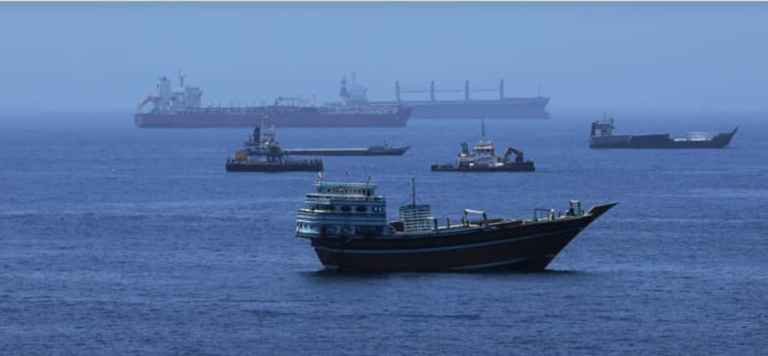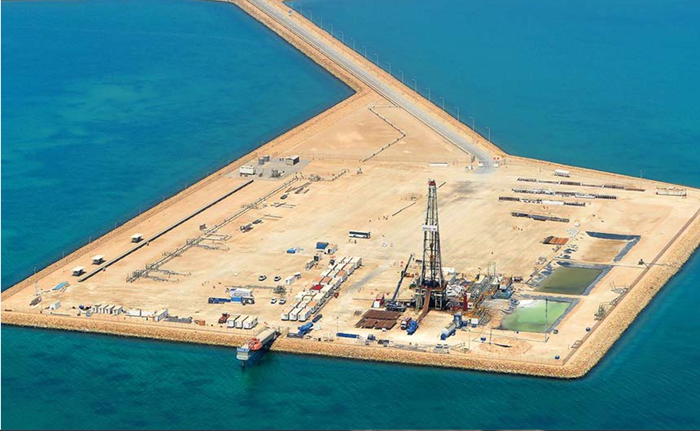
Ocean drilling rig: ExxonMobil focuses on strengthening energy security by expanding low-cost-of-supply, high-return oil and natural gas operations. Source: https://corporate.exxonmobil.com/
Obtaining outside data.
Checking internet sources, using keywords: Brent Crude price 2026
News from various sources:
The content extracted from various articles and analyses about Brent Crude prices in 2026 revolves around geopolitical tensions, primarily focused on disruptions in the Strait of Hormuz due to US-Iran conflict, impacting global oil supply and pricing. Below is a summary of the key points discussed:
- Geopolitical Tensions: Brent Crude is nearing $90 a barrel due to geopolitical tensions, especially with disruptions in the Strait of Hormuz, a critical artery for global oil and gas transit. US-Iran diplomatic breakdown and conflicts, including accusations of Iran targeting tankers, contribute to supply instability.
- Demand Concerns: Despite these disruptions, the International Energy Agency (IEA) is forecasting a decline in global oil demand by 1.6 million barrels per day in 2026, influenced by high fuel prices which dampen consumption. Contrastingly, OPEC projects a modest growth in demand.
- Price Projections: The US Energy Information Administration expects Brent to average around $85 in the third quarter of 2026, dropping to $78 by the fourth quarter as logistic conditions improve and shut-in production returns. Fitch Ratings forecasts Brent to fall towards $70 by Q4 2026 due to oversupply conditions, despite a predicted price peak this summer driven by Hormuz disruptions.
- Strategic Responses: Oil companies like ExxonMobil, Chevron, Shell, TotalEnergies, and BP amassed record cash flows in Q2 2026, underscoring the profitability during heightened geopolitical tensions. Meanwhile, US crude reserves are at historic lows, potentially reducing the capacity to buffer against supply shocks.
- Market Predictions: Market reactions remained volatile, with potential unpredictability due to the ongoing complex situations surrounding geopolitical affairs and market fundamentals, such as demand and production levels.
The content indicates that while Brent Crude prices are buoyed by geopolitical risk premiums, the market is simultaneously pressured by a weakened demand outlook, suggesting that the geopolitical events and supply disruptions are temporarily inflating prices during a period of generally diminishing demand.
Fact-checked summary:
The price of Brent Crude is significantly influenced by geopolitical tensions, such as disruptions in the Strait of Hormuz and the US-Iran diplomatic breakdown, which contribute to supply instability and have historically led to higher oil prices. Although current prices are nearing $90 a barrel due to these tensions, future price forecasts present a mixed picture. The International Energy Agency (IEA) predicts a decline in global oil demand by 1.6 million barrels per day by 2026, a critical factor for price declines. However, OPEC projects modest demand growth, illustrating uncertainty and influencing pricing predictions. The US Energy Information Administration (EIA) forecasts Brent prices to average $85 in Q3 2026, dropping to $78 by Q4, while Fitch Ratings suggests a further decline towards $70 due to anticipated oversupply. Additionally, low US crude reserves limit the capacity to buffer against supply shocks, which could impact future prices. Overall, market volatility and complex geopolitical factors are central to the uncertainty around a potential decline in Brent Crude prices below $50 per barrel by 2026.
OpenAI gives a base rate of 0.02 (2%)
The question difficulty is rated 7 (0 to 10)
A Bayesian calculation could be performed as follows:
Using the historical factors, we apply the weights to current events: Geopolitical tensions (0.3 * high tension = reduces likelihood), Global demand trends (0.25 * reduced growth = neutral effect), Alternative energy adoption (0.2 * current pace = small upward pressure on likelihood), OPEC production behavior (0.15 * stabilizing prices = reduces likelihood), US crude reserves (0.1 * low levels = reduces likelihood). Combining these factors with current forecasts from IEA, EIA, and Fitch, we determine the final Bayesian probability of prices dropping below $50 to be 0.03.
Bayesian base rate: 0.03 (3%)
Sufficient news to provide a good forecast? 1 (0 or 1)
News is relevant, topical and unbiased? 1 (0 or 1)
Question classification: scenario_based_forecast
Expected time (days) until question close: 135
The following were considered in order to produce this base rate:
To determine the base rate, we considered historical trends in oil price changes relative to geopolitical disruptions and shifts in supply-demand dynamics. The general historical rarity of Brent prices dropping below $50, alongside the combined effect of geopolitical and market forecasting, suggests a low base rate for such an event.
Ideally, the news feed would contain the following sorts of information for a better forecast:
More detailed data on current and projected oil production capacities by countries, technological advancements in the oil extraction process, and comprehensive forecasts on alternative energy markets would enhance forecasting accuracy.
Some potential divergent considerations that might affect the base rate:
Current forecasts by major energy agencies predict price stability or moderate decline, largely influenced by geopolitical factors and anticipated demand shifts. Potential technological advances or unexpected geopolitical resolutions could diverge from these predictions, impacting the price downward.
The following chain of events are necessary for the question to resolve positively:
- Significant reduction in global oil demand, beyond current projections, possibly due to accelerated adoption of alternative energy or an economic downturn. (Unlikely)
- A major shift in geopolitical or economic stability, leading to excess supply or reduced demand on a global scale. (Moderately unlikely)
- A substantial increase in oil supply from unexpected sources or technological advances in oil extraction, significantly impacting prices downward. (Moderately unlikely)
Querying Claude (AI predicts: 0.07 – confidence: 6)
Querying OpenAI (AI predicts: 0.05 – confidence: 6)
Guide to Jeremy Lichtman’s Multi-AI Oracle Reports
Question Type: Binary
Median from LLMs: 0.06
Base rate: 0.02 (from OpenAI)
SD: 0.01
MAPD: 0
Confidence: 6
Conf Mode: Normal
Mellers: 0.02
Reverse Mellers: 0.14
Theory of Mind: 0.025 (What did the LLMs think other LLMs predicted?)
Beta Distribution: 0.001
Close Type: A (B = cautious # closer to 50%; A/C = closer to extremes)
LLM responses: 2
Model value: 0.06 (6%)
The consensus across the AI analyses is that the likelihood of Brent Crude falling below $50 per barrel in 2026 is low. As of mid-August, prices are near $90, and the remaining months in the year provide insufficient time for such a significant drop, barring a drastic black swan event. Historical data and forecasts from agencies like the EIA and OPEC suggest that while some demand decline and geopolitical tensions persist, average prices should remain well above $50. Factors supporting higher prices include geopolitical tensions, OPEC’s production discipline, and reduced US crude reserves. Some potential risk factors that could lead to a dramatic decline include a severe global economic downturn, an unexpected resolution of geopolitical issues increasing supply, or rapid advancements in alternative energy adoption. However, these scenarios are considered unlikely within the given timeframe.
Runtime: 144 seconds.
About The Author