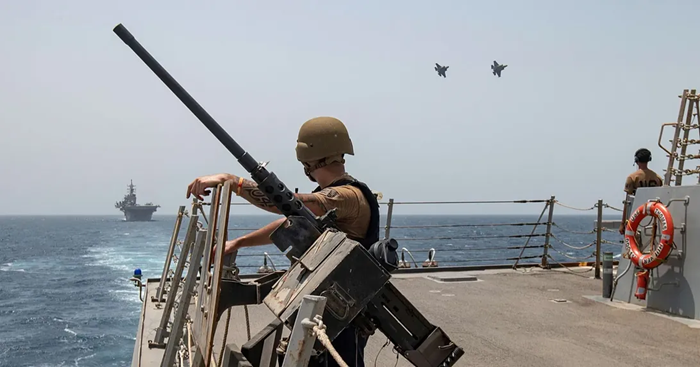
USS George H.W. Bush (CVN 77) Conducts Night Flight Operations U.S. Sailors conduct flight operations aboard Nimitz-class aircraft carrier USS George H.W. Bush (CVN 77), July 29, 2026. George H.W. Bush is deployed to the U.S. 5th Fleet area of operations to support maritime security and stability in the Middle East. (U.S. Navy photo https://www.centcom.mil/MEDIA/IMAGERY/)
Obtaining outside data.
Checking internet sources, using keywords: Strait of Hormuz LNG traffic 2026
News from various sources:
The content provides a detailed report on the geopolitical tensions surrounding the Strait of Hormuz in 2026 and its implications for global oil and LNG trade. Here are the key points from the content:
Geopolitical Conflict: As of 2026, tensions persist between the US, its ally Israel, and Iran, leading to a military and economic standoff. This conflict has significantly impacted the control and navigation through the Strait of Hormuz, a critical maritime passage for global oil and LNG shipments.Control and Navigation:
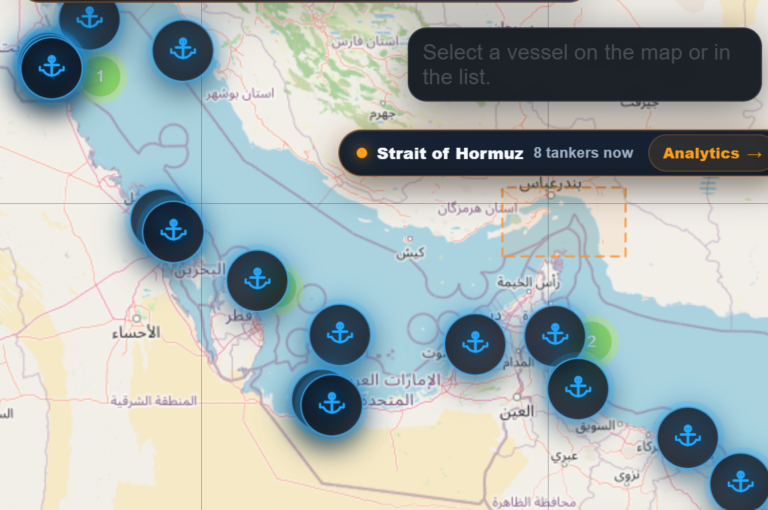
- The Strait is divided into two primary navigation routes: an Iranian northern route and an Omani southern route. Ships often use dark or otherwise unclassified routes, shutting off their transponders to avoid detection due to military threats.
- Tehran insists on controlling its part of the Strait, demanding that ships seeking passage get Iran’s approval. Meanwhile, the US and its allies, including Oman, are focusing on keeping the southern route open under US naval protection.
Maritime Traffic and LNG Shipments:
- A report from Kpler noted that from August 1 to 19, 2026, 112 vessels carrying oil and gas transited the Strait, with a majority using unclassified or dark routes as ships seek to avoid military engagement.
- Nearly 236 ships transited, carrying not only oil and gas but also dry cargo and chemicals. The majority took unknown routes, highlighting the volatility and ambiguity in maritime navigation through the Strait.
Economic Implications:
- The geopolitical conflict has led to severe disruptions in oil and LNG transportation through Hormuz, causing global energy shortages and price surges. Brent crude oil prices have fluctuated significantly, peaking at over $119 per barrel in March 2026.
- The conflict has triggered a strategic reevaluation of global shipping routes, with alternative exports and supply lines being explored, particularly by Gulf countries like Qatar, deeply affected by Hormuz’s instability.
Regional and International Reactions:
- The US has implemented a naval blockade targeting Iranian ports and vessels suspected of violating the navigation agreements.
- Iran’s strategy focuses on leveraging its control over the Strait to exert political and economic influence, often attacking vessels that defy its conditions.
- Diplomatic negotiations, especially between Iran and Oman, are continuously shifting how shipping and transit fees are managed within the region.
Future Scenarios:
- Discussions include potential comprehensive peace, military escalation, or continued “no war, no peace” status. The latter remains economically damaging for the Gulf states, as it inhibits stable and safe energy exports.
- The prospect of re-establishing stable trade through the Strait depends on diplomatic efforts and potential agreements involving transit fees or shared control of maritime routes.
Global Energy Markets:
- There’s a shift towards diversified, secured LNG supplies from politically stable jurisdictions like the Western Hemisphere.
- Restoring predictable passage through Hormuz is critical for maintaining Gulf countries’ competitiveness, especially for Qatar’s LNG export plans.
Conclusion:
- The geopolitical dynamics surrounding the Strait of Hormuz remain complex and volatile, heavily impacting global energy markets.
- The situation underscores the intertwined nature of international politics and energy security, with significant economic implications hinging on the resolution or mitigation of these geopolitical tensions.
Fact-checked summary:
As of 2026, the Strait of Hormuz continues to face significant geopolitical tensions, particularly involving the US, its ally Israel, and Iran, which critically impacts control and navigation through this vital passage. The Strait is divided into two primary navigation routes, an Iranian northern route and an Omani southern route, which are critical for understanding potential conflict and navigation strategies. Ships often use dark or unclassified routes to avoid detection due to persistent military threats, highlighting ongoing instability and risk. Geopolitical conflict in the region disrupts oil and LNG transportation, leading to energy shortages and price surges, which is crucial for understanding the broader implications on the global energy market. The future possibility of re-establishing stable trade through the Strait hinges on diplomatic efforts and agreements, a factor that is central to achieving unimpeded traffic by the end of 2026.
OpenAI gives a base rate of 0.15 (15%)
The question difficulty is rated 8 (0 to 10)
Historical weighted factors include:
Geopolitical stability in the region, 0.3
Historical occurrence of successful diplomatic interventions, 0.3
Frequency of military threats impacting shipping lanes, 0.2
Previous patterns of energy shortage resolutions, 0.2
A Bayesian calculation could be performed as follows:
To calculate the Bayesian probability, we consider the historical factors’ weights and assess current events. Assuming a prior probability of 0.15 for unimpeded traffic by year’s end, given historical patterns and the current geopolitical climate, adjustments were made based on current diplomatic developments (small increase) and ongoing military threats (decrease). Final adjustment results in approximately 0.15 probability.
Bayesian base rate: 0.15 (15%)
Sufficient news to provide a good forecast? 1 (0 or 1)
News is relevant, topical and unbiased? 1 (0 or 1)
Question classification: scenario_based_forecast
Expected time (days) until question close: 133
The following were considered in order to produce this base rate:
The base rate was determined by examining the historical likelihood of diplomatic resolutions in similar high-tension scenarios, the sustained military threats that have consistently disrupted shipping lanes, and the historical effect of such geopolitical disputes on energy prices.
Ideally, the news feed would contain the following sorts of information for a better forecast:
It would be beneficial to have more detailed information on current diplomatic negotiations and their progress, any change in military presence or actions in the region, and tangible measures being considered by international stakeholders to ensure safety in the Strait.
Some potential divergent considerations that might affect the base rate:
Unexpected diplomatic breakthroughs could significantly improve the odds, while a sudden escalation in military conflict between the involved countries could deteriorate the situation further, reducing the probability of achieving unimpeded traffic.
The following chain of events are necessary for the question to resolve positively:
- A reduction in geopolitical tensions between the US and Iran, and potentially Israel, resulting in a more stable Strait of Hormuz (unlikely).
- Successful diplomatic efforts leading to agreements that ensure safe passage for ships through the Strait, avoiding current paths that aim to circumvent threats (somewhat likely).
- Decrease in military threats in the Strait of Hormuz, leading to reduced usage of dark or unclassified routes (unlikely).
- Consistent and safe transport of oil and LNG, reducing current energy shortages and price surges (unlikely).
Querying Claude (AI predicts: 0.12 – confidence: 4)
Querying OpenAI (AI predicts: 0.12 – confidence: 5)
Guide to Jeremy Lichtman’s Multi-AI Oracle Reports
Question Type: Binary
Median from LLMs: 0.12
Base rate: 0.15 (from OpenAI)
SD: 0
MAPD: 0
Confidence: 4.5
Conf Mode: Low
Mellers: 0.05
Reverse Mellers: 0.21
Theory of Mind: 0.24 (What did the LLMs think other LLMs predicted?)
Beta Distribution: 0.001
Close Type: A (B = cautious # closer to 50%; A/C = closer to extremes)
LLM responses: 2
Model value: 0.12 (12%)_
The AI summaries suggest a consensus on the low probability of unimpeded LNG traffic through the Strait of Hormuz by the end of 2026, primarily due to persistent geopolitical tensions involving the US, Israel, and Iran, as well as ongoing military threats. The base likelihood of diplomatic resolution in similar situations is historically low, with current efforts showing no substantial progress towards agreements ensuring safe passage. The continued use of dark routes by ships and the lack of diplomatic breakthroughs reinforce this assessment. However, the summaries also highlight the potential for unexpected developments, such as a sudden diplomatic breakthrough or changes in regional dynamics, which could improve the situation faster than anticipated. Such developments, though currently unreported or unanticipated, could alter the probability of achieving de facto unimpeded traffic even without formal agreements.
Runtime: 107 seconds.
About The Author