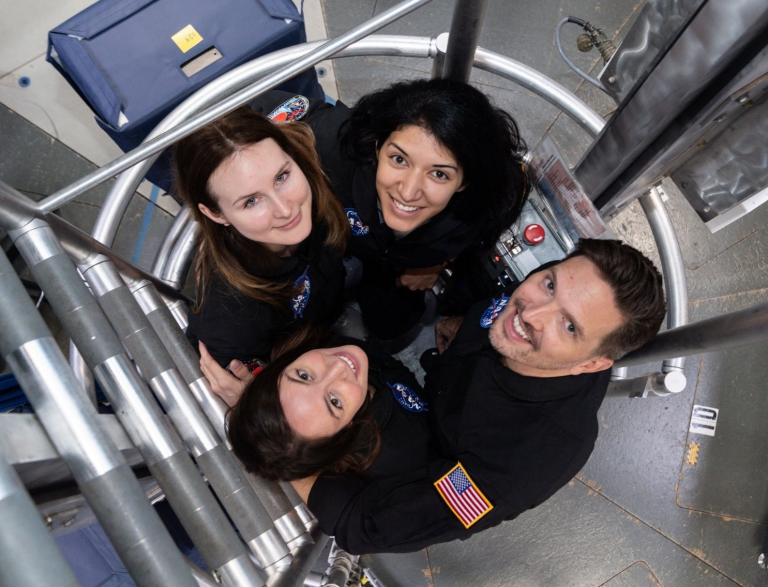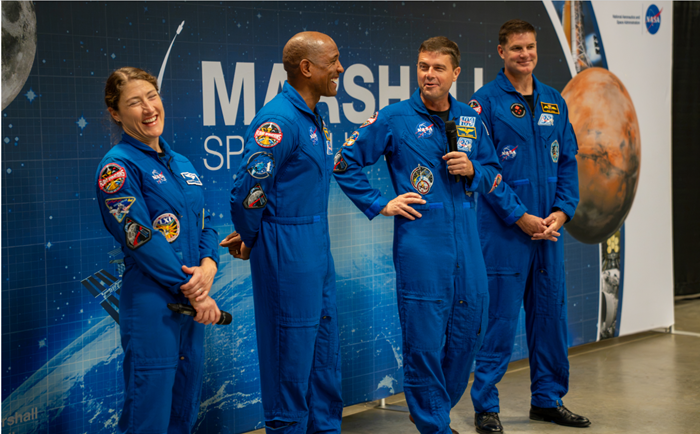
The crew of NASA’s Artemis II mission – NASA astronauts Christina Koch, Victor Glover, and Reid Wiseman and CSA (Canadian Space Agency) astronaut Jeremy Hansen – visited Huntsville, Alabama, Sept. 1, 2026, where they met with the NASA workforce at NASA’s Marshall Space Flight Center. The event gave the crew an opportunity to share firsthand experiences from their mission, reflect on their time in space, and connect with the workforce that supported the mission through an engaging question-and-answer session. Image credit: NASA/Brandon Hancock. Source: https://www.nasa.gov/image-article/artemis-ii-crew-at-nasa-marshall/
Deepseek Binary response:
The Artemis III mission has been redefined from a lunar landing to a lower-risk low Earth orbit (LEO) demonstration, which improves its chances compared to the original profile. NASA’s SLS/Orion hardware is reportedly progressing well, with Artemis II successfully completed in April 2026, and stacking of Artemis III elements already underway. However, the mission still depends on at least one commercial lander—SpaceX’s Starship HLS pathfinder or Blue Origin’s Blue Moon Mark 2—being ready to launch, rendezvous, and dock with Orion by late 2027.
The commercial side remains the critical bottleneck. SpaceX’s Starship had not yet reached orbit as of September 2026, though a first orbital attempt was imminent. Blue Origin suffered a launch pad explosion in May 2026 and is rebuilding infrastructure, with an ambitious target to return to flight before the end of 2026. Both providers face significant technical and schedule risks. NASA’s internal email in September 2026 indicated Artemis III is roughly 90 days behind schedule, with a summer 2027 launch as the best-case scenario. Even a modest further slip could push the mission into 2028, and the mission must not only launch but also successfully complete rendezvous, docking, and crew return before December 31, 2027.
Historical base rates for large NASA human spaceflight missions show frequent delays, and the commercial lander dependencies introduce additional uncertainty. While NASA leadership has expressed confidence, the compressed timeline and unresolved commercial readiness make success by the end of 2027 far from assured. Accounting for the need for at least one lander to be ready, a launch window that allows completion within 2027, and the inherent risks of first-time docking operations, the probability is moderate but below even odds.
Data sufficiency: Sufficient
Probability: 35%
Grok response:
Artemis Lander Program Faces Schedule Delays and Unmitigated Crew Safety Risks (NASA Office of Inspector General). Description: Official audit summary of Human Landing System contracts. Published March 10, 2026. The OIG found firm-fixed-price contracts had limited cost growth but both SpaceX and Blue Origin faced schedule delays and technical challenges with potential further impacts, particularly for a 2028 landing. SpaceX’s lander was assessed as not ready for a June 2027 lunar landing (pre-redesign context). Gaps remained in crew-survival analysis and testing posture even as NASA pursued acceleration options.
Moon to Mars | NASA’s Artemis Program (NASA official site). Description: Primary resolution source page describing the Artemis campaign sequence. Published/updated September 15, 2026. NASA defines Artemis III as a demonstration mission in low Earth orbit planned for 2027 to evaluate one or both commercial human landing systems from SpaceX and Blue Origin. The mission launches a crew aboard Orion on SLS to test critical rendezvous and docking operations needed for future lunar surface missions. Artemis IV remains targeted as the first lunar landing in 2028, with Artemis V also anticipated in 2028.
NASA Marches Toward Artemis III Mission in 2027, Names Crew Members (NASA news release). Description: Official announcement of crew and mission concept of operations. Published June 9, 2026. NASA named the prime crew as commander Randy Bresnik (NASA), pilot Luca Parmitano (ESA), and mission specialists Andre Douglas and Frank Rubio (NASA), with Bob Hines as backup. The roughly two-week LEO mission will have Blue Origin’s lander pathfinder launch first and loiter, followed by SLS/Orion for docking and crew ingress tests lasting about two days, then a SpaceX Starship pathfinder docking for about one day before splashdown. Hardware processing for Orion docking system integration and SLS core stage was described as progressing toward summer stacking.
Artemis III delays could threaten landing on the moon in 2028 (Mashable). Description: Reporting on an internal NASA workforce email confirming schedule status. Published September 23, 2026. Administrator Jared Isaacman stated Artemis III is tracking roughly 90 days behind schedule, with a summer 2027 launch as the best-case scenario that would preserve two 2028 lunar landing opportunities. The email, confirmed authentic by NASA, noted remaining decisions, problems, and recovery opportunities, while framing the pace against competition with China. Continued lag could limit NASA to one late-2028 landing attempt.
How NASA’s Artemis III Lander Test Will Pave Way for Moon Landings (NASA). Description: Detailed technical overview of the demonstration architecture. Published July 15, 2026. Both providers will fly test articles (pathfinders) launched commercially, while the crew launches on SLS/Orion to a circular low Earth orbit of approximately 230 nautical miles. Blue Origin’s article can loiter up to 30 days and allows crew entry; SpaceX’s Starship Version 3 test article has a docking system but astronauts will not enter it. The sequence exercises three powerful rockets, ground systems, and back-to-back rendezvous and docking before Orion splashdown.
Put it in pencil: NASA’s Artemis III mission will launch no earlier than late 2027 (Ars Technica). Description: Coverage of congressional testimony on vendor readiness. Published April 28, 2026. Isaacman reported that both SpaceX and Blue Origin stated they could support a late-2027 rendezvous, docking, and interoperability test, later than the mid-2027 target floated in February. The mission will not go to the Moon; details on orbit altitude and SLS configuration were still under review at the time. Officials emphasized annual cadence goals and the large taxpayer investment in both HLS contracts.
NASA says Artemis III mission on schedule as Blue Origin repairs launchpad (Reuters). Description: Interview with Administrator Isaacman at the Farnborough Airshow. Published July 20, 2026. Isaacman said NASA remained “very much planning” for the 2027 timeline despite the May New Glenn pad explosion, with SLS and Orion elements “doing incredibly well.” Both landers had experienced delays and some industry executives doubted 2027 readiness, but NASA had contingency plans if New Glenn slipped further. Plan A remained launching the Blue Origin test article on New Glenn, with roughly a year of margin cited at the time.
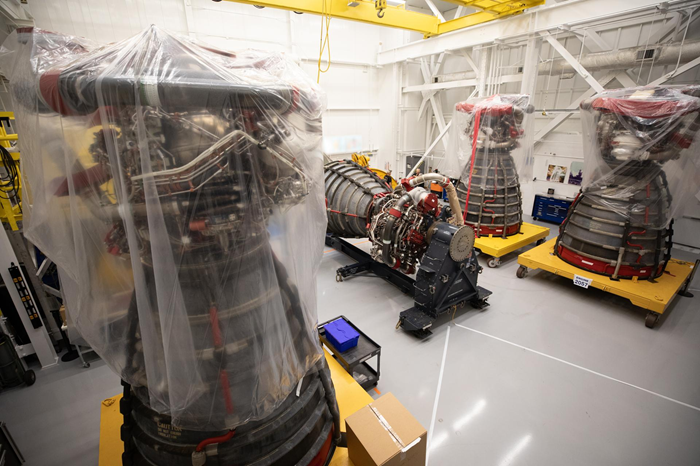
Artemis III SLS stacking advances as Orion results confirm trajectory fix (NASASpaceFlight.com). Description: Status report on vehicle assembly at Kennedy Space Center. Published September 7, 2026. Teams had stacked four of five solid rocket booster segments on the mobile launcher and completed installation of all four RS-25 engines on Core Stage-3. Progress continued in parallel with Artemis IV hardware and followed confirmation that a modified Artemis II reentry profile reduced heat-shield char loss. Stacking was described as advancing after lessons from prior missions.
Isaacman “Extremely Confident” Artemis III Will Launch in 2027 (SpacePolicyOnline.com). Description: Reporting from a public event at Kennedy Space Center. Published August 14, 2026. Isaacman said he was “extremely confident” Artemis III would launch in 2027 and that the program was managed “down to the day, down to the hour.” A wet dress rehearsal was planned for November 2026. He noted the May New Glenn anomaly was a setback that did not directly affect Blue Moon Mark 2 development, while SpaceX had flown Starship Version 3 twice that year without yet reaching orbit.
Artemis III (Wikipedia). Description: Consolidated reference page synthesizing official announcements and technical details. Last major update reflected September 28, 2026. The page records the February 27, 2026 redesignation from lunar landing to crewed LEO demonstration, a planned NET June 2027 launch (with later references to late 2027), use of a non-propulsive spacer instead of the remaining ICPS, and an approximately 230-nautical-mile orbit. It notes both test articles lack full lunar systems and that astronauts are not planned to enter the Starship article.
Extracted resolution criteria links:
[‘https://www.nasa.gov/humans-in-space/artemis/‘]
=== Forecast Result ===
=== Reasoning ===
Analytical Overview and Framing
The question asks whether NASA will successfully complete the Artemis III low-Earth-orbit (LEO) demonstration mission by December 31, 2027.
Following the February 2026 program realignment, Artemis III is no longer a lunar landing mission; it is an “Apollo 9-style” crewed demonstration in low Earth orbit (~230 nmi altitude) designed to validate rendezvous and docking between Orion (launched on SLS) and one or both commercial Human Landing System (HLS) test articles from SpaceX and Blue Origin. Artemis II successfully flew around the Moon in April 2026, validating crew systems and heat shield dynamics.
As of late September 2026, approximately 15 months remain until the December 31, 2027 resolution boundary. NASA’s official target remains 2027, but internal assessments reveal tight margins.
Cumulative Schedule Risk & Base Rates:
- Historical aerospace base rates indicate that missions within 12 to 18 months of launch typically experience an additional 2 to 6 months of schedule slip.
- With nominal internal schedules already pointing toward October–November 2027 (factoring in the 90-day slip from an initial mid-2027 target), any single additional delay—such as minor integration anomalies during wet dress rehearsals, launch pad delays, or range availability constraints—would push Artemis III into Q1 or Q2 of 2028.
Timeline Likelihoods
- Completion by mid-2027 (June 30, 2027): ~10% (largely foreclosed by the confirmed 90-day internal slip).
- Completion by end of 2027 (December 31, 2027): ~37% (the window between late summer and year-end 2027 is viable, but slippage into early 2028 is the modal outcome).
- Completion by mid-2028: ~80%.
Data sufficiency: Sufficient
Probability: 37%
End
About The Author