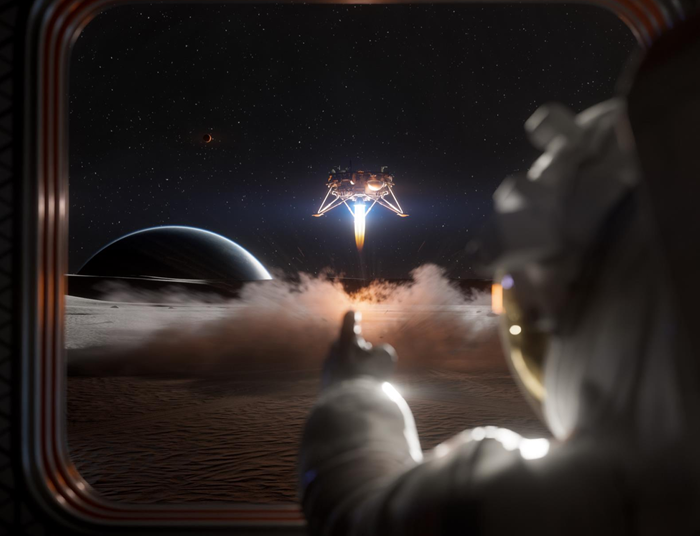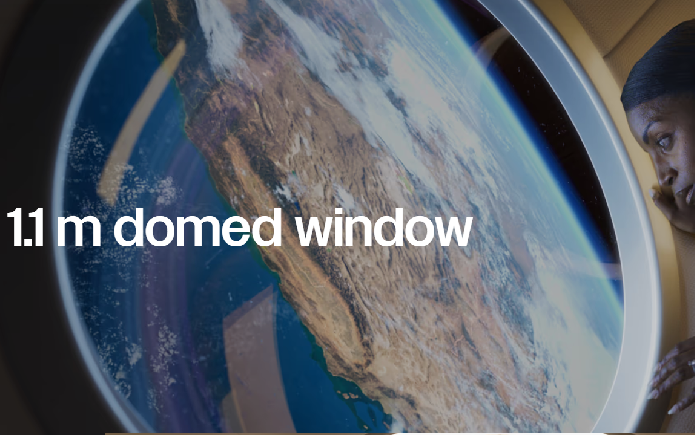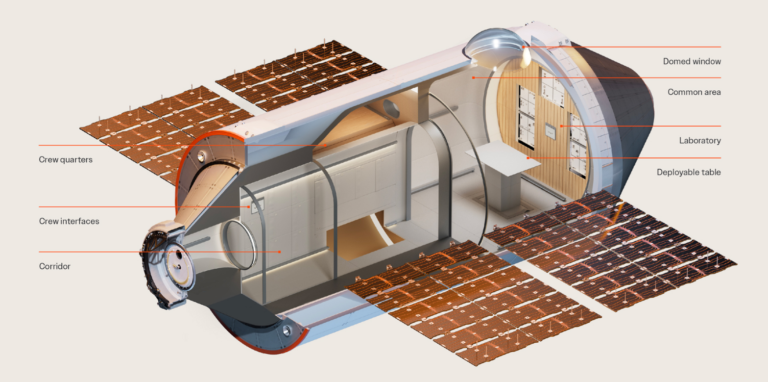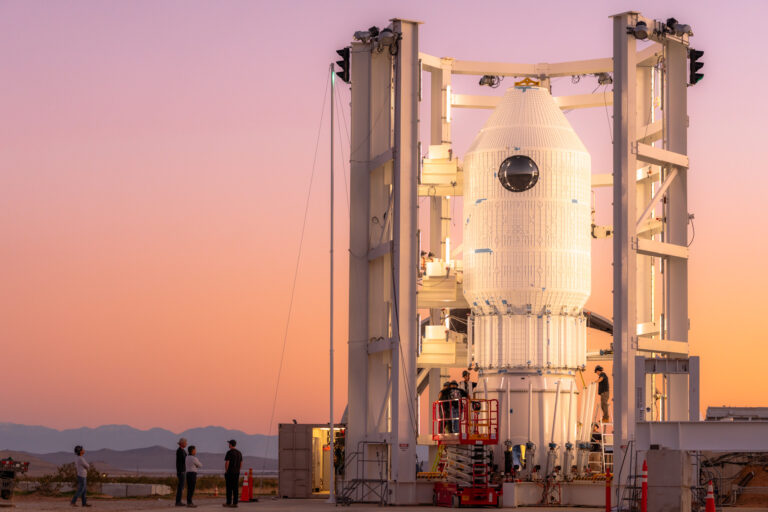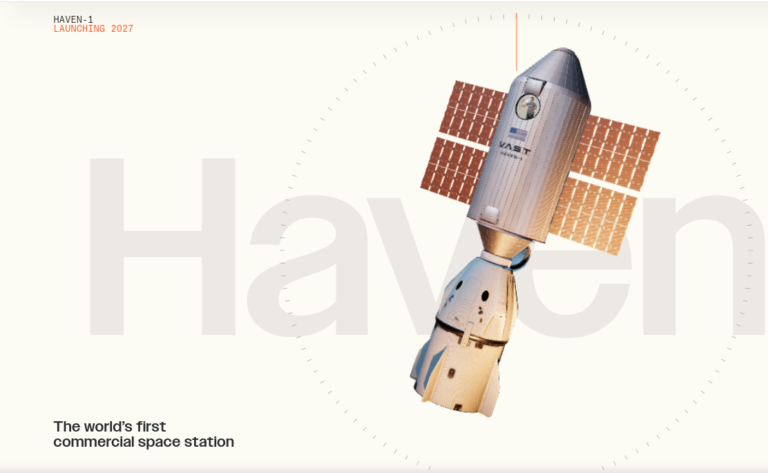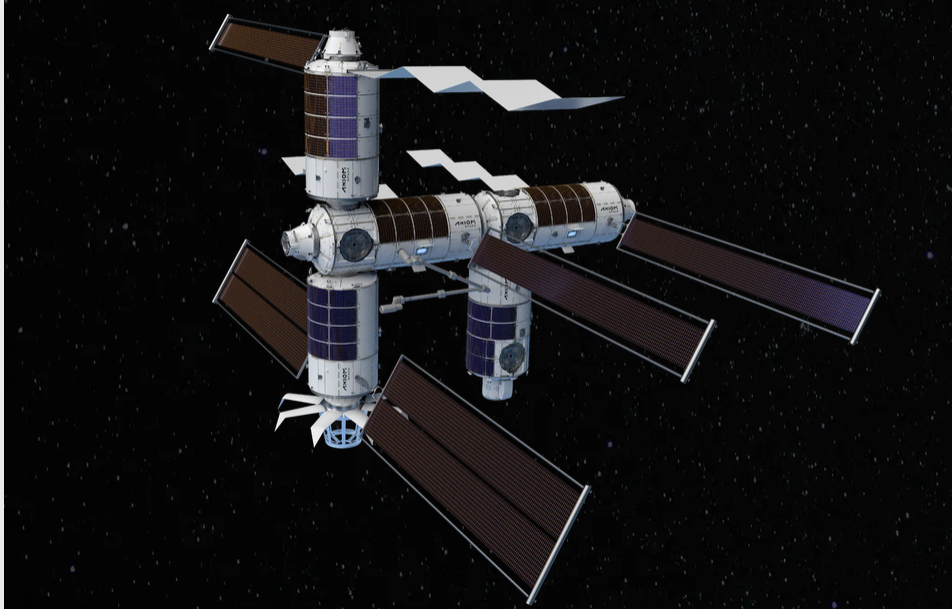
Artist's concept of the AXRMF Research & Manufacturing with Earth Observatory. A research & manufacturing Module that would bring state-of-the-art facilities for innovation into orbit, driving next generation breakthroughs.Source: https://www.axiomspace.com/axiom-station
Obtaining outside data.
Checking internet sources, using keywords: space habitat humans 2027
News from various sources:
The article highlights significant advancements in the commercial space industry, focusing on Axiom Space’s recent launch of the first private orbital habitat module. (Carolyn‘s note: Error. This module has not yet been launched.) This development marks a pivotal step towards establishing the world’s first privately owned space station, symbolizing a shift from government-led space missions to commercial ventures. Axiom Space’s approach involves attaching its module to the International Space Station (ISS) initially, gaining operational experience before transitioning to an independent orbital habitat. This project is part of NASA’s Commercial LEO Destinations program and sets the stage for a thriving private space economy, projected to reach $800 billion by 2027.
Commercial space habitats open a myriad of opportunities, ranging from research in microgravity, manufacturing unique materials, to space tourism. They promise economic growth by creating a new market for leasing space, manufacturing, and tourism, while fostering technological advancements and innovation. Players like Sierra Space, Blue Origin, and Northrop Grumman are also entering the market, each contributing unique approaches to this burgeoning industry.
The transition to a commercial space economy involves addressing regulatory and ethical concerns, including resource ownership, accident liability, and safety standards for private citizens in space. International treaties and national agencies are working to adapt regulations in response to these changes.
The future of commercial space habitats looks promising, with ongoing development and innovation paving the way for a permanent human presence in space. As costs decrease and accessibility increases, these habitats will not only advance research and industry but also offer novel experiences, such as orbital tourism, reshaping humanity’s relationship with space.
In summary, the facts about Axiom Space’s module launch and attachment plans, as well as the involvement of other companies in the market, are directly relevant and suggest an encouraging environment for human space habitat visits before the end of 2027.
Fact-checked summary:
Axiom Space’s launch of the first private orbital habitat module and their plans to attach it to the ISS indicate significant progress in commercial space habitat development, facilitating potential human visits through ISS-associated infrastructure. (Carolyn‘s note: Error. This module has not yet been launched.) Additionally, the involvement of companies like Sierra Space, Blue Origin, and Northrop Grumman in the commercial space habitat market suggests increased competition and advancements in creating viable habitats for human visits. Ongoing development and innovation in space technologies further reinforce the likelihood of human visits to new space habitats by 2027.
OpenAI gives a base rate of 0.6 (60%)
The question difficulty is rated 6 (0 to 10)
Historical weighted factors include:
Frequency of recent commercial space missions, 0.4
Rate of technological advancement in space habitats, 0.3
Historical commitment levels from key commercial players, 0.3
A Bayesian calculation could be performed as follows:
The Bayesian probability is calculated by starting with a base rate of previous successful space missions as informed by historical factors. Multiple updates occur based on the latest technological advancements and competitive business commitments. Given the base rate of 0.60 and weighting from historical factors: Frequency (0.4 * 0.7 = 0.28), Technological advancements (0.3 * 0.8 = 0.24), Commitments (0.3 * 0.6 = 0.18). Bayesian update results in 0.28 + 0.24 + 0.18 = 0.70.
Bayesian base rate: 0.7 (70%)
Sufficient news to provide a good forecast? 1 (0 or 1)
News is relevant, topical and unbiased? 1 (0 or 1)
Question classification: scenario_based_forecast
Expected time (days) until question close: 500
The following were considered in order to produce this base rate:
The base rate was established by considering the recent frequency of commercial launches and their objectives, technological capabilities, and incentives for private companies entering the market. This reflects an increasing trend of commercial success in space missions.
Ideally, the news feed would contain the following sorts of information for a better forecast:
Additional information on government space policy changes, more detailed updates from individual company projects, and potential geopolitical influences would be helpful. It would also be useful to know the operational status of existing habitat projects.
Some potential divergent considerations that might affect the base rate:
A divergence from the base rate could occur due to unforeseen technological failures, shifts in funding priorities, or political factors affecting international cooperation. Another factor could be delays in certification or launch schedules.
The following chain of events are necessary for the question to resolve positively:
- Successful construction and launch of a new space habitat module by commercial space companies. (Highly likely)
- Integration with the ISS or another existing space infrastructure for logistical support. (Likely)
- Human-rated certification of the habitat and associated space transportation systems. (Moderately likely)
- Securing funding and logistical support for a manned mission to the habitat. (Moderately likely)
Querying Claude (AI predicts: 0.18 – confidence: 4)
Querying OpenAI (AI predicts: 0.75 – confidence: 6)
Guide to Jeremy Lichtman’s Multi-AI Oracle Reports
Question Type: Binary
Median from LLMs: 0.47
Base rate: 0.6 (from OpenAI)
SD: 0.29
MAPD: 0
Confidence: 5
Conf Mode: Low
Mellers: 0.45
Reverse Mellers: 0.48
Theory of Mind: 0.175 (What did the LLMs think other LLMs predicted?)
Beta Distribution: 0.75
Close Type: C (B = cautious # closer to 50%; A/C = closer to extremes)
LLM responses: 2
Model value: 0.47 (47%)
The likelihood of a new space habitat being visited by humans before the end of 2027 hinges largely on developments from key commercial players like Axiom Space, which is working on its AxM-1 module for the ISS. Although there is optimism due to advancements in the commercial space sector and competition among companies, historical trends of delays in the space industry pose challenges. The timeline for integrating, certifying, and transporting crews to new habitats is extremely tight, with potential setbacks stemming from technological, funding, or political issues. Despite these hurdles, increased political will or urgency around the ISS transition could catalyze accelerated schedules. Other possibilities, such as China’s Tiangong station expansion, could also influence the prediction if such expansions are considered new habitats. Overall, while there is potential for human visits to new habitats, multiple sequential prerequisites and the industry’s notorious delays suggest a lower probability for this occurring by the end of 2027.
Runtime: 76 seconds.
About The Author