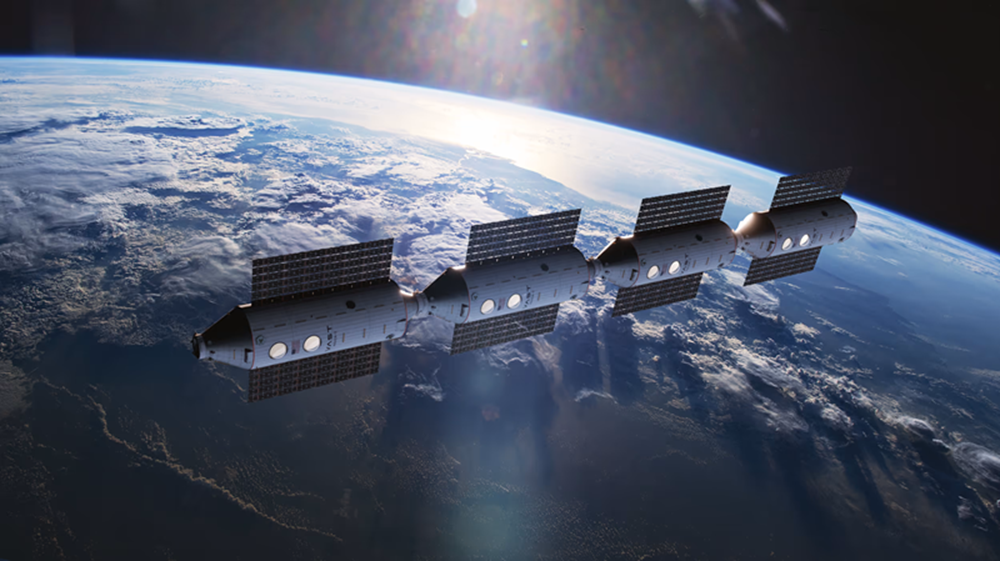
, Haven-2 will launch modules approximately every six months, with four launched by 2030. Source: https://www.vastspace.com/roadmap
Deepseek Binary response:
The only credible path to “Yes” is Vast’s Haven-1. Starlab is publicly targeted at 2029, Orbital Reef has no current launch/crew date, and a Starship-based habitat is still conceptual for this window. Axiom’s first module is also reported as slipping to 2028 or later. Thus this is almost entirely a question of whether Haven-1 can launch and host a crewed visit by 31 Dec 2027.
The evidence is genuinely mixed. Positives: Vast officially still targets 2027 for Haven-1 and the first crewed mission; the module is in final integration; structural testing has progressed; a crew has been named; and the launch-to-crew interval could be as short as a few weeks. If Haven-1 launches by mid-2027, a human visit before the deadline is quite plausible.
Negatives: the last major environmental test campaign had not clearly started as of September 2026, there is no firm launch date, and Vast has repeatedly slipped the schedule. A further 6–9 month delay would push launch into late 2027 or 2028. Even after launch, a crewed Dragon visit is a separate certification and scheduling gate, and Vast’s own CEO has described a wide window for the first crewed arrival. A launch very late in 2027 would likely push the crew visit into 2028.
My rough decomposition: probability Haven-1 launches by a date early enough to permit a 2027 crewed visit is perhaps around two-thirds, and conditional probability of the crewed visit occurring by year-end given such a launch is around 55–65%. Combined with negligible alternative paths, this points to a probability near 40%. I am deliberately keeping it below 50% because first-of-kind aerospace schedules and new-station crew certification are highly delay-prone.
Data sufficiency: Sufficient
Probability: 40%
Perplexity response:
- “Haven-1: primeira estação espacial comercial pode levar brasileiro ao espaço” — G1
Published: October 16, 2026; updated October 21, 2026. Translation from Portuguese: “First commercial space station could take a Brazilian to space.”
G1 reports that Vast plans to launch Haven-1 in 2027 on a SpaceX Falcon 9.
The first astronauts are expected to arrive approximately one month later aboard a Crew Dragon.
This is the clearest currently reported path to a qualifying human visit before the end of 2027. [30] - “Haven-1 pode levar neurocientista brasileiro ao espaço em 2027” — Mix Vale Translation from Portuguese: “Haven-1 May Take Brazilian Neuroscientist into Space in 2027”
Published: October 16, 2026; updated October 18, 2026.
Vast’s current plan is a first-quarter 2027 launch, after the schedule moved from 2026 to early 2027.
Systems integration reportedly began in January 2026, including propulsion, life support, and thermal-control hardware.
The article says the crew visit could occur as soon as two weeks after launch or later during Haven-1’s planned operating life, so the exact crew date remains unresolved. [17] - “Alysson Muotri apresenta protótipo da estação espacial Haven-1” — Mix Vale Translation from Portuguese: “Alysson Muotri presents the prototype of the Haven-1 space station.”
Published: October 17, 2026.
The report repeats Vast’s first-quarter 2027 launch target and describes Haven-1 as a single Falcon 9-launched module.
It says the first crew would reach the habitat roughly one month after orbital insertion aboard Crew Dragon.
The specific launch and crew dates are not yet set, and participation by the named scientist depends on laboratory-equipment readiness. [18] - “Camas infláveis e minicérebros: veja como será a 1ª estação espacial comercial do mundo” — Exame Translatio from Portuguese: “Inflatable beds and mini brains: see what the world’s 1st commercial space station will be like”
Published: October 18, 2026; updated October 19, 2026.
Exame reports that Vast still targets a 2027 Haven-1 launch using Falcon 9.
The article notes that the beginning of crewed operations depends on completing testing and preparing the associated missions.
The continued 2027 target is positive evidence for a human visit, but the remaining tests and transportation schedule create execution risk. [21] - “Haven-1 may be first commercial space station” — Venture Atlas
Published: October 19, 2026; updated October 21, 2026.
The latest status described Haven-1 as targeting 2027, with the primary structure having passed full-scale pressure and static-load testing and entering clean-room integration.
However, solar-array wings were still in acceptance inspection and the flight computer was entering electromagnetic-interference testing.
Thus, the project appears substantially advanced but not yet fully flight-ready, with schedule risk concentrated in final integration, testing, and launch. [16] - “Space Coast launch schedule” — Sun Sentinel
Published: October 20, 2026.
The launch schedule lists the Vast Haven-1 Falcon 9 flight as “no earlier than Q1 2027.”
It does not provide a firm launch day.
A first-quarter launch would leave ample calendar time for a crewed Dragon visit before December 31, 2027, assuming the roughly one-month post-launch sequence remains feasible. [15] - “LEO Destinations” — Blue Origin
Published: undated official webpage, accessed October 21, 2026.
Blue Origin describes Orbital Reef as a mixed-use low-Earth-orbit business park and says the company continues work under NASA’s Commercial LEO Development Phase 1 program.
The page discusses the concept, intended services, and partnerships but does not state a launch date or a crew-visit date.
Based on the absence of a published 2027 launch commitment, Orbital Reef is currently a substantially weaker candidate than Haven-1 for resolution before the end of 2027. [31] - “NASA szuka prywatnego następcy ISS” — Space24 Translation from Polish: NASA is looking for a private successor to the ISS.
Published: October 15, 2026; updated October 20, 2026.
Space24 reports that Starlab completed a critical design review in February 2026 and was moving into production and component integration.
It gives Starlab a planned launch year of 2029, outside the question’s resolution window.
The same report describes Haven-1 as being in final integration for a planned 2027 launch, reinforcing the large schedule gap between the leading candidates. [22] - “A Space Revolution Is Imminent — Are We Ready?” — Fair Observer
Published: October 19, 2026.
The article reports that Airbus identifies 2029 as Starlab’s scheduled launch year.
It also describes Axiom’s revised plan as allowing independent operations no earlier than 2028.
These dates make neither Starlab nor the Axiom alternative a likely qualifying habitat visit by the end of 2027. [24] - “NASA to Buy a New Space Station. Price Tag: $34.1 Billion” — Yahoo Finance
Published: October 18, 2026; updated October 20, 2026.
NASA’s commercial-station procurement is described as an eight-year contract beginning in April 2027 and covering station construction, launch, and operation.
This procurement timeline concerns future development rather than an already flight-ready station.
It therefore does not provide evidence that NASA’s contemplated Starship station, Orbital Reef, or Starlab could host humans before the end of 2027. [28]
Assessment
Most likely resolution: Yes, via Haven-1. The strongest current evidence is that Vast is targeting a first-quarter 2027 launch, with the first crew expected to arrive roughly two to four weeks—or about one month—after orbital insertion. That schedule would put a human visit comfortably before the December 31, 2027 cutoff if the launch occurs during the stated window.
Candidate comparison
| Candidate | Latest reported launch/crew timing | Evidence for a human visit by end-2027 |
|---|---|---|
| Haven-1 | Launch targeted for Q1 2027; crew visit expected weeks afterward | Strongest candidate; hardware is in final integration, but no exact launch date is published. [16][17][30] |
| Orbital Reef | No current public launch date identified on Blue Origin’s destination page | Low; official material describes the program but gives no 2027 launch commitment. [31] |
| Starlab | Reported target launch in 2029 | Very low; outside the resolution window. [22][24] |
| SpaceX Starship station | Conceptual/NASA commercial-station planning stage; no demonstrated station launch or crew-visit schedule by 2027 | Very low; the procurement framework is for longer-term development and operations. [28] |
Recent movement toward resolution
The evidence has moved toward Yes, primarily because Haven-1’s target has become more specific: the current plan is not merely “sometime in 2027,” but a first-quarter 2027 launch followed by a crewed Dragon visit. Integration and testing are progressing, including structural testing and clean-room integration, although acceptance testing of solar arrays and avionics remains unfinished. The main risk to a Yes resolution is therefore not competition from another habitat; it is a delay to Haven-1’s launch, final certification, Crew Dragon availability, or the first crew mission.
Bottom line: Haven-1 is the decisive project. On the currently available evidence, the question leans Yes, with the caveat that the published schedule remains a target rather than a firm launch date.
=== Forecast Result ===
=== Reasoning ===
The only credible path to “Yes” is Vast’s Haven-1. Starlab is publicly targeted at 2029, Orbital Reef has no current launch/crew date, and a Starship-based habitat is still conceptual for this window. Axiom’s first module is also reported as slipping to 2028 or later. Thus this is almost entirely a question of whether Haven-1 can launch and host a crewed visit by 31 Dec 2027.
The evidence is genuinely mixed. Positives: Vast officially still targets 2027 for Haven-1 and the first crewed mission; the module is in final integration; structural testing has progressed; a crew has been named; and the launch-to-crew interval could be as short as a few weeks. If Haven-1 launches by mid-2027, a human visit before the deadline is quite plausible.
Negatives: the last major environmental test campaign had not clearly started as of September 2026, there is no firm launch date, and Vast has repeatedly slipped the schedule. A further 6–9 month delay would push launch into late 2027 or 2028. Even after launch, a crewed Dragon visit is a separate certification and scheduling gate, and Vast’s own CEO has described a wide window for the first crewed arrival. A launch very late in 2027 would likely push the crew visit into 2028.
My rough decomposition: probability Haven-1 launches by a date early enough to permit a 2027 crewed visit is perhaps around two-thirds, and conditional probability of the crewed visit occurring by year-end given such a launch is around 55–65%. Combined with negligible alternative paths, this points to a probability near 40%. I am deliberately keeping it below 50% because first-of-kind aerospace schedules and new-station crew certification are highly delay-prone.
Data sufficiency: Sufficient
Probability: 40%
End
About The Author