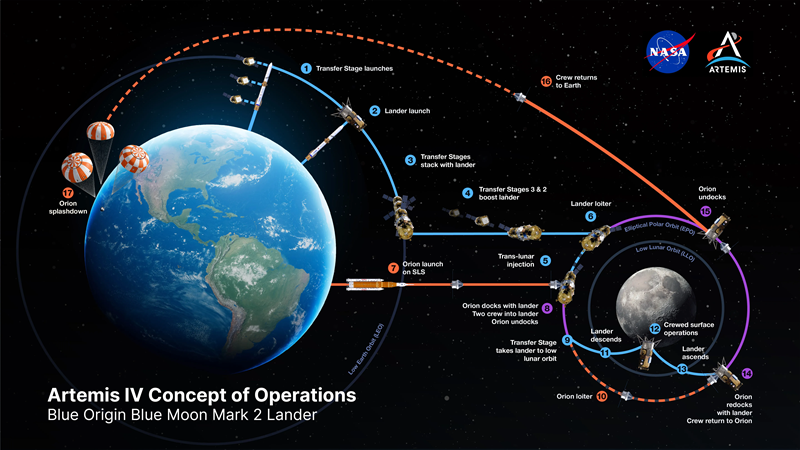
maximizes the performance available by SLS.
Obtaining outside data.
Checking internet sources, using keywords: Artemis III orbital demonstration 2027
News from various sources:
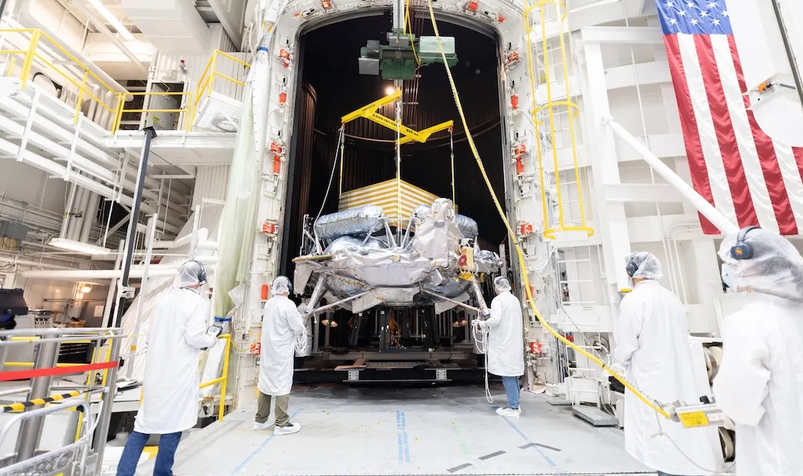
The Artemis III mission, scheduled for summer 2027, is a crucial test in NASA’s Artemis program. This mission will utilize both Blue Origin’s Blue Moon lunar lander and a version of SpaceX’s Starship in a 14-day orbital demonstration to assess their docking capabilities with the Orion spacecraft. The mission aims to verify the operability of these lunar landers in preparation for NASA’s planned crewed lunar landings in 202
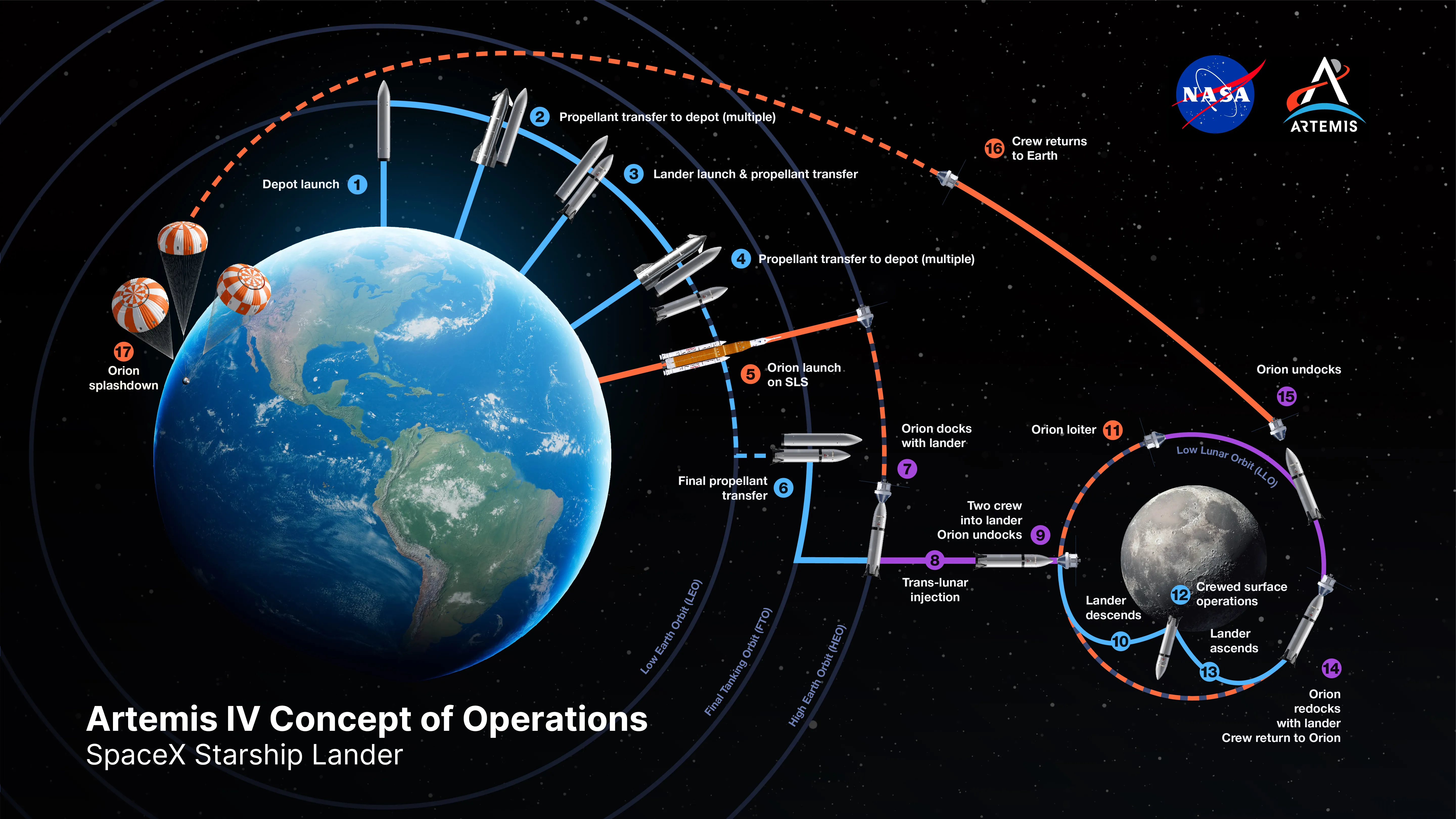
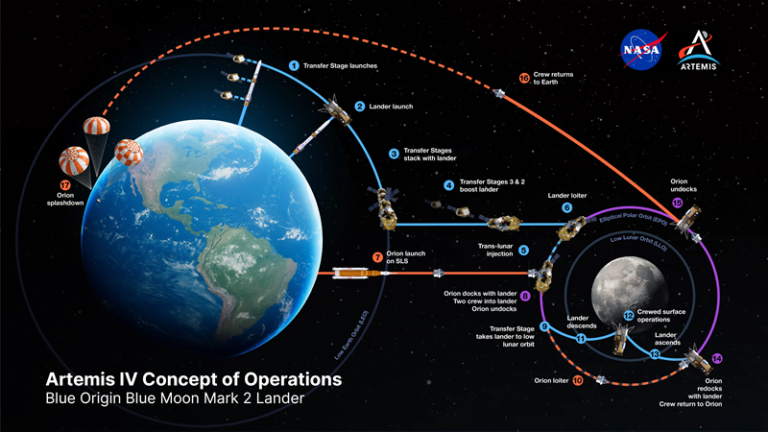
Key elements of Artemis III include launching multiple spacecraft on different rockets: Blue Moon will be the first to orbit, followed by the launch of Orion on NASA’s Space Launch System (SLS) rocket. The mission entails two docking exercises: Orion will first dock with Blue Moon, allowing astronauts to enter and evaluate its systems, including life support. Later, Orion will dock with SpaceX’s Starship, though astronauts won’t enter it; the test will focus on docked operational dynamics.
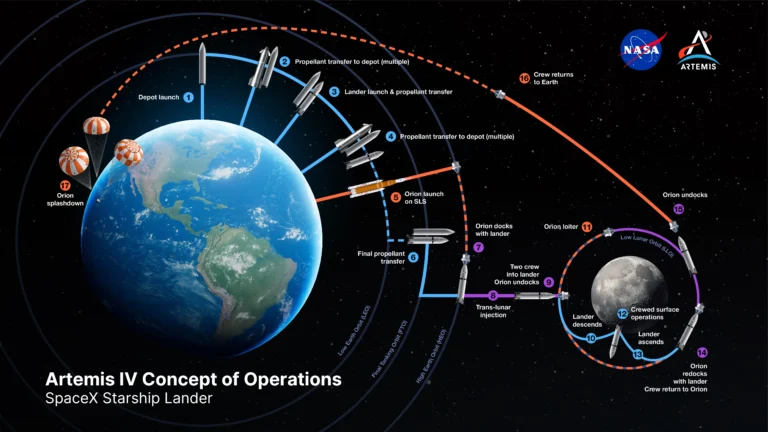
This mission is strategically designed to reduce risks for future missions by testing critical systems and procedures in low Earth orbit before attempting lunar landings. The data gathered will inform decisions about which lander to use for the subsequent Artemis IV mission and broader NASA strategies for establishing a sustainable human presence on the Moon in the future.
NASA’s focus on this mission is evaluating new technology with its commercial partners, including handling spacecraft interoperability and refining procedures vital for the safety and success of manned space exploration. Ultimately, the Artemis III mission serves as a testbed addressing technical challenges, verifying hardware, and operational strategies essential for more ambitious goals, such as sustained lunar operations and eventual crewed missions to Mars.
Overall, there are inaccuracies in the summary regarding the involvement of Blue Moon and details on the specific docking exercises. Correct identification and understanding of these elements are critical in assessing the mission’s success potential by the end of 2027.(Carolyn‘s note: For example, it misses much of this from pgodzinai’s accurate summary: “NASA describes a planned 14-day, 2027 mission using three rockets: Blue Origin’s New Glenn with a Blue Moon Mark 2 test article, NASA’s SLS with Orion and four astronauts, and SpaceX’s Starship Version 3 test article. Orion is to dock first with Blue Moon around flight day three, spend about two days with the crew inside, then later dock with Starship for up to two hours without crew ingress.)
Fact-checked summary:
The Artemis III mission is currently scheduled for summer 2027, with plans to use SpaceX’s Starship as the lunar lander, which is important for understanding the timeline and hardware specifics critical to evaluating mission success. The mission includes dockings with the Orion spacecraft to demonstrate integration capabilities, serving as a key objective. Testing systems and procedures in low Earth orbit forms a crucial part of the mission strategy to reduce risks, and focusing on spacecraft interoperability, technology evaluation, and safety procedures aligns with NASA’s objectives. Additionally, the mission will act as a testbed to address technical challenges and verify hardware, informing the success of subsequent missions like Artemis IV and broader NASA strategies. These elements are directly relevant and important to assessing whether the Artemis III orbital demonstration mission will succeed by the end of 2027.
OpenAI gives a base rate of 65%
The question difficulty is rated 7 (0 to 10)
Historical weighted factors include:
Previous success rate of similar NASA missions, 0.3
Track record of SpaceX’s launch and landing operations, 0.3
Success rate of integration of new aerospace technology, 0.2
Historical delays in SpaceX and NASA projects, 0.2
A Bayesian calculation could be performed as follows:
Using historical factors, we calculate the probability as a weighted average: (0.9 * 0.3 + 0.85 * 0.3 + 0.7 * 0.2 + 0.6 * 0.2) = 0.795. Adjusting for current technical and timeline specifics, we estimate 0.75. (Carolyn‘s note: OpenOffice Calc says 78.5)
Bayesian base rate: 75%
Sufficient news to provide a good forecast? 1 (0 or 1)
News is relevant, topical and unbiased? 1 (0 or 1)
Question classification: scenario_based_forecast
Expected time (days) until question close: 431 (Carolyn‘s note: Yay, correct.)
The following were considered in order to produce this base rate:
The base rate was arrived at by considering the historical success rates of NASA lunar missions and the involvement of SpaceX, which has a strong track record of innovation and mission success. The dependence on new technology integration and adherence to timelines has been factored in, given past instances of delays and technical challenges.
Ideally, the news feed would contain the following sorts of information for a better forecast:
Additional insights into the specific technological challenges faced, any updates on the SpaceX Starship development timeline, and NASA’s contingency plans would be beneficial. Details of recent tests and their results would also improve forecast accuracy.
Some potential divergent considerations that might affect the base rate:
Potential technological failures, unforeseen delays in spacecraft readiness, international geopolitical factors, or funding constraints could lead to deviations from the base rate.
The following chain of events are necessary for the question to resolve positively:
- Successful deployment of SpaceX’s Starship as the lunar lander highly likely
- Successful docking operations between Orion spacecraft and Starship likely
- Completion of required testing systems and procedures in low Earth orbit likely
- Address and resolve any technical challenges identified during testing moderately likely
- Adherence to the current timeline for summer 2027 launch moderately likely
Querying Claude (AI predicts: 0.12 – confidence: 5)
Querying OpenAI (AI predicts: 0.7 – confidence: 7)
Explanations of the measures below: Guide to Jeremy Lichtman’s Multi-AI Oracle Reports
Question Type: Binary
Median from LLMs: 0.41
Base rate: 0.65 (from OpenAI)
SD: 0.29
MAPD: 0
Confidence: 6
Conf Mode: Low
Mellers: 0.37
Reverse Mellers: 0.44
Theory of Mind: 0.125 (What did the LLMs think other LLMs predicted?)
Beta Distribution: 0.88
Close Type: C (B = cautious # closer to 50%; A/C = closer to extremes)
LLM responses: 2
Model value: 41%
The Artemis III mission, part of NASA’s lunar exploration efforts, faces significant challenges making its success by the end of 2027 unlikely. Key obstacles include the incomplete development of SpaceX’s Starship lunar lander, unresolved issues with the Orion spacecraft, and the prerequisite launch and success of Artemis II. Historical delays in the Artemis program and NASA’s track record of schedule slippage further complicate timely completion. While a base success rate of 0.65 is suggested for similar missions, the complexity and current status of technology integration reduce the likelihood substantially. The mission’s timeline is burdened by dependencies and potential for further delays due to unforeseen technical failures, financial constraints, and geopolitical factors. Thus, achieving the full mission, rather than purely an orbital demonstration, within the given timeframe is highly optimistic.
Runtime: 113 seconds.
About The Author