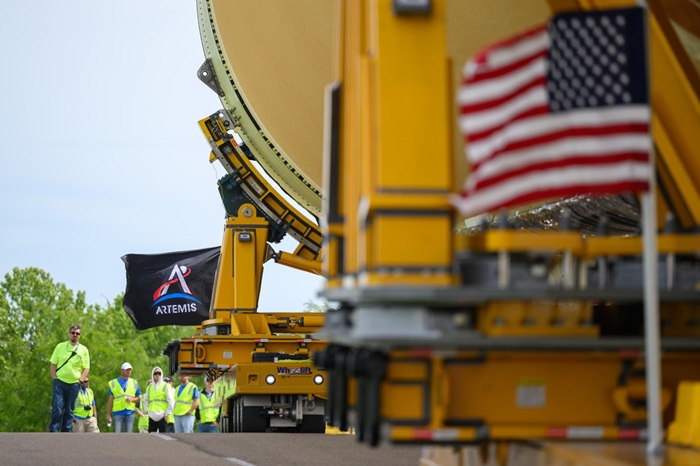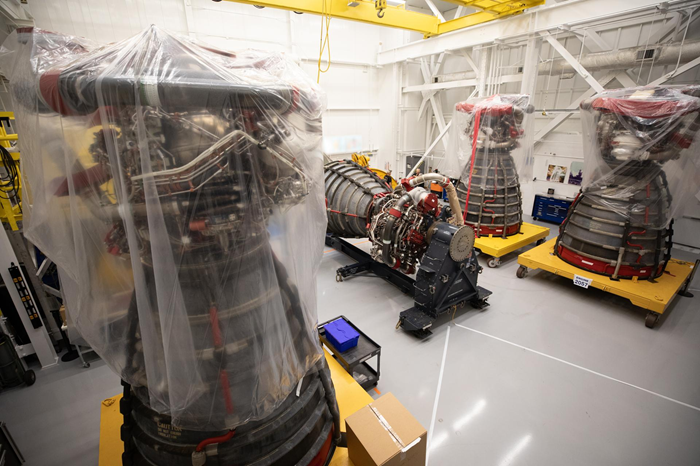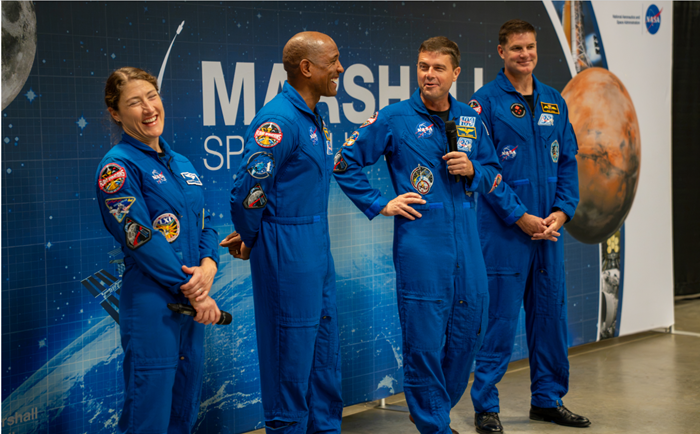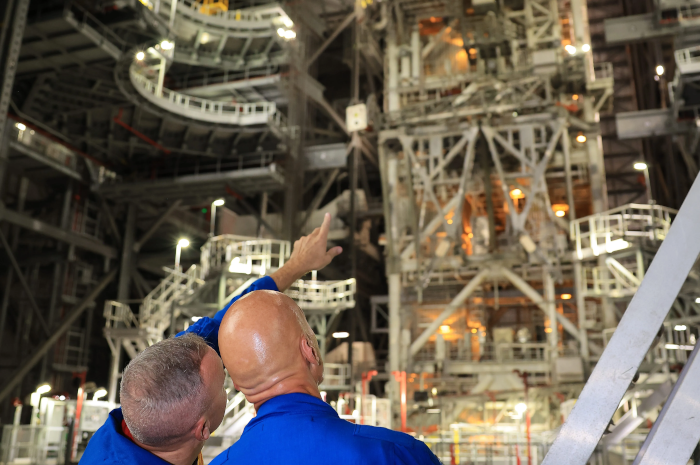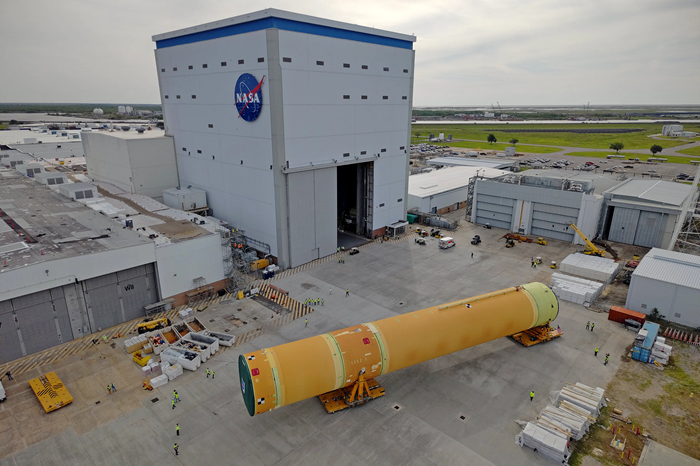
NASA moved the core stage, or the largest section, of the SLS (Space Launch System) rocket that will launch the crewed Artemis III mission in 2027 from the agency’s Michoud Assembly Facility to the agency’s Pegasus barge in New Orleans on April 20. Credit: NASA/Michael DeMocker. Source: https://www.nasa.gov/news-release/nasa-rolls-out-artemis-iii-moon-rocket-core-stage/
Deepseek Binary response:
The evidence indicates a mixed but challenging outlook. NASA’s Artemis III has been redefined as a low-Earth-orbit demonstration, which reduces complexity compared to a lunar landing. SLS/Orion hardware is progressing, and Artemis II already flew successfully in April 2026, suggesting the NASA-controlled elements are relatively mature.
However, the mission remains highly schedule-constrained. The current target is no earlier than June 2027, and as of September 2026 NASA acknowledged being about three months behind. That pushes the realistic launch window toward late 2027, leaving little margin for further delays before the end of 2027.
The critical bottleneck is the commercial lander test articles from SpaceX and Blue Origin. Blue Origin suffered a major pad explosion in May 2026 and is still repairing infrastructure, while SpaceX must integrate a docking system onto Starship. While NASA’s public page says “one or both” landers, Administrator Isaacman has suggested both may be required for mission success, increasing the risk that a delay from either provider could slip the mission into 2028. Even if one lander suffices, coordinating multiple launches and two orbital dockings within a two-week mission is complex and carries technical risk.
Historical NASA flagship missions frequently slip by more than a few months, and the current known slip already consumes much of the available buffer. Considering the base rate of similar events and compensating for overconfidence, I estimate a moderate-to-low probability that the mission launches and completes successfully by the end of 2027.
Data sufficiency: Sufficient
Probability: 35%
Grok response:
Here is a list of 10 key recent sources on the Artemis III LEO demonstration mission (as of October 12, 2026):
- NASA Moon to Mars | Artemis Program page (official NASA site, page last updated September 15, 2026). Official program overview describing Artemis III as a 2027 LEO demo with crewed Orion/SLS testing rendezvous/docking with one or both SpaceX/Blue Origin commercial lander test articles. It notes Artemis II success in April 2026 and targets Artemis IV lunar landing in 2028.[1]
- NASA Marches Toward Artemis III Mission in 2027, Names Crew Members (NASA news release, June 9, 2026). Details the June 2026 crew announcement (Randy Bresnik commander, Luca Parmitano pilot, Andre Douglas/Frank Rubio specialists) and mission plan for 2027 LEO tests including docking with Blue Origin and SpaceX lander pathfinders; reports strong progress on Orion/SLS integration and docking system.[2]
- Countdown to Artemis III: The major milestones still ahead (Aerospace Global News, October 6, 2026). Summarizes ongoing SLS/Orion work and lander preparations for the 2027 demo; notes NASA Administrator Isaacman’s July 2026 commitment to the schedule despite a May Blue Origin setback, with crewed docking tests planned sequentially with Blue Moon then Starship test articles.[3]
- Artemis III (Wikipedia, last updated October 10, 2026). Provides mission parameters (NET June 2027 launch on SLS/Orion to LEO for docking tests) and crew details; outlines the February 2026 replan shifting Artemis III to an Earth-orbit demo and notes internal Orion readiness dates around early 2028 before acceleration.[4]
- NASA progress with SLS vehicles for upcoming Artemis missions (NASASpaceflight.com, October 6, 2026). Reports active stacking of Artemis III solid rocket boosters and core stage/engine integration at Kennedy Space Center; confirms NET June 2027 target and notes use of structural test articles for adapters to preserve flight hardware for later missions.[5]
- Next Artemis mission on track for 2027, but anything can happen, astronaut says (Reuters, October 5, 2026). Astronaut Andre Douglas states the mission remains targeted for summer 2027 but highlights remaining lander development risks (rendezvous, docking, propellant transfer); notes NASA meetings planned in coming months to assess SpaceX/Blue Origin readiness while SLS/Orion elements are on track.[6]
- NASA’s Artemis III is about three months behind schedule, Isaacman says (Mashable, September 23, 2026). Reports NASA Administrator Isaacman’s internal email noting ~90-day schedule slip against summer 2027 target (best-case scenario); attributes some delays to supplier issues but emphasizes recovery opportunities and continued push for two 2028 lunar landing attempts.[7]
- NASA provides some details about Artemis III, but hard decisions remain (Ars Technica, May 13, 2026). Covers the shift to LEO-only demo using a spacer instead of ICPS upper stage (to preserve it for Artemis IV); discusses test-article concepts for both landers and notes ongoing refinement of operations including potential crew entry into at least one lander.[8]
- NASA says Artemis III mission on schedule as Blue Origin repairs launchpad (Reuters, July 20, 2026). Notes Isaacman’s continued confidence in the 2027 timeline post-May 2026 New Glenn explosion; highlights contingency plans for lander launches and strong progress on NASA-controlled elements (SLS/Orion) while Blue Origin aims to resume flights by year-end.[9]
- NASA Outlines Preliminary Artemis III Mission Plans (NASA, May 13, 2026). Details the LEO profile (~230 nmi/430 km orbit), sequential dockings (Blue Origin first, then SpaceX), and use of commercial rockets for lander test articles; emphasizes risk reduction for Artemis IV and ongoing hardware work including Orion service module integration.[10]
Additional context from recent reporting (October 2026): SLS hardware stacking is actively progressing with boosters partially stacked and engines being integrated; Orion crew/service modules are connected and undergoing testing. The primary risks remain the commercial lander test articles (SpaceX Starship V3 with docking system; Blue Origin Blue Moon test article with crew cabin/ECLSS) and their launch vehicles. Blue Origin continues pad repairs after the May 2026 incident. NASA officials remain publicly optimistic about a mid-to-late 2027 window while acknowledging slips and the need for lander readiness confirmation in coming months. No major new delays have been announced since the September 2026 email. The official NASA Artemis page continues to list the mission for 2027 without updated slippage.
Extracted resolution criteria links:
[‘https://www.nasa.gov/humans-in-space/artemis/
=== Forecast Result ===
=== Reasoning ===
Looking at this forecast, I need to weigh several competing factors:
Factors supporting success by Dec 2027:
- Mission scope has been dramatically simplified from a full lunar landing to a LEO demonstration, removing major risks (translunar injection, lunar orbit, surface landing, ascent)
- NASA’s own description allows for “one or both” commercial landers — this could lower the bar for mission success if only one provider is ready
- SLS/Orion hardware is actively progressing (boosters stacking, core stage engines installed, Orion integration underway)
- Artemis II succeeded on schedule in April 2026, suggesting improved execution reliability for the SLS/Orion portion
- Significant schedule buffer: even with the ~90-day slip already acknowledged (pushing from June 2027 to ~September 2027), there would still be ~3 months of margin before the Dec 31, 2027 resolution deadline
Factors against success by Dec 2027:
- This is an unprecedented three-vehicle coordination mission (SLS/Orion + SpaceX Starship test article + Blue Origin Blue Moon test article) — multiple independent critical-path dependencies
- Neither SpaceX nor Blue Origin has yet demonstrated readiness for lunar-capable systems; Blue Origin suffered a launchpad explosion in May 2026 and is still repairing infrastructure
- NASA’s own Administrator reportedly wants high confidence of achieving ALL objectives before launch — suggesting the “one or both” language may not reflect actual operational practice
- Historical precedent: NASA/SLS programs (Artemis I, II) have repeatedly experienced significant schedule slips, often exceeding initial buffers
- A 90-day slip has already been acknowledged just one month ago (Sept 2026), indicating the program is already behind its own “best case” timeline
- Complex orbital rendezvous/docking with two separate novel spacecraft has never been attempted in this configuration
Key uncertain assumptions:
- Whether “success” requires only one lander ready (≈60% likely based on official wording) vs. both (≈40% likely based on Isaacman’s comments) — this materially changes feasibility
- Whether Blue Origin can recover pad operations and prepare a flight-ready test article in time (highly uncertain given recent setback)
- Whether the ~90-day slip stabilizes or compounds further, a common pattern in complex first-of-kind space missions
Given the multiple independent technical dependencies, acknowledged schedule slip, novel three-vehicle choreography, and historical NASA tendency toward multi-month-to-year delays in complex programs — balanced against genuine hardware progress and a moderately generous buffer to the Dec 2027 deadline — I estimate a moderate-to-below-even probability of full success within the window.
Data sufficiency: Sufficient
Probability: 37%
End
About The Author