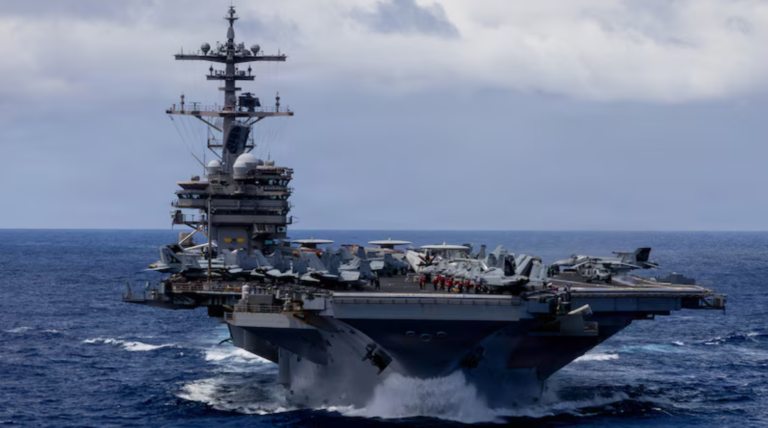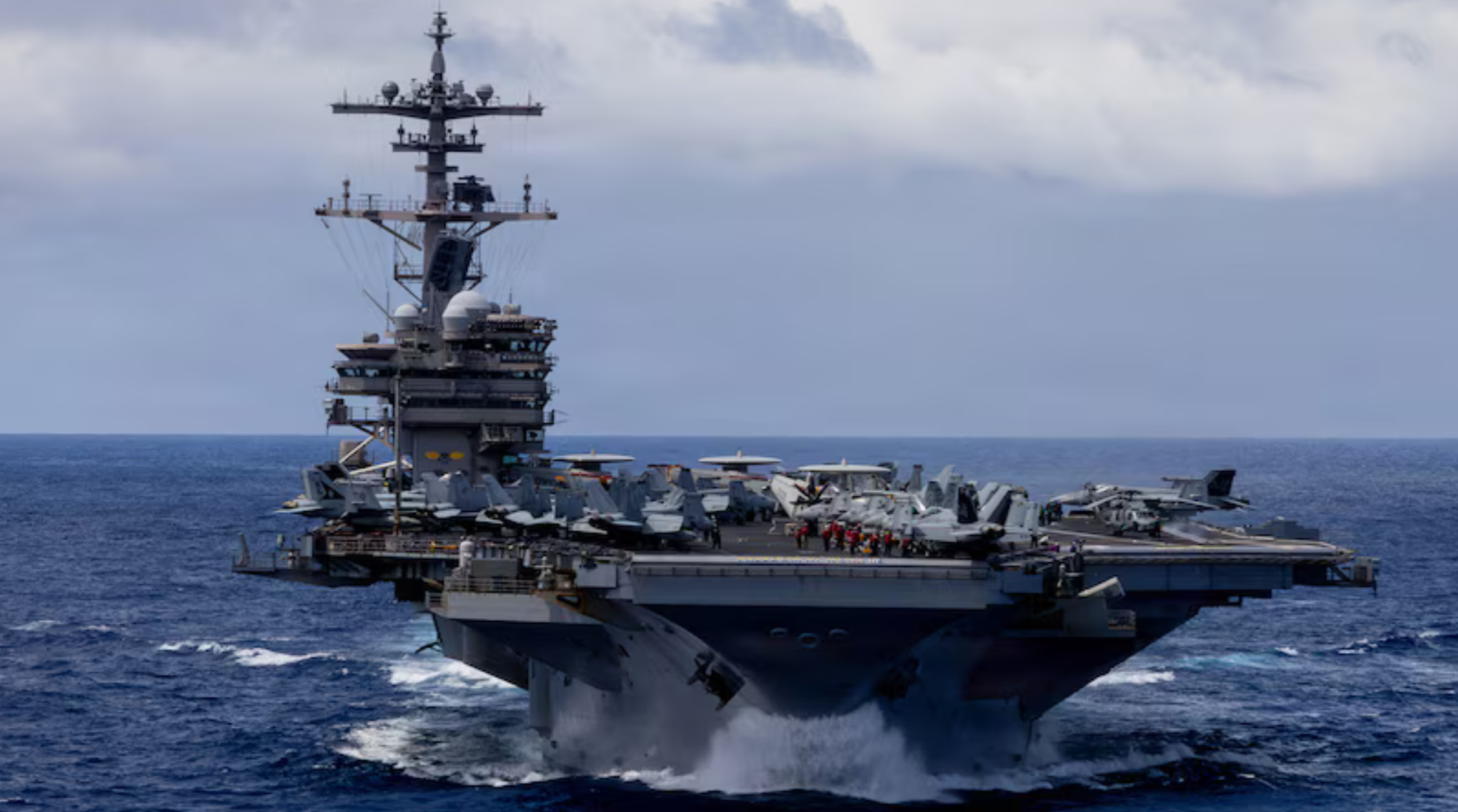
Image: Nimitz-class aircraft carrier USS George H.W. Bush (CVN 77) sails in the Indian Ocean in the U.S. Central Command area of responsibility, April 23, 2026. (U.S. Navy photo) Source: https://www.centcom.mil/MEDIA/IMAGERY/igphoto/2003919469/
Deepseek Binary response:
The available evidence as of October 15, 2026, strongly indicates that Strait of Hormuz LNG traffic is not de facto unimpeded. gCaptain itself reports a SEVERE threat assessment, QatarEnergy force majeure extensions, and that Qatari LNG transits “all but stopped” after a projectile attack. LNG-specific flows remain more than 75% below prewar levels, with October attacks surging to their highest level since the war began. The recent direction is toward renewed restriction, not normalization.
For a “Yes” resolution, there would need to be a rapid, major de-escalation followed by sufficient security normalization, lifting of force majeure, resumption of routine LNG transits, and a gCaptain report declaring traffic de facto unimpeded—all within roughly 11 weeks. Even under a ceasefire scenario, shipping confidence, insurance, and operational restart often lag by weeks or months. The base rate for a severely disrupted conflict chokepoint returning to unimpeded traffic within a couple of months is very low.
I assign roughly a 4% probability to this multi-condition chain resolving positively by December 31, 2026. The main upside risks are a sudden US-Iran ceasefire, a Qatar-Iran side deal for LNG, or a successful US-led escort corridor; however, current evidence suggests these are unlikely to materialize and fully normalize LNG traffic in time.
Data sufficiency: Sufficient
Probability: 4%
Grok response:
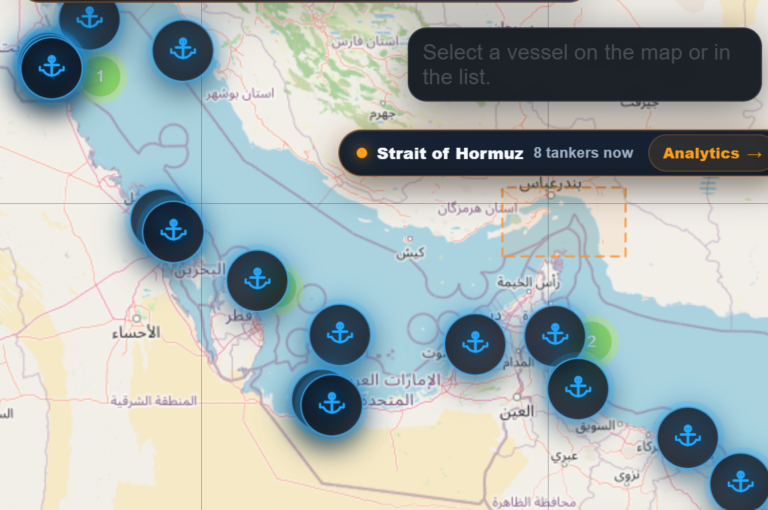
Current status (as of October 15, 2026): The Strait of Hormuz remains severely restricted for commercial shipping, including LNG traffic, due to the ongoing US-Israel-Iran conflict that began in late February 2026. AIS-visible commercial traffic averages around 9-11 vessels per day (roughly 10% of pre-crisis levels of ~85), with many “dark” (AIS-off) transits. LNG flows have seen a modest rebound but remain heavily curtailed.[1]
LNG-specific data: September 2026 saw the highest monthly LNG cargoes exiting the strait since the war began (19-21 cargoes per S&P Global and Kpler data, mostly from Qatar and UAE), up from 15 in June. This is still more than 75% below pre-war levels (pre-war: ~3 LNG cargoes per day). Some Qatari and UAE vessels have transited visibly or in dark mode in recent weeks, but overall flows are low, with force majeure extensions by QatarEnergy and persistent security risks.[2][3]
10 Citations:
- Is the Strait of Hormuz Open? Live Status: Restricted | hormuz.now (hormuz.now, published Oct 15, 2026): Live tracker shows “Restricted” status with AIS-visible commercial traffic at ~10% of normal (8.9/day vs. 84.8 pre-crisis); notes severe restrictions, US coordination, Iranian permits, and only minimal LNG/LPG activity (2 LNG carriers in region recently). Summarizes day 230 of crisis with ongoing dark feeds and low crossings.[1]
- LNG cargoes defy Strait of Hormuz security risks to hit wartime high | World Ports Organization (World Ports Organization, published Oct 15, 2026): Reports 19 LNG cargoes through strait in September (13 Qatar, 6 UAE per S&P), up from June; notes acceleration in late September but still far below pre-war, with visible QatarEnergy transits resuming amid conflict. Highlights potential for 25% recovery if trend holds.[2]
- Qatar-linked LNG traffic through Hormuz strait picks up despite conflict – The Economic Times (Economic Times, published Oct 15, 2026): Details increased visible transits of Qatar-linked LNG vessels in recent weeks (e.g., GasLog Skagen, Mesaimeer); notes zero visible in August due to attack fears, with some “dark” movements possible earlier. Cites Kpler/LSEG data on pick-up.[8]
- Hormuz LNG Flows Still Down More Than 75% Despite Rebound – Iran (europesays.com, published Oct 5, 2026): September saw 21 LNG cargoes (Kpler/Reuters), highest since war start but >75% below pre-war; notes rebound extending into early October with risks from recent attacks (e.g., UKMTO reports). Emphasizes dark transits complicating tracking.[3]
- LNG Trade Through Hormuz Extends Rebound Despite Shipping Risks | World Ports Organization (World Ports Organization, published Oct 13, 2026): At least three LNG shipments exited since late prior week (Bloomberg/Kpler); September flows highest since conflict but still sharply reduced; notes acute risks from recent projectile incidents and winter demand pressures.[9]
- Iran steps up Hormuz surveillance: Attacks soar, oil flows crash again | Al Jazeera (Al Jazeera, published Oct 14, 2026): Details surge in attacks (10+ tankers struck late Sep-early Oct, plus more in mid-Oct); notes flows dropping (e.g., 2.9 mb/d oil on Oct 11); Iran expanding surveillance amid efforts to control waterway.[4]
- Attacks in Strait of Hormuz reach highest level since start of US Iran war, security data shows (Economic Times, published Oct 15, 2026): Reports 10+ vessels attacked since Sunday (highest daily since war), 23 incidents in early October; links to disrupted shipping and Iran’s leverage tactics amid partial oil flow recovery.[5]
- Strait of Hormuz: is it open? Status, ship traffic and oil flows | Strategic Energy Map (Strategic Energy Map, published Oct 15, 2026): Classifies strait as effectively closed to normal traffic since Feb 28; cites very low tanker counts (0.6/day tracked) and ongoing attacks/permits; notes no bypass for most Qatari/UAE LNG.[6]
- LNG Shipments Through Hormuz Hit Highest Level Since Iran War Began | OilPrice.com (OilPrice.com, published Oct 2, 2026): 19-21 LNG cargoes in September (highest since war); pre-war ~3/day; notes dark transits, force majeure extensions, and volumes too low to impact global balances significantly.[7]
- Containership Sinks as Hormuz Attacks Spiral Out of Control | gCaptain (gCaptain via X, published Oct 14, 2026): Reports containership sinking (GFS Pride) after projectile strike amid record attack levels; part of broader coverage of escalating incidents without any normalization signals.[10]
Recent updates (mid-October attacks and flow drops) indicate movement away from normalization. No gCaptain report declares LNG traffic de facto unimpeded; sources instead highlight persistent severe restrictions. Expert/analyst views (Kpler, S&P) stress risks of escalation preventing sustained recovery.
=== Forecast Result ===
=== Reasoning ===
Rationale and Analysis
1. Current State and Trajectory
As of October 15, 2026, LNG transit through the Strait of Hormuz is severely restricted rather than unimpeded. While late September saw a modest uptick to around 19–21 LNG cargoes (roughly 20–25% of pre-war normal volume of ~90/month), recent developments in mid-October indicate sharp deterioration rather than normalization:
- Iranian and regional missile/drone attacks on commercial shipping have reached peak intensity, including the sinking of a container vessel (GFS Pride) on October 13/14 and multiple tanker strikes.
- Traffic recently dropped to single digits per day (around 6–10 commercial vessels vs. pre-war norms of 85–140).
- Qatari LNG transits, which had briefly resumed at a modest pace, “all but stopped” following a recent projectile attack outside the strait.
- QatarEnergy has extended force majeure notices on LNG supplies through late November.
- The Joint Maritime Information Center maintains a SEVERE threat rating for the waterway.
2. Resolution Criteria Interpretation
The resolution requires that, by December 31, 2026, gCaptain reports that Strait of Hormuz LNG traffic has become “de facto unimpeded,” defined as international maritime LNG traffic no longer being halted or severely restricted.
Partial resumptions, convoy-escorted trickle traffic, or dark-AIS movements subject to Iranian permits/tolls do not meet the definition of “de facto unimpeded.” A genuine resolution requires substantial restoration of safety, insurance viability, and operational capacity such that shipping is no longer severely constrained.
3. Time Horizon Considerations
There are approximately 77 days (2.5 months) remaining until the resolution date.
- 1-Month Horizon (by mid-November 2026): Probability estimated at 1%. With QatarEnergy force majeure active into November, attacks at war-record highs, and regional tensions heightened, near-term normalization is virtually impossible.
- 2.5-Month Horizon (by December 31, 2026 – Target): Probability estimated at 5%. The only plausible pathway to resolution by year-end is a rapid diplomatic breakthrough or maritime safe-passage agreement following the early November US elections, followed by rapid clearing of hazards and re-entry of commercial fleets within a 3–4 week window before year-end.
- 1-Year Horizon (by late 2027): Probability estimated at 40%, reflecting the likelihood of war exhaustion, diplomatic negotiations, or stable long-term enforcement mechanisms over an extended timeframe.
4. Critical Assumptions and Failure Rates
Assumption 1: High reporting standard by gCaptain. gCaptain will not describe traffic as “de facto unimpeded” simply because a temporary ceasefire or escort protocol begins; it requires an actual reduction in severe restrictions.
- Probability of assumption being incorrect: 12% (gCaptain could publish a slightly premature or sensationalized headline upon an initial truce declaration).
Assumption 2: Conflict de-escalation will not occur rapidly enough to normalize shipping within 77 days. Even if diplomatic talks begin post-US election, the lag required for risk assessments, hull insurance rates to collapse back to viable ranges, and shipping lines to remove operational restrictions typically spans 1–2 months after fighting ceases.
- Probability of assumption being incorrect: 8% (An abrupt, ironclad international maritime pact or sudden cessation of hostilities could accelerate transit normalization before late December).
Assumption 3: The mid-October surge in attacks represents continued structural disruption.
- Probability of assumption being incorrect: 15% (The spike could be a brief pre-election peak of posturing followed by an immediate lull).
Combining these factors, a positive resolution requires a rapid sequence of low-probability events: swift political/military de-escalation, rapid maritime confidence restoration, and unambiguous gCaptain reporting before year-end.
Data sufficiency: Sufficient
Probability: 5%
End
About The Author