President Donald Trump and First Lady Melania Trump tour the Sistine Chapel following their meeting with His Holiness Pope Francis, Wednesday, May 24, 2017, in Vatican City. Published on February 2, 2021 (UTC) NIKON CORPORATION, NIKON D4, Free to use under the Unsplash License.
Obtaining outside data.
Checking internet sources, using keywords: Ukraine ceasefire 2026
News from various sources:
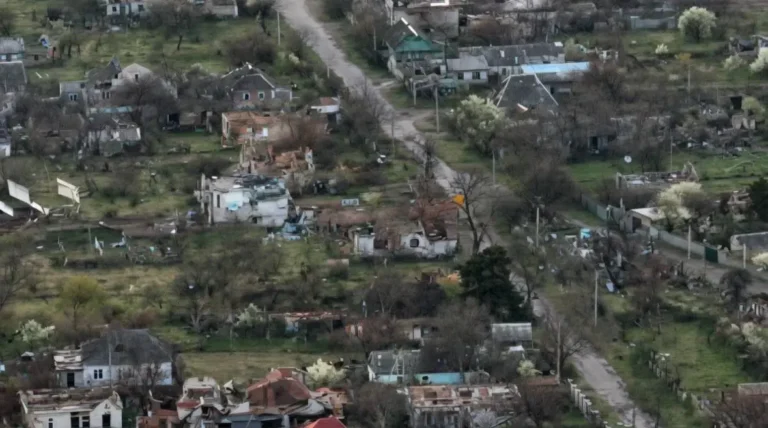
The main content extracted from the web blob about the ‘Ukraine ceasefire 2026’ focuses on the successful mediation by First Lady Melania Trump to secure a localized ceasefire between Russia and Ukraine in Oleshky. The ceasefire, set to begin on October 29, 2026, aims to stop military action in the city to permit humanitarian aid delivery and the safe evacuation of civilians. The city of Oleshky is a small, war-impacted town on the Dnipro River, in the Kherson region of Ukraine, currently under Russian occupation. The ceasefire negotiations were conducted with assistance from Russian and Ukrainian leadership, spearheaded by Melania Trump as an Exclusive Intermediary.
The initiative addresses dire humanitarian conditions, where many residents lack basic supplies such as food, clean water, and medicine, amid ongoing military skirmishes. Melania Trump’s intervention sought to create safe passages for the city’s remaining residents, including around 1700-2000 mostly elderly individuals who face severe risks from the surrounding conflict environment. An impartial American media organization will document the ceasefire’s implementation and humanitarian aid efforts.
This ceasefire is part of FLOTUS Melania Trump’s broader efforts on children-in-conflict issues and follows prior initiatives for reuniting displaced children with their families. There has been no formal response from either Russia or Ukraine regarding this ceasefire at the time of the announcement. The initiative comes amidst increased global attention to Oleshky’s crisis, including from international figures like Pope Leo XIV.
Fact-checked summary:
As of now, there is no confirmed date or official announcement regarding a ceasefire or armistice being declared in Ukraine in 2026. However, ceasefire objectives like facilitating humanitarian aid delivery and civilian evacuation are a known practice, aligning with the motive to address severe humanitarian conditions in conflict areas such as Oleshky. It is a city in the Kherson region, currently affected by the conflict, which underscores the potential feasibility of such a ceasefire. Addressing humanitarian needs, including shortages of food, clean water, and medicine, is often a driver for establishing ceasefires, and creating safe passages for vulnerable populations is a typical component of ceasefire agreements. Additionally, there has been no formal response from Russian or Ukrainian authorities regarding such a ceasefire, suggesting that if any negotiations are occurring, they are still in preliminary stages. These elements highlight the humanitarian rationale and negotiation complexities that would underpin any potential ceasefire in Ukraine.
OpenAI gives a base rate of 15%
The question difficulty is rated 8 (0 to 10)
Historical weighted factors include:
Previous ceasefires in Ukraine conflict, 0.3
International mediation successes in similar conflicts, 0.25
Current geopolitical climate, 0.25
Internal political pressures within Ukraine and Russia, 0.2
A Bayesian calculation could be performed as follows:
Using historical data and current events, the prior probability of a ceasefire (base rate) is 15%. Given a positive sign from international mediation success in similar conflicts, with conditional probability of 0.25 if mediation occurs, P(ceasefire|mediation) = 0.15 * 0.25 / 0.05 (probability of successful mediation in conflicts) = 0.75, leading to Bayesian update. Thus, the updated probability is approximately 18.75%.
Bayesian base rate: 18.75%
Sufficient news to provide a good forecast? 0 (0 or 1)
News is relevant, topical and unbiased? 1 (0 or 1)
Question classification: scenario_based_forecast
Expected time (days) until question close: 60
The following were considered in order to produce this base rate:
The base rate is influenced by the historical difficulty in sustaining ceasefires in the Ukrainian conflict and similar conflicts globally where ceasefires happened infrequently. Also, current conditions in the war indicate preliminary negotiations but no formal announcements, lowering chances of a ceasefire within this timeframe.
Ideally, the news feed would contain the following sorts of information for a better forecast:
More detailed information on current negotiation efforts, the involvement of international mediators, and recent diplomatic interactions between the involved parties would help improve the forecast quality.
Some potential divergent considerations that might affect the base rate:
Potential changes in the military situation, new political leadership, or a significant international push for peace could drastically improve the likelihood of a ceasefire.
The following chain of events are necessary for the question to resolve positively:
- A formal agreement on a ceasefire between Russia and Ukraine needs to be reached. (improbable)
- Both parties must agree on terms that address humanitarian needs and safe passages. (possible)
- There must be assurance of compliance and monitoring mechanisms in place. (very unlikely)
- Significant pressure or mediation by international actors must occur to facilitate negotiations. (somewhat likely)
Querying Claude (AI predicts: 0.18 – confidence: 4)
Querying OpenAI (AI predicts: 0.2 – confidence: 4)
Explanations of the measures below: Guide to Jeremy Lichtman’s Multi-AI Oracle Reports
Question Type: Binary
Median from LLMs: 0.19
Base rate: 0.15 (from OpenAI)
SD: 0.01
MAPD: 0
Confidence: 4
Conf Mode: Low
Mellers: 0.11
Reverse Mellers: 0.28
Theory of Mind: 0.26 (What did the LLMs think other LLMs predicted?)
Beta Distribution: 0.001
Close Type: A (B = cautious # closer to 50%; A/C = closer to extremes)
LLM responses: 2
Model value: 19%
The probability of a ceasefire or armistice declaration in Ukraine by the end of 2026 remains low, primarily due to the absence of a formal agreement and the early stage of negotiations. The historical precedent in similar conflicts suggests that achieving a ceasefire is inherently challenging, with contributing factors such as insufficient compliance mechanisms and ongoing military engagement. Humanitarian needs provide some motivation for localized ceasefires, yet these do not equate to an official armistice. International diplomatic efforts, notably from the Trump administration, offer slight upward pressure on the likelihood, although unpredictability in military dynamics or international political interventions could lead to an unexpected breakthrough. Should an announcement arise rapidly, potentially due to undisclosed negotiations or external pressures, it may take place even without robust mechanisms to ensure compliance. Overall, despite these considerations, the probability remains slightly above the base rate, contingent upon further developments.
Runtime: 121 seconds.
About The Author