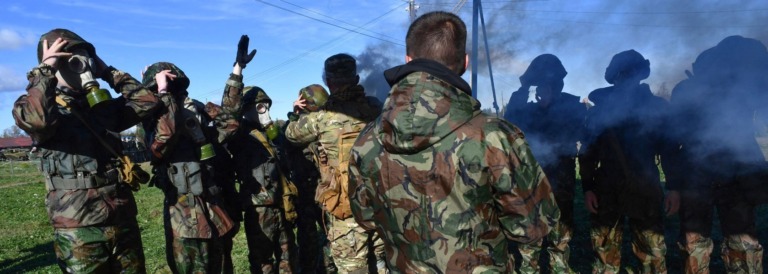
Ukraine's trident symbol patch on a soldier's camouflage uniform. Photo from Ukraine by Žilvinas Ka on Unsplash, @zilvinaska. Published on June 17, 2022 (UTC) SONY, ILCE-6400. Free to use under the Unsplash License
DeepSeek research response:
Bottom line (as of October 23, 2026)
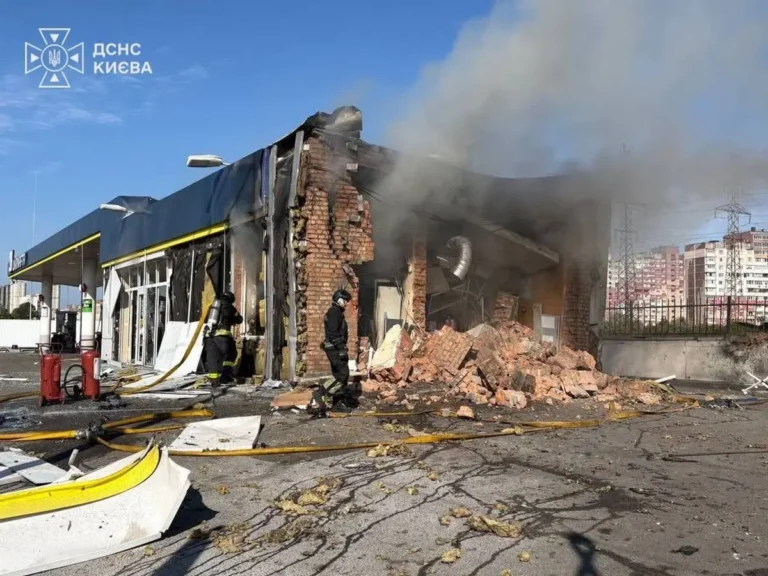
- No general ceasefire or armistice is currently in force. Fighting remains intense: Ukraine’s General Staff reported 269 combat clashes in 24 hours on October 20, including 37 Russian attacks on the Kostiantynivka front and 30 on the Pokrovsk front (Ukrainska Pravda, Oct. 21, 2026).
- The diplomatic track has restarted, but on Russia’s terms. Putin agreed in principle on October 21 to resume US–Russia–Ukraine trilateral talks after November 10, possibly in Abu Dhabi, but explicitly said the goal is a final peace agreement, not a “short ceasefire” (Yonhap, Oct. 22; Xinhua, Oct. 23).
- The core territorial gap is unchanged. Putin demands all of Donbas and rejects freezing the current front line; Zelensky says he will accept a freeze along the current line but will not cede Kramatorsk/Sloviansk or other Ukrainian-held Donbas territory (Hankyoreh, Oct. 21–22; Reuters, Oct. 22).
- The biggest resolution ambiguity is the May 8–10 Victory Day truce. Polymarket’s contract page on this exact question displays a final “Yes” settlement tied to that short truce, but the resolution was disputed and major outlets described the May proposals as not mutually agreed. The October 11 “energy ceasefire” is a second, weaker candidate: it was announced by Trump, only conditionally supported by Zelensky, not confirmed by Moscow, and violated.
10 citations
1. “Putin agrees to resume 3-way peace talks with Ukraine and US … to open after 9 months?”
Yonhap News Agency (Korean), published October 22, 2026.
Putin met US envoy Steve Witkoff for nearly three hours in St. Petersburg on October 21 and agreed in principle to resume US–Russia–Ukraine trilateral talks after November 10, with Abu Dhabi mentioned as a possible venue. Kremlin aide Yuri Ushakov said the agenda would focus on post-war security guarantees, but CNN reported no sign Russia is retreating from demands for all of Donbas, a smaller Ukrainian army, and no NATO membership. Zelensky welcomed the rapid resumption and again called for a leaders’ summit involving Trump and Putin.
2. “Putin: Russia–US–Ukraine trilateral talks to resume, not for a ‘short-term ceasefire’”
Xinhua Korean, published October 23, 2026.
Putin said the purpose of the resumed trilateral talks is to secure a final peace agreement and post-war security guarantees for both Russia and Ukraine, not a brief pause in fighting. He said Russia is ready to restart contacts to achieve that goal and wants the talks to address a Europe-wide security architecture. The report notes Ukraine has signaled openness to an “energy ceasefire” and a freeze of the current front line, while Russia continues to insist that eastern Ukraine is historically Russian territory.
3. “Zelensky: ‘Ceasefire possible on the current front line’ … Putin also agrees to resume 3-way talks”
Hankyoreh (Korean), published October 21, 2026, updated October 22.
In a Fox News interview, Zelensky said Ukraine could accept a peace agreement that freezes the current front line, calling it “the minimum we demand from Russia today.” He explicitly rejected ceding the Donbas, arguing Russia is not winning on the battlefield and that handing over Ukrainian-held land would be “unfair.” Putin separately agreed in principle to resume trilateral talks after November 10, though the two sides remain far apart on territory and security guarantees.
4. “Putin agrees to resume 3-way peace talks with Ukraine and US”
Reuters via AWANI International, published October 22, 2026.
The Kremlin said the new talks would be at technical level and could begin on or after November 10 in Abu Dhabi, focused on how to guarantee Ukraine’s and Russia’s security once the war ends. Putin has shown few signs of compromising on core war aims: full Russian control of Donetsk, no NATO membership for Kyiv, and an overall peace deal rather than a temporary ceasefire. Trump has intensified pressure on Ukraine to strike a deal, and a possible Trump–Putin–Xi meeting was also discussed.
5. “Why US diplomatic pressure offers little hope for peace in Ukraine”
BBC Hungarian (Steve Rosenberg), published October 21, 2026.
Rosenberg writes that after the Oslo and St. Petersburg talks, there is little evidence Putin feels under pressure to end the war; the Kremlin dismissed the Ukrainian/European proposals as having “not much useful” in them. Ushakov said, “I don’t know how much closer we’ve got, but things are moving in that direction,” a deliberately vague formulation. The analysis notes Putin knows Ukraine’s air defenses are strained and may see the coming winter as an opportunity to force concessions.
6. “Russian Offensive Campaign Assessment, October 22, 2026”
Institute for the Study of War (ISW), published October 22, 2026.
ISW assesses that the Kremlin’s apparent interest in negotiations is aimed at extracting economic concessions from the United States so Russia can continue funding the war, not at ending it. Russian forces have suffered a net loss of 241 square kilometers in Ukraine since September 1, 2026, and have averaged only 0.25 square kilometers of advance per day in 2026, while October casualties reached roughly 37,000. Russia struck Kyiv with cluster munitions and has hit more than 170 Ukrainian energy facilities since Trump’s October 11 “energy ceasefire” announcement.
7. “Trump announces Russia–Ukraine ‘energy ceasefire,’ which Zelenskyy says he hasn’t seen but supports”
CBC/Reuters, published October 11, 2026, updated October 12.
Trump declared on Truth Social that an “energy ceasefire” was in effect and that both sides had agreed, but Zelensky said the announcement was “news for me” and that Ukraine would support it only if Russia did. The Kremlin did not confirm the deal, and Russian strikes on Ukrainian energy infrastructure continued, including a strike on a Kharkiv heating plant after the announcement. Zelensky also said he would hold elections if Putin agreed to a 60-day total ceasefire, which the Kremlin rejected.
8. “Trump’s ‘energy ceasefire’ claim: What’s behind and how countries react”
CGTN, published October 12, 2026.
CGTN reports that neither Moscow nor Kyiv confirmed the energy ceasefire, and Zelensky initially said the proposal was news to him before conditionally supporting it. The announcement came amid a US diesel deal with Russia and pressure to lower fuel prices before the November 3 midterm elections, with US diesel prices at one point 94% above pre-Iran-war levels. European allies criticized the diesel deal, and Russia continued strikes on Ukrainian energy facilities.
9. “Russia Country Risk Report & Analysis”
Allianz Trade, published September 21, 2026.
Allianz Trade estimates Russia’s GDP growth will stagnate at 0–1% in 2026, down from 1% in 2025 and 4.1% in 2024, with the central bank’s key rate cut to 14% by late July. The federal deficit reached 6 trillion rubles ($83.5 billion) in January–May 2026, 60% above the full-year target, while oil and gas revenues fell 30% year-on-year and the liquid National Welfare Fund shrank to 1.8% of GDP. Unemployment is at a record 2.1%, and military recruitment fell 20% in Q1 2026 despite large bonuses.
10. “Russia May Exceed Its Target for Recruiting Foreigners as Early as November – Coordination Headquarters”
LIGA.net, published October 18, 2026.
Ukraine’s POW coordination headquarters says Russia recruited 16,168 foreigners in the first nine months of 2026, against an annual target of 18,500, and is recruiting about 1,800 per month. Since 2022, 45,959 foreigners from 151 countries have signed contracts with the Russian army, with recruitment shifting toward Africa and Latin America. If the pace continues, Russia will exceed its target in November and could reach 21,500 new foreign contract soldiers by year-end.
Resolution-relevant data
Battlefield
- 269 combat clashes in the 24 hours to the morning of October 21, 2026; 37 attacks on the Kostiantynivka front and 30 on the Pokrovsk front (Ukrainska Pravda, Oct. 21, 2026).
- Russia suffered a net loss of 241 km² in Ukraine between September 1 and October 22, 2026, and averaged 0.25 km²/day of advance in 2026 (ISW, Oct. 22, 2026).
- Russian casualties in October 2026 were already ~37,000, versus 31,270 for all of October 2025 (ISW, Oct. 22, 2026).
- Russia controls 75–85% of Donetsk but not Kramatorsk or Sloviansk; Ukraine says losing those cities would open the road to Dnipro (Expresso, Oct. 23, 2026).
=== Forecast Result ===
I am forecasting a declaration after October 23 and before the year-end deadline. The May truce and October 11 energy-ceasefire announcement cannot themselves satisfy this forward-looking window.
The criterion concerns a declaration, not successful implementation. A bilateral ceasefire could qualify even if fighting subsequently continued. Conversely, an unsupported announcement by a mediator would not clearly establish an agreement between Russia and Ukraine.
The most important evidence is:
- Recent diplomacy provides a genuine opening. The supplied October 21–23 Reuters reporting describes Russian agreement in principle to resume trilateral talks and Ukrainian willingness to freeze the current front line. This creates a concrete opportunity, rather than merely a hypothetical negotiating pathway.
- The substantive gap remains large. Putin rejects a short ceasefire as the negotiating objective, while the sides remain divided over territory and security arrangements. Technical talks beginning after November 10 would leave only about seven weeks to produce a declaration.
- A narrow agreement is easier than a settlement. An energy, regional, or short-duration truce could emerge without resolving territorial disputes. The previous ceasefire announcements demonstrate interest in this route, although their disputed bilateral status limits their evidentiary value.
- Economic pressure does not establish imminent Russian capitulation. Fiscal and recruitment strains matter, but the newer oil-revenue reporting and assessments of Russia’s ability to continue fighting weaken the claim that exhaustion will force agreement within this short window.
- Continuing attacks are negative but not disqualifying evidence. They suggest little operational convergence, yet attacks can continue during negotiations—or after a qualifying declaration.
I give greatest weight to the recent Reuters reporting. Repeated articles describing the same diplomatic development are not independent signals. The disputed market settlement is unsuitable as a current probability estimate; the separate mid-20s market snapshot is only a weak cross-check.
Scenario estimate
These are judgmental weights, not measured historical frequencies:
| Scenario before the deadline | Scenario probability | Chance of a qualifying declaration within that scenario |
|---|---|---|
| Talks produce a major diplomatic breakthrough | 14% | 90% |
| Talks proceed, but core disagreements remain | 56% | 25% |
| Meaningful negotiations stall or arrive too late | 30% | 10% |
The weighted estimate is approximately 30%. Limited ceasefires account for much of the probability outside the breakthrough scenario.
Two pivotal assumptions
- Meaningful negotiations occur early enough to matter. I assign a 30% probability this assumption fails through cancellation, delay, or largely performative talks. The stalled-negotiations branch explicitly incorporates that risk.
- Core Russian and Ukrainian positions remain incompatible despite negotiations. Conditional on meaningful talks occurring, I assign a 20% probability this assumption fails because concessions or external pressure produce a major breakthrough. That generates the breakthrough branch rather than assuming current positions are permanent.
Timing calibration
For a qualifying declaration occurring after today, my cumulative estimates are:
- By November 30, 2026: 16%
- By December 31, 2026: 30%
- By March 31, 2027, under a hypothetical extended deadline: 48%
The likelihood is not evenly distributed: it rises around the proposed November negotiations. Nevertheless, the roughly ten-week remaining window, persistent bargaining gap, and absence of a clearly confirmed bilateral arrangement keep the forecast below even odds.
Data sufficiency: Sufficient
Probability: 30%
End
About The Author