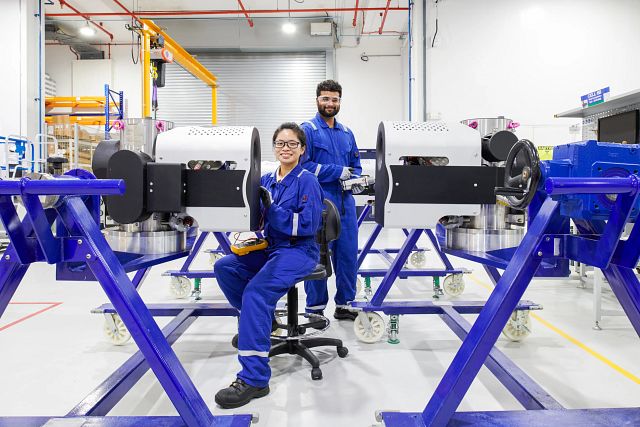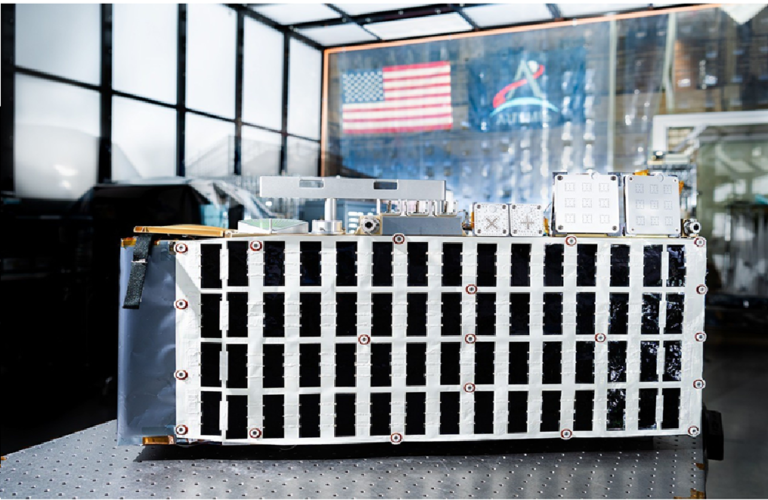
With Artemis missions, we are exploring the Moon for scientific discovery, technology advancement, and to learn how to live and work on another world as we prepare for human missions to Mars. Source: NASA
This is its condensed report. Full version here.
Grok response:
- Title: Moon to Mars | NASA’s Artemis Program
Description: Official NASA overview of the Artemis program timeline and missions.
Date of Publication: April 10, 2026
Summary: The page confirms Artemis III is scheduled for 2027 as a new low-Earth orbit demonstration mission to test one or both commercial landers from SpaceX (Starship HLS) and Blue Origin (Blue Moon) for rendezvous and docking with Orion launched on SLS. Artemis II is the first crewed flight around the Moon, with Artemis IV targeted for early 2028 lunar landing. No delays announced for Artemis III; page notes NASA is increasing mission cadence.[1][2] - Title: NASA Rolls Out Artemis III Moon Rocket Core Stage
Description: NASA press release on hardware progress for Artemis III.
Date of Publication: April 23, 2026 (4 days ago)
Summary: NASA rolled out the SLS core stage for Artemis III from Michoud Assembly Facility, marking progress toward the 2027 LEO demo mission where Orion will test rendezvous and docking with commercial landers. The core stage, built by Boeing, includes tanks and skirts; it heads to Kennedy Space Center for stacking. This follows successful Artemis II and supports on-schedule preparations.[3] - Title: Artemis III
Description: Dedicated NASA mission page for Artemis III.
Date of Publication: March 16, 2026
Summary: Describes Artemis III as a low-Earth orbit demonstration testing one or both commercial landers from SpaceX and Blue Origin for rendezvous/docking with Orion/SLS crew. NASA to announce crew and specifics closer to mid-2027 launch. Links to March 2026 announcement adding the demo mission.[4][5] - Title: NASA rolls out Artemis 3 SLS rocket’s huge core stage to gear up for 2027 launch
Description: Space.com article on Artemis III hardware rollout.
Date of Publication: April 21, 2026 (6 days ago)
Summary: Core stage rolled out April 20 from New Orleans to Florida for Artemis III, the LEO rendezvous test in mid-2027. Emphasizes post-Artemis II momentum, with stacking to begin soon in VAB. No mention of delays; focuses on hardware readiness.[6] - Title: NASA Adds Mission to Artemis Lunar Program, Updates Architecture
Description: Official NASA news release announcing program changes.
Date of Publication: March 3, 2026
Summary: NASA added Artemis III LEO demo in 2027 to test commercial landers/systems ahead of Artemis IV lunar landing in early 2028. Prepares for Artemis II launch (now completed); refines architecture for higher cadence. Confirms involvement of SpaceX and Blue Origin landers.[7][8] - Title: NASA’s Artemis III will pit SpaceX against Blue Origin
Description: Scientific American analysis of Artemis III competition.
Date of Publication: April 14, 2026
Summary: Artemis III in 2027 will test SpaceX Starship HLS and Blue Origin Blue Moon in LEO for docking with Orion, like Apollo 9. Aims to validate both providers for future lunar missions. Notes recent hardware progress post-Artemis II.[9] - Title: Looking ahead to NASA’s Artemis III, IV and V missions
Description: NewsNation overview of upcoming Artemis missions.
Date of Publication: April 13, 2026
Summary: Artemis III LEO test of SpaceX/Blue Origin landers in 2027, followed by Artemis IV lunar landing 2028. Builds on Artemis II success earlier in April 2026. Highlights rendezvous/docking as key demo for commercial providers.[10] - Title: Artemis 3 is a Low Earth Orbit Rendezvous Test
Description: NextBigFuture report on mission redesign.
Date of Publication: February 27, 2026
Summary: NASA redefined Artemis III as 2027 LEO rendezvous mission with no orbital refueling needed for Starship. Shifts lunar landing to Artemis IV; enables faster cadence. Announced amid preparations for Artemis II.[11] - Title: NASA Rolls Out SLS Core Stage for Artemis III Moon Mission (X Post visualization)
Description: X post by @konstructivizm sharing NASA image of rollout.
Date of Publication: April 22, 2026
Summary: Highlights rollout of Artemis III SLS core stage (top four-fifths) from Michoud on April 20, built by Boeing. Supports 2027 LEO demo preparations. Reflects recent positive hardware milestones.[12] [post:4] - Title: NASA has officially begun stacking the Artemis III rocket (X Post)
Description: X post by @surajit_ghosh2 on stacking start.
Date of Publication: April 17, 2026
Summary: Solid rocket booster segment unboxed for Artemis III SLS at Kennedy; twin boosters provide 75% thrust. Indicates stacking operations underway post-Artemis II. Mobile launcher returned to VAB April 16 for inspections/repairs.[13] [post:1]
The resolution source (NASA’s Artemis page, last updated April 10, 2026) confirms the Artemis III low-Earth orbit demonstration mission remains scheduled for 2027, specifically mid-2027, to test rendezvous and docking between crewed Orion/SLS and one or both commercial landers from SpaceX (Starship HLS) and Blue Origin (Blue Moon).[1] This page lists no changes or delays since the March 2026 announcement adding the demo and shifting the first lunar landing to Artemis IV in early 2028.[7]
Recent developments show strong momentum: Artemis II, the first crewed lunar flyby, launched successfully in early April 2026, enabling focus on Artemis III hardware.[10][14] On April 16, the mobile launcher returned to Kennedy’s Vehicle Assembly Building (VAB) for Artemis III stacking after Artemis II.[15] [post:5] The SLS core stage rolled out from Michoud Assembly Facility on April 20—its top four-fifths (including tanks by Boeing)—en route to Florida, with solid rocket booster segments now processing.[3][6] Stacking operations have begun, per April 17 updates.[13]
Commercial lander status: The demo will validate SpaceX Starship HLS and/or Blue Origin Blue Moon in LEO—no lunar trip or refueling required, reducing complexity versus prior plans.[11] Blue Origin’s New Glenn launched NG-3 on April 19 (first reuse of first stage), but placed payload into off-nominal orbit; assessment ongoing, though unrelated directly to Blue Moon lander.[16] [post:7] Earlier 2025-2026 reports noted Starship HLS delays pushing lunar plans, but the LEO demo redesign accommodates this for 2027.[17] NASA emphasizes testing both providers competitively.[9]
No recent sources indicate delays to end-2027; post-Artemis II success and hardware progress (April 2026) suggest movement toward success. NASA plans crew announcement soon, akin to Apollo 9’s Earth-orbit tests before landings.[18] Overall timeline: Artemis I (2022 uncrewed), II (April 2026 crewed lunar flyby), III (2027 LEO demo), IV (early 2028 landing).[1]
Extracted resolution criteria links:
[‘https://www.nasa.gov/humans-in-space/artemis/‘]
=== Forecast Result ===
The key question is not whether Artemis III is real or progressing — it clearly is — but whether NASA can get a successful crewed SLS/Orion LEO docking demo with at least one commercial lander completed by 2027-12-31.
My read is that this is a close but sub-even proposition.
What pushes toward Yes
- Official NASA plan is now explicitly this easier LEO demo, not the harder lunar landing architecture.
- Artemis II has reportedly already succeeded in this timeline, which meaningfully de-risks Orion/SLS crew operations.
- Artemis III hardware is materially advancing now: core stage rollout, stacking prep, mobile launcher turnaround.
- The mission can be done with “one or both” providers, so Blue Origin does not need to be ready if SpaceX is.
What pushes toward No
- The deadline is end of 2027, while NASA says mid-2027. That is only about a 6-month schedule cushion. For a first-of-its-kind crewed demo involving NASA plus commercial lander integration, that cushion is not generous.
- Artemis schedules have historically slipped badly. Even with recent progress, NASA’s official dates for major Artemis missions have not been highly reliable.
- The biggest uncertainty is commercial partner readiness, especially the actual availability of a dockable spacecraft/lander configuration on time. SpaceX is the likeliest path, but Starship-family timelines have also historically slipped.
- This is not just a launch question; it requires a successful mission completion, which likely means launch, rendezvous/docking objective(s), and return without a mission-ending anomaly.
Base-rate style framing
If this question were “by end of 2028,” I would be substantially more bullish. That suggests the dominant risk is delay, not permanent cancellation.
Roughly:
- By end of 2026: near-zero
- By end of 2027: materially uncertain
- By end of 2028: much more likely than not
That shape of the distribution argues against a very high 2027 probability.
Most important assumptions
- SLS/Orion/ground systems remain close enough to schedule to support a 2027 flight
Chance this assumption fails: about 30
This is the standard Artemis schedule-slip risk. - At least one commercial lander provider, most likely SpaceX, is actually ready for the rendezvous/docking demo by late 2027
Chance this assumption fails: about 35
This is the single biggest swing factor. - If the mission flies in 2027, it is judged a success rather than a partial/failed test
Chance this assumption fails: about 15
LEO is easier than lunar operations, but this is still a novel integrated crewed mission.
Synthesis
The strongest case for Yes is that NASA has deliberately reduced scope to make 2027 achievable and already has real hardware momentum.
The strongest case for No is that the remaining integration and partner-readiness chain is long, and NASA’s effective margin before the deadline is thin.
Net: I think the market should be below 50, but not dramatically below.
Probability: 42%
End
About The Author