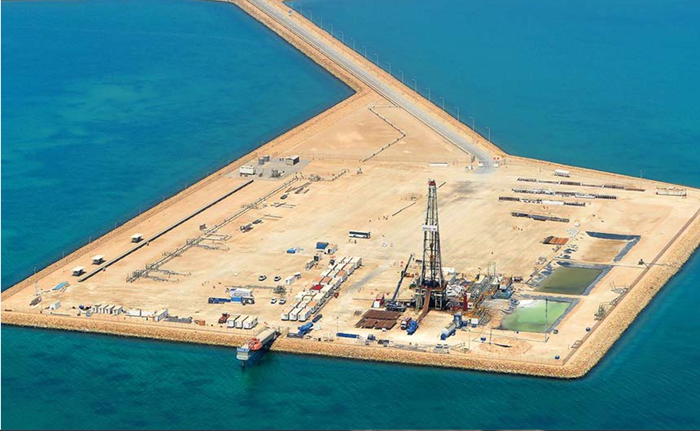
Coiled Tubing is a continuous length of steel pipe used for various well interventions. Oilwell Group offers coiled tubing services that minimize rig time and maximize well access for cleaning, acidizing, and downhole tool deployment. Source: OWS https://www.oilwellgroup.net/en-us Coiled Tubing is a continuous length of steel pipe used for various well interventions. Oilwell Group offers coiled tubing services that minimize rig time and maximize well access for cleaning, acidizing, and downhole tool deployment. Source: OWS https://www.oilwellgroup.net/en-us
This is its condensed report. Full version here.
Grok response:
- Brent crude oil – Price – Chart – Historical Data – News (Trading Economics), Published: Ongoing (data as of May 12, 2026). As of May 12, 2026, Brent Crude is at $107.83 per barrel, up 3.47% daily, 8.52% monthly, and 61.83% year-over-year. Forecasts indicate $103.40 by quarter-end and $116.69 in 12 months. Recent news highlights gains above $107 due to US-Iran ceasefire doubts and Strait of Hormuz risks.[2]
- Short-Term Energy Outlook (EIA), Published: Recent (references March 2026 data, outlook to 2Q26). Brent averaged $103/b in March 2026, expected to peak at $115/b in 2Q26 before easing. Projections account for supply growth and geopolitical tensions.[2]
- Barclays raises 2026 Brent price forecast to $100 per barrel (Reuters), Published: May 1, 2026. Barclays increased its 2026 Brent forecast to $100/b amid Iran conflict disruptions. Prices could rise further if supply issues persist.[3]
- Crude Oil Prices: Brent – Europe (DCOILBRENTEU) (FRED St. Louis Fed), Published: Ongoing (daily data to early May 2026). Late April 2026 daily closes: April 30 at $124.24, April 29 at $124.16, down to April 28 at $117.62; all above $113. No sub-$100 readings in shown period.[4]
- Brent Crude Oil Last Day Financ (BZ=F) (Yahoo Finance Historical), Published: Ongoing (daily to April 2026). April 22, 2026 low: $96.54; April 23 low: $101.28. January 2026 levels around $60-61, with Jan 5 open at $60.89—lowest indicated ~$60 early year.[5]
- Goldman Sachs lowers second-quarter 2026 oil price forecasts (Reuters), Published: April 8, 2026. Goldman cut Q2 2026 Brent forecast to $90/b due to supply expectations. Later flagged two-way risks around $83/b annual average.[6][7]
- Oil Market Report – April 2026 (IEA), Published: April 14, 2026. Global oil demand projected to decline slightly in 2026 amid ample supply. No specific Brent below-$50 scenarios; focuses on market balance.[8]
- Iran war shock drives steepest hike yet in oil price forecasts (Reuters), Published: March 31, 2026. March survey predicts 2026 Brent average $82.85/b, up 30% from prior $63.85 due to war disruptions. Reflects sharp upward revisions.[9]
- Brent Crude Oil Last Day Financ (BZ=F) Historical (Yahoo Finance), Published: Ongoing (early 2026 data). Year-end 2025: Dec 31 at $61.27 close. 2026 opened ~$60.92 (Jan 2), marking ~$60 low; 2025 yearly low not specified but transitioned from mid-$60s.[5]
- Goldman Sachs flags two-way risks to their 2026 oil price outlook (Reuters), Published: April 15, 2026. GS sees 2026 Brent/WTI averages at $83/$78 with upside from prolonged conflict, downside from quick resolution or oversupply. Volatility heightened by geopolitics.[7]
Current Status from Resolution Source
As of May 12, 2026, Brent Crude trades at $107.83 per barrel on Trading Economics (resolution source), up sharply amid US-Iran tensions disrupting the Strait of Hormuz. No daily or monthly data indicates a trade below $50 in 2026 YTD; the lowest inferred from cross-sources is ~$60 in early January (e.g., Jan 2-5 closes/opens ~$60.89-$61).[5] 2026 YTD high appears ~$124 (late April per FRED), reflecting ~100% swing from yearly low, with high volatility driven by geopolitics (61.83% YOY gain).[4]
2025-2026 Historical Context
Brent ended 2025 at ~$61.27 (Dec 31), with early 2026 hovering in the low $60s before rallying on conflict escalation (e.g., April lows ~$96.54 on April 22).[5] No 2025 yearly high/low precisely cited, but transition suggests mid-$60s floor amid pre-conflict oversupply expectations. April-May 2026 saw peaks near $124 before pulling to $107-118, showing seasonal Q2 strength but no sub-$50 dips.[4] Volatility elevated: daily swings of 3-5% common recently, with 8-9% monthly gains.
Forward-Looking Guidance and Consensus
Wall Street consensus skewed higher post-Iran conflict: EIA’s May STEO sees $115/b peak in 2Q26 before easing (March avg $103); Barclays $100/b 2026 avg (May 1); ANZ $88/b year-end; GS $90/b Q2, $83/b annual with two-way risks; Morgan Stanley holds $110/b Q2, $100/b later (April).[2][3][10][6][11][7] IEA April report notes slight 2026 demand decline (80 kb/d) vs. prior growth, implying balance but no crash.[8] Pre-conflict (Jan-Mar) surveys eyed $61-82 avgs, but March Reuters poll hiked to $82.85 on war shock—30% upward shift.[9][12]
Seasonality: Q1 2026 lows (~$60) vs. Q2 peaks ($115-124 forecast/actual), typical post-winter demand ramp but amplified by supply fears. Q3-Q4 guidance softer (e.g., GS toward $80 in 2027), but no sub-$50 calls; downside needs conflict resolution + OPEC unwind.[13]
Key Drivers and Recent Updates
Geopolitics (Bullish Tilt): May 11 news (Trading Economics) cites ceasefire doubts, Trump rejecting Iran offer—pushing Brent >$107; April peaks on Strait closures. Goldman/FT note $120+ if war drags (April 27).[13]
OPEC+ Supply: Retained 3.6M b/d cuts through 2026 (May 2025 decision), pausing increases amid surpluses; Jan 2026 hold supported $90+ stability, but 2026 balance expected to cap upside.[14][15]
Prediction Markets: No direct Polymarket/Manifold for Brent <50 in 2026; active WTI/CL hit-low markets (e.g., $50 by June at low odds), implying low sub-$50 probs amid $100+ futures (Sep 2026 ~$100).[16][17][18]
Expert Views: Consensus sees no <50 path absent major resolution/oversupply shock; upside risks dominate (GS, Barclays). Recent updates (April-May) trend higher on conflict, reversing early-year bearishness.[7]
Extracted resolution criteria links:
[‘https://tradingeconomics.com/commodity/brent-crude-oil‘]
=== Forecast Result ===
My reasoning for the forecast is as follow
1. Current Market State and Distance to Threshold
As of May 12, 2026, the price of Brent Crude is approximately $108 per barrel. The question asks if the price will fall below $50. This requires a price collapse of over 53% from current levels. The lowest price observed in 2026 was around $60 per barrel in early January, before the geopolitical tensions in the Middle East escalated significantly. This means that for the price to drop below $50, market conditions would need to become considerably more bearish than they were at the start of the year, which was already characterized by expectations of ample supply.
2. Analysis of Expert Forecasts and Scenarios
The overwhelming consensus among major financial institutions and energy agencies is that prices will remain well above $50 for the remainder of 2026.
- Goldman Sachs projects an $85/barrel average for 2026, with a downside stabilization price of $80 through 2027.
- Barclays raised its 2026 forecast to a $100/barrel average.
- The U.S. Energy Information Administration (EIA) forecasts a peak of $115/barrel in the second quarter of 2026 before prices ease.
Crucially, even the most bearish scenarios discussed by analysts do not breach the $50 threshold. For instance, a successful resolution of the US-Iran conflict is modeled to bring prices down to the $76-$84 range, not below $50. This suggests a strong structural floor based on supply/demand fundamentals, even after accounting for the current geopolitical risk premium.
3. Identifying Paths to a “Yes” Resolution
A drop below $50 is a tail-risk event that would require a “perfect storm” of bearish factors, far beyond a simple de-escalation of current conflicts. The plausible paths to such an outcome are:
- Path A: A Severe Global Recession. A sudden and deep economic downturn, on the scale of the 2008 financial crisis or the 2020 COVID-19 shock, could crush global oil demand and send prices plummeting.
- Path B: An OPEC+ Price War. A breakdown in production discipline among OPEC+ members, leading them to abandon quotas and flood the market to fight for market share, has historically caused price crashes (e.g., 2014-2016, 2020).
- Path C: A Combination Scenario. The most likely path to sub-$50 oil would involve a combination of events: a full resolution of the Middle East conflict (removing the risk premium) occurring simultaneously with the onset of a moderate global recession and/or signs of weakening OPEC+ cohesion.
4. Quantifying the Probability
Each of these paths represents a low-probability event within the given timeframe.
- Recession/Demand Shock: While economic risks exist, a full-blown 2008-style collapse is not the current base case for the next seven months.
- OPEC+ Collapse: The cartel has shown significant cohesion, and high prices give members a strong incentive to maintain discipline. A sudden reversal to a price war is a tail risk.
- Combination Scenario: The probability of multiple, individually unlikely events occurring in concert is, by definition, very low.
Based on historical volatility and the magnitude of shocks required, the likelihood of a drop below $50 is small. The year-to-date range has been wide (~$60 to ~$126), but breaking the established ~$60 floor would require a powerful new bearish catalyst that is not currently visible.
While a price drop of this magnitude is not impossible in the volatile oil market, it runs contrary to all available expert analysis and would necessitate a series of cascading negative shocks. Therefore, I assess this as a low-probability, high-impact event. A 5% probability reflects the fact that it is a distinct possibility in a volatile market, but a highly improbable one.
Probability: 5%
End
About The Author