Source: https://www.vastspace.com/haven-1
This is its condensed report. Full version here.
Grok response:
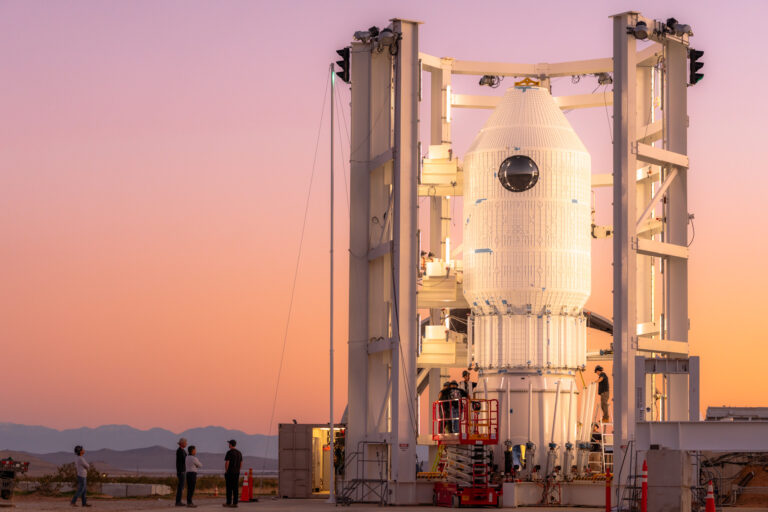
- Title: Vast Advances Haven‑1 Into Integration Phase
Description: Official Vast Space update on Haven-1 progress.
Published: January 20, 2026
Summary: Vast has advanced Haven-1 into the integration phase after completing primary structure welding. The company updated its launch schedule to Q1 2027 due to the integration timeline. Haven-1 is contracted for launch on a SpaceX Falcon 9.[1] - Title: Vast Delays Haven-1 Launch to 2027
Description: Payload Space article on Haven-1 delay announcement.
Published: January 20, 2026
Summary: Haven-1 launch slipped from 2026 to no earlier than Q1 2027, with potential for further delays before crewed operations. The delay stems from integration challenges despite hardware progress. Vast remains committed to being the first commercial space station.[2] - Title: Launch of Haven-1 station postponed until 2027
Description: Universe Magazine report on the postponement.
Published: January 21, 2026
Summary: The first commercial orbital station Haven-1’s launch is now set for Q1 2027 on Falcon 9. Previously targeted for 2026, the delay allows more time for integration. No specific crewed visit date mentioned, but it positions Vast ahead of competitors.[3] - Title: Vast Station Launch Slips To 2027
Description: Aviation Week coverage of the delay.
Published: January 20, 2026
Summary: Haven-1 demonstration station launch delayed from May 2026 to Q1 2027. The single-module station aims to validate commercial LEO capabilities. CEO Max Haot cited supply chain and integration factors.[4] - Title: The first commercial space station, Haven-1, is now undergoing assembly for launch
Description: Ars Technica in-depth interview with Vast CEO.
Published: January 20, 2026
Summary: Haven-1 primary structure completed; assembly underway, but mid-2026 launch no longer feasible, shifting to 2027. Vast plans a crewed mission (Vast-1) shortly after launch. The station will support NASA research and private astronauts.[5] - Title: Haven-1
Description: Wikipedia entry on Haven-1.
Published: Accessed May 2026 (last edited recently)
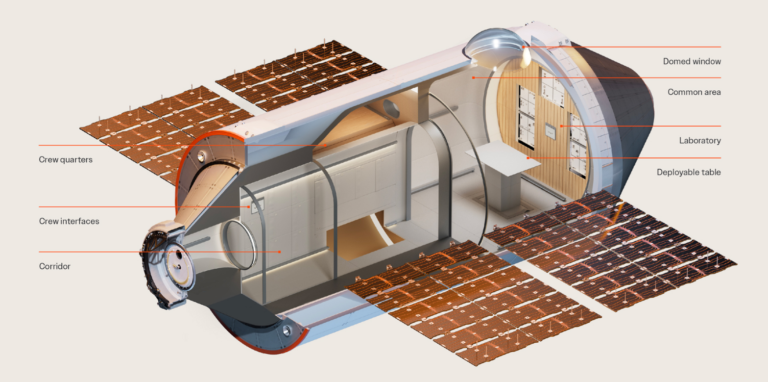
Summary: Haven-1 expected to launch Q1 2027 on Falcon 9; first crewed mission Vast-1 with four astronauts planned post-launch. The single-module station is 3.1m diameter, 4.8m long, designed for one year uncrewed then crewed. No exact crew docking date specified, but within operational phase.[6] - Title: LEO Destinations | Blue Origin
Description: Official Blue Origin page on destinations including Orbital Reef.
Published: Ongoing (accessed 2026)
Summary: Orbital Reef described as a mixed-use business park in LEO, part of NASA’s CLD Phase 1 since 2021. No specific launch, assembly, or human visit timelines provided. Partners include NASA, businesses, and universities; progress noted in design milestones but no 2026-2027 dates.[7] - Title: Inside Orbital Reef
Description: Exterrajsc analysis of Orbital Reef status.
Published: January 26, 2026
Summary: Orbital Reef timelines tied to Blue Origin’s New Glenn rocket, first launch NET April 2026 but history of delays. Questions viability of 2027 operational target given dependencies. Crewed missions would follow module launches, likely post-2027.[8] - Title: Why Axiom Space sped up launch timeline for its space station
Description: Houston Business Journal on Axiom updates.
Published: March 3, 2025
Summary: Axiom accelerated plans: Power and Propulsion Test Module (PPTM) for 2027 launch, followed by Hab-1 in 2028. Focus on risk reduction for rendezvous. First human visits tied to Hab-1 assembly completion post-2027.[9] - Title: Voyager Selects Vivace to Manufacture Starlab
Description: Payload Space on Starlab manufacturing.
Published: September 25, 2025
Summary: Starlab manufacturing contract advances project toward 2029 orbital launch as ISS successor. Previously slipped from 2027; single large module design. No crewed timeline before 2030; focuses on NASA CLD replacement.[10]
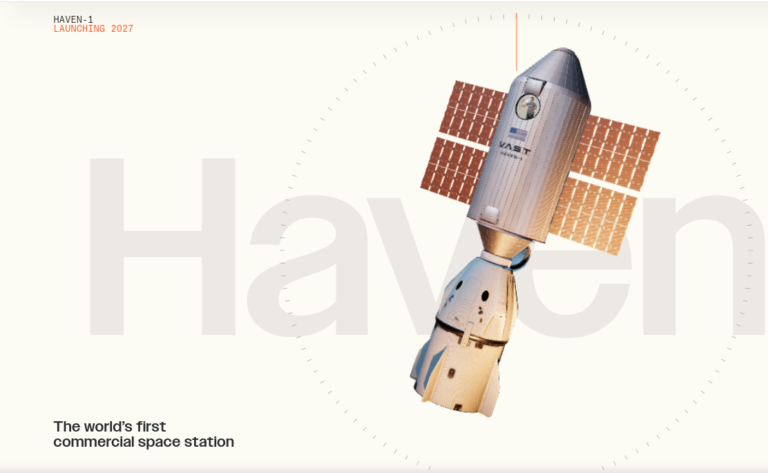
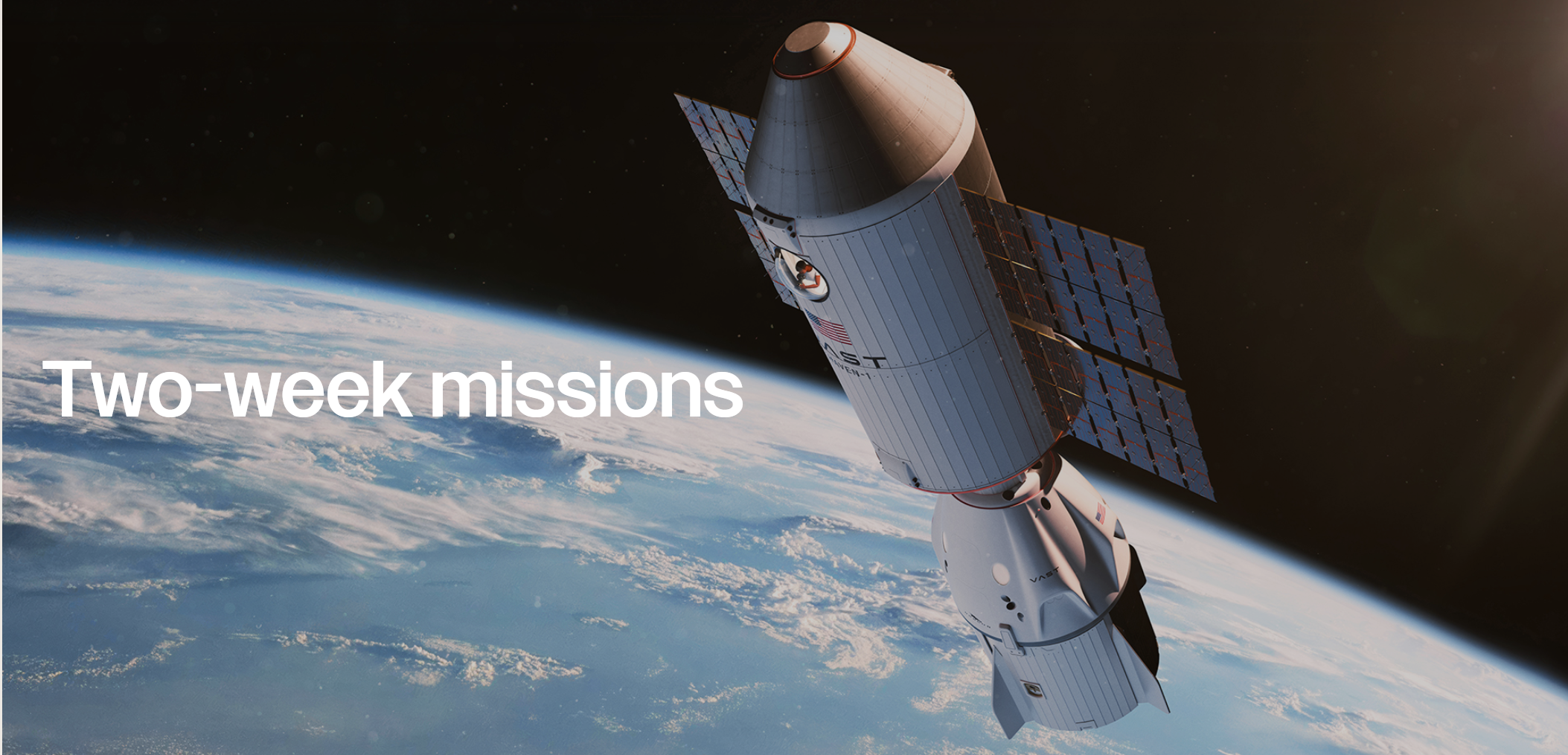
Haven-1 by Vast Space remains the leading candidate for the first new space habitat, with recent January 2026 updates confirming entry into integration after primary structure completion, though launch delayed from mid-2026 to Q1 2027 on SpaceX Falcon 9.[1][2][5] The station’s roadmap lists Haven-1 for 2027 following a 2025 demo mission (Haven Demo, potentially flown by now as of May 2026), with the first crewed mission Vast-1 planned for four astronauts post-launch, though no precise docking date is specified beyond the operational phase in 2027.[11][6] This positions a human visit as feasible within 2027 if launch occurs early in Q1 and crew follows promptly, but integration risks could push timelines.
Orbital Reef, led by Blue Origin and Sierra Space, shows no firm commitments for 2026-2027 launches on its official page, remaining a Phase 1 concept from 2021 with NASA design progress noted in April 2025 human-in-the-loop testing.[7][12] A January 2026 analysis highlights dependency on New Glenn’s third mission (NET April 2026), with historical delays raising doubts on 2027 crewed operations.[8]
Starlab by Voyager Space (now Starlab Space JV) has slipped from 2027 to NET 2028-2029 launches, with a September 2025 manufacturing contract but official site lacking timeline details; recent NASA awards focus on ISS private missions NET 2028, not Starlab itself.[13][10]
NASA’s consideration of SpaceX Starship as a potential space station, per a July 2023 Space.com article, remains exploratory under CCSC-2 with no 2026-2027 commitments or updates in recent searches; Starship focuses on Artemis and Mars, not dedicated LEO habitat by end-2027.[14]
Axiom Station plans a 2027 Power and Propulsion Test Module ahead of Hab-1 in 2028, per March 2025 reports, with construction underway but human visits linked to full habitat assembly post-2027.[9][15] Other concepts like Max Space’s expandable habitats (April 2026 unveil) lack launch dates before 2028.[16]
No new space habitats have launched or been human-visiting as of May 13, 2026; Haven-1’s Q1 2027 launch represents the nearest-term progress, with January 2026 updates indicating forward movement despite the slip, while competitors face greater delays tied to rocket readiness and funding milestones. Expert commentary from Vast CEO emphasizes hardware readiness offsetting schedule shifts, and NASA continues supporting commercial LEO via CLD without endorsing specific 2027 achievers.
Extracted resolution criteria links:
[‘https://voyagertechnologies.com/starlab/,’, ‘https://www.space.com/nasa-considering-spacex-starship-space-station‘, ‘https://www.blueorigin.com/destinations,’]
=== Forecast Result ===
Analysis: New Space Habitat Human Visitation Before End of 2027
Current Situation Assessment (as of May 13, 2026)
Based on the research, I need to evaluate whether any new space habitat (not ISS or Tiangong) will receive human visitors by December 31, 2027 – approximately 19.5 months from now.
Candidate Assessment
Haven-1 (Vast Space) – Primary Candidate
- Entered integration phase in January 2026 after completing primary structure welding
- Launch delayed from mid-2026 to Q1 2027 (Falcon 9)
- First crewed mission (Vast-1) with four astronauts planned “post-launch”
- Currently the most advanced commercial station candidate
- Integration has been ongoing for ~4.5 months with ~8-11 months until targeted launch
Orbital Reef (Blue Origin)
- Dependent on New Glenn rocket (still facing delays)
- No firm 2026-2027 launch commitments
- Very unlikely to achieve human visit by end-2027
Starlab (Voyager Space)
- Slipped from 2027 to NET 2028-2029
- Effectively ruled out for this timeline
Axiom Station
- Power and Propulsion Test Module targeted for 2027
- Hab-1 module not until 2028
- Human visits tied to full habitat assembly post-2027
SpaceX Starship as Station
- Remains exploratory/conceptual
- No concrete timeline for LEO habitat operations
Timeline Probability Analysis
For Haven-1 to resolve this question “Yes”:
- Launch must occur in 2027 (currently targeting Q1)
- Orbital checkout must complete
- Crewed mission must dock before December 31, 2027
Launch Probability by Quarter:
- P(Q1 2027 launch) = 35% (target, but slips common)
- P(Q2 2027 launch) = 30% (reasonable slip scenario)
- P(Q3-Q4 2027 launch) = 15%
- P(2028+ launch) = 20%
Crewed Visit Probability Given Launch Timing:
- If Q1 2027 launch: 65% chance crewed visit by EOY
- If Q2 2027 launch: 45% chance crewed visit by EOY
- If Q3-Q4 2027 launch: 15% chance crewed visit by EOY
Combined Calculation:
- Q1 scenario: 35% × 65% = 22.75%
- Q2 scenario: 30% × 45% = 13.5%
- Q3-Q4 scenario: 15% × 15% = 2.25%
- Total Haven-1: ~38.5%
Other candidates combined: ~3% (accounting for unlikely accelerations)
Critical Assumptions That Could Alter Forecast
Haven-1 integration proceeds without major technical issues (30% failure risk)
- First-of-kind commercial station carries elevated risk
- Could push launch to 2028 if significant problems emerge
Vast-1 crewed mission occurs within months of station launch (35% failure risk)
- Extended checkout periods are common for new stations
- Could push crewed visit into 2028 even with 2027 launch
No regulatory delays from NASA/FAA (20% failure risk)
- Commercial space certification can be unpredictable
Historical Context
- Space programs historically run late more often than on schedule
- Commercial space has accelerated timelines but still faces typical engineering challenges
- No commercial free-flying space station has ever hosted crew (novel event)
Final Assessment
Given that Haven-1 is in active integration, targeting Q1 2027 launch, with a crewed mission planned post-launch, there is a meaningful probability of success. However, the cascading requirements (on-time launch → successful checkout → crewed docking → all before EOY 2027) introduce substantial uncertainty.
The question essentially asks whether the space industry can execute an aggressive but not impossible timeline for a first-of-kind mission.
Accounting for:
- Solid progress reported on Haven-1
- Historical delays in space programs (~50% on-time rate)
- Need for both launch AND crewed visit within 2027
- Small contribution from other candidates
- My historical overconfidence bias
Probability: 40%
End
About The Author