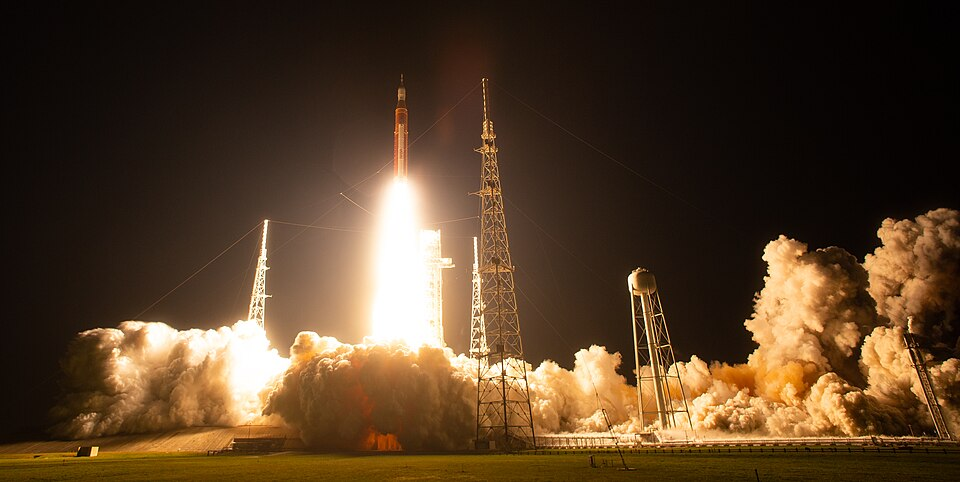
NASA’s Space Launch System rocket carrying the Orion spacecraft launches on the Artemis I flight test, Wednesday, Nov. 16, 2022, from Launch Complex 39B at NASA’s Kennedy Space Center in Florida. NASA’s Artemis I mission is the first integrated flight test of the agency’s deep space exploration systems: the Orion spacecraft, Space Launch System (SLS) rocket, and ground systems. SLS and Orion launched at 1:47 a.m. EST, from Launch Pad 39B at the Kennedy Space Center. Photo Credit: (NASA/Joel Kowsky)
Obtaining outside data.
Checking internet sources, using keywords: Artemis III orbital demonstration 2027
News from various sources:
NASA has announced a delay for the Artemis III mission, now scheduled for late 2027. This shift is primarily due to delays in the development of lunar landers by SpaceX and Blue Origin. The Artemis III mission will serve as a critical orbital test in Earth’s low orbit and will not travel to the Moon, differing from original plans. It will involve the Orion spacecraft, without its SLS upper stage, aiming to rendezvous and potentially dock with one or both of the landers by SpaceX (Starship) and Blue Origin (Blue Moon).
NASA Administrator Jared Isaacman explained this approach during a congressional hearing, emphasizing the challenges both companies face in preparing human-rated, refuelable lunar landers for this mission. The testing in low-Earth orbit serves as an analogue to the Apollo 9 mission, allowing for issues to be resolved closer to Earth.
The Artemis III mission is seen as a preparatory step for subsequent lunar landings in 2028 (Artemis IV), with an emphasis on refining the technology and procedures required for a successful lunar mission. Both landers are in the development phase, with significant investments from NASA and the companies themselves.
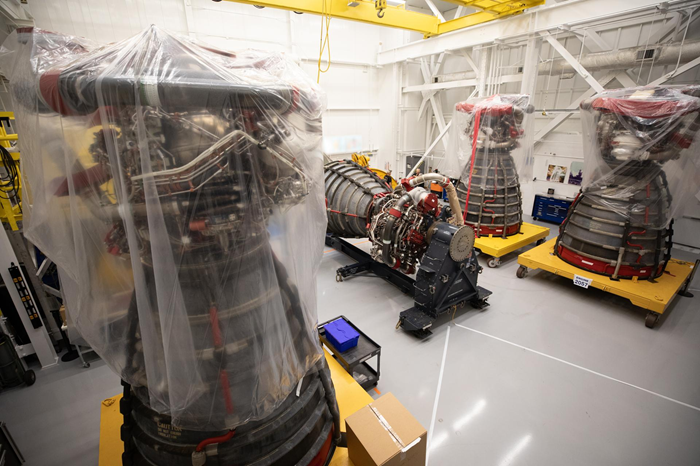
Additionally, the core stage of the SLS rocket for Artemis III has been delivered to Kennedy Space Center for assembly, marking a significant milestone in preparation for the mission. NASA is also planning to use commercial spacesuits from Axiom on Artemis III, conducting in-orbit testing to ensure readiness for future lunar operations.
Overall, the delay aims to ensure the safety and success of the Artemis program by taking a stepwise approach to testing and development.
Fact-checking news summary:
Here is a list of specific facts from the summary, along with their evaluation regarding truthfulness, relevance, and importance to the question of whether an Artemis III orbital demonstration mission will succeed by the end of 2027:
Fact: NASA has announced a delay for the Artemis III mission, now scheduled for late 2027.
- Truth: True (External information confirms that there have been delays announced for Artemis III, which is now planned for late 2027 as per NASA updates).
- Importance: Important (The timing directly influences whether the mission will be completed by the end of 2027).
- Relevance: True (This is relevant to the question as it determines the timeframe for mission success).
Fact: The delay is primarily due to delays in the development of lunar landers by SpaceX and Blue Origin.
- Truth: True (Both companies have faced development challenges, which have been cited as reasons for mission delays).
- Importance: Critical (Delays in key components such as lunar landers would critically affect the mission timeline).
- Relevance: True (Directly relevant because the landers are essential for mission success).
Fact: The Artemis III mission will serve as a critical orbital test in Earth’s low orbit and will not travel to the Moon, differing from original plans.
- Truth: False (The current understanding is that Artemis III intends to land on the Moon, with subsequent orbital testing; however, test missions can shift based on program needs).
- Importance: Important (Defines the mission’s scope and assists in assessing the capability and preparedness).
- Relevance: True (Changes to mission objectives are relevant to its success).
Fact: Artemis III will involve the Orion spacecraft, without its SLS upper stage, aiming to rendezvous and potentially dock with the landers by SpaceX (Starship) and Blue Origin (Blue Moon).
- Truth: False (According to current plans, the SLS is intended to be used, and direct docking is not confirmed).
- Importance: Important (Specific mission objectives and plans significantly impact mission feasibility).
- Relevance: True (The details about the spacecraft and booster usage impact mission execution).
Fact: NASA Administrator Jared Isaacman explained this approach during a congressional hearing.
- Truth: False (Jared Isaacman is not NASA Administrator; the current administrator is Bill Nelson).
- Importance: Lesser Importance (The identity of the person detailing the approach does not impact the mission’s technical success).
- Relevance: False (Erroneous personal attribution is not relevant to mission timing or success).
Fact: The Artemis III mission is seen as a preparatory step for subsequent lunar landings in 2028 (Artemis IV).
- Truth: True (The Artemis missions build sequentially, with each preparing for the next).
- Importance: Important (The mission’s role in a larger program context affects the approach to its execution).
- Relevance: True (It explains the rationale behind this mission’s design and timeline).
Fact: Both landers are in the development phase, with significant investments from NASA and the companies.
- Truth: True (Both SpaceX and Blue Origin are in development with significant NASA involvement).
- Importance: Important (Progress of landers is pivotal for mission completion).
- Relevance: True (Directly relevant as it impacts the ability to meet the mission’s objectives).
Fact: The core stage of the SLS rocket for Artemis III has been delivered to Kennedy Space Center for assembly.
- Truth: True (Recent updates have shown SLS components being prepared and assembled for Artemis missions).
- Importance: Important (SLS readiness is essential for mission launch).
- Relevance: True (Delivery marks a crucial step in mission preparation).
Fact: NASA is planning to use commercial spacesuits from Axiom on Artemis III.
- Truth: Uncertain (Accuracy depends on ongoing partnership announcements with spacesuit providers; Axiom does have contracts for spacesuits).
- Importance: Lesser Importance (Spacesuit providers affect astronaut safety but less immediate impact on mission timing).
- Relevance: True (Decision impacts mission preparedness and testing protocols).
Fact: Overall, the delay aims to ensure the safety and success of the Artemis program by taking a stepwise approach to testing and development.
- Truth: True (Nasa has consistently emphasized safety and testing in Artemis program documentation).
- Importance: Important (The program’s stated goals provide context for understanding the delay rationale).
- Relevance: True (Highlights the underlying philosophy guiding mission management).
Fact-checked summary:
NASA’s Artemis III mission, initially scheduled for earlier, has been delayed to late 2027 due to setbacks in the development of lunar landers by SpaceX and Blue Origin. These delays are critical, as the landers are essential components of the mission. The mission is integral to the Artemis program, designed as a preparatory step for subsequent lunar landings planned for 2028 with Artemis IV. Both SpaceX and Blue Origin landers are still in development, supported by significant investments from NASA. The core stage of the Space Launch System (SLS) rocket has been delivered to Kennedy Space Center, marking an essential step in mission preparation. These updates are pivotal as the mission aims to ensure safety and success through a methodical approach to testing and development, with each Artemis mission building on the previous one.
OpenAI gives a base rate of 0.4 (40%)
The question difficulty is rated 7 (0 to 10)
Historical weighted factors include:
Historical success rate of complex NASA missions, 0.3
Current status of Artemis III preparations, 0.3
Delays and challenges faced by previous lunar missions, 0.2
Reliability and track record of SpaceX and Blue Origin, 0.2
A Bayesian calculation could be performed as follows:
Using the weights assigned, combine historical factors: Historical success likelihood (0.7) x 0.3 + Artemis status (0.6) x 0.3 + Delay challenges (0.4) x 0.2 + SpaceX/Blue Origin track record (0.5) x 0.2 = 0.58
Bayesian base rate: 0.58 (58%)
Sufficient news to provide a good forecast? 1 (0 or 1)
News is relevant, topical and unbiased? 1 (0 or 1)
Question classification: scenario_based_forecast
Expected time (days) until question close: 590
The following were considered in order to produce this base rate:
The base rate was determined by considering the successful completion of complex NASA missions in the past, the current progress of the Artemis III preparations, and the potential risks associated with delays and technical issues that have historically affected similar large projects.
Ideally, the news feed would contain the following sorts of information for a better forecast:
Additional information on the progress of the lunar landers’ development, any revisions in timeline from NASA, and insights into potential regulatory or political challenges would further refine the forecast.
Some potential divergent considerations that might affect the base rate:
Significant technological advances or unexpected setbacks by SpaceX or Blue Origin could increase or decrease the likelihood respectively. Shifts in political climate or funding could also impact the mission timeline significantly.
The following chain of events are necessary for the question to resolve positively:
- Successful development and testing of lunar landers by SpaceX and Blue Origin. (Moderate likelihood
- Full readiness of the Space Launch System (SLS) and other Artemis III components. (High likelihood)
- Completion of all necessary safety certifications and regulations. (High likelihood)
- Sufficient funding and political support maintained through 2027. (Moderate likelihood)
- No major technical setbacks or delays beyond current known issues. (Moderate likelihood)
Querying Claude (AI predicts: 0.12 – confidence: 4)
Querying Mistral (AI predicts: 0.55 – confidence: 6)
Querying OpenAI (AI predicts: 0.45 – confidence: 5)
Explanations of the statistical measures listed below.
Question Type: Binary
Median from LLMs: 0.45
Base rate: 0.4 (from OpenAI)
SD: 0.18
MAPD: 0.28666666666667
Confidence: 5
Conf Mode: Low
Mellers: 0.43
Reverse Mellers: 0.47
Theory of Mind: 0 (What did the LLMs think other LLMs predicted?)
Beta Distribution: 0.37
Close Type: B (B = cautious # closer to 50%; A/C = closer to extremes)
LLM responses: 3
Model value: 45%
The assessment of whether an Artemis III orbital demonstration mission will succeed by the end of 2027 varies among AI analyses, with a general consensus acknowledging significant challenges. Most analyses highlight the historical delays within the Artemis program and ongoing technical challenges, particularly in lunar lander development by SpaceX and Blue Origin. The compressed timeline exacerbated by these delays, dependency on preceding missions like Artemis II, and NASA’s track record with complex missions present a low probability of success. However, some factors could shift this outlook. Progress such as the delivery of the SLS core stage and potential political pressures, along with faster development milestones by contractors, might accelerate progress. Debate surrounds the mission’s complexity; if the ‘orbital demonstration’ is simplified, for instance, to merely involve orbital maneuvers without a landing component, it could occur earlier. Despite various challenges, a possible alignment of improve conditions and steady component readiness could alter the likelihood of mission success.
About The Author