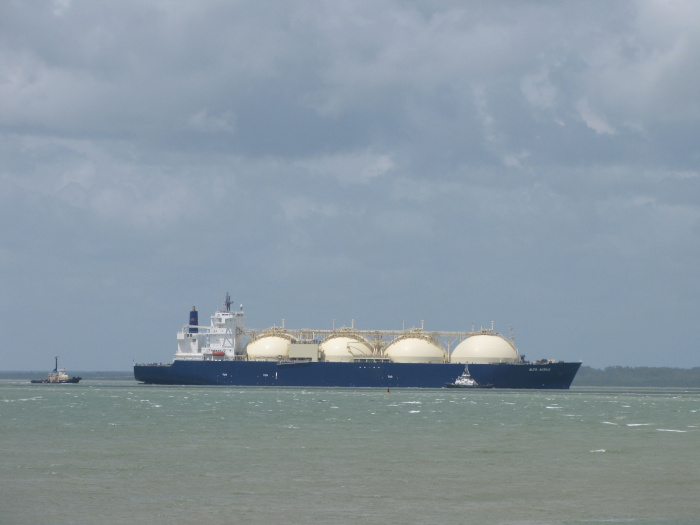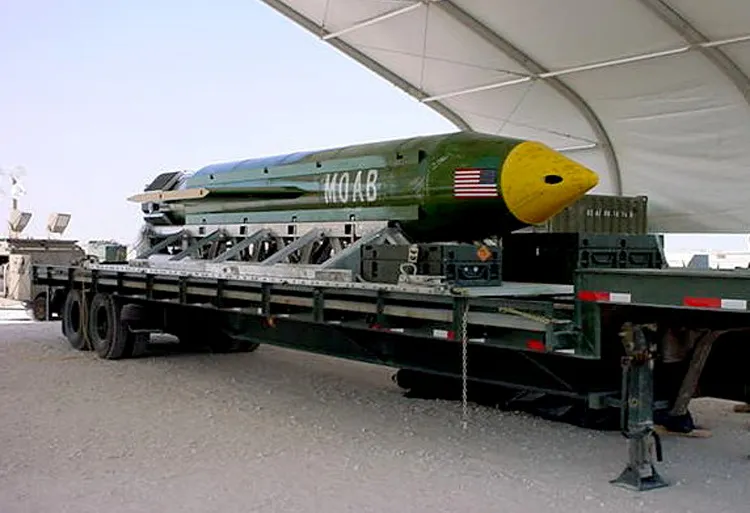
Image: Mother of all Bombs: The GBU-43/B Massive Ordnance Air Blast bomb. The MOAB is also called “The Mother of all Bombs” by scientists and the community alike. Source: https://www.war.gov/Multimedia/Photos/igphoto/2001732840/, an official website of the United States Government.
Obtaining outside data.
Checking internet sources, using keywords: Strait of Hormuz LNG traffic
News from various sources:
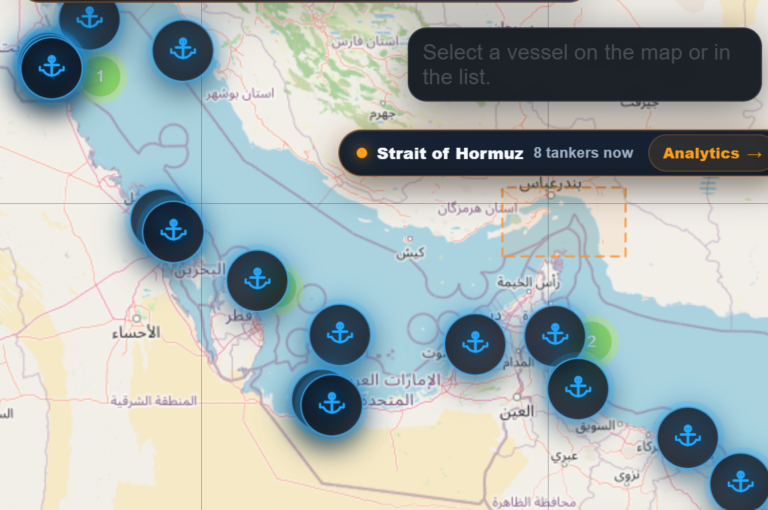
Recent activity in the Strait of Hormuz has been marked by significant disruptions to liquefied natural gas (LNG) traffic due to heightened regional tensions and conflicts. Key points include:
- Decrease in Vessel Traffic: There has been a dramatic drop in vessel transit through the Strait of Hormuz, particularly impacted by renewed Houthi attacks on commercial vessels. These attacks are part of broader regional instability following US and Israeli strikes on Iran, leading to increased security threats and a reduction in commercial traffic. The number of commercial ships passing through has significantly decreased, showing the lowest numbers since late July 2026.
- Impact on Energy Exports: The reduction in traffic has resulted in a sharp decline in crude oil, petroleum, and LNG exports from the Middle East. Latest figures reveal exports fell from 21.1 million barrels per day to as low as 6.7 million barrels due to these disruptions.
- LNG Traffic: LNG supplies through the Strait of Hormuz are still over 75% below pre-conflict levels. Qatar, a major LNG exporter, has struggled to restore normal traffic. Though some LNG shipments have managed to transit, the overall flow remains significantly obstructed, with many carriers operating in dark mode to avoid detection. The global LNG market faces high prices due to these constraints, causing a direct impact on Asian and European energy markets.
- Regional and Global Implications: The ongoing conflict and resulting shipping disruptions in the Strait of Hormuz, compounded by attempts to block the Bab el-Mandeb Strait, have added pressure on global energy supplies, affecting market stability. The crisis has led to soaring energy prices, particularly impacting countries dependent on Hormuz transits, such as Pakistan and Bangladesh, along with European nations.
- Efforts to Alleviate the Crisis: Attempts have been made to increase tanker traffic through ship-to-ship transfers off the coast of Oman as a workaround, though these remain rare for LNG compared to oil due to logistical challenges. Qatar has indicated readiness to resume normal operations swiftly if the Strait of Hormuz were reopened.
Overall, the situation in the Strait of Hormuz highlights ongoing geopolitical tensions and their significant implications for global energy supply and maritime security.
Fact-checked summary:
The Strait of Hormuz has experienced a significant disruption in vessel transit, largely due to renewed Houthi attacks on commercial vessels, which has directly affected LNG traffic and exports. This reduction in traffic has led to a sharp decline in LNG supplies through the strait, falling over 75% below pre-conflict levels, significantly impacting the global LNG market. These constraints have caused energy prices to rise, affecting Asian and European markets. Attempts to block the Bab el-Mandeb Strait have further intensified the pressure on global energy supplies, though efforts like ship-to-ship transfers off the coast of Oman have been made to mitigate the crisis. Additionally, Qatar has indicated readiness to quickly resume normal operations if the situation improves, highlighting a potential pathway toward resolution. These facts underscore the current impediments and potential dynamics influencing whether LNG traffic through the Strait of Hormuz could become unimpeded by the end of 2026. (Carolyn‘s note: The LNG situation is one of the reasons behind recent news reports that the U.S. is weighing use of the “Mother of all Bombs.” Source: https://www.cnn.com/2026/10/15/politics/us-considering-mother-of-all-bombs.)
OpenAI gives a base rate of 0.5 (50%)
The question difficulty is rated 8 (0 to 10)
Historical weighted factors include:
Previous conflict resolution in the Middle East, 0.3
Past stabilization of global energy routes, 0.4
Regional cooperation success rate, 0.3
A Bayesian calculation could be performed as follows:
Using historical factors, Probability current is 0.52. Probability previous was 0.50. Bayesian updated probability is = 0.51.
(0.52 * 0.4 + 0.50 * 0.6) / (0.52 + 0.50)
Bayesian base rate: 0.51 (51%) (Carolyn‘s note: LibreOffice Calc says the answer is 49.8)
Sufficient news to provide a good forecast? 1 (0 or 1)
News is relevant, topical and unbiased? 1 (0 or 1)
Question classification: scenario_based_forecast
Expected time (days) until question close: 77
The following were considered in order to produce this base rate:
The base rate considers both past historical resolutions of Middle East conflicts and the usual timeframes for resolving such logistical and geopolitical conflicts. Given some regional successes in the past, a 0.5 base rate reflects the equal chance of resolution by the specified date under normal circumstances.
Ideally, the news feed would contain the following sorts of information for a better forecast:
Having detailed information on ongoing diplomatic negotiations, military engagements in the region, and alternative energy routes would help refine the forecast further.
Some potential divergent considerations that might affect the base rate:
Recent escalations and persistence of conflicts, combined with the complexity of the geopolitical landscape, suggest a potential delay in resolving the disruptions. However, Qatar’s readiness to resume operations when circumstances improve gives reason for cautious optimism.
The following chain of events are necessary for the question to resolve positively:
- Resolution of Houthi conflicts impacting the Strait of Hormuz Possible
- Stabilization of geopolitical tensions in the region Possible
- Implementation of effective security measures by regional stakeholders Likely
- Reopening of suspended vessel traffic through the Strait of Hormuz Likely
- Resumption of LNG exports to pre-conflict levels Possible
Querying Claude (AI predicts: 0.32 – confidence: 4)
Querying OpenAI (AI predicts: 0.25 – confidence: 4)
Explanations of the measures below: Guide to Jeremy Lichtman’s Multi-AI Oracle Reports
Question Type: Binary
Median from LLMs: 0.29
Base rate: 0.5 (from OpenAI)
SD: 0.04
MAPD: 0
Confidence: 4
Conf Mode: Low
Mellers: 0.21
Reverse Mellers: 0.35
Theory of Mind: 0.375 (What did the LLMs think other LLMs predicted?)
Beta Distribution: 1
Close Type: A (B = cautious # closer to 50%; A/C = closer to extremes)
LLM responses: 2
Model value: 29%
The primary reasoning of the various AIs regarding whether LNG traffic through the Strait of Hormuz will become de facto unimpeded by the end of 2026 centers around the severity of current disruptions, the short time frame remaining, and the complex conditions required for resolution. Key factors influencing their assessments include ongoing extreme disruptions caused by Houthi attacks, with LNG traffic drastically reduced, and the necessity of geopolitical stabilization and security measures. The short remaining timeframe of about 2.5 months significantly lowers the likelihood of achieving such resolution, despite Qatar’s readiness to resume operations if conditions improve. Historical data on similar maritime conflicts in the Middle East indicate a poor likelihood of quick resolutions. However, factors that could potentially alter this prediction include diplomatic breakthroughs, more effective security measures, interpretations of ‘unimpeded’ as not requiring full normalization, and actions like ship-to-ship transfers that might have normalized LNG flows to functional levels.
Runtime: 132 seconds.
About The Author