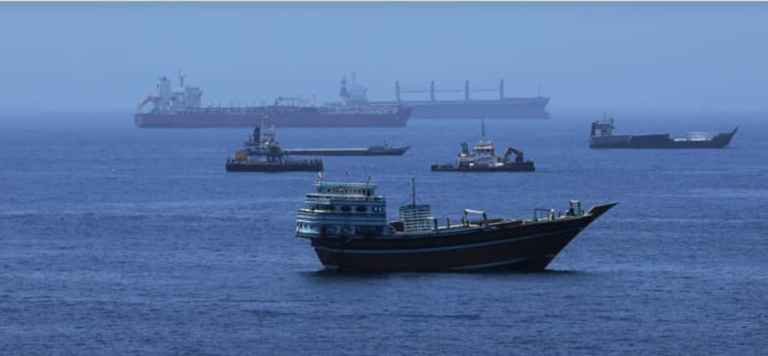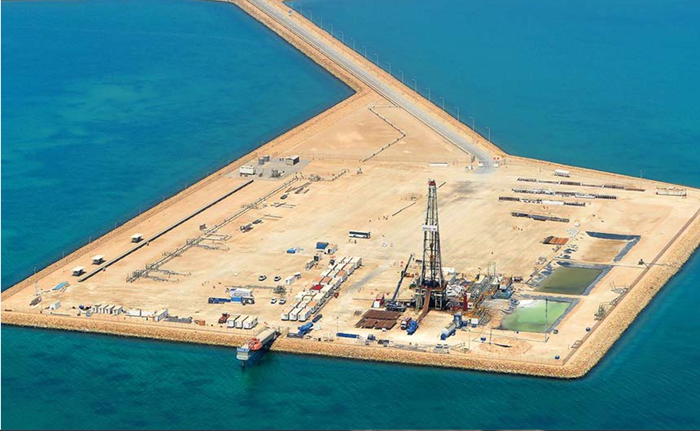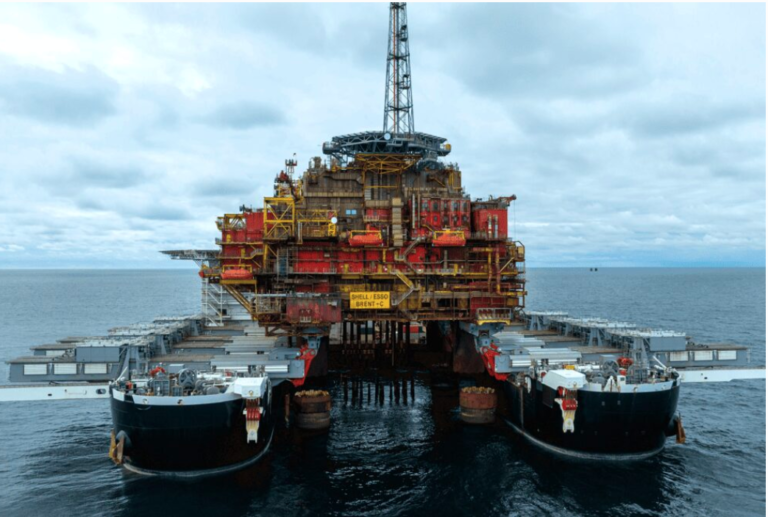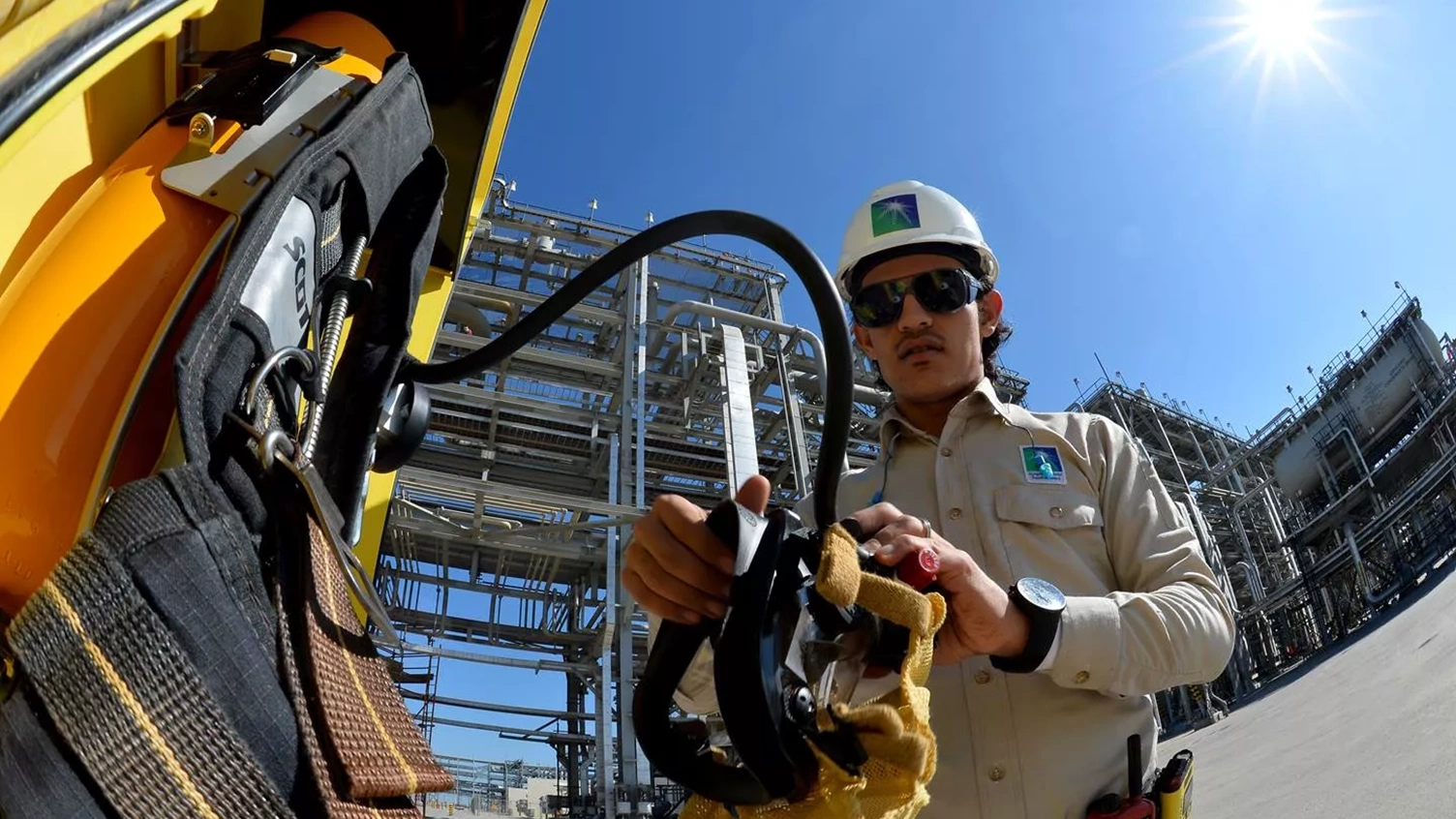
An Aramco Manifa oil field worker. Aramco's program for health and safety was awarded the International Corporate Health and Productivity Prize by the Institute for Health and Productivity Management in 2013. Source: https://www.aramco.com/en/what-we-do/mega-projects/manifa-offshore-oil-field
Deepseek Binary response:
Brent crude is currently around $103 per barrel as of late September 2026, and the resolution threshold is $50—a drop of more than 50% in roughly three months. The research consistently shows recent 2026 lows in the high-$50s to low-$60s, with no data series indicating any trade below $50 at any point this year. Institutional forecasts for end-2026 and 2026 averages cluster in the $80–$100 range, with even bearish scenarios rarely below $60–$70. The dominant drivers—Middle East supply disruptions, low inventories, and geopolitical risk—currently support high prices. A sub-$50 print would require a near-complete and rapid reversal of those supply constraints plus a significant demand collapse or OPEC+ price war, an extreme tail event. Using historical volatility (annualized roughly 50–60%), the probability of Brent touching $50 from $103 over ~93 days is on the order of 1–2%. Given the base case, time remaining, and strong expert consensus, I estimate a very low probability.
Data sufficiency: Sufficient
Probability: 1%
Grok response:
Supply, demand, and geopolitical drivers
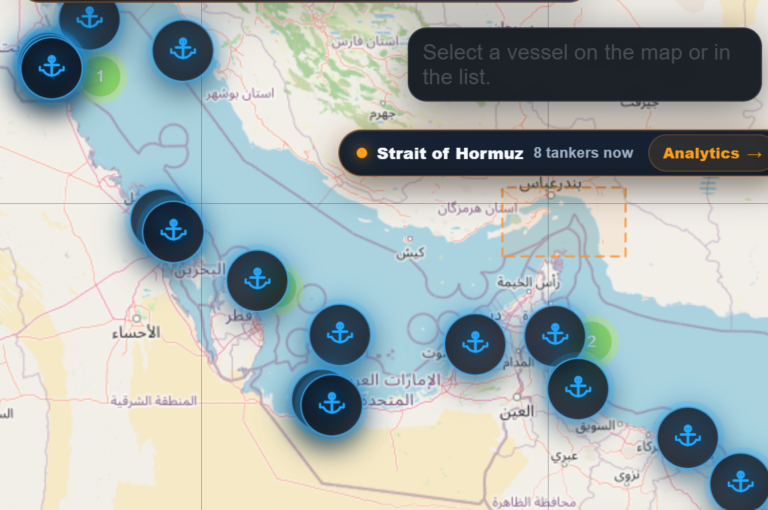
The dominant factor is the ongoing conflict affecting the Strait of Hormuz (normally ~20 mb/d of oil flows). August Hormuz volumes were reported around 7.6 mb/d by the IEA, with cumulative losses in the billions of barrels. Bypass routes (Saudi East-West/Yanbu, UAE Fujairah) have provided partial offsets but have themselves faced attacks and outages. Recent reports (late September) note partial pipeline restarts and some recovery in escorted or workaround flows, yet Iranian exports remain heavily restricted and floating storage is depleting. Global inventories have fallen sharply, supporting prices even as non-Gulf supply has risen. Demand has been tempered by high prices in places, but not enough to offset the supply shock. Peace talks continue via mediators, with mixed signals and explicit doubts about a durable deal before U.S. midterms; markets remain sensitive to headlines but have not priced a sudden full restoration of pre-war flows.
Implications for the resolution question
With roughly three months left in 2026, prices near $100, official and private forecasts clustered in the $80–100 range for the period, physical deficits still expected, and the year’s low already established near $59, there is no recent data or expert consensus indicating movement toward a print below $50. A move of that magnitude would require an abrupt, near-complete resolution of Hormuz and related disruptions plus a demand collapse or inventory surge well outside current baselines—scenarios that remain tail risks rather than central cases. Volatility will likely persist, but the observed floor and forward curves do not currently signal proximity to the $50 threshold.
Extracted resolution criteria links:
[‘https://tradingeconomics.com/commodity/brent-crude-oil‘]
=== Forecast Result ===
=== Reasoning ===
To evaluate whether Brent Crude will fall below $50 per barrel at any point in 2026, we examine the year-to-date historical price path, current market conditions, forward projections, and extreme downside tail risks over the remaining three months of the year.
1. Historical 2026 Price Range and Baseline
According to TradingEconomics, EIA, and FRED data:
- Brent opened 2026 in the low-$60s, reaching its calendar-year low in early January (intraday lows near $59.45–$59.75 on January 7).
- Following Middle East conflict escalations and disruptions around the Strait of Hormuz beginning late winter, prices rallied sharply, peaking near $126 in the spring, retreating to the low-$80s during temporary mid-year lulls, and rising again to the $95–$108 range through August and September.
- As of September 29, 2026, Brent is trading at approximately $103.25–$103.29 per barrel.
- Therefore, Brent has not traded below $50 at any point in 2026 to date.
2. Required Magnitude of Price Move
For the question to resolve positively, Brent must trade below $50 before December 31, 2026:
- From the current price of ~$103.29, Brent would need to decline by more than $53.30 (a drop of over 51.6%) within approximately 93 days.
- In modern crude oil history, a 50%+ price collapse within a 3-month window is an extreme rarity, historically observed only during catastrophic, systemic global demand shocks:
- The 2008 Global Financial Crisis (Brent fell from $147 in July to ~$50 by late November, taking ~4 months).
- The March–April 2020 COVID-19 shock (a simultaneous global lockdown and unexpected Saudi-Russian price war).
3. Supply, Demand, and Inventory Fundamentals
- Global crude inventories have drawn down by an estimated 400 million barrels year-to-date due to Persian Gulf shipping disruptions and pipeline constraints.
- Official forecasts (such as the EIA Short-Term Energy Outlook) project Brent to average around $90–$93/bbl through Q4 2026, gradually easing into 2027 (~$74/bbl average) as supply chains normalize.
- Major Wall Street consensus projections for Q4 2026 cluster between $75 and $95. Even the most aggressive “peace and demand weakness” downside scenarios modeled by investment banks anticipate a floor in the mid-$60s to low-$70s by year-end, not sub-$50.
- Because physical inventories are depleted, even a rapid diplomatic resolution in the Middle East would take time to rebuild buffer stocks, limiting the speed of any sudden downward repricing.
4. Key Assumptions and Sensitivity Analysis
Assumption: Absence of an acute, systemic global macro shock (e.g., sudden financial collapse or global pandemic).
- Probability of failure over 3 months: ~2%.
- Impact: A severe liquidity and demand freeze could collapse prices rapidly toward marginal production costs.
Assumption: Middle East supply normalization is gradual rather than accompanied by an aggressive OPEC+ market-share flood.
- Probability of failure: ~1.5%.
- Impact: If conflict ceases and key producers deliberately open spigots into a weakening global economy, prices could fall faster than base case expectations, though likely bounded around $60 in the near term.
Assumption: Data reliability and contract integrity.
- Probability of failure (data glitch / anomalous localized futures roll or flash crash recorded on TradingEconomics): ~0.5%.
5. Multi-Horizon Probability Assessment
- Likelihood of touching <$50 within 1 month (by late October 2026): ~0.5%
- Likelihood of touching <$50 within 3 months (by December 31, 2026): ~2%
- Likelihood of touching <$50 within 12 months (by September 2027): ~10%
Data sufficiency: Sufficient
Probability: 2%
End
About The Author