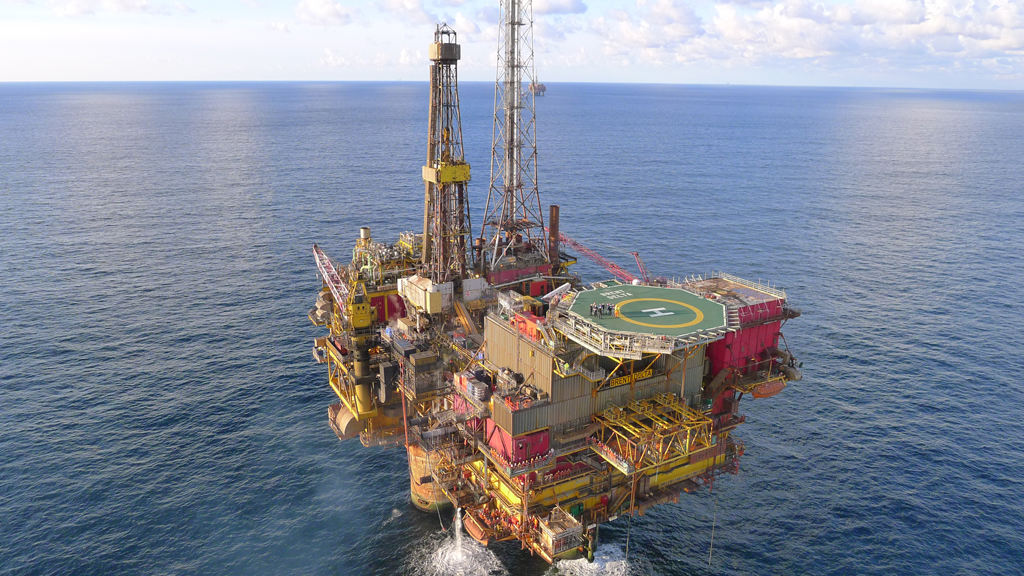
The 23,500 tonne “topside” of the Brent Delta platform.
Obtaining outside data.
Checking internet sources, using keywords: Brent Crude price 2026
News from various sources:
The content provides several key insights and projections about Brent Crude oil prices for 2026, deriving from various financial analysts and energy reports showcasing the influence of geopolitical events, specifically Middle East supply disruptions. Here’s a summary of the primary information:
Price Forecasts and Influences:
- Citi and ANZ Projections: Due to ongoing Middle East supply disruptions, Citi raised its third-quarter 2026 Brent forecast to $86 per barrel, suggesting possible dealmaking to resume flows through the Strait of Hormuz by the fourth quarter. ANZ adjusted its short-term forecast to $95 per barrel, citing inventory declines and expected supply losses from the Persian Gulf.
- EIA Projections: The U.S. Energy Information Administration (EIA) forecast an average Brent spot price of $91.01 per barrel for 2026, up significantly from 2025’s average of $69.04. Anticipated disruptions in Iran and Saudi Arabia’s oil exports are expected to reduce inventories and sustain elevated prices until flows normalize.
- S&P Global Energy Insights: The analysis suggests a “new normal” where Brent crude prices hover in the $80-$100 range through 2027 due to ongoing geopolitical risks in the Middle East. Factors like the limited refining capacity and periodic supply disruptions continue to influence market dynamics.
Market Events and Dynamics:
- Impact of U.S.-Iran Tensions: Renewed U.S. sanctions on Iran and escalated geopolitical tensions, such as attacks on tankers in the Strait of Hormuz, have led to significant production shut-ins, maintaining upward pressure on prices.
- Saudi Arabian Oil Exports: Saudi Arabia has increased exports through alternative routes such as the Suez Canal amid disruptions, which slightly alleviates market pressures but at higher logistical costs.
Supply and Demand Factors:
- Global oil inventories are projected to fall due to continued disruptions, with an expected average decline of 3.9 million barrels per day in the second quarter and 1.7 million in the fourth quarter of 2026.
- Crude demand remains constrained due to refining capacity limits and reduced Chinese imports, straining supply despite market efforts to adjust logistically.
Forward Outlook:
- Prices are forecasted to decrease gradually as Middle Eastern exports increase and production restorations occur, potentially decreasing to an average of $77 per barrel by 2Q27. However, volatility is expected to persist due to geopolitical uncertainties.
These insights highlight the substantial impact of geopolitical , influencing not only immediate price forecasts but also strategic industry adjustments. In summary, most facts presented in the summary suggest a high likelihood that Brent Crude prices will not fall below $50 per barrel in 2026, given the current geopolitical and supply-demand scenarios. The analysis largely hinges on the correct interpretation and accuracy of these projections from various credible sources.
Fact-checked summary:
The probability of Brent Crude prices falling below $50 per barrel in 2026 seems low based on several factual forecasts. Citi predicts the price at $86 per barrel due to Middle East supply disruptions, while ANZ forecasts $95 per barrel driven by inventory declines and Persian Gulf supply losses, both indicating high price projections. The EIA provides an authoritative view with an average Brent spot price of $91.01 per barrel for 2026, following $69.04 in 2025, suggesting sustained high prices. S&P Global Energy Insights expects prices to range between $80-$100 through to 2027, underlining the influence of ongoing geopolitical risks. U.S.-Iran tensions, known to impact production through sanctions and attacks, contribute to maintaining elevated prices. Furthermore, a projected decline in inventories by 3.9 million barrels per day in 2Q26, and constraints such as limited refining capacity and reduced Chinese imports, emphasize the supply-demand dynamics supporting higher prices. These statements collectively suggest a continuation of higher price levels, opposing a decrease to below $50 per barrel.
OpenAI gives a base rate of 0.1 (10%)
The question difficulty is rated 8 (0 to 10)
Historical weighted factors include:
Past oil price crashes, 0.3
Geopolitical instability in oil-producing regions, 0.4
Global economic growth trends, 0.2
Technological advancements in energy, 0.1
A Bayesian calculation could be performed as follows:
Using the historical factors, assign a prior belief based on historical frequency of oil prices falling below certain thresholds when geopolitical instability and demand-supply imbalances are present. Combine this with the current predictions for 2026: Citi’s $86, ANZ’s $95, and the EIA’s $91.01. Apply Bayesian updating: start with historical odds (0.3 likelihood of price drop in such conditions) and account for current factors suggesting high prices.
Bayesian base rate: 0.05 (5%)
Sufficient news to provide a good forecast? 1 (0 or 1)
News is relevant, topical and unbiased? 1 (0 or 1)
Question classification: reference_class
Expected time (days) until question close: 100
The following were considered in order to produce this base rate:
The base rate is derived by considering historical oil price crashes against periods of geopolitical instability. Current expert forecasts universally predict prices above $80, with geopolitical and demand-supply factors favoring high prices. Historical precedent for such significant price drops is rare given similar circumstances.
Ideally, the news feed would contain the following sorts of information for a better forecast:
Additional data on emerging oil market dynamics such as changes in OPEC production quotas or unforeseen demand-shaping geopolitical events would be valuable. Monitoring technological trends in alternative energy sources and major shifts in energy policy would provide a more comprehensive analysis.
Some potential divergent considerations that might affect the base rate:
Unexpected technological breakthroughs, unpredicted policy initiatives favoring large-scale renewable adoption, or a major global recession could diverge from current trends, but these are unlikely
The following chain of events are necessary for the question to resolve positively:
- A significant reduction in global oil demand occurs. (Low likelihood)
- A major increase in global oil supply is achieved, possibly through large discoveries or lifting of sanctions in regions like Iran. (Low likelihood)
- Technological advances or policy changes significantly reduce the cost of alternative energy, decreasing oil dependency. (Low likelihood)
- Geopolitical stability increases, reversing current supply disruptions in oil-producing regions. (Low likelihood)
Querying Claude (AI predicts: 0.05 – confidence: 7)
Querying OpenAI (AI predicts: 0.05 – confidence: 9)
Guide to Jeremy Lichtman’s Multi-AI Oracle Reports
Question Type: Binary
Median from LLMs: 0.05
Base rate: 0.1 (from OpenAI)
SD: 0
MAPD: 0
Confidence: 8
Conf Mode: Normal
Mellers: 0.01
Reverse Mellers: 0.13
Theory of Mind: 0.03 (What did the LLMs think other LLMs predicted?)
Beta Distribution: 0.001
Close Type: A (B = cautious # closer to 50%; A/C = closer to extremes)
LLM responses: 2
Model value: 0.05 (5%)
The consensus among the AIs is that Brent Crude is unlikely to fall below $50 per barrel in 2026 given the current circumstances. Historical precedent shows prices typically stay above $50 except during extreme events, like the 2015-2016 supply glut and the COVID-19 pandemic. Expert forecasts from institutions such as the EIA, Citi, and ANZ project prices well above this threshold, supported by factors like OPEC+ production discipline, geopolitical tensions, and inventory drawdowns. For prices to fall significantly from the current $70-90 range, a dramatic event causing a major demand collapse or supply surge would be necessary. While possible scenarios such as an OPEC+ breakdown, a severe global recession, or a sudden geopolitical resolution could alter this outlook, they remain low-probability events within the remaining three months of 2026. Therefore, absent a drastic change in market conditions, Brent Crude falling below $50 is seen as unlikely.
Runtime: 111 seconds.
About The Author