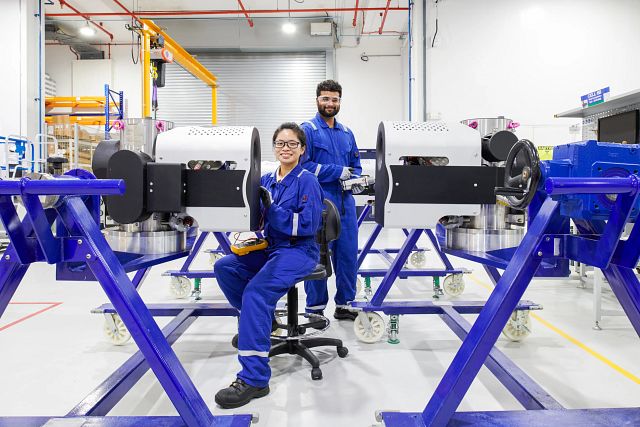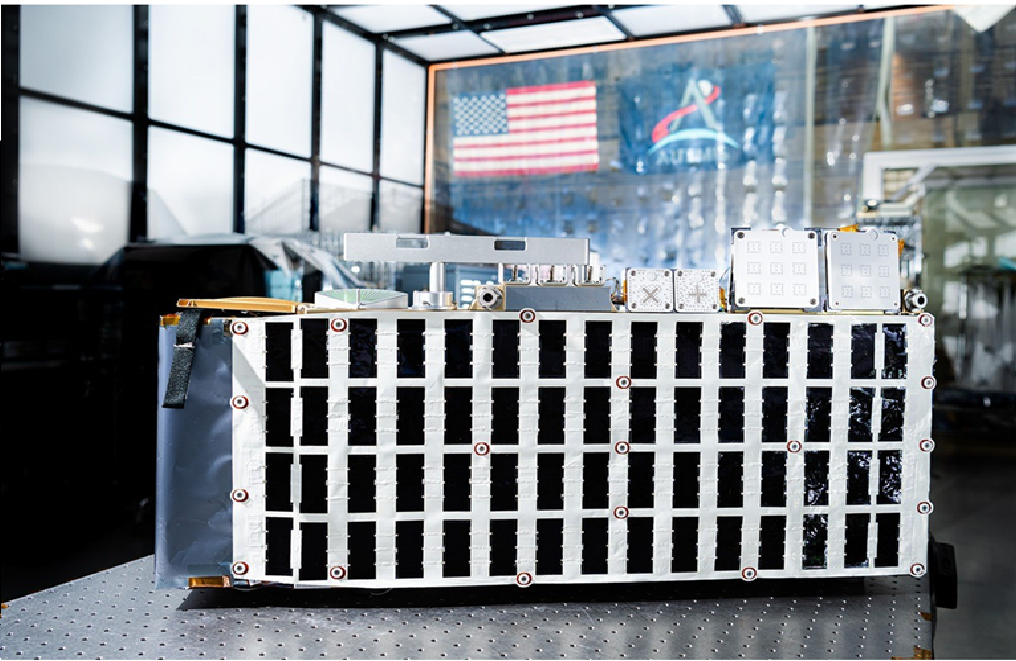
The fully-integrated LEMS (Lunar Environment Monitoring Station) ready for environmental testing. A small suitcase-size instrument suite built at NASA Goddard, LEMS is designed to carry out continuous, long-term monitoring of the seismic environment at the Moon, including surface motion caused by moonquakes and meteorite impacts in the lunar south polar region. NASA Goddard/Mike Guinto
Grok response:
1. Moon to Mars | NASA’s Artemis Program
NASA official program page. Published/updated August 12, 2026.
This page outlines the current Artemis mission sequence, describing Artemis III as a 2027 low-Earth-orbit demonstration to evaluate one or both commercial human landing systems from SpaceX and Blue Origin via Orion rendezvous and docking tests. It notes Artemis II’s successful April 2026 lunar flyby and targets the first lunar landing for Artemis IV in 2028. The page confirms the LEO demo as a risk-reduction step before surface missions.[1]
2. NASA Marches Toward Artemis III Mission in 2027, Names Crew Members
NASA news release announcing crew and mission details. Published June 9, 2026.
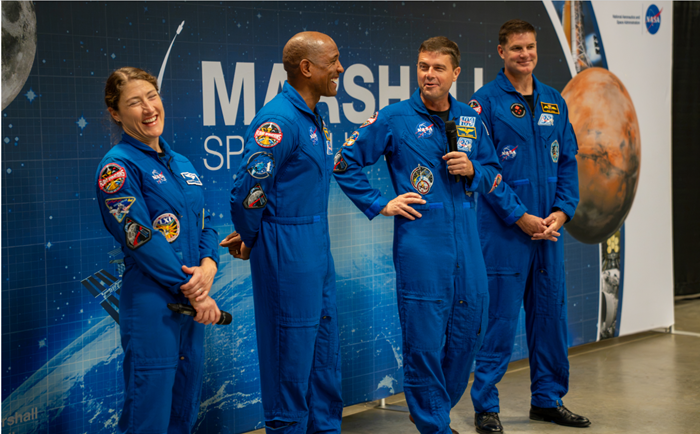
NASA named the four-person crew (Randy Bresnik commander, Luca Parmitano pilot, Andre Douglas and Frank Rubio specialists) for the 2027 LEO test flight involving rendezvous/docking with Blue Origin and/or SpaceX lander test articles. It detailed a multi-launch campaign, ~2-week duration, and hardware progress including Orion module integration and SLS stacking preparations. Officials described it as essential preparation for the 2028 Artemis IV landing.[2]
3. NASA Joins Artemis III Orion Modules; Rocket Hardware Update
NASA missions blog post on hardware milestones. Published August 5, 2026.
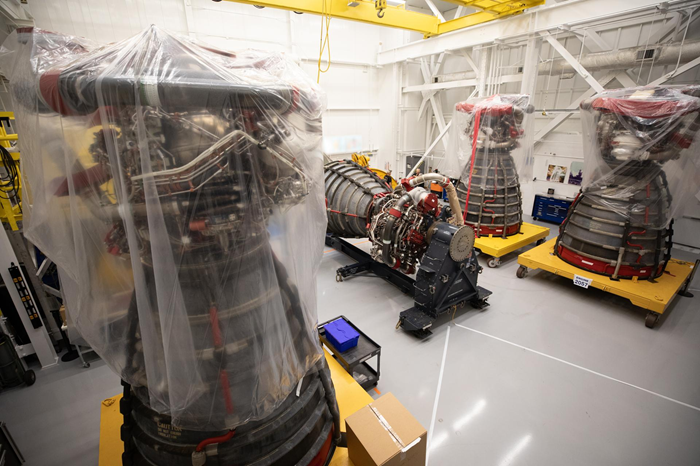
Engineers joined the Orion crew and service modules on July 31, 2026, with power-on tests upcoming; SLS booster stacking began in early July, all four RS-25 engines delivered July 21, and spacer welding completed. NASA reported accelerated progress outpacing Artemis II timelines, including hardware reuse and faster processing. The update emphasized readiness for the 2027 LEO demonstration.[3]
4. Artemis III (Wikipedia)
Encyclopedia entry summarizing the mission. Last updated around August 2026.
It details the February 27, 2026, NASA announcement re-profiling Artemis III as a ~2-week LEO crewed demo (NET 2027) rather than a lunar landing, with specific orbital parameters, three-launch sequence (Blue Origin pathfinder first, then SLS/Orion, then Starship), and docking tests (crew entering Blue Origin vehicle but remaining in Orion for Starship). It covers crew, spacecraft status, and history of schedule slips. The page notes both lander test articles remain in development without full human-rating.[4]
5. ‘Full steam ahead’: NASA ramps up prep for Artemis III astronaut launch in 2027
Space.com article on current preparations. Published July 15, 2026.
NASA is targeting mid-to-late 2027 for the four-astronaut LEO mission to test docking with SpaceX Starship and Blue Origin Blue Moon pathfinders. Hardware assembly at Kennedy Space Center is advancing, with SLS components integrating and Orion processing underway. Officials described the effort as “full steam ahead” following Artemis II success.[5]
6. NASA says Artemis III mission on schedule as Blue Origin repairs launchpad
Reuters report quoting NASA Administrator. Published July 20, 2026.
Administrator Jared Isaacman stated the 2027 mission remains on track despite Blue Origin’s May 2026 New Glenn static-fire explosion, with contingency plans if one lander is delayed. Both providers committed to late-2027 rendezvous/docking tests. The article noted industry doubts about lander readiness but NASA’s optimism for the LEO demo.[6]
7. Revised Artemis lunar lander plans take shape
SpaceNews article on commercial lander status. Published June 13, 2026.
Blue Origin’s John Couluris said manufacturing of the Artemis III Mark 2 crew module and subsystems is underway around the clock, expecting the vehicle ready for 2027 launch despite the New Glenn pad incident. NASA is supporting both SpaceX and Blue Origin hands-on for test articles. The piece highlighted acceleration efforts for the LEO interoperability tests.[7]
8. Artemis Lander Program Faces Schedule Delays and Unmitigated Crew Safety Risks
NASA Office of Inspector General report summary. Published March 10, 2026.
The OIG found both SpaceX Starship HLS and Blue Origin Blue Moon facing schedule delays, technical issues, and integration challenges, though contract costs have been controlled. It noted NASA working to accelerate development for 2028 landings and identified gaps in testing and crew safety analyses. The report predates some later hardware updates but flagged risks for related systems.[8]
9. Starship’s Thirteenth Flight Test
SpaceX official launch recap. Published July 24, 2026.
Starship IFT-13 (second V3 vehicle flight) successfully lifted off, performed hot-staging, reached space, and deployed next-generation Starlink V3 satellites. This marked progress in the Block 3 architecture needed for future HLS variants. Subsequent IFT-14 was targeted no earlier than September 2026, potentially including orbital and catch attempts.[9]
10. Blue Origin identifies engine issue behind New Glenn explosion
Spaceflight Now report on recovery. Published August 6, 2026.
Blue Origin CEO Dave Limp identified a main oxygen valve issue on a BE-4 engine as the cause of the May 28, 2026, pad explosion; small modifications are being retrofitted. Pad reconstruction is underway with a new hybrid operations approach, targeting New Glenn return to flight by end of 2026. This supports potential 2027 lander pathfinder launch for Artemis III.[10]
NASA officially describes Artemis III as a crewed low-Earth-orbit demonstration mission planned for 2027 (targeting mid-to-late 2027 or no earlier than summer 2027) to test rendezvous, docking, and interoperability between the Orion spacecraft (launched on SLS) and test articles/pathfinders of one or both commercial human landing systems from SpaceX (Starship) and Blue Origin (Blue Moon variant). The ~2-week mission involves a coordinated three-launch campaign: Blue Origin’s vehicle first (capable of weeks-long loiter), followed by SLS/Orion with four astronauts (commander Randy Bresnik, ESA pilot Luca Parmitano, specialists Andre Douglas and Frank Rubio), docking tests (including crew entry into the Blue Origin vehicle), then a Starship test article docking (crew remaining in Orion), and Pacific splashdown. This was re-profiled from a lunar landing on February 27, 2026, to reduce risk ahead of Artemis IV’s targeted 2028 South Pole landing; SLS will fly with a non-propulsive spacer instead of an upper stage.[1]
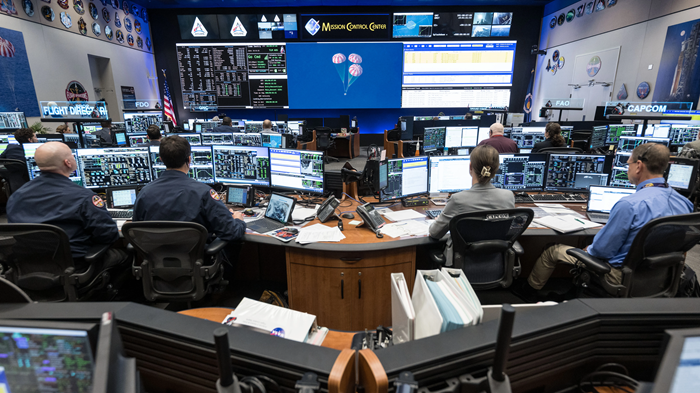
As of August 2026, NASA hardware for SLS and Orion is progressing rapidly and ahead of prior mission timelines. Orion crew and service modules were joined July 31, 2026, with power-on and integrated testing next; the heat shield is complete. SLS booster stacking started in early July in the Vehicle Assembly Building, all four refurbished RS-25 engines arrived by July 21, and spacer fabrication (welds complete) is advancing at Marshall. NASA reports efficiencies from hardware reuse (including from Artemis II), faster processing, and lessons learned, with mobile launcher turnaround halved. Officials, including Administrator Jared Isaacman, describe preparations as “full steam ahead” and the mission as on schedule.[3]
Commercial lander test articles remain the primary schedule risk. Blue Origin reports manufacturing of the crew module and key systems underway on around-the-clock shifts and expects readiness for 2027, but its New Glenn launch vehicle suffered a May 28, 2026, static-fire explosion that damaged the pad (caused by a BE-4 oxygen valve issue, now being modified). Pad rebuild is progressing with a streamlined hybrid approach, targeting return to flight by end of 2026. SpaceX’s Starship program advanced with IFT-13 (July 24, 2026), the second successful V3 flight that deployed Starlink satellites; IFT-14 is eyed for September 2026 with potential orbital/catch goals. The Artemis III Starship article needs only a docking adapter (no full life support or landing systems), easing some requirements compared to the operational HLS. NASA has contingencies if one provider slips, as the test can proceed with one or both. A March 2026 NASA OIG report highlighted broader HLS development delays, technical challenges, and safety analysis gaps for the 2028 landing vehicles, though those apply less directly to these simpler test articles.[6]
Recent updates through early August 2026 show no announced slips beyond the existing 2027 window and indicate positive momentum after Artemis II’s successful April 1–10, 2026, crewed lunar flyby (itself delayed multiple times from original 2024/2025 targets). NASA is applying those lessons for faster cadence. Industry and analyst views are mixed: NASA and the providers express confidence, but some reports and observers note tight timelines for the landers and coordinated launches, with historical Artemis slips (original III landing repeatedly delayed) suggesting possible movement into 2028. No major prediction markets specifically cover this LEO demo’s 2027 success, though related lunar landing odds (now Artemis IV) remain conservative. Authoritative NASA pages and updates consistently hold the 2027 plan without contradiction as of mid-August 2026. Success would require timely SLS/Orion stacking/launch, at least one lander pathfinder availability, and safe execution of the docking tests and return.
Extracted resolution criteria links:
[‘https://www.nasa.gov/humans-in-space/artemis/‘]
=== Forecast Result ===
Analytical Framework
Mission Profile Assessment
The Artemis III LEO demonstration is a multi-component mission requiring:
- SLS/Orion successfully launching crew to LEO
- At least one commercial lander (Blue Origin Blue Moon Mk2 and/or SpaceX Starship HLS test article) being available in orbit
- Successful rendezvous and docking operations
- Safe crew return
The three-launch coordination requirement makes this inherently complex, though NASA has contingency to proceed with just one provider.
Critical Assumptions and Risk Analysis
Assumption 1: The mission will fly before Dec 31, 2027
This requires both SLS/Orion and at least one commercial lander test article being ready.
- SLS/Orion: Hardware is at KSC, modules integrated July 31, 2026. This appears relatively on track. Risk of failure: ~25%
- Blue Origin: Had a May 2026 New Glenn pad explosion (BE-4 oxygen valve), targeting return-to-flight EOY 2026. This leaves minimal margin to prepare a Blue Moon Mk2 pathfinder for a mid-to-late 2027 launch. Risk of failure: ~45%
- SpaceX: Starship progressing (IFT-13 success July 2026), but Starship HLS still needs complex integration even for a test article. Risk of failure: ~35%
- Combined (given NASA contingency for one provider): ~35-40% chance at least one delays past 2027
Assumption 2: Historical Artemis schedule adherence
- Artemis I slipped ~1-2 years from original targets
- Artemis II slipped from 2024/2025 to April 2026 (~1.5 years)
- Base rate of Artemis missions meeting planned schedule: extremely low (~20-30%)
- Partial mitigation: This mission is simpler (LEO demo vs. lunar landing), hardware is progressing ahead of Artemis II timelines, and Artemis II success provides momentum
Assumption 3: Mission success given it flies
If the mission launches in 2027:
- SLS/Orion has a solid track record (two successful flights)
- Docking with commercial vehicles is novel but the mission is specifically designed to test this in a low-risk environment
- Conditional success probability: ~75-80%
Quantitative Estimation
P(mission flies by Dec 31, 2027):
- NASA/SLS/Orion readiness: ~70% ready on time
- At least one commercial lander available: ~60%
- Combined (accounting for some correlation): ~55-60%
- Applying historical Artemis slip factor (strong headwinds): ~45-50%
P(success | mission flies): ~75%
P(success by Dec 31, 2027): ~0.47 × 0.75 ≈ ~35%
Additional Context
Positive signals: NASA Administrator’s confidence, crew selection in June 2026, hardware at KSC ahead of Artemis II timeline pace, SLS reuse efficiencies, contingency for one lander, OIG report identified issues before now-simplified mission profile
Negative signals: Blue Origin pad explosion with tight recovery window, NASA OIG (March 2026) flagged delays and safety gaps, historical Artemis slip pattern of 1-2 years, complex coordination across multiple launches, mid-to-late 2027 timing leaves almost no margin for any delay
Comparable timelines:
- 1 year probability (mission flies AND succeeds): ~35%
- 2 year probability (by end 2028): ~65% (more reasonable given historical patterns)
- Base rate for Artemis milestones hitting schedule: ~25-30%
The most likely single outcome is a slip into 2028, but there’s a meaningful minority probability of success in 2027 given the unusual confluence of positive hardware signals and the simplified mission profile compared to the original Artemis III lunar landing plan.
Probability: 35%
End
About The Author