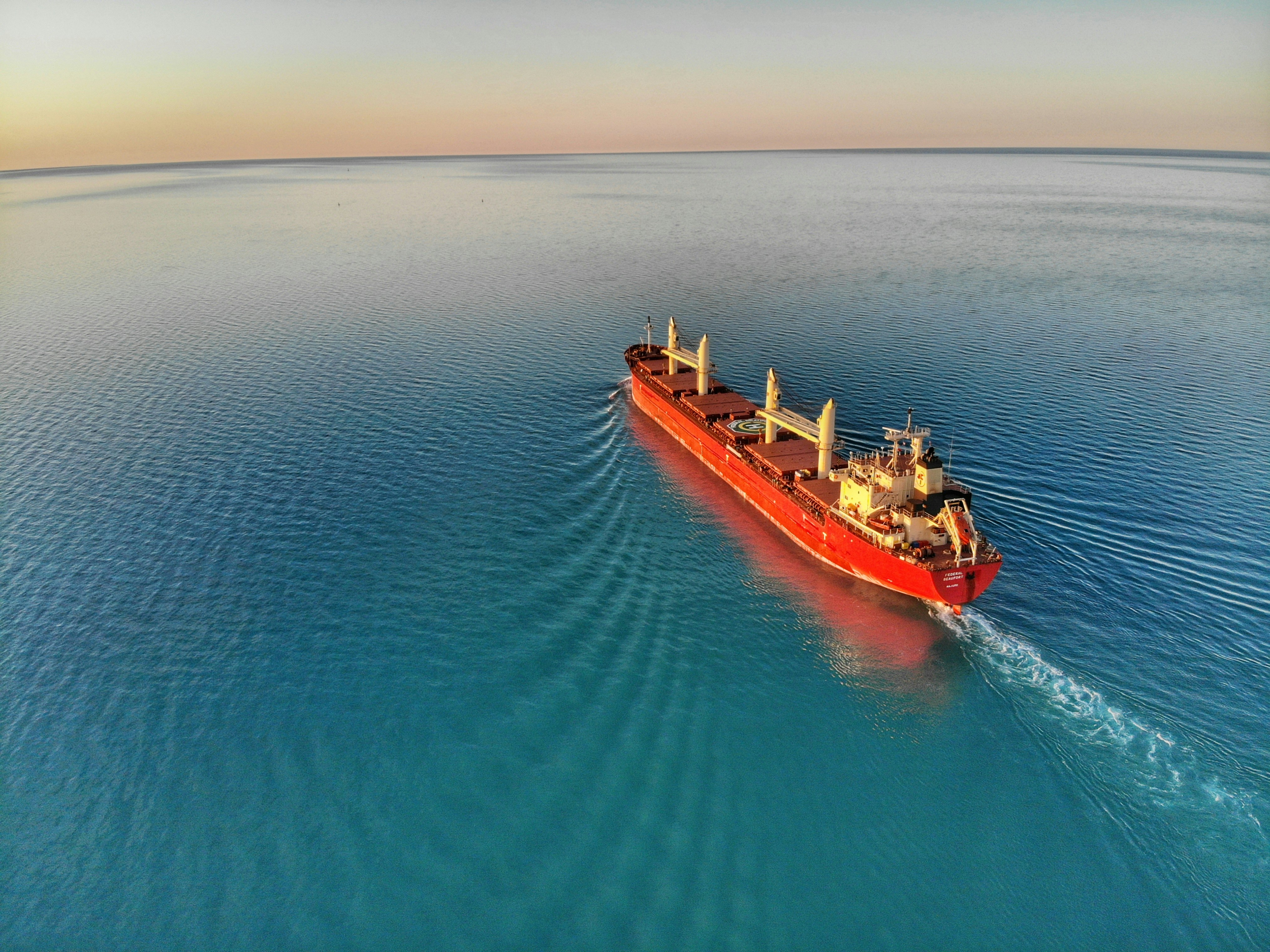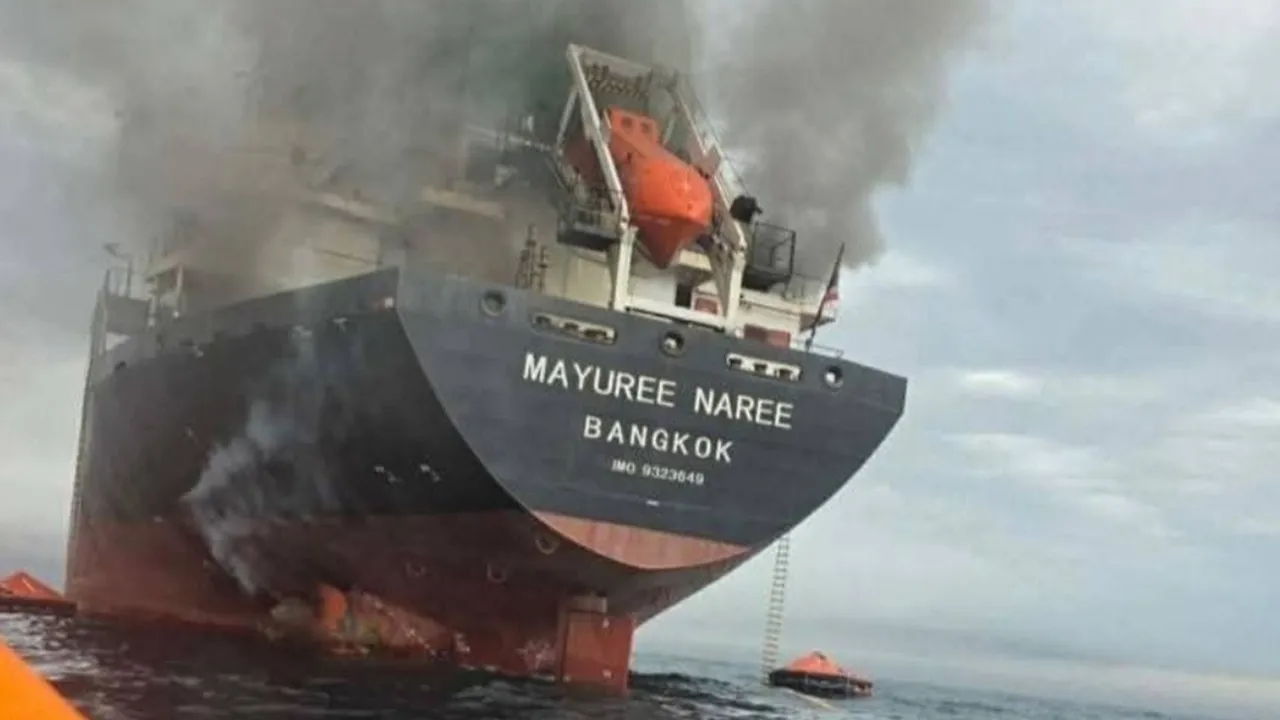
Precious Shipping has received $10.98 million in war risk insurance payouts for the loss of the bulker Mayuree Naree from an attack in the Strait of Hormuz.
Grok response:
10 Citations:
- Title/Description: Qatari LNG Ship Struck in Strait of Hormuz, Testing US Talks (gCaptain/Bloomberg article on attack on Nakilat LNG carrier).
Date: July 7, 2026.
Summary: Details the first attack on a Qatari LNG tanker exiting the strait since the war began, highlighting risks despite prior ceasefire efforts. Notes it as a setback for resuming exports after months of paralysis. Emphasizes ongoing threats testing fragile US-Iran agreements.[1] - Title/Description: More LNG, Japan-Linked Vessels Transit Hormuz Despite Renewed Mideast Tensions (gCaptain/Reuters on partial transits).
Date: July 10, 2026.
Summary: Reports some LNG tankers (including Qatar-linked) resuming limited transits amid flare-ups, with 22 Japan-linked vessels departing the Gulf. Notes overall daily traffic remains far below pre-war levels (e.g., down to 10 ships on one day vs. 125-140 normal). Indicates sporadic movement but persistent severe restrictions.[2] - Title/Description: GasLog LNG Carrier Damaged Exiting Hormuz as UKMTO Reports Two New Attacks (gCaptain on July 31 incident).
Date: August 1, 2026.
Summary: Describes damage to a GasLog-operated LNG carrier while exiting the strait, alongside reports of additional attacks. Highlights continued risks and subdued shipping activity in early August. Shows LNG traffic remains disrupted by security incidents.[3] - Title/Description: Traffic slows through Strait of Hormuz as Iran tensions flare (Reuters on Kpler/LSEG data).
Date: July 10, 2026.
Summary: LNG and oil tanker traffic dropped to lowest daily levels since late June, averaging well below pre-conflict norms even after brief upticks. Notes some ballast LNG tankers entering but overall slump due to hostilities. Confirms traffic far from normal volumes post-February strikes.[4] - Title/Description: Strait of Hormuz Live Traffic Tracker (hormuzstraitmonitor.com real-time data).
Date: August 13, 2026 (updated).
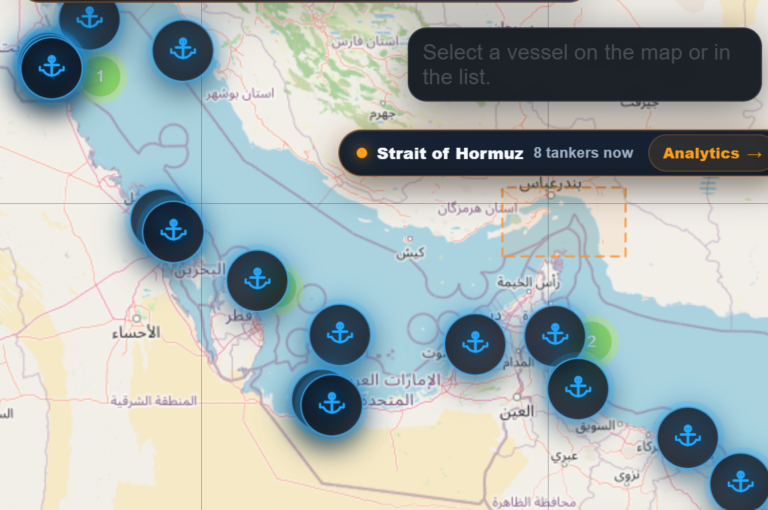
Summary: Declares strait status “CLOSED” since February 27, 2026 (166 days). Reports 16 daily transits (13.3% of normal ~60/day) and 13.1% of average DWT throughput, with 200 vessels waiting. Provides latest metrics showing severe ongoing restrictions on LNG-capable traffic.[5] - Title/Description: 2026 Strait of Hormuz crisis (Wikipedia overview of events).
Date: Updated ~August 2026 (ongoing page).
Summary: Summarizes blockade since February 28, 2026, following US/Israel strikes on Iran, with ~20% of global LNG affected. Notes brief April ceasefire and June MOU allowing limited passage, followed by July resumption of attacks and US blockade reimposition. Indicates no return to unimpeded commercial LNG flows.[6] - Title/Description: The Strait of Hormuz: Security Developments and Impacts (US Congressional Research Service report).
Date: ~August 2026 (recent update).
Summary: Details Iranian control efforts, attacks on noncompliant ships, and the June MOU’s 60-day safe passage arrangement that collapsed amid renewed July attacks. Notes US blockade reimposed by early August due to violations. Confirms LNG traffic remains severely restricted.[7] - Title/Description: Strait of Hormuz: What has happened since the US-Iran MoU on June 17 (Al Jazeera analysis).
Date: July 9, 2026.
Summary: Reviews breakdown of the June MOU after three weeks, with Trump declaring the truce “over” and renewed Iranian threats to close the strait. Notes Iran effectively closed it post-February strikes, with partial reopenings failing. Highlights persistent uncertainty for global LNG flows.[8] - Title/Description: Proposed Hormuz passage deal not feasible for shipping industry sources say (Reuters on Iran-Oman talks).
Date: August 6, 2026.
Summary: Reports industry rejection of proposed Iran-Oman deal due to US sanctions, insurance termination clauses for fee payments, and demands for 5-7% cargo fees. Notes stalled negotiations as of early August. Indicates no path to de facto unimpeded LNG traffic.[9] - Title/Description: Trump Claims Hormuz Control as US, Iran Harden Their Stances (gCaptain/Bloomberg on latest negotiations).
Date: August 12, 2026.
Summary: Covers deadlocked talks, with Trump claiming US control and intermittent Iranian attacks continuing. Notes no resolution to shipping constraints despite rhetoric. Reinforces that LNG traffic remains far from unimpeded as of mid-August.[10]
Current Status Summary (as of August 13, 2026): LNG traffic through the Strait of Hormuz remains severely restricted or effectively halted at roughly 13% of pre-war levels, with ongoing attacks, blockades, and failed agreements preventing de facto unimpeded international maritime LNG flows. Recent gCaptain reporting documents continued incidents into early August, and live trackers confirm “closed” status with no indication of normalization. Resolution by end-2026 would require major diplomatic breakthroughs not evident in the latest sources.
=== Forecast Result ===
This is a forecasting question about a complex geopolitical and logistical situation with a specific, qualitative resolution criterion. My analysis will break down the current state, the necessary conditions for a “Yes” resolution, the key uncertainties, and the likelihood of those conditions being met within the 4.5-month timeframe.
1. Analysis of the Current Situation (as of August 13, 2026)
The provided research paints a clear and consistent picture of severe disruption.
- Traffic Volumes: Overall vessel traffic is operating at a small fraction of pre-crisis levels, around 10-15% of normal, with some days seeing even lower numbers. LNG-specific traffic is even more constrained, estimated at only ~6% of its normal flow. A live tracker bluntly describes the strait’s status as “CLOSED” since late February, accumulating over 160 days of disruption. [Social Media #5]
- Security Environment: The strait is an active conflict zone. There are reports of recent attacks on LNG carriers in July and early August. [Social Media #1, #3] In response, vessels are engaging in high-risk behavior, such as “running dark” (disabling AIS transponders), which is the antithesis of “unimpeded” traffic.
- Political & Diplomatic Context: The root of the crisis is the war between Iran and the US. Iran has explicitly stated that the strait will remain closed until its political conditions are met, linking any reopening to major concessions from the US. Recent diplomatic efforts have failed; a June memorandum of understanding collapsed within weeks, and a more recent proposal brokered by Oman was deemed unworkable by the shipping industry. [Social Media #8, #9]
- Commercial Reality: The market reflects this high-risk environment. QatarEnergy, a major LNG exporter, has extended its force majeure notices into mid-October, signaling an inability to fulfill contracts. Insurers are applying war-risk premiums, and major shipping lines have restricted bookings.
In short, as of today, LNG traffic is not just restricted; it is effectively halted for all normal commercial purposes, with only minimal, high-risk transits occurring.
2. Defining the Path to a “Yes” Resolution
For the question to resolve “Yes,” gCaptain must report by December 31, 2026, that LNG traffic is “de facto unimpeded.” This requires a chain of events to occur:
- A Major Political De-escalation: A durable ceasefire or peace agreement between the US and Iran must be reached. Given the stated positions, this is the most significant hurdle.
- Operational De-risking: Following a political agreement, the physical threat must be neutralized. This would involve clearing any mines and a sustained cessation of attacks, convincing insurers to lower war-risk premiums.
- Sustained Traffic Resumption: Shipping companies would need to regain confidence. Traffic would have to ramp up from the current ~6% of normal to a level that is no longer “severely restricted.” This would likely mean sustained traffic at or above 80-90% of pre-crisis levels for a period of weeks, not just days.
- Observation and Reporting: Finally, gCaptain, an industry-specific news source, would need to observe this new, stable state and publish a report confirming it.
This entire sequence must be completed in the ~4.5 months remaining in 2026.
3. Key Assumptions & Probabilities
My forecast rests on the following core assumptions:
- Assumption 1: A durable political resolution between the US and Iran will not be achieved and implemented quickly. The failure of the June MOU and the hardened rhetoric from both sides in August suggest deep-seated conflict. The probability of this assumption being wrong (i.e., a sudden, durable peace deal is signed and implemented) within the next 2-3 months is low. I estimate the probability of a viable deal happening in time to be around 10%.
- Assumption 2: “De facto unimpeded” is a high bar. gCaptain is unlikely to make this declaration based on a partial reopening (e.g., 50% of normal traffic under a convoy system). It implies a return to near-normal, routine, commercially-driven shipping. The probability of this assumption being wrong (i.e., gCaptain uses a much looser definition) is low, but not zero.
- Assumption 3: The operational ramp-up takes significant time. Even if a peace deal were signed tomorrow, it would take weeks, if not months, for insurers to change their risk ratings, for shippers to redirect fleets, and for traffic volumes to demonstrably and sustainably return to normal.
4. Forecast and Rationale
The path to a “Yes” resolution is long, complex, and fraught with points of failure. The primary obstacle is political. Without a major breakthrough between the US and Iran, the strait will remain a contested and high-risk waterway. The current data strongly suggests such a breakthrough is not imminent.
Expert analysis from Kpler, a specialized market intelligence firm, reinforces this conclusion, placing their base case for a gradual recovery as starting in Q1 2027, after the resolution date.
Even if a peace deal—a low-probability event in itself—were to materialize, the subsequent logistical and commercial normalization would consume most, if not all, of the remaining time. A deal in October would leave very little time for the situation to stabilize enough for gCaptain to confidently report that traffic is “unimpeded.”
Therefore, the forecast must be heavily weighted toward the current state of severe restriction continuing through the end of the year. The probability of resolution is not zero—geopolitical situations can be volatile, and a sudden change can’t be entirely ruled out—but it is very low.
Let’s break down the probability:
- There’s roughly a 10% chance of a political deal being signed in time.
- Given a deal, there is a significant chance it fails or the ramp-up is too slow. I estimate a 40% chance of traffic successfully normalizing to an “unimpeded” state before the deadline if a deal is signed.
This leads to a calculated probability of 10% * 40% = 4%.
This accounts for the high improbability of the necessary political breakthrough while still acknowledging the non-zero chance of a rapid, unexpected resolution within the volatile Middle Eastern political landscape.
Probability: 4%
About The Author