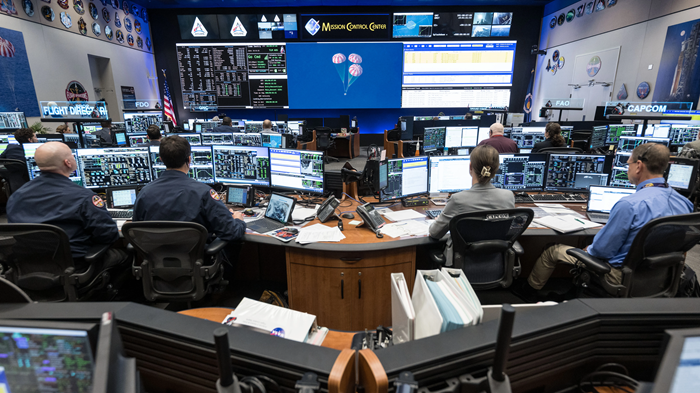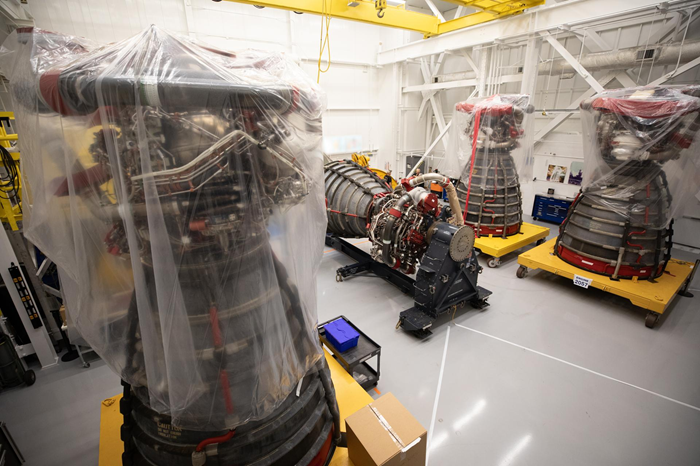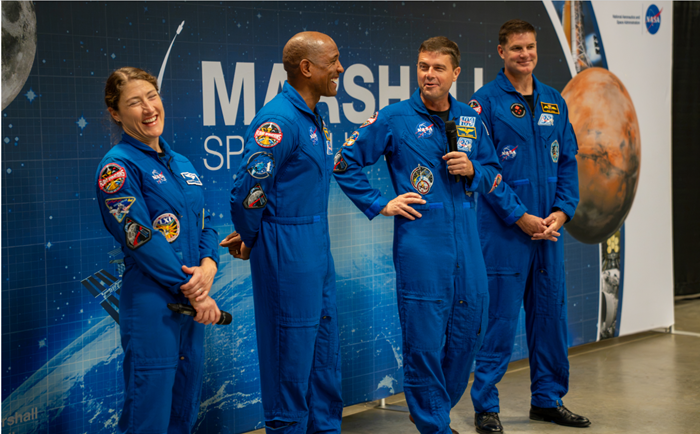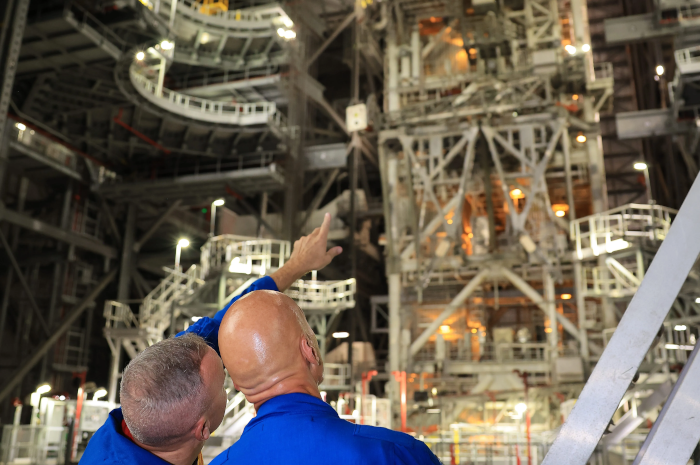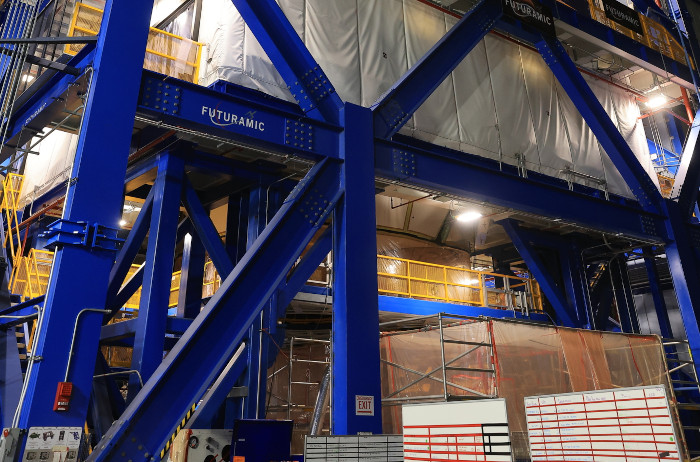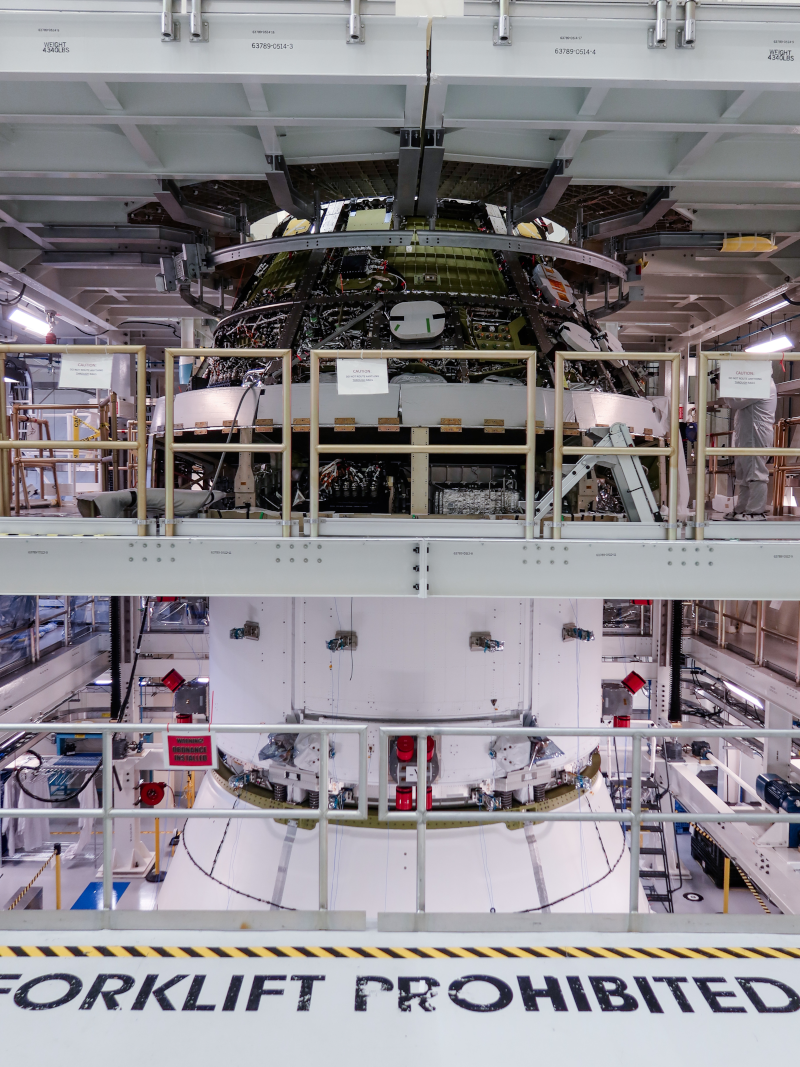
Technicians joined the Orion crew and service modules together on July 30, 2026, inside the Neil Armstrong Operations and Checkout Building at NASA’s Kennedy Space Center in Florida.
Obtaining outside data.
Checking internet sources, using keywords: Artemis III orbital demonstration 2027
News from various sources:
The retrieved web content primarily focuses on NASA’s Artemis III mission, scheduled for 2027, which aims to test docking sequences and lunar landers in low Earth orbit as part of the broader Artemis program designed to return humans to the Moon. Here are the key takeaways:
Mission Overview:
- Artemis III is planned for a mid-to-late 2027 launch from Kennedy Space Center.
- The mission will not land on the Moon but will serve as a critical test of systems for future lunar landings.
- It is designed to test NASA’s Space Launch System (SLS) and the Orion spacecraft in orbital operations with SpaceX’s Starship and Blue Origin’s Blue Moon landers.
Objectives:
- The mission will involve four astronauts launched into low Earth orbit to perform rendezvous and docking tests.
- It aims to validate multi-vehicle docking operations, a necessary step before attempting lunar landings.
- Artemis III will test the asymmetric control authority, transferring control between Orion and the Starship during docking sequences.
Technological and Engineering Challenges:
- Hardware components for the Artemis III SLS rocket are being assembled and tested at NASA facilities.
- The mission requires complex orchestration of three launch systems to achieve a 460-kilometer circular parking orbit.
- A novel aspect includes the software handoff of control authority, a first in crewed spaceflight.
Preparation and Development Status:
- Preparations are ongoing with assembly and testing of hardware at the Kennedy Space Center.
- The Orion spacecraft is undergoing final assembly, including the installation of an upgraded heat shield.
- Blue Origin and SpaceX are developing and testing their respective lander systems, which have experienced some delays.
Future Plans:
- Artemis IV, targeted for a 2028 launch, is the planned mission to return astronauts to the lunar surface, marking the first such attempt since the Apollo 17 mission in 1972.
- The Artemis III mission acts as a precursor for these lunar landings, providing critical data and operational experience.
Industry Collaboration and Challenges:
- NASA is working closely with SpaceX and Blue Origin, which provide landers for the Artemis missions.
- The mission underscores NASA’s collaborations with private industry to develop space technologies and mitigate schedule risks.
- Recent challenges included a Blue Origin rocket pad mishap, though the timeline for Artemis III is maintained despite such setbacks.
This mission is integral to the eventual goal of establishing a sustainable human presence on the Moon, with the lessons learned from Artemis III forming the foundation for future deep space exploration, including potential missions to Mars.
Fact-checked summary:
Artemis III is scheduled for a mid-to-late 2027 launch from Kennedy Space Center, a critical timing aspect for mission success. The mission will not involve a lunar landing but instead serve as a vital test of systems needed for future lunar landings, which is important for understanding mission success. Four astronauts will be involved in low Earth orbit rendezvous and docking tests, crucial operations for overall mission success. Hardware components for the Artemis III Space Launch System (SLS) are currently being assembled and tested, underscoring the importance of this preparation for the launch date. The mission requires the complex coordination of three launch systems to achieve a 460-kilometer circular parking orbit, which denotes a significant challenge that could impact the timeline. Preparations ongoing at the Kennedy Space Center for assembly and testing of hardware are vital, as these timelines affect launch readiness. Despite some delays in the development of landing systems by partners like SpaceX and Blue Origin, NASA collaborates with these companies, which is part of the strategy to ensure mission success. Lastly, the Artemis III mission acts as a precursor for lunar landings, providing critical data and operational experience, important for future mission planning and timelines.
OpenAI gives a base rate of 0.75 (75%)
The question difficulty is rated 6 (0 to 10)
Historical weighted factors include:
0.40.30.3
A Bayesian calculation could be performed as follows:
Using historical factors, the probability is calculated by assessing the weighted likelihood of each factor: P(success) = 0.4 * (1 – Delays) + 0.3 * Coordination Success + 0.3 * Hardware Timeliness. Estimating delays at 0.2 probability, coordination at 0.8, and timeliness at 0.7, P(success) = 0.4 * 0.8 + 0.3 * 0.8 + 0.3 * 0.7 = 0.32 + 0.24 + 0.21 = 0.77. (Carolyn‘s note: Correct, verified by LibreOffice Calc.)
Bayesian base rate: 0.77 (77%)
Sufficient news to provide a good forecast? 1 (0 or 1)
News is relevant, topical and unbiased? 1 (0 or 1)
Question classification: scenario_based_forecast
Expected time (days) until question close: 365
The following were considered in order to produce this base rate:
The base rate of 0.75 is derived from historical observation of similar complex space missions, where success rates are generally high, taking into account NASA’s track record in mission timelines, technology advancements, and recent collaboration histories.
Ideally, the news feed would contain the following sorts of information for a better forecast:
Additional information on progress updates from NASA, SpaceX, and Blue Origin could provide clearer insights. Data on specific bottlenecks in hardware or systems integration would be ideal for refining the forecast.
Some potential divergent considerations that might affect the base rate:
Potential schedule changes due to unforeseen technical difficulties or supply chain disruptions that historically affect space missions could lower this base rate. Additionally, reliance on multiple partners increases the risk of delays.
The following chain of events are necessary for the question to resolve positively:
- Successful assembly and testing of the Artemis III Space Launch System components at Kennedy Space Center. [High likelihood]
- Completion of required hardware preparations on time. [Moderate likelihood]
- Coordination and integration of three launch systems to achieve a 460-kilometer circular parking orbit. [Moderate likelihood]
- No significant delays in collaborations with SpaceX and Blue Origin affecting the Artemis III mission timeline. [Moderate likelihood]
- All necessary conditions for launch readiness are met by the scheduled mid-to-late 2027 timeframe. [Moderate likelihood]
Querying Claude (AI predicts: 0.18 – confidence: 4)
Querying OpenAI (AI predicts: 0.7 – confidence: 7)
Guide to Jeremy Lichtman’s Multi-AI Oracle Reportshttps://bestworldgroup.com/guide-to-jeremy-lichtmans-multi-ai-oracle-reports/
Question Type: Binary
Median from LLMs: 0.44
Base rate: 0.75 (from OpenAI)
SD: 0.26
MAPD: 0
Confidence: 5.5
Conf Mode: Low
Mellers: 0.41
Reverse Mellers: 0.46
Theory of Mind: 0.475 (What did the LLMs think other LLMs predicted?)
Beta Distribution: 0.96
Close Type: C (B = cautious # closer to 50%; A/C = closer to extremes)
LLM responses: 2
Model value: 0.44 (44%)
The question of whether an Artemis III orbital demonstration mission will succeed by the end of 2027 is complex, involving multiple considerations. While the mission is scheduled for 2027, it faces significant challenges due to historical delays in the Artemis program, coordination with multiple partners like SpaceX and Blue Origin, and technical complexities with the integration of various launch systems. Development delays in crucial components such as the SpaceX Starship and Blue Origin landers add further uncertainty. Despite NASA’s track record of successful mission completions, the compressed timeline and dependencies on multiple partners lower the likelihood of an on-time completion. Some factors, like potential political pressure to accelerate the timeline or a simplified mission profile, could mitigate these delays. However, the overall probability of meeting the original schedule remains low, estimated at 0.18 due to these compounded risks.
Runtime: 107 seconds.
About The Author