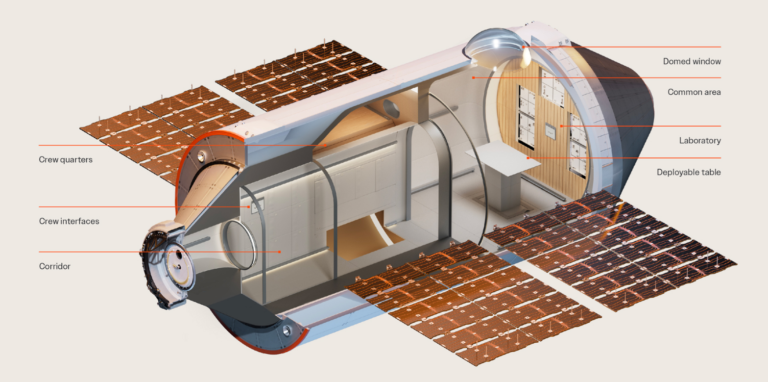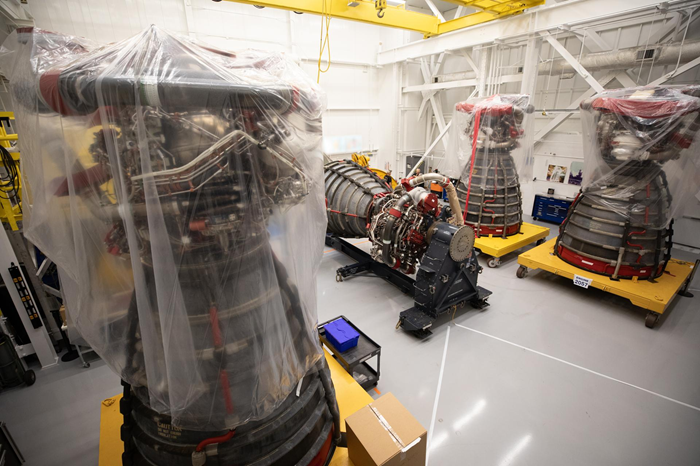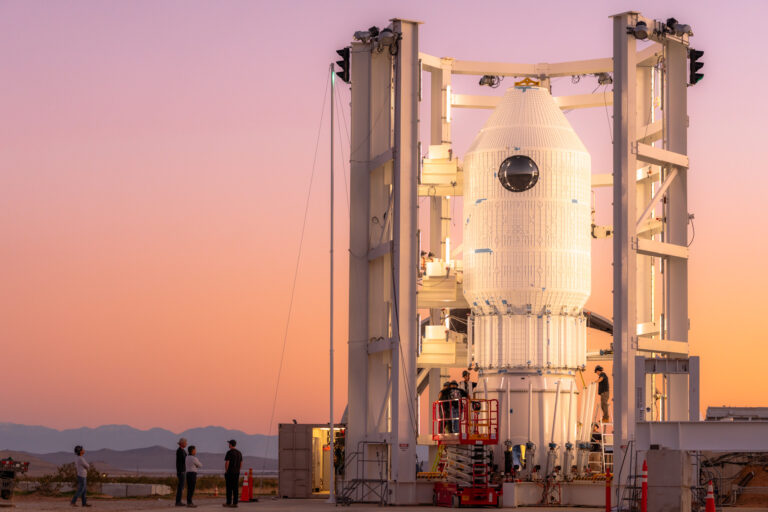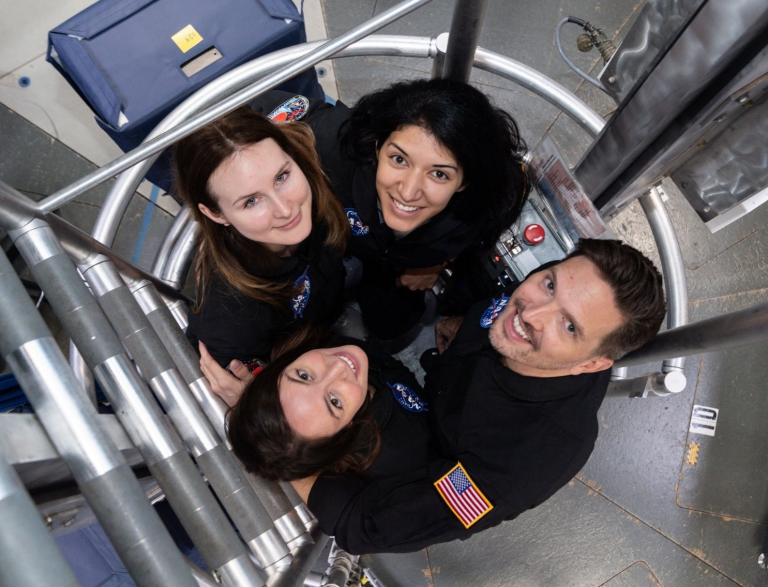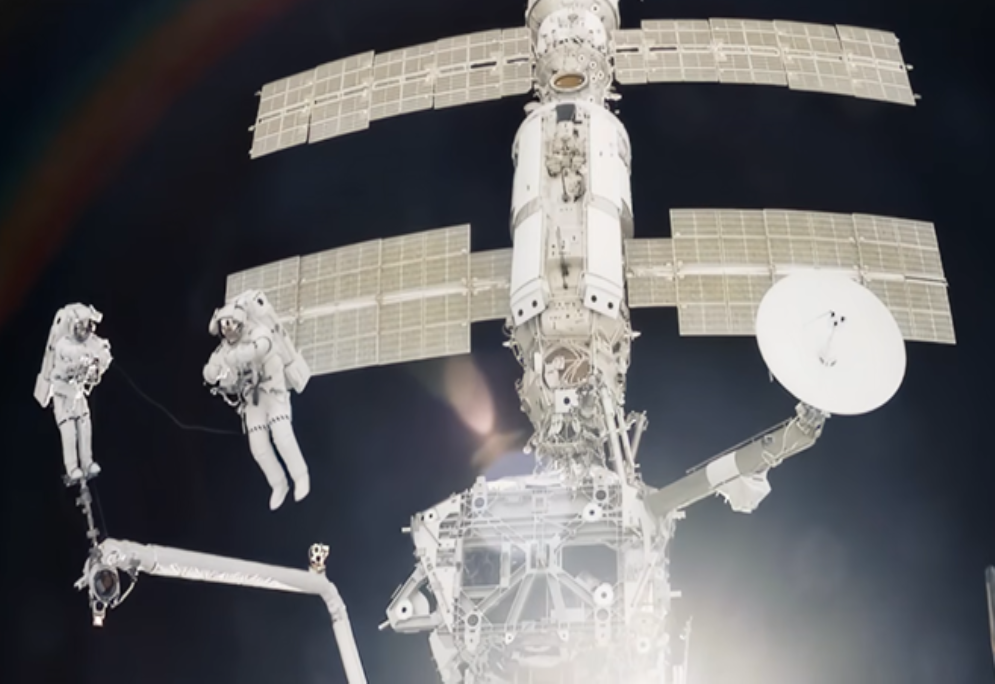
Throughout Haven-1's design and its ongoing integration, Vast's Astronaut Advisors have worked side by side with our industrial design and engineering teams to make sure every crew-facing system is safe, intuitive, and built for the realities of microgravity. Collectively, those advisors have spent more than 1,000 days living and working in space, and that experience shapes decisions down to the smallest detail.
Grok response:
- Vast’s Haven-1 continues to advance through milestones ahead of planned 2027 launch – NASASpaceFlight.com
Description: Update on hardware progress, testing, and partnerships for Vast’s station.
Date of publication: July 4, 2026.
Haven-1 remains on track for a Q1 2027 Falcon 9 launch after completing integration and testing milestones, following a successful Haven Demo satellite in November 2025. The inaugural four-person crew on Vast-1 would arrive via Crew Dragon, with the station using the capsule for supplemental life support. Vast has signed European agreements for astronaut missions to both the ISS and Haven-1. - This could be the Earth-orbiting habitat that replaces the International Space Station | BBC Sky at Night Magazine
Description: Coverage of a Franco-Vast partnership for astronaut flights.
Date of publication: August 23, 2026.
France signed a two-mission deal with Vast, with ESA reserve astronaut Arnaud Prost planned as a flight test engineer on the first crewed Haven-1 mission in 2027. Both the ISS private mission (Thomas Pesquet) and Haven-1 flight are targeted for 2027, lasting about two weeks each, using SpaceX Dragon. This supports Haven-1 as a precursor to larger Vast stations amid ISS retirement planning. - The first commercial space station, Haven-1, is now undergoing assembly for launch – Ars Technica
Description: Interview with Vast CEO on schedule update and post-launch plans.
Date of publication: January 20, 2026.
Haven-1 entered clean-room integration, prompting a slip from mid-2026 to Q1 2027 to allow full testing at NASA facilities later in 2026. The uncrewed launch would be followed by monitoring, with a crewed Dragon visit possible as early as two weeks later if systems check out, though it could take longer. Vast has a strong incentive to send crew quickly within the station’s three-year life. - Roadmap — Vast
Description: Official company timeline for the Haven program of space stations.
Date of publication: Current (as of late August 2026).
Haven-1 is listed for 2027 as the world’s first commercial space station, a human-centric module with 45 m³ habitable volume supporting four crew. It follows the successful November 2025 Haven Demo in-orbit testbed. Later Haven-2 modules are planned starting 2028 to succeed the ISS with larger configurations.
Haven-1 by Vast remains the leading candidate for a new space habitat visited by humans before the end of 2027, with the most aggressive and hardware-progressed timeline among commercial projects. As of late August 2026, the station is in integration after the primary structure was completed in late 2025, following a successful in-orbit Haven Demo testbed in November 2025 that validated key systems. The official target is a Falcon 9 launch in Q1 2027 as an uncrewed payload (the heaviest ever on that rocket at ~14,000 kg), followed by on-orbit commissioning and an uncrewed Dragon docking verification. A crewed Vast-1 mission of four people for 10-30 days (typically two weeks) could follow relatively quickly if checks succeed—Vast’s CEO has indicated as little as two weeks after launch is possible, though the verification window could extend.[1]
A significant recent development is a June 2026 agreement (announced at a France-U.S. summit) for ESA-linked French astronaut Arnaud Prost to fly as a test engineer on the inaugural crewed Haven-1 mission, with both that flight and a related ISS private astronaut mission targeted for 2027 using SpaceX Dragon. ts it for 2027 as the first commercial station. Progress reports through July 2026 confirm it is advancing through environmental testing planned later in 2026 at NASA facilities.[2]
Recent updates (through August 2026) show steady Haven-1 hardware and partnership progress with no major public setbacks since the January 2026 schedule clarification, increasing the chance of a 2027 crewed visit relative to competitors. However, first-of-kind human-rated stations carry integration, testing, certification, and launch risks; the uncrewed-to-crewed gap could easily push past December 2027 even if launch occurs on time. NASA and industry sources emphasize avoiding an LEO crew gap after ISS (~2030, possibly extendable), but 2027 is earlier than most official commercial demonstration targets. No other new habitat (distinct from ISS or Tiangong) currently shows a comparable 2027 crewed path. Official pages for Orbital Reef and Starlab do not indicate 2027 human visits.
Extracted resolution criteria links:
[‘https://www.blueorigin.com/destinations,’, ‘https://www.space.com/nasa-considering-spacex-starship-space-station‘, ‘https://voyagertechnologies.com/starlab/,’]
=== Forecast Result ===
=== Reasoning ===
Analysis
Core Question Breakdown
This resolves “Yes” if humans visit any new space habitat (not ISS or Tiangong) before December 31, 2027. The primary candidate is Vast’s Haven-1; all other contenders appear far behind.
Haven-1 Assessment
Current status (August 26, 2026):
- Hardware in integration/clean-room assembly
- Q1 2027 launch target (slipped from 2026)
- France-Vast agreement signed; Arnaud Prost named for first crewed mission
- Advancing through environmental testing milestones
- Raised $500M in March 2026; 4% workforce reduction a minor negative
- Successful Haven Demo testbed in November 2025 validates key systems
Multi-step path to “Yes”:
- Launch Haven-1 (Q1 2027 target)
- Uncrewed commissioning + Dragon docking verification (weeks to months)
- Crewed Vast-1 mission (4 astronauts, up to 30 days)
- All of the above before December 31, 2027
Probabilistic Timeline Modeling
| Launch Window | P(launch) | P(crew visits by end 2027 | launched) | Joint P |
|---|---|---|---|
| Q1 2027 | 42% | 82% | 34.4% |
| Q2 2027 | 18% | 68% | 12.2% |
| Q3 2027 | 10% | 48% | 4.8% |
| Q4 2027 | 5% | 10% | 0.5% |
| Not in 2027 | 25% | 0% | 0% |
P(Haven-1 enables “Yes”) ≈ 51.9%
P(other station enables “Yes”) ≈ 3% (Orbital Reef stalled, Starlab targeting 2029, Axiom modules delayed to 2028, Thunderbird is uncrewed test)
Combined P(Yes from any station) ≈ 52% × (1 – diminishing returns) + 3% ≈ ~53%
Key Assumptions Subject to Failure
- Haven-1 launches Q1 2027 as currently targeted (~45% probability this holds exactly): Prior slips from 2025→2026→Q1 2027, further delay risk is real. First-of-kind station hardware faces integration surprises.
- Crewed mission follows launch without extended safety holds (~75% probability given successful launch): Novel station with no heritage; NASA and SpaceX might impose additional verification requirements, potentially pushing crew visit into 2028.
- No major programmatic collapse at Vast (~90% probability): The 4% workforce reduction and competitive pressure are minor risks; Vast’s $500M funding and France deal provide strong incentive.
Calibration Considerations
- Historical base rate: Novel crewed space station milestones are exceedingly rare; first commercial station ever is unprecedented complexity
- 16 months until resolution (generous time window once station launches)
- Research (August 2026) consistently points to Q1 2027 as achievable but uncertain
- I must adjust downward for overconfidence bias (~35% historical positive resolution rate for competition questions)
- The detailed hardware progress and international partnerships are genuine positive signals vs. many “paper station” concepts
Net adjustment: Pull from 53% toward base rate, landing near 45%.
Probability: 45%
End
About The Author