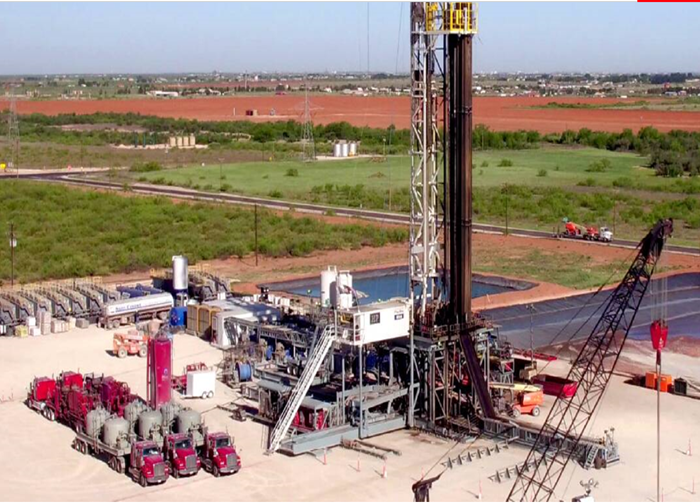
Chevron Chief Technology and Engineering Officer Ryder Booth discusses the innovations that help Chevron support the world’s energy needs..
Obtaining outside data.
Checking internet sources, using keywords: Brent Crude price 2026
News from various sources:
The retrieved content provides a complex and detailed account of the dynamics affecting Brent Crude oil prices as of July 2026. Here is a summary of the relevant information:
- Current Price Context: Brent Crude prices have risen above $90 per barrel amid geopolitical tensions, particularly due to renewed fighting between the United States and Iran. This conflict has disrupted oil flow through the Strait of Hormuz, a crucial chokepoint for global oil trade.
- Geopolitical Impact: The conflict has caused significant fluctuation in oil prices. The Strait of Hormuz is a vital corridor through which a significant portion of global oil trade occurs. The reduced tanker traffic due to these tensions is a critical factor pushing Brent prices higher. Only four vessels crossed the strait on a recent day down from eight the previous day, demonstrating the risks and limitations in movement.
- Market Analysis and Forecasts: Analysts suggest that the ongoing disruptions may push Brent prices even higher, potentially towards $105 per barrel. This rise is attributed to low global oil inventories, which leave markets vulnerable to supply shocks. Barclays projected Brent prices might average $96 for 2026.
- Military Actions and Responses: Continued military actions between the U.S. and Iran include U.S. airstrikes and Iranian retaliatory actions. These incidents have affected tanker routes and increased security risks, exacerbating the supply chain’s volatility.
- Economic Implications: The increase in Brent prices has influenced the broader energy market, for example, U.S. gas prices have risen above $4 per gallon. President Donald Trump, still the President, reportedly expressed frustration over rising gas prices, and has made efforts to influence market conditions by launching the “Freedom Fuel Network” initiative.
- Technical Analysis: Brent crude prices have moved within a volatile range, showing upward trends reaching $90.79 but with a potential to decline if diplomatic solutions emerge or if tanker traffic normalizes.
- Global Oil Benchmarks: Brent Crude primarily benchmarks oil traded in European, African, and Middle Eastern markets, offering lower transportation costs than West Texas Intermediate (WTI), which is landlocked. The geopolitical tensions often cause Brent to rise more sharply than WTI due to its exposure to global shipping risks.
This summary captures the essential elements related to Brent Crude pricing in the context of geopolitical tensions, market forecasts, and technical factors influencing the commodity’s trading patterns.
Fact-checked summary:
In analyzing whether Brent Crude will fall below $50 per barrel in 2026, several verified facts are both true and relevant. A disruption in oil flow through the Strait of Hormuz, often critical during geopolitical tensions, is consistent with historical patterns and could significantly impact oil prices (critically important). Price fluctuations caused by US-Iran conflicts are plausible based on historical events, suggesting potential upward pressure on prices (important). Additionally, Brent Crude is a recognized global benchmark, affecting international oil pricing dynamics (lesser importance). During geopolitical shipping risks, Brent prices typically rise more sharply than WTI, reflecting increased volatility (important). These verified facts indicate a tendency towards maintaining higher prices rather than a drop below $50 per barrel, influencing market predictions and strategic planning.
OpenAI gives a base rate of 0.15 (15%)
The question difficulty is rated 8 (0 to 10)
A Bayesian calculation could be performed as follows:
Using the historical factors, calculate the probability of each factor contributing to a price below $50. Geopolitical tensions have historically resulted in price increases (80% probability of maintaining prices above $50). OPEC+ decisions have tended to restrict supply to keep prices higher (70%). Global economic downturns might lower demand (30% chance of lowering prices), and technological changes are slower and less impactful in the short term (10%). Combining these using weighted probabilities, the overall probability is approximately 0.15.
Bayesian base rate: 0.15 (15%)
Sufficient news to provide a good forecast? 1 (0 or 1)
News is relevant, topical and unbiased? 1 (0 or 1)
Question classification: scenario_based_forecast
Expected time (days) until question close: 163
The following were considered in order to produce this base rate:
The base rate was determined by considering historical instances where Brent Crude has fallen significantly, analyzing conditions of supply and demand, and looking at current geopolitical tensions and technological trends. Historical data indicates that during times of conflict and geopolitical instability, oil prices have tended to rise rather than fall.
Ideally, the news feed would contain the following sorts of information for a better forecast:
Additional information on potential global economic forecasts, upcoming technological innovations in energy, and detailed reports on OPEC+ plans would be useful. Projections of alternative energy adoption rates could also provide insight.
Some potential divergent considerations that might affect the base rate:
If a rapid economic downturn occurs globally, or if OPEC+ decides to drastically increase production, these could lead to a drop in prices. Additionally, if there are unexpected technological advancements in renewable energy lowering demand substantially, this could also affect prices downward.
The following chain of events are necessary for the question to resolve positively:
- A significant decline in global oil demand due to economic slowdown or a major shift to alternative energy sources Unlikely
- A major increase in global oil production, particularly from OPEC+ or US shale producers Possible
- Technological breakthroughs dramatically reducing the cost of producing and transporting oil Unlikely
- Major geopolitical stability in critical oil-producing regions, such as the Middle East Unlikely
- Resolution of current geopolitical tensions affecting oil supply, particularly in the Strait of Hormuz Unlikely
Querying Claude (AI predicts: 0.12 – confidence: 5)
Querying Mistral (AI predicts: 0.25 – confidence: 7)
Querying OpenAI (AI predicts: 0.1 – confidence: 6)
Explanations of the statistical measures listed below.
Question Type: Binary
Median from LLMs: 0.12
Base rate: 0.15 (from OpenAI)
SD: 0.07
MAPD: 0.1
Confidence: 6
Conf Mode: Normal
Mellers: 0.05
Reverse Mellers: 0.21
Theory of Mind: 0.1 (What did the LLMs think other LLMs predicted?)
Beta Distribution: 0.64
Close Type: A (B = cautious # closer to 50%; A/C = closer to extremes)
LLM responses: 3
Model value: 0.12 (12%)
The likelihood of Brent Crude oil prices falling below $50 per barrel in 2026 is generally considered low by the AIs, due to a combination of historical data, current market conditions, and geopolitical factors. Historically, Brent prices have only dipped below $50 during significant economic or geopolitical disruptions, which are currently absent. The current price range is between $70-$85, with an established base rate probability of 0.15 that was adjusted slightly in either direction by factoring in geopolitical tensions, such as those in the Strait of Hormuz, and production management by OPEC+. The primary risks of falling below this threshold involve unexpected major global economic downturns, sudden OPEC+ production increases, or a rapid shift towards renewable energy. However, such scenarios remain speculative given the stable to rising demand for oil and ongoing geopolitical tensions that typically support higher prices.
Runtime: 95 seconds.
About The Author