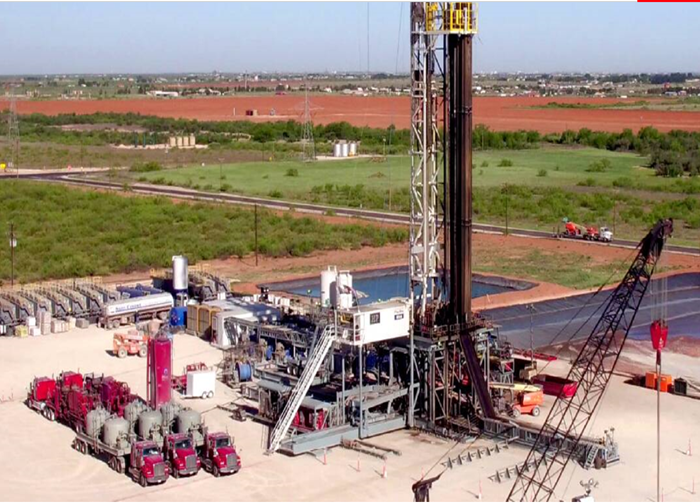
Innovating oil and gas production: Every producing asset is in decline. The challenge is slowing that decline while controlling operating cost, maintaining production efficiency, and reducing emissions intensity. Source: https://www.slb.com/about/driving-energy-innovation/innovating-in-oil-and-gas
Grok response:
10 Citations
- Title: Brent crude oil – Price – Chart – Historical Data – News
Description: Official resolution source page with live prices, charts, stats, and news for Brent crude.
Date: Updated September 1, 2026.
Summary: Brent traded at 92.33 USD/Bbl, up 2.03% on the day amid renewed US-Iran hostilities, US strikes, Iranian retaliation, and reports of tankers hit in the Strait of Hormuz. Over the past month it rose 10.17% and is up 33.48% year-over-year. Trading Economics models expect 91.72 by end of Q3 2026.[1] - Title: Short-Term Energy Outlook – U.S. Energy Information Administration (EIA)
Description: Monthly EIA forecast for energy markets including global oil prices, production, demand, and inventories.
Date: Released August 11, 2026 (forecast completed August 6).
Summary: EIA forecasts Brent averaging $87/bbl in 2026 (Q3 ~$85, Q4 ~$78) and $69 in 2027, with large inventory draws from Hormuz disruptions keeping prices elevated near-term before production restarts and inventories rebuild. Global production is projected at 100.8 million b/d in 2026 vs. demand around 104 million b/d. Some Middle East output may remain shut through 2027.[2] - Title: JP Morgan lowers Brent crude price forecast for second-half 2026
Description: Bank research note on oil market rebalancing, inventories, and demand.
Date: June 24, 2026.
Summary: JP Morgan cut H2 2026 forecasts to $86/bbl in Q3, $80 in Q4, and $78 by year-end due to weaker-than-expected OECD inventory draws and larger demand losses. It sees oversupply building in Q4 2026/H1 2027 requiring potential production cuts in 2027, with supply growth from Venezuela, Iran, Brazil, Guyana, and the US. Oil flows were running high at ~8.6 million b/d.[3] - Title: Brent could fall to $60 a barrel by Christmas, forecasts Citi
Description: FT report on Citi analysts’ bearish outlook as Hormuz shock fades and surplus emerges.
Date: July 3, 2026.
Summary: Citi sees Brent at $60-65 by end-2026 (below consensus of ~$78), recommending selling rallies as shipping normalizes, Chinese demand stays weak, and inventories draw less than expected. Goldman had cut year-end to $80; a faster recovery scenario could take it to $60. Brent was trading ~$71.58 at the time of the note.[4] - Title: Oil to hold above $80 a barrel as Middle East supply risks persist
Description: Reuters poll of 31 economists/analysts on 2026 oil price averages.
Date: August 31, 2026.
Summary: Analysts forecast Brent averaging $85.08/bbl in 2026 (WTI $80.20), roughly unchanged from July, due to lingering Hormuz/shipping risks despite weak China demand. The market is seen in deficit (1.65-3.5 million b/d estimates). OPEC+ output hikes have limited impact amid disruptions; IEA sees 2026 demand falling 1.6 million b/d.[5] - Title: Brent Crude Oil price information – FT.com
Description: Live market data, 52-week range, and performance for Brent.
Date: September 1, 2026.
Summary: Brent at $92.05 (up 1.72%), 1-year change +35.05%. 52-week range $58.72 (Dec 16, 2025) to $126.41 (Apr 30, 2026). Data delayed ~10 minutes. Related WTI at $87.74 with similar 52-week $54.98-$119.48.[6] - Title: Goldman Sachs doubles down on oil price forecast for 2026
Description: Bank note on Q4 2026 outlook amid tanker disruptions and demand softness.
Date: July 24, 2026 (and related June notes).
Summary: Goldman maintains Q4 2026 Brent at $80 (WTI $76), assuming tensions ease; 2027 $75 amid 3.2 million b/d surplus. Upside risks if Hormuz stays disrupted (could exceed $120 in Q4). Demand softness in China/Europe offsets some supply risks. Earlier cuts from $90.[7] - Title: Oil Market Report – August 2026 – Analysis – IEA
Description: IEA monthly assessment of global oil demand, supply, and balances.
Date: August 15, 2026 (highlights).
Summary: World oil demand forecast to decline 1.6 million b/d in 2026 (further downgrade), easing from Q2 contraction of 4.9 million b/d. Supply down 4.3 million b/d in 2026 due to Gulf shut-ins, rebounding 8.3 million b/d in 2027. Refinery throughputs remain well below year-ago levels. Renewed hostilities reduced Q3 supply estimates.[8] - Title: UBS lowers 2026-2027 oil price forecasts as Hormuz flows recover
Description: Reuters report on UBS research amid recovering transits and Iranian exports.
Date: July 2, 2026.
Summary: UBS cut 2026 Brent average to $83.74 (from $93.28) and 2027 to $75; Q3/Q4 2026 at $80. Sees $70-100 range depending on Hormuz pace and US-Iran MoU durability. Faster reopening + UAE supply growth could pull toward $70; breakdown could send to $100+. Transits recovered to ~50% of pre-conflict.[9] - Title: Brent Crude Futures Pricing (ICE)
Description: Live ICE Brent futures contract prices and volumes.
Date: September 1, 2026.
Summary: Front-month (Nov 2026) at 92.13; Dec 2026 89.62; Jan 2027 87.17, declining in backwardation to ~76-80 range into 2027-2028. High volumes on near contracts. Curve reflects expected easing of disruptions over time.[10]
Current Price and Historical Context (as of September 1, 2026)
Brent is trading around $92.05–$92.33, up sharply in recent days on renewed US-Iran fighting, tanker incidents in Hormuz, and supply fears. This follows a volatile 2026: monthly averages started at ~$66.60 in January, spiked to $103–$117 in March–April (peak ~$126.41 on Apr 30), then eased to the mid-80s in June–July before recent rebound. 52-week range is $58.72 (Dec 16, 2025) to $126.41. It has not traded below $50 at any point in 2026 (or the trailing 52 weeks). 2025 averaged around $69–$76 with a low near $62. Volatility has been extreme due to the Iran conflict, far exceeding typical seasonal patterns (e.g., winter heating demand vs. Q4–Q1 drop-offs). Year-to-date 2026 average is tracking toward the high $80s–low $90s per EIA and others.[1] response:
Forward-Looking Guidance, Consensus, and Futures
Wall Street and official forecasts for remaining 2026 (Q4 especially) cluster in the $70–$85 range, with 2026 full-year averages $83–$87. EIA (authoritative for many energy outlooks) sees Q4 ~$78 and a drop to $69 average in 2027 as inventories rebuild post-disruption. JP Morgan, Goldman Sachs, and Reuters poll (~$85 2026 average) align similarly. Citi is the most bearish among majors at potential $60 by year-end if Hormuz normalizes quickly and demand stays weak. Futures curve is in backwardation: Dec 2026 ~$89, then sliding toward $76–$80 in 2027. No major bank or EIA/IEA/OPEC outlook projects a move to $50 in 2026; even bearish scenarios stay in the $60s. OPEC is more bullish on demand (growth ~0.6 million b/d) than IEA (contraction of 1.6 million b/d in 2026 due to high prices and disruptions). Non-OPEC supply growth (US, Brazil, Guyana) plus potential Iran/Venezuela recovery points to surplus once Middle East flows resume.[11]
Extracted resolution criteria links:
[‘https://tradingeconomics.com/commodity/brent-crude-oil‘]
=== Forecast Result ===
Brent is currently around $92, with the November and December futures contracts also near $90. The relevant remaining window is roughly four months, and the threshold requires a fall of more than 40% from current levels.
The strongest evidence against resolution is the combination of:
- No sub-$50 print so far in 2026; the reported yearly low is about $59.
- Futures pricing for the remaining 2026 contracts remains close to $90.
- EIA, Reuters-surveyed analysts, JPMorgan, Goldman Sachs, UBS, and even the notably bearish Citi scenario generally place late-2026 Brent in the $60–$85 range, not below $50.
- Current geopolitical conditions are supporting prices rather than creating immediate downside pressure.
The event is nevertheless not impossible. Oil has occasionally fallen 40% or more over a few months during severe demand shocks, abrupt geopolitical de-escalation, or a sudden supply glut. The current market is unusually volatile, and the forecast horizon is long enough for a major change in the Iran/Hormuz situation. However, even the bearish scenarios described in the research mostly bottom in the $60s, so a sub-$50 print would likely require multiple adverse developments simultaneously: rapid restoration of disrupted supply, substantial additional non-OPEC production, sharply weaker global demand, and/or a broad financial or recessionary shock.
The main assumptions most affecting this forecast are:
- The reported current price and 2026 low are accurate and correspond closely to the Trading Economics series. Failure probability: about 2%. A data discrepancy could matter, but the sources broadly corroborate one another.
- Hormuz and Middle Eastern supply disruptions ease without a much larger global demand collapse. Failure probability: about 15%. A rapid normalization would increase downside risk, but by itself probably points toward the $60–$70 range rather than below $50.
- No severe global recession or sudden oversupply shock occurs before year-end. Failure probability: about 8%. This is the clearest route to the threshold, but it is a low-base-rate outcome over the remaining period.
Balancing the large distance to the threshold, the short remaining window, the forward curve, and the possibility of a highly nonlinear oil-market shock, the probability is low but not negligible.
Probability: 4%
End
About The Author